11 Best AI Appointment Setters for Booking Meetings in 2026

11 Best AI Appointment Setters for Booking Meetings in 2026

Key takeaways:

  • AI appointment setters do three different jobs: outbound agents prospect and book from cold replies, inbound agents convert form fills and website visitors, and voice agents book over the phone. Pick the job before you compare tools.
  • Prices are hard to find. 11x, Qualified and 1mind publish none, Synthflow publishes only a $30,000-a-year floor, and the cheapest subscription plans that book meetings are AiSDR at $200 a month and Artisan at $250 a month, both billed annually.
  • Inbound tools win or lose on response time. In a Harvard Business Review study of 1.25 million leads, reaching out within the hour made a lead about seven times likelier to qualify than trying an hour later.
  • Voice tools need a consent check first, because the FCC has ruled that an AI-generated voice on a call falls under the TCPA’s artificial-voice rules, so calls to mobile or residential numbers need the called party’s prior express consent.

AI appointment setters promise the part of sales development everyone wants and nobody enjoys doing by hand: getting an interested prospect from “sure, let’s talk” to a confirmed slot on a rep’s calendar. The trouble is that the tools sold under that name do very different things, and almost every ranking list you’ll find is written by a vendor that puts itself first and leaves the prices out.

We’re a vendor too: Reply.io makes Jason AI, our AI SDR agent, and we’ve ranked it #1 below. Every other tool was checked against its vendor’s own site on October 10, 2026, and every published price is quoted with its billing basis.

To make the list easier to use, we’ve also labeled each of the AI appointment setters by type, outbound, inbound or voice, so you can skip straight to the kind that matches how your leads arrive.

What Are AI Appointment Setters?

AI appointment setters are software agents that hold the scheduling conversation with a prospect and put a meeting on a salesperson’s calendar without a human SDR doing the back-and-forth. The human job they copy is appointment setting in B2B: qualifying interest, proposing times, answering the “what does this cost?” question, and confirming the slot.

That definition rules out pure scheduling links such as Calendly or Cal.com on their own. A booking page lets a prospect pick a time once they’ve already decided to talk, while a setter has to create that decision by answering a reply, chatting with a website visitor, or calling someone back.

Inside the category, three designs dominate, and each solves a different problem:

  • Outbound setters prospect, send the first messages, read the replies and book the interested ones.
  • Inbound setters sit on your website or behind your forms and turn hand-raisers into meetings within seconds.
  • Voice setters place or answer phone calls, qualify the person on the line and book the slot during the call.

A company with plenty of inbound demand needs a very different tool from a two-person startup that has to create every conversation from scratch, which is why the table below labels each tool by type before anything else.

The 11 Best AI Appointment Setters in 2026

The table shows each tool’s setter type, best use, main limitation and lowest published price. Reply.io is first because it’s our product; after it, tools run outbound, then inbound, then voice, and the order within each group is our editorial judgment of fit for booking B2B sales meetings.

Tool Setter type Best for Main limitation Pricing (from)
Reply.io (Jason AI) Outbound Booking meetings from multichannel outbound replies One booking source at a time; no free plan $500/month billed annually ($800 monthly)
11x Outbound + inbound voice One vendor for outbound and inbound agents No published price or self-serve path Custom (demo only)
Artisan Outbound Startups wanting an AI BDR with a free trial Mailboxes and phone numbers billed separately $250/month billed annually (startup plans)
AiSDR Outbound Small teams buying without a sales call Solo plan capped at 200 contacts a month $200/month billed annually ($250 monthly)
Salesforge (Agent Frank) Outbound Mid-market ACVs from $5K to $100K Demo-gated; infrastructure costs extra $499/month billed annually ($599 billed quarterly)
Qualified (Piper) Inbound Salesforce shops with heavy website traffic Quote-only, scoped by web sessions Custom
1mind Inbound (voice and video) Enterprise sites wanting a live demo agent Enterprise pricing, no outbound Custom
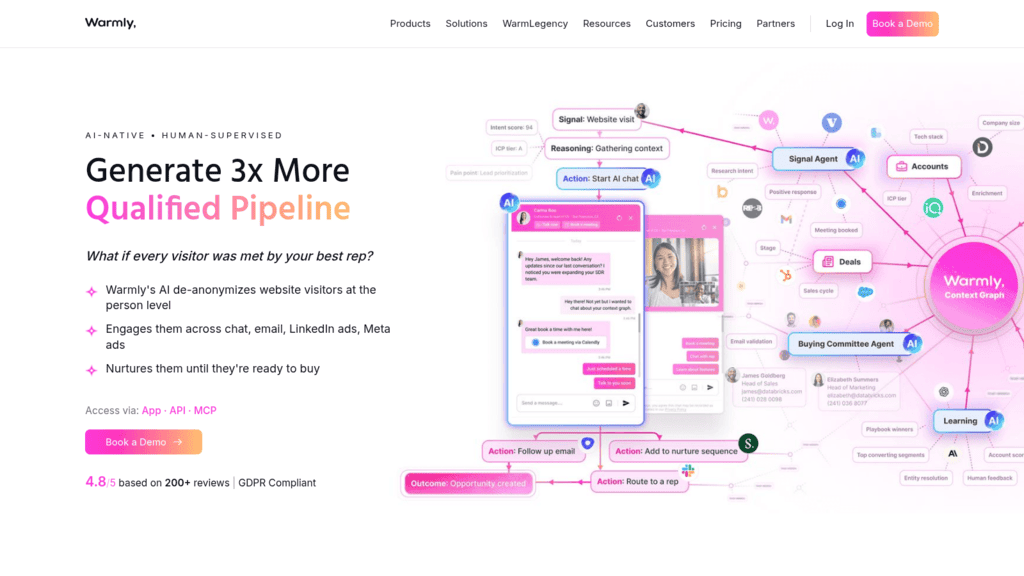
Warmly Inbound Identifying and booking anonymous visitors $20,000-a-year entry for the AI agent $20,000/year
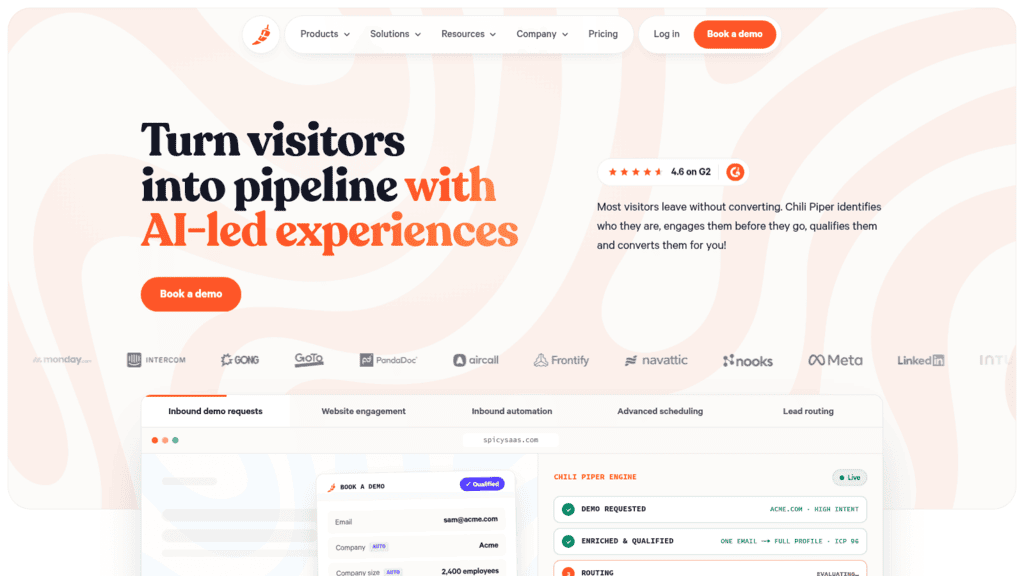
Chili Piper Inbound (scheduling and routing) Instant booking at form fill Books and routes hand-raisers; doesn’t prospect $15,000/year, billed annually
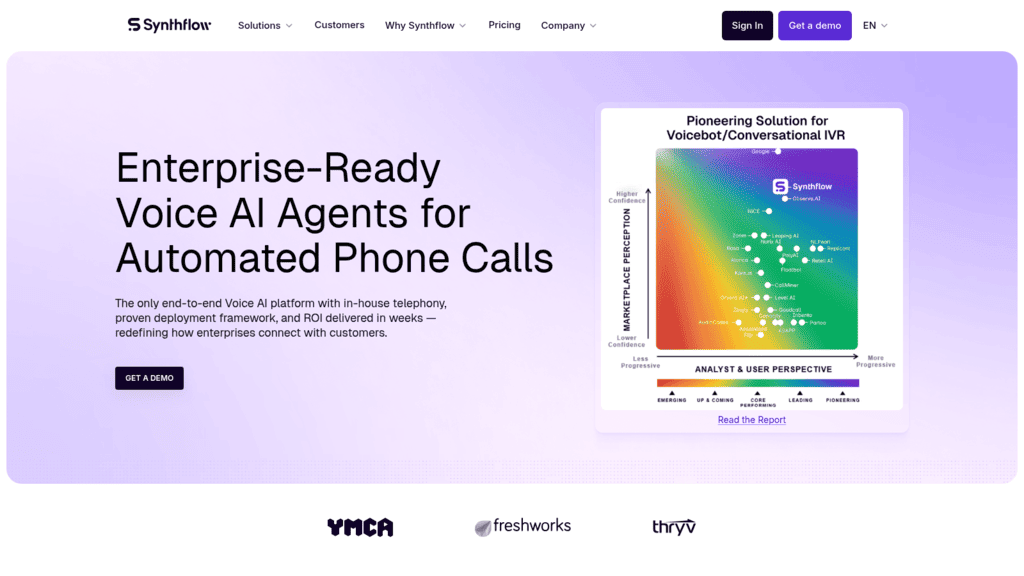
Synthflow Voice High-volume phone booking Enterprise contract only $30,000/year
Retell AI Voice Building your own phone setter You build and maintain the agent $0.07–$0.31/minute

Three of the ten tools after ours publish no price at all, so treat “Custom” as a sales call and a contract, not as a hidden discount.
Reply.io as one of the best ai appointment setters

1. Reply.io (Jason AI SDR)

Setter type: Outbound

Best for: Turning outbound replies into booked meetings

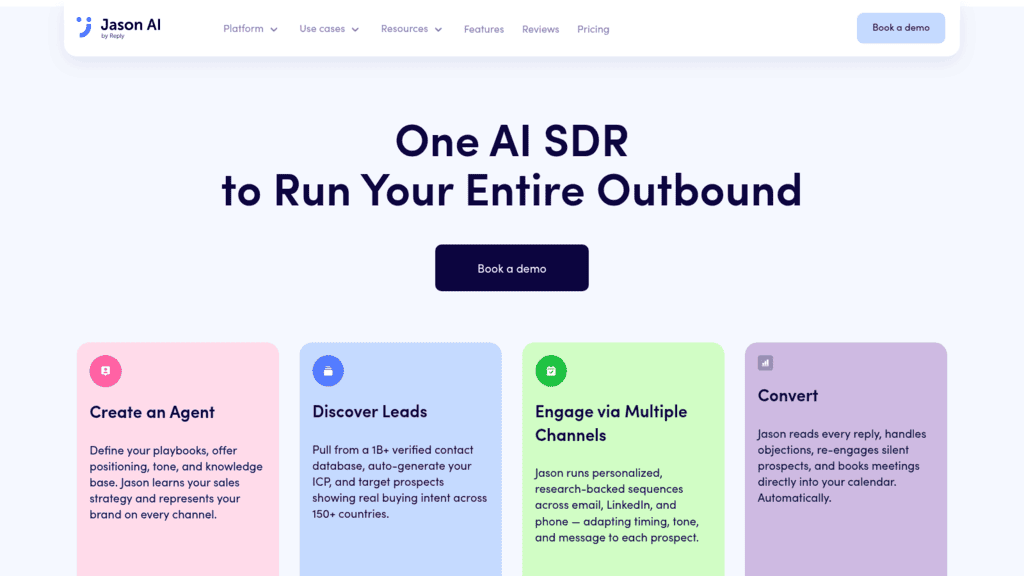
Overview: We built Jason AI SDR to run outbound from the first message to the calendar invite. It researches prospects, writes email, LinkedIn and call steps, reads every reply, and books the ones that say yes. More than 300 companies use Jason today.

Booking runs from one source at a time: either Google Calendar, which gives Jason a personal booking link with Google Meet or Zoom as the location, or a paid Calendly account. Calendly’s free plan and team or shared events aren’t supported, so check that before you plan a round-robin.

When a reply shows meeting intent, Jason books a proposed time directly, resolves several proposed times to the first free slot, and sends slot suggestions to a “yes” that names no time. Both sides then get a confirmation and a reminder 15 minutes before the call, and the contact moves to Meeting Booked, which stops the sequence. Jason can’t make the prospect show up, though, and we don’t claim it does.

Revenue Enablement Lab, Luis Báez’s solo-founder consultancy, shows the ramp. Its booking rate went from 4% in month one to 7% in month two and 12% in month three, with the first automated booking inside 11 days.

Key features:

  • Meeting-intent reply handling that books proposed times and suggests slots when a prospect agrees without naming one
  • Approval mode, which holds every generated reply in a Pending approvals queue until you edit, regenerate or approve it
  • Reply handlers per question type, set to Auto, Draft, or Stop and notify, so pricing or legal questions can go to a human
  • Availability rules for booking windows, buffers and cutoffs, so meetings land when reps can take them
  • A Meeting Booked status that ends the sequence, plus a reminder before each call
  • Booked meetings reported by channel, with a manual log for meetings booked outside Reply.io

Pricing: On an annual contract, Jason costs $500 a month at the 1,000-active-contact tier, or $800 if you pay month to month, roughly ten times our entry Email Volume plan ($49 a month billed annually for 1,000 active contacts).

Unlimited mailboxes and warm-up are included, LinkedIn automation beyond the plan’s included account is a $69-a-month add-on per account, and there’s a 14-day free trial but no free plan. We’re not a CRM, so booked meetings sync to HubSpot, Salesforce or Pipedrive.

Pros: books from email, LinkedIn and call steps in one sequence, human approval available for every reply, escalation rules per question type, sequences stop the moment a meeting lands, prices published with the billing basis

Cons: one booking source at a time with no support for Calendly’s free plan or team events, a steep price next to self-serve outbound tools, with $800 a month the lowest monthly-billing option

How to start using it:

  1. Open a 14-day trial account and add your sending mailboxes.
  2. Connect Google Calendar or a paid Calendly account, then set availability windows and buffers.
  3. Load your offer, pricing answers and case studies into Jason’s knowledge base.
  4. Run the first sequence in approval mode and read every draft for a week or two.
  5. Switch the question types you trust to Auto and keep pricing and legal questions on Stop and notify.

Why it’s a good AI appointment setter: Jason owns the whole outbound path, from the first email to the invite and the reminder, so the meeting gets booked in the same thread as the reply instead of after a handoff to a rep.

Final verdict: Choose Jason if most of your meetings have to come from outbound and you want the booking, the stop rules and the human checkpoints in one place. If your leads mostly arrive through your website, an inbound setter further down fits better.
11x as one of the best ai appointment setters

2. 11x

Setter type: Outbound plus inbound voice

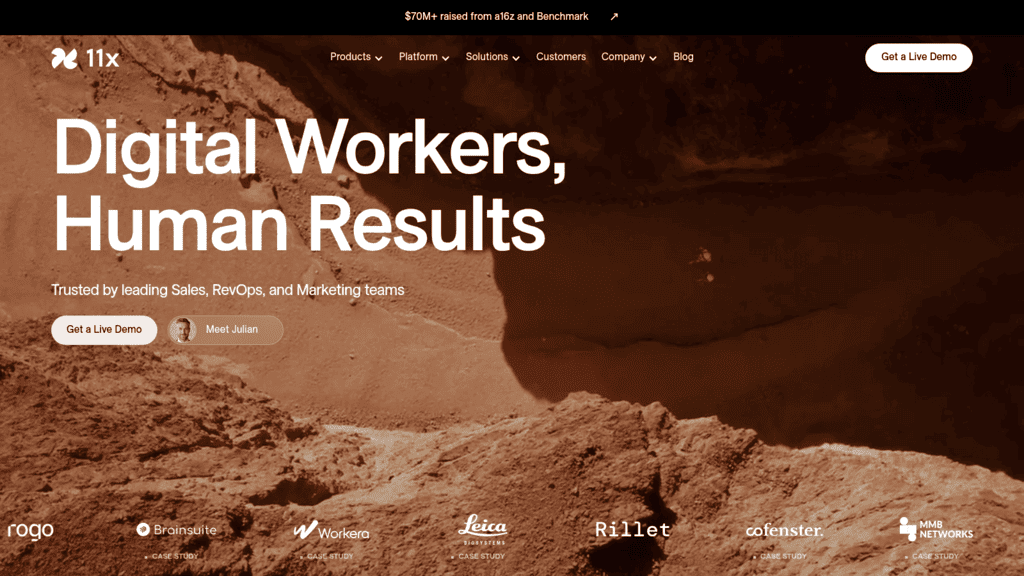
Overview: 11x sells two “digital workers.” Alice is an outbound AI SDR that prospects, handles replies and schedules meetings, while Julian calls back form fills and engages inbound leads by phone, chat, SMS and WhatsApp.

Key features:

  • Callbacks to form fills within 60 seconds, which covers the speed-to-lead job in one feature
  • Re-engagement of no-shows on whichever channel the prospect prefers
  • Routing through 11x’s own router or an existing one such as Chili Piper, with Salesforce and HubSpot sync

Pricing: 11x publishes no pricing. Its pricing URL returns a 404, and every path leads to a live demo.

Pros: outbound and inbound from one vendor, fast inbound callbacks, no-show follow-up

Cons: no price or self-serve trial, two separate workers to scope, headline results are vendor-reported

Why it stands out: It’s the only vendor on this list pairing an outbound AI SDR with an inbound agent that phones form fills back.

Final verdict: Worth a demo if you want one contract for both motions.

Artisan as one of the best ai appointment setters

3. Artisan

Setter type: Outbound

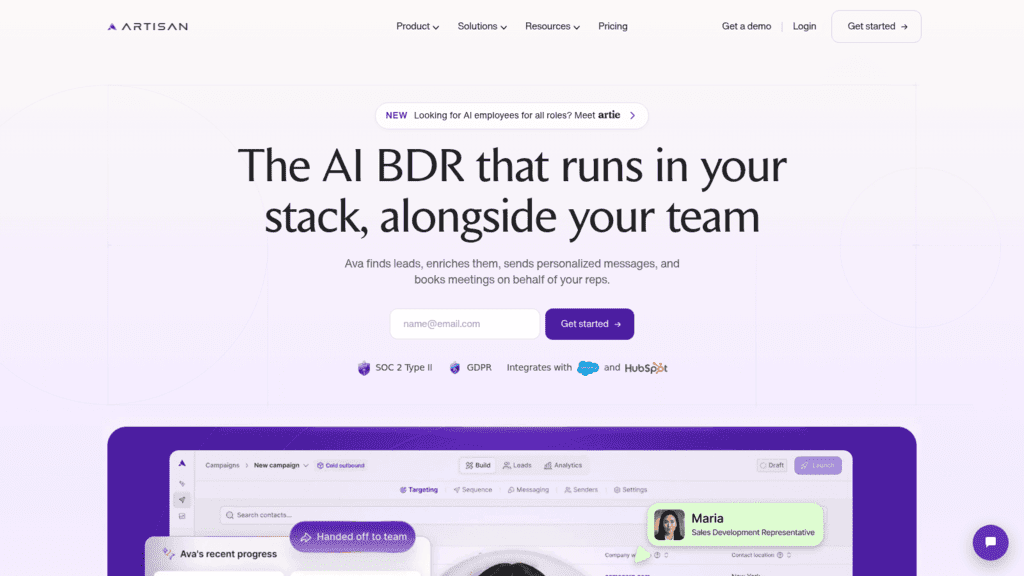
Overview: Artisan’s agent, Ava, is an AI BDR that finds leads, enriches them, sends personalized messages and books meetings for your reps, syncing with Salesforce and HubSpot.

Key features:

  • Autonomous replies and meeting booking on outbound campaigns
  • Lead search and enrichment inside Artisan’s own contact database
  • An AI dialer add-on per seat, so human reps call while Ava handles email

Pricing: On its startup plans, the Intern tier is $250 a month billed annually or $280 billed monthly for 10K credits, about 500 leads contacted a month. That price sits on the Startups tab of the pricing page; the default Businesses tab is quote-only.

Pros: a 30-day, 10K-credit trial with no card, a free plan for search and enrichment, clear startup pricing

Cons: mailboxes and phone numbers billed separately, about 20 credits used per prospect, Ava doesn’t call anyone herself

Where it fits: Early-stage teams testing an AI BDR for a month before paying.

Final verdict: A strong startup pick, provided you budget for sending infrastructure.

AiSDR as one of the best ai appointment setters

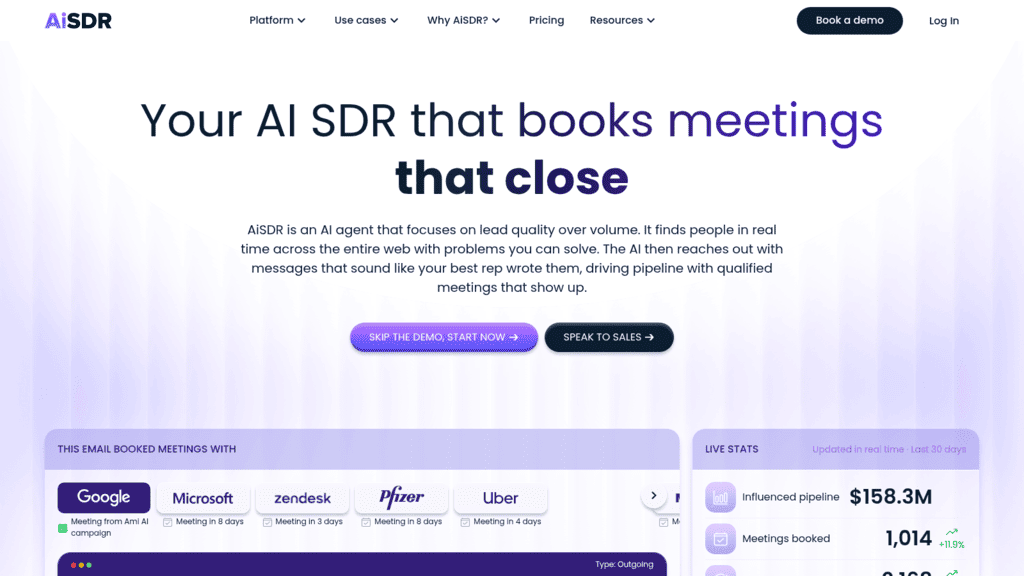
4. AiSDR

Setter type: Outbound

Overview: AiSDR runs email and LinkedIn outreach with an AI that answers replies in five to ten minutes, or drafts them for approval in co-pilot mode.

Key features:

  • Objection handling inside replies, so a pricing question gets an answer instead of a wait
  • Calendly and HubSpot calendar integration for booking
  • AI call steps in sequences through the Aircall dialer

Pricing: Solo costs $250 a month with no contract, or $2,400 a year, which works out to $200 a month. It covers 200 AI-researched contacts a month, one user, three mailboxes and one LinkedIn account.

Pros: no sales call needed, a month-to-month option, mailboxes included

Cons: 200 contacts a month is small, Salesforce sync starts at the $2,500-a-month Scale plan, Explore and Scale need quarterly contracts

Why it earns a place here: You can sign up, connect a calendar and see booked meetings without talking to anyone.

Final verdict: The low-commitment outbound trial run, as long as HubSpot is your CRM.

Agent Frank as one of the best ai appointment setters

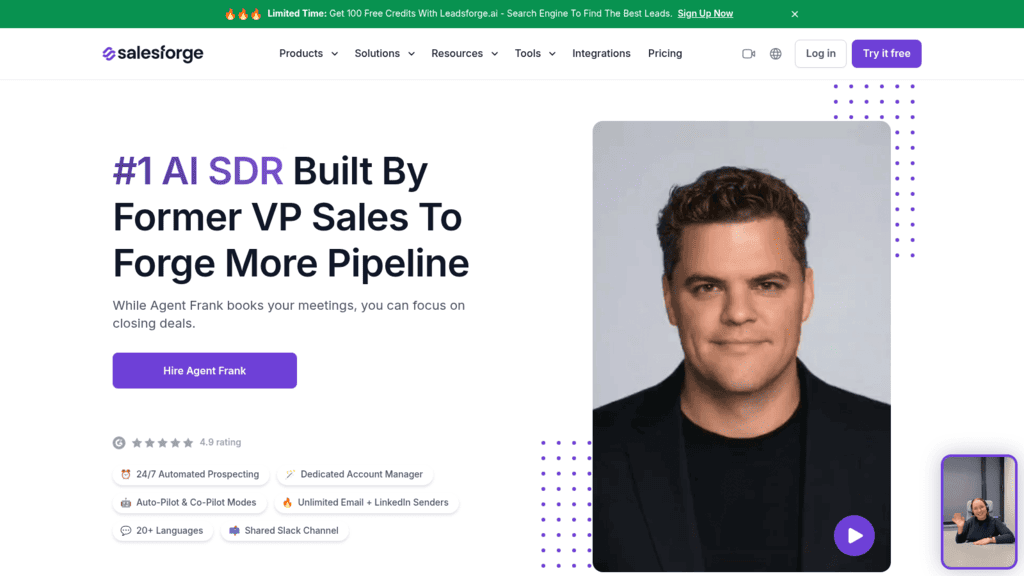
5. Salesforge (Agent Frank)

Setter type: Outbound

Overview: Agent Frank is the autonomous AI SDR inside Salesforge. It prospects around the clock, writes in 20+ languages and books meetings, with Auto-Pilot and Co-Pilot modes setting how much a human reviews.

Key features:

  • A built-in contact search engine for prospecting
  • Unlimited mailboxes and LinkedIn senders, plus a knowledge base you upload
  • A dedicated account manager and shared Slack channel

Pricing: Agent Frank costs $499 a month billed annually, or $599 a month on the toggle Salesforge labels “billed quarterly,” for 2,000+ contacts a month. Email infrastructure is separate, through Infraforge from $33 a month billed annually for 10 mailboxes.

Pros: multilingual outreach, a human support channel, clear per-contact math

Cons: available only after a demo, infrastructure costs extra, a self-declared poor fit for Fortune 500 targets and long RFP cycles

Its real strength: Salesforge spells out its fit: ACVs from $5K to $100K and 3,000+ target businesses.

Final verdict: A close rival worth comparing if your deals sit in that band.

Qualified as one of the best ai appointment setters

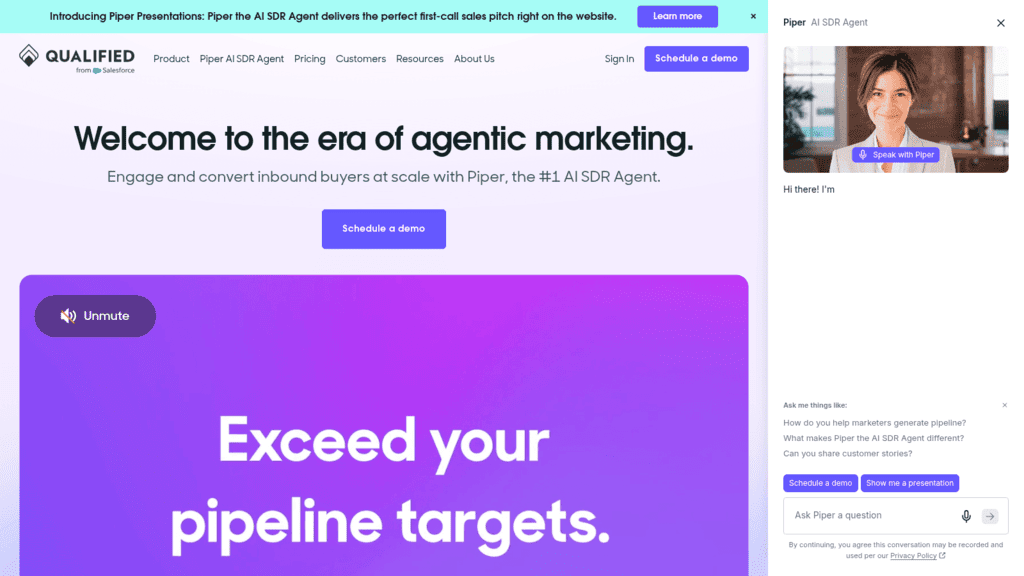
6. Qualified (Piper)

Setter type: Inbound

Overview: Piper is Qualified’s inbound AI SDR agent, which engages website visitors and email contacts, qualifies them and books meetings. Salesforce completed its acquisition of Qualified on April 1, 2026, and the logo now reads “Qualified from Salesforce.”

Key features:

  • Website and email conversations in text, voice or video, in multiple languages
  • Meeting booking with conversation, email and meeting routing on every plan
  • Waterfall enrichment and integrations with Salesforce and 20+ go-to-market systems

Pricing: Every plan is custom. Premier, the first tier, is scoped at one agent profile, 250K monthly web sessions and 2.5K monthly active email contacts.

Pros: deep Salesforce integration, multi-modal conversations, routing built in

Cons: quote-only, inbound only, agent handoff and MCP or API access start at Enterprise

What sets it apart: It turns the visitors you already pay to attract into booked meetings without a form-and-wait step.

Final verdict: The inbound benchmark for Salesforce shops with serious site traffic.

1mind as one of the best ai appointment setters

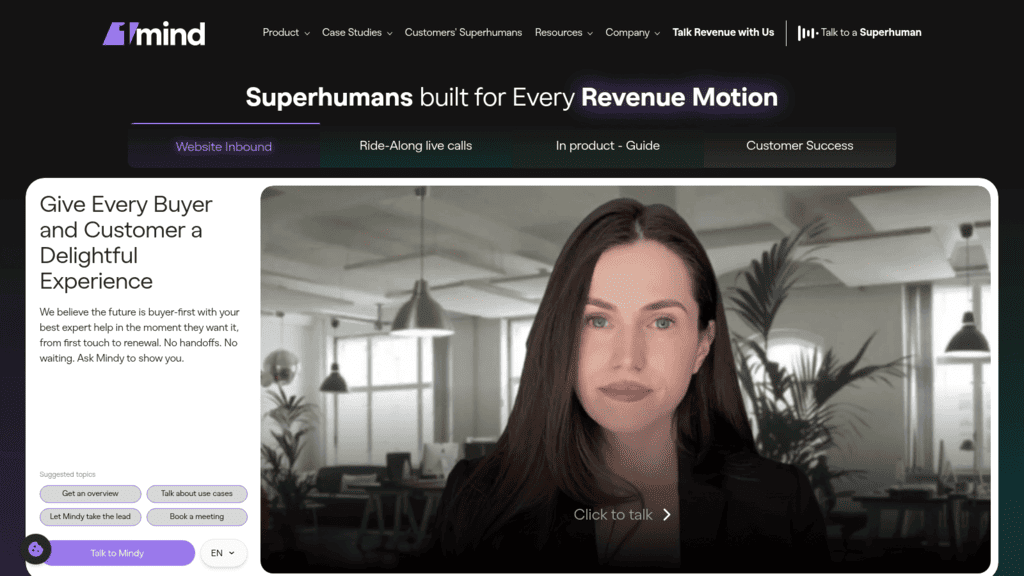
7. 1mind

Setter type: Inbound (voice and video)

Overview: 1mind puts “Superhumans” on your website: voice and video avatar agents that answer product and pricing questions, run a live demo, qualify the visitor, then book the meeting or hand off to a rep in real time.

Key features:

  • Interactive product demos inside the conversation
  • Structured qualification written to Salesforce, HubSpot, Dynamics or Pipedrive
  • Automatic follow-up on inbound leads

Pricing: There’s no pricing page, and the pricing URL returns a 404. 1mind’s own blog describes six-figure average contract values.

Pros: handles detailed product questions, demos without a rep, books or hands off live

Cons: enterprise pricing, inbound focus only, vendor-reported homepage results

Why it made this list: It can take a visitor from first question to booked meeting in one sitting, demo included.

Final verdict: For complex products; 1mind itself says a point tool costs less if you only need lightweight scheduling.

Warmly as one of the best ai appointment setters

8. Warmly

Setter type: Inbound

Overview: Warmly identifies anonymous website visitors at the person level, then engages them with an AI chat agent that books meetings, through Calendly inside the chat, and routes leads to reps.

Key features:

  • Person-level visitor identification feeding the chat agent
  • Engagement across chat, email, LinkedIn ads and Meta ads
  • CRM sync, lead routing, and API and MCP access

Pricing: Inbound Chat, the first plan with an AI agent, starts at $20,000 a year. Visitor identification alone is $10,000 a year, and you can pay quarterly to try before switching to annual.

Pros: knows who the visitor is before the chat starts, public pricing, broad channels

Cons: a $20,000 entry for the AI agent, quarterly or annual terms only, credit-metered usage

Where it beats the alternatives: It puts a name on an anonymous visit, so the chat agent knows who it’s talking to before anyone fills in a form.

Final verdict: Worth it when traffic is high and most visitors leave without converting.

Chili Piper as one of the best ai appointment setters

9. Chili Piper

Setter type: Inbound (scheduling and routing)

Overview: Chili Piper books the meeting the moment a prospect submits a form or chats. It qualifies and enriches the lead, routes it by owner, territory or round-robin, and shows the right rep’s calendar on the spot.

Key features:

  • Form Concierge, which qualifies at form fill and blocks spam
  • Instant routing by account owner, territory or round-robin
  • AI agents for visitor identification and chat, running on AI credits

Pricing: Routing and Scheduling costs $1,250 a month, or $15,000 a year, with 15 seats and 45k AI credits a year; extra seats are $45 a month each. Every plan is billed annually.

Pros: near-instant booking, mature routing, CRM logging

Cons: annual only, no outbound prospecting, new pricing tiers rolling out now

Why buyers shortlist it: It removes the gap between “submit” and “booked,” where inbound leads go cold.

Final verdict: The booking layer for teams whose problem is speed, not conversation.

Synthflow as one of the best ai appointment setters

10. Synthflow

Setter type: Voice

Overview: Synthflow is an enterprise voice AI platform with a dedicated appointment-setter product that calls leads, qualifies them and books the slot during the call.

Key features:

  • Native telephony and SIP trunking, with custom concurrency and routing
  • Escalation and handoff to humans mid-call
  • Calendar, CRM and webhook integrations, including Cal.com, HubSpot, Salesforce and Zapier

Pricing: Enterprise contracts start at $30,000 a year, scoped by call volume, concurrency, telephony and integrations. There’s no self-serve plan.

Pros: built for high call volume, human escalation, contracts with an SLA

Cons: a $30,000 floor, implementation work, voice only

What it’s genuinely good at: Answering and placing calls at contact-center volume without adding headcount.

Final verdict: Fits teams whose leads expect a phone call and arrive in the thousands.

Retell AI as one of the best ai appointment setters

11. Retell AI

Setter type: Voice

Overview: Retell AI is a platform for building and deploying AI phone agents yourself. Its appointment-setter use case reads calendar availability in real time, handles conflicts, sends reminders and can warm-transfer to a person.

Key features:

  • A visual flow editor or API, plus simulated test calls before going live
  • Deployment over voice, chat, SMS, web widgets and outbound campaigns
  • Metrics that include booked appointments and show rates

Pricing: Pay-as-you-go runs $0.07 to $0.31 a minute, built from voice infrastructure, text-to-speech, the language model and telephony, and phone numbers cost $2 a month each. New accounts get $10 of free usage.

Pros: real per-minute pricing, free usage to test with, SOC 2 Type II and HIPAA

Cons: you build and maintain the agent, costs stack from several components, marketing leans toward contact centers and healthcare

Where it’s strongest: Per-minute pricing and free usage let you test a phone setter on real calls before signing any contract.

Final verdict: Choose it if someone technical can own the build.

How We Chose These AI Appointment Setting Tools

We started from the tools that rank for this keyword and those that come up in AI GTM agent tools comparisons, then kept only AI appointment setting tools that put a meeting on a calendar themselves. That test cut several familiar names: Valley hands interested replies back to you, Regie.ai assists reps rather than booking, and Air.ai’s domain now belongs to a defense company.

Every remaining vendor’s own site, including its pricing page where one exists, was read on October 10, 2026. Where a price only appears behind a toggle or tab, like Artisan’s startup plans or Salesforge’s quarterly option, we say so, and where a vendor publishes none, we don’t estimate one.

The mix is deliberate too: five outbound tools, four inbound and two voice. Vendor-reported results, such as homepage reply rates or meetings-booked counters, stayed out of the entries because none can be checked from outside.

Outbound, Inbound or Voice: Which Setter Do You Need?

The fastest way to narrow this list is to look at where your meetings come from today and where the delay sits. Each type of setter fixes a different delay, and buying the wrong one leaves the real bottleneck untouched.

Outbound Setters Create the Conversation

Outbound setters suit teams that have to start every conversation themselves. They prospect, write the sequence, read replies and book, which makes them the most complete form of outbound AI you can buy.

The questions to ask are about the booking end, not the sending end. Can it book a time a prospect proposes in a reply? Does it stop the sequence once the meeting lands? Can you hold replies for approval while you build trust in it? Reply.io, 11x’s Alice, Artisan, AiSDR and Agent Frank all sit here.

Inbound Setters Win on Speed

Inbound setters suit teams that already get demo requests, chats or heavy website traffic. Their value is speed, and the evidence for that is old but blunt.

When researchers audited 2,241 U.S. companies for Harvard Business Review, 37% responded to a web lead within an hour and 23% never responded at all. Across 1.25 million leads, firms that tried to make contact within an hour were nearly seven times as likely to qualify the lead as firms that waited even an hour longer, and more than 60 times as likely as those that waited a day.

The data dates from 2011, and one co-author ran a sales-software vendor, which the article disclosed. Still, it’s the premise inbound AI appointment setters are built on: Chili Piper, Qualified, Warmly, 1mind and 11x’s Julian all try to answer before the prospect moves on.

Voice Setters Need a Consent Check

Voice setters suit businesses whose leads expect a call, or that get enough phone volume to justify automating it. They also carry a legal question the other two types don’t.

In its 2024 declaratory ruling, the FCC confirmed that the TCPA’s restrictions on “artificial or prerecorded voice” cover current AI technologies that generate human voices. Such calls need the called party’s prior express consent unless an emergency purpose or exemption applies, and the rule reaches wireless numbers as well as residential lines.

In practice, an AI calling back someone who filled in your form and asked to be contacted is a very different risk from an AI cold-dialing a prospect’s mobile. Talk to counsel before you point Synthflow or Retell AI at people who never asked to hear from you.

What Features Should AI Appointment Setting Software Have?

Once you know the type, the checklist gets shorter. Good AI appointment setting software passes most of these tests:

  • It books directly from a reply or conversation, not just by pasting a scheduling link.
  • It reads real calendar availability and respects buffers and cutoffs.
  • It stops all outreach to a contact the moment a meeting is booked.
  • It lets you approve messages before they send while you’re still testing it.
  • It escalates pricing, legal or security questions to a human instead of guessing.
  • It sends a reminder before the meeting and re-engages people who don’t show.

Approval and escalation matter most in the first month, because a setter that guesses at a pricing question can lose a deal faster than a slow human would. Look for per-question controls rather than one global on-off switch, and check that booked meetings write back to your CRM.

How Much Do AI Appointment Setting Platforms Cost?

Published prices fall into three bands. Outbound tools start around $200 to $500 a month, inbound AI appointment setting platforms start at $15,000 to $20,000 a year, and voice runs either per minute or on a $30,000 enterprise contract. Our own Jason pricing tiers climb from $500 a month for 1,000 active contacts to $3,000 a month for 10,000, billed annually, so cost follows contacts rather than seats.

The first-year figures below are our own arithmetic, not vendor quotes: each published entry price multiplied out over 12 months on the cheapest billing basis and on the most flexible one. 11x, Qualified and 1mind are left out because they publish no price.

Tool Setter type Lowest published tier First year, cheapest basis (our math) First year, flexible basis (our math)
Reply.io (Jason AI) Outbound 1,000 active contacts $6,000 (annual) $9,600 (monthly)
Artisan Outbound Intern, 10K credits $3,000 (annual) $3,360 (monthly)
AiSDR Outbound Solo, 200 contacts/month $2,400 (annual) $3,000 (monthly)
Salesforge (Agent Frank) Outbound 2,000+ contacts/month $5,988 (annual) $7,188 (quarterly)
Warmly Inbound Inbound Chat $20,000 (annual) Quarterly trial, price not published
Chili Piper Inbound Routing and Scheduling, 15 seats $15,000 (annual) Annual only
Synthflow Voice Enterprise contract $30,000 (annual) Annual contract
Retell AI Voice Pay-as-you-go About $860–$3,750, assuming 1,000 minutes a month and one number Same, no commitment

That Retell AI range is $0.07 to $0.31 a minute times our assumed 1,000 call minutes a month, plus $2 a month for one number, so scale it to your volume. The other rows are list prices before add-ons, which is where budgets slip: Artisan bills mailboxes and phone numbers separately, Agent Frank’s email infrastructure is extra, and AiSDR’s Salesforce sync only arrives on its $2,500-a-month plan.

How Long Before an AI Setter Books Its First Meeting?

An outbound setter rarely books in its first week. It needs warmed mailboxes, a knowledge base to answer from and a review period before it replies on its own, and our own setup docs put a fresh sending domain at about two to three weeks of warm-up before it should send cold email.

Inbound tools start faster because the demand already exists. The work there is routing: deciding which visitors qualify, whose calendar each lead lands on, and what happens outside working hours. Voice sits in between, since you need numbers, scripts, a round of simulated test calls and, for anything outbound, a consent process you trust.

How to Run a Two-Week Pilot of an AI Appointment Setter

A short, controlled pilot tells you more than any demo, and it’s the fairest way to compare AI appointment setting solutions against each other. Run it on real leads with one setter type and one success measure:

  1. Pick one lead source, such as one outbound segment or your demo-request form, and keep it apart from your human team’s work.
  2. Write down your current booking rate and response time for that source.
  3. Connect the calendar, set availability rules, and load your pricing and objection answers.
  4. Keep every reply on approval for the first week and note each edit you make.
  5. Turn on automatic replies only for question types you never had to edit.
  6. Count meetings booked, meetings held and no-shows, not just replies.
  7. Compare cost per held meeting with what an SDR or agency costs for the same source.

If the setter books but the meetings don’t hold, the problem is usually qualification rather than the tool. Tighten the questions it asks before booking, then run the pilot again before you scale.

Frequently asked questions

What is the difference between an AI appointment setter and a scheduling tool?

A scheduling tool such as Calendly shows open times once a prospect has already decided to meet. An AI appointment setter creates that decision by answering replies, chatting with visitors or calling leads, then books the meeting itself.

Are AI appointment setters cheaper than human SDRs?

Often, but compare the whole cost. Outbound tools start at a few thousand dollars a year, while the inbound platforms that publish prices and Synthflow’s voice contracts start at $15,000 to $30,000 a year. An outsourced SDR team brings human judgment to qualification, so price both against your cost per held meeting rather than the monthly fee.

Can AI appointment setting apps reduce no-shows?

Some AI appointment setting apps help through reminders and re-engagement. Jason sends a reminder 15 minutes before each meeting, and 11x’s Julian re-engages no-shows by channel, but no tool guarantees attendance. Better qualification before booking does more than any reminder.

Is it legal to use AI voice agents to book appointments?

It depends on consent. The FCC ruled in 2024 that AI-generated voices count as an “artificial or prerecorded voice” under the TCPA. A call to a mobile or home number therefore needs the person’s prior express consent, absent an emergency or an exemption. Get legal advice before running outbound AI calls.

Which AI appointment setting solutions work for small teams?

AiSDR’s Solo plan at $250 a month with no contract and Artisan’s startup plans at $250 a month billed annually are built for small teams. Our Jason AI costs $500 a month on an annual plan, with unlimited mailboxes and warm-up, and you can test it on a 14-day trial.

Subscribe to our blog to receive the latest updates from the world of sales and marketing.
Stay up to date.

Related Articles

B2B SaaS Marketing Strategy in 2026 [Step-by-Step Guide]

B2B SaaS Marketing Strategy in 2026 [Step-by-Step Guide]

B2B SaaS Marketing Strategy in 2026 [Step-by-Step Guide]
How an Automated Voice Messaging System Will Improve Outreach in 2026

How an Automated Voice Messaging System Will Improve Outreach in 2026

How an Automated Voice Messaging System Will Improve Outreach in 2026
Outbound Marketing Software in 2026 (Top Picks)

Outbound Marketing Software in 2026 (Top Picks)

Outbound Marketing Software in 2026 (Top Picks)