
11 Best B2B Data APIs in 2026 to Find More Prospects

11 Best B2B Data APIs in 2026 to Find More Prospects

Key takeaways:

  • B2B data APIs split into four types: contact data, company firmographics, real-time signals, and infrastructure you build your own dataset on. Buying the wrong type is the most common and most expensive mistake here.
  • Published coverage numbers are vendor claims with no independent audit anywhere in this category, so test candidates against 500 of your own records instead of comparing marketing figures.
  • The enterprise tier is quote-only across ZoomInfo, Cognism and Crustdata, with third-party procurement data putting ZoomInfo’s median contract near $31,875 a year.
  • Our database is real at 1+ billion contacts, and it ships bundled inside our platform rather than sold standalone, which we spell out in our entry because it disqualifies us for some buyers.

Every outbound team eventually hits the same wall. The CRM is full of records nobody trusts, the SDRs are hand-checking LinkedIn before every send, and someone asks why you are paying for a database that is wrong a third of the time.

B2B data APIs are how teams get out of that loop, and they have largely displaced the marketing data providers selling static files. Rather than buying a static file that starts decaying the day it lands, you call an endpoint at the moment you need a record and get the current version.

That shift is now the norm rather than the exception. Postman’s State of the API Report, covering more than 5,700 developers, found 82% of organizations have adopted some level of API-first approach and 65% now generate revenue directly from their APIs. Data vendors selling CSV exports are working against the current.

This guide ranks the 11 B2B data APIs worth evaluating in 2026, with pricing verified live. We are one of them and we have listed ourselves first, so weigh our entry accordingly. We have also been direct about the shape of buyer we are wrong for.

The Four Types of B2B Data API

Vendors in this category describe themselves almost identically, and they do quite different jobs. Sorting them by type first will save you a wasted trial.

Contact data APIs return people: name, title, seniority, verified work email, direct dial. People Data Labs and Apollo.io sit here.

Company data APIs return firmographics from a domain: headcount, industry, location, revenue band, tech stack. Diffbot and Coresignal lead this group.

Signal APIs return events rather than attributes: a funding round, a hiring surge, a leadership change. Crustdata is the clearest example, and the value is timing rather than description.

Data infrastructure sells you the underlying dataset or the means to build one, which you then host and query yourself. Bright Data is the main option, and it is a different kind of purchase with different compliance obligations.

Choosing between GTM outbound platforms starts here. A team that buys a contact API when it needed a signals API will conclude the data is bad, when in fact it answered a question nobody asked.

How We Assessed These B2B Data Providers

We required a callable API, pricing we could verify live or an explicit statement that pricing is quote-only, and enough documentation to judge what a developer would actually receive.

We fetched every pricing page rather than reusing published comparisons, which matters because several vendors in this list have repriced during 2026. Clay moved its API access gating, and Relevance AI withdrew its self-serve tiers entirely.

We weighted the questions that decide total cost rather than headline price:

  • Whether API access is included or sits behind an enterprise contract
  • Whether credits expire, roll over, or reset monthly
  • Whether failed lookups consume credits
  • Whether coverage claims are vendor-published or independently checked, which in this category is always the former

ZoomInfo is discussed here but is not a ranked entry. It publishes no pricing, blocks automated inspection of its site, and its API is reported through third-party procurement sources at roughly $50,000 a year, with an enrichment-only connector near $5,000.

Vendr data across 1,313 purchases puts the median ZoomInfo contract at $31,875 a year. Those figures come from procurement platforms rather than from ZoomInfo, and we will not rank a vendor whose terms we cannot verify.

The 11 Best B2B Data APIs Compared

Pricing is the cheapest tier that includes API access.

Tool Best for Key features Main limitation Pricing (from) Rating
Reply.io Data that feeds outbound directly 1B+ contacts, Live Data search, sequencing in one API Data is bundled, not sold standalone $49/month ★★★★★
People Data Labs A foundation to build on Person and company datasets, strong SDKs Person and company priced separately $98/month ★★★★★
Coresignal Employment and hiring depth 895M+ employee records, historical headcount Search and Collect credits billed apart $49/month ★★★★☆
Clay Orchestrating many providers 100+ provider waterfalls, Claygent research API gated to the Growth tier $185/month ★★★★☆
Diffbot Companies missing from list vendors Knowledge Graph built by crawling Credit-based, so cost varies by query Free (10,000 credits) ★★★★☆
Apollo.io Data plus sending in one account Large database, genuine free tier Accuracy varies by segment $49/user/month ★★★★☆
Explorium Agent-driven data retrieval Agent-native design, credit packages Credits expire after 12 months $84.99 (2,500 credits) ★★★☆☆
Crustdata Timing rather than attributes Real-time hiring and funding signals, MCP No published pricing Quote only ★★★☆☆
Bright Data Building your own dataset LinkedIn datasets, refresh-rate discounts Per-tier totals not published $2.50/1,000 records ★★★☆☆
Cognism European compliance requirements Phone-verified data, notified GDPR Quote-only, five-figure contracts Quote only ★★★☆☆
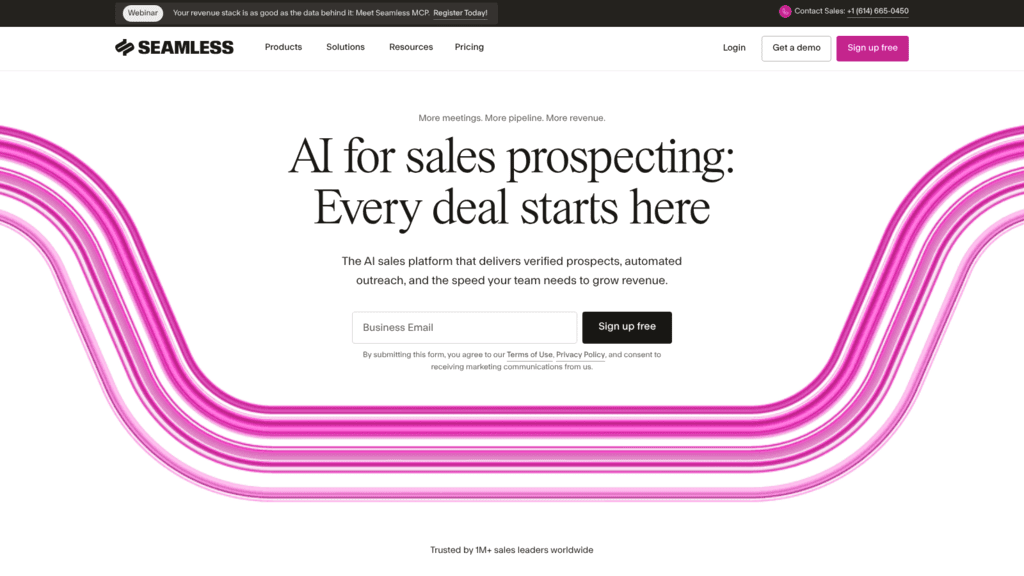
Seamless.AI Self-serve credit-based prospecting 1.3B+ contacts, free tier with API Credits burned on failed lookups Free (50 credits) ★★★☆☆

Ratings reflect fit for programmatic B2B data access, which is why quote-only enterprise vendors score lower here than in a general sales-intelligence roundup.

1. Reply.io
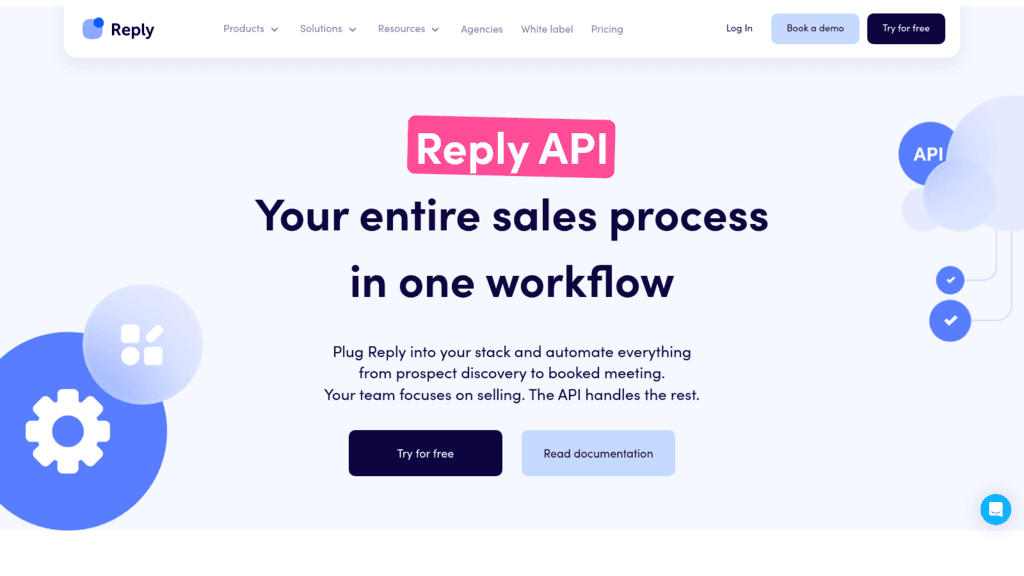
Reply.io as one of the best b2b data apis

Best for: Data that feeds outbound directly

Overview: Our database covers 1+ billion global contacts through Generect, including 220+ million US contacts, 15+ million US company profiles, and 60+ million accounts across 150+ countries.

That is a real dataset, and we should be equally clear about how it is sold. It ships inside our sales engagement platform, not as a standalone data subscription. The base plan carries 50 live data credits a month, with additional packages from $20.

So the comparison to make is not us against People Data Labs on records-per-dollar, which we would lose. It is whether you want a data vendor plus a sending platform plus the integration between them, or one sales engagement API that covers all three.

For teams whose data exists to drive outbound, that consolidation is the point. Our Live Data search endpoints are in beta, and the contact enrichment endpoints arrive in late August 2026.

Key features:

  • 1+ billion global contacts with 220+ million in the US, sourced through Generect
  • Live Data search filtered by department, industry, job title, location and seniority, currently in beta
  • 60+ million accounts and 15+ million US company profiles for account-level targeting
  • Contact enrichment by email and LinkedIn URL, arriving late August 2026
  • Async email validation with background job handling for bulk work
  • Multichannel sequencing endpoints plus CRM integrations, so a sourced record becomes a live campaign

Pricing: the meter is active contacts. $49 a month billed annually ($59 monthly) covers 1,000 of them, and the tiers climb to $899 at 100,000, with seats unmetered throughout. The 50 live data credits bundled into the base plan are modest for data-led work, so budget for credit packages from $20 a month on top.

Pros: genuinely large contact database with strong US depth, data and outreach behind one API key, plan-level rather than per-seat pricing, published rate limits at 100 requests per minute, no separate integration to maintain between data and sending

Cons: the data is bundled inside the platform rather than sold as a standalone product, so we are the wrong purchase if you want records to load into your own warehouse, and 50 live data credits on the base plan is modest, meaning data-heavy use means buying credit packages on top

How to start using it:

  1. Begin a 14-day trial and generate your key under Settings > API Key.
  2. Confirm authentication against https://api.reply.io/v3/whoami.
  3. Run Live Data search with your ICP filters and use the preview endpoint before spending credits.
  4. Compare coverage against 200 known accounts in your target segment to judge fit honestly.
  5. Push results into a sequence through the same API rather than exporting to a separate tool.

Why it’s a good B2B data API: most data purchases end with a CSV somebody has to load somewhere. Ours ends with a running campaign, which removes the step where B2B data projects usually stall.

Final verdict: the strongest option when data and outreach belong together, and the wrong one when you need a standalone data feed for a warehouse. If that is your requirement, People Data Labs or Coresignal below are built for it and we are not.
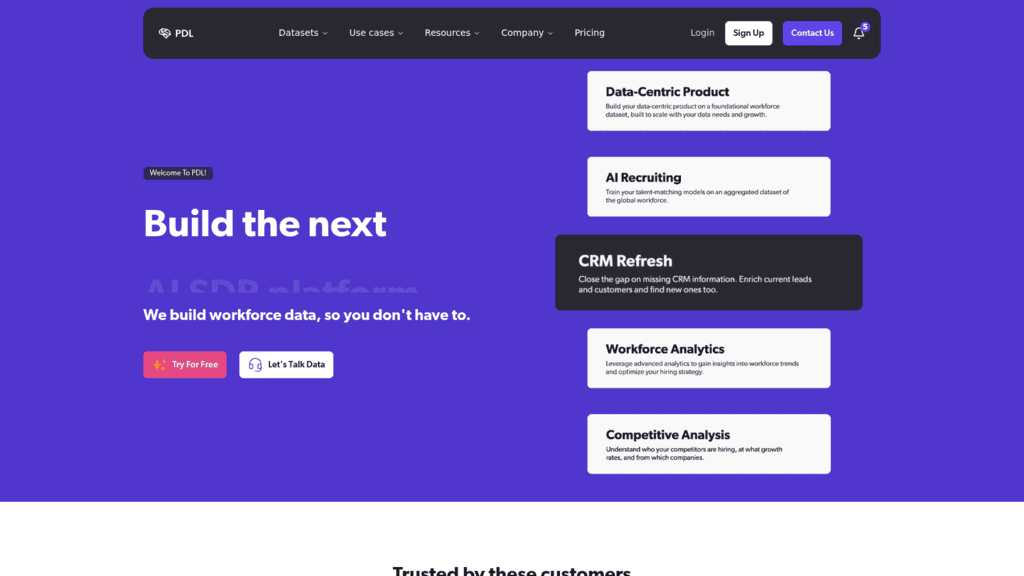
2. People Data Labs

People Data Labs as one of the best b2b data apis

Overview: People Data Labs is the closest thing here to a raw data utility. It sells person and company datasets to engineering teams that want to own the matching, scoring and storage themselves, with no workflow layer at all.

Key features:

  • Person and company enrichment plus search endpoints, sold as separate products
  • Bulk enrichment for batch jobs rather than record-by-record calls
  • A well-maintained OpenAPI spec with SDKs across major languages

Pricing: a free tier covers up to 100 records per month. Above that, Pro opens at $98 a month covering 350 monthly records, with the rate falling as volume climbs and a further 20% off for an annual commitment. Enterprise is quoted individually and adds data-license feeds and SSO.

Pros: the best developer ergonomics in this list, transparent volume-based pricing, ISO and SOC 2 Type 2 certified, both sides of the graph from one vendor

Cons: the free tier obfuscates contact data so email and phone quality cannot be evaluated without paying, Person and Company are priced separately so combined workloads cost more than the headline, and there is no interface for non-technical users

Why it’s a good B2B data API: when you are building a data layer rather than buying a tool, you want clean JSON, a real spec and no opinions imposed on your schema.

Final verdict: the default foundation for engineering-led data work, and the benchmark others get measured against.

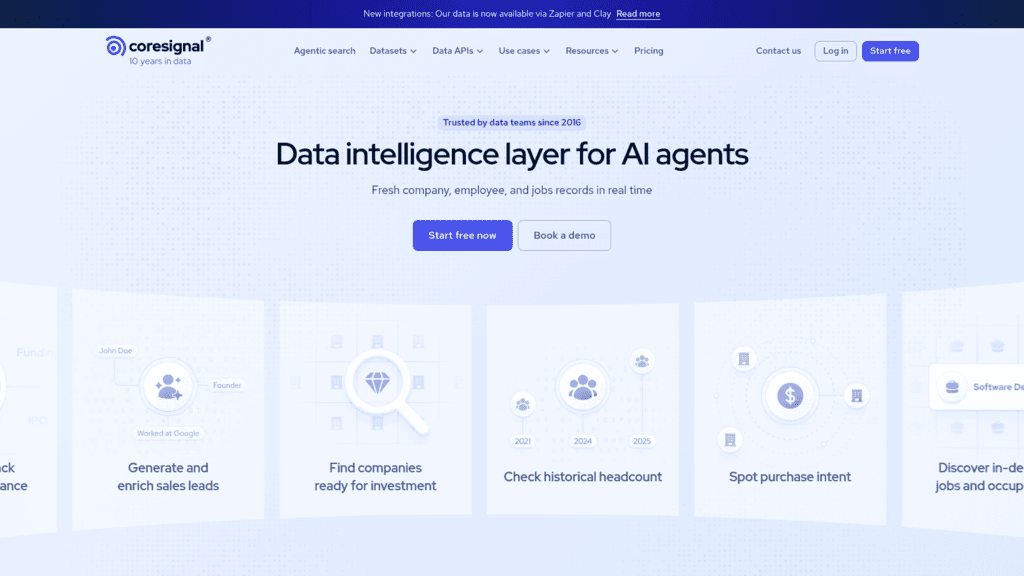
3. Coresignal

Coresignal as one of the best b2b data apis

Overview: Coresignal aggregates employee, company and job-posting data from 15 or more public web sources. Its distinguishing asset is depth on employment history and headcount over time.

Key features:

  • 70M+ company records, 895M+ employee records and 468M+ job postings
  • A historical headcount API and employee webhooks on the Premium tier
  • Bulk datasets in JSON, CSV or JSONL alongside the per-record API

Pricing: the API free tier gives 200 Collect and 400 Search credits valid for 7 days. The paid ladder reads $49, $800 and $1,500 a month for Starter, Pro and Premium. Cost per record compresses hard along it, from about $0.196 down to $0.005. Bulk datasets start from $1,000 per month with no free tier. Paying yearly upfront saves 20%.

Pros: unrivaled hiring and headcount history, per-record costs drop sharply at scale, a genuine free tier for evaluation, both API and bulk delivery

Cons: Collect and Search credits bill separately so query-heavy work costs more than the per-record figure implies, multi-source company data costs double, and the gap between $49 and $800 leaves nothing in between

Why it’s a good B2B data API: headcount trajectory and job postings are among the few signals that reliably indicate budget and intent, and few vendors expose them historically.

Final verdict: the specialist pick when the employment graph is what you are actually buying.

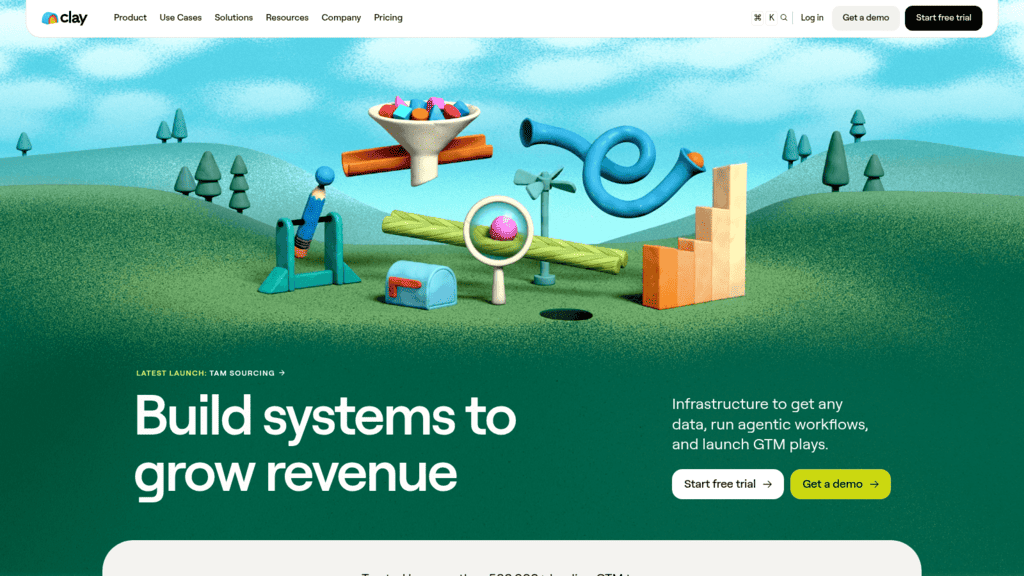
4. Clay

Clay as one of the best b2b data apis

Overview: Clay is an orchestration layer rather than a data source. It runs waterfalls across more than 100 providers and adds Claygent, an AI agent that researches prospects against a prompt, so you buy coverage across vendors rather than from one.

Key features:

  • Waterfall enrichment across 100+ providers with pay-on-match billing
  • Claygent for research that structured endpoints cannot answer
  • HTTP API integrations, webhook automation and CRM auto-sync from the Growth tier

Pricing: unlimited seats, 500 actions and 100 data credits come free every month, though nothing programmable does. Launch, from $54 a month on annual billing ($167 monthly), is still interface-only. API access begins at Growth, listed from $185 a month annually ($446 monthly). A credit slider sits behind all of it, so the figure you are quoted moves with the volume you pick.

Pros: the widest provider coverage available through one contract, pay-on-match keeps waste low, Claygent handles unstructured research well

Cons: nothing is callable below Growth, putting a floor near $185 a month on programmatic use, two separate credit types complicate any forecast, and the slider means the number you were quoted may not be the number you pay

Why it’s a good B2B data API: replicating a 100-provider waterfall in-house costs far more in engineering time than Clay costs in subscription, even at the Growth tier.

Final verdict: the best aggregation layer here, priced so that API use is a deliberate step up.

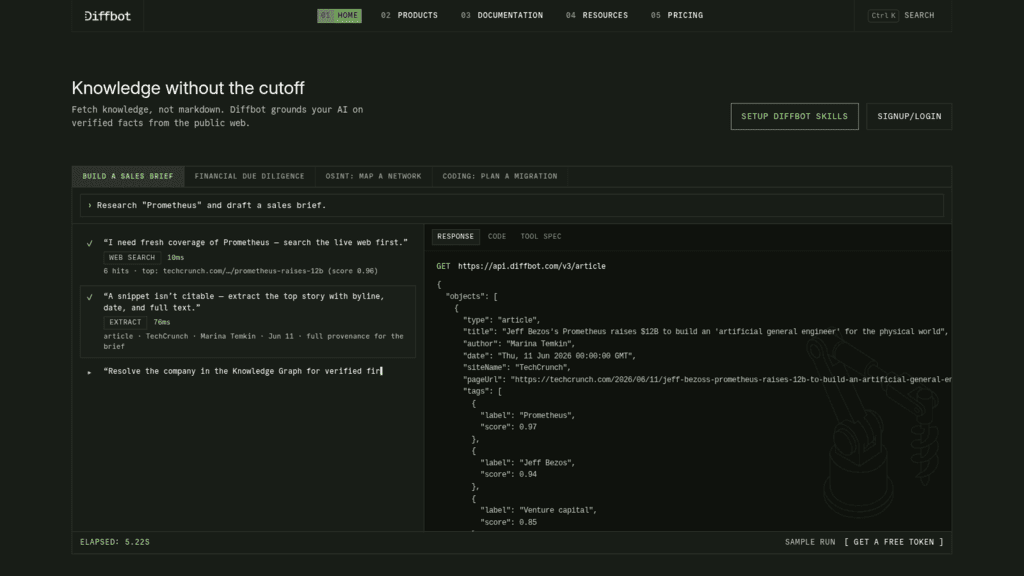
5. Diffbot

Diffbot as one of the best b2b data apis

Overview: Nothing in Diffbot’s Knowledge Graph is licensed. It is assembled by machine reading of the open web, which is why it holds records on companies no commercial list has ever indexed.

Key features:

  • Knowledge Graph search and enhance endpoints for company records
  • Extract, Bulk Extract and Crawl included on every tier
  • Natural language processing across the crawled corpus

Pricing: 10,000 credits a month cost nothing, permanently, with no card and a 5-per-minute ceiling. Paid plans open at $299 (Startup) for 250,000 credits priced at $0.001 apiece, lifting throughput to 5 calls a second. Plus runs $899 for a million credits at $0.0009, 25 calls a second and 3 seats, and Enterprise is quoted.

Pros: the most generous free tier in this list, genuine long-tail company coverage, no long-term contract, overages charged pro rata at the plan rate

Cons: you pay per credit rather than per record, so an elaborate query quietly costs more than a plain one, throughput on the free plan is capped at 5 calls a minute, and a crawler notices a rebrand later than a filing does

Why it’s a good B2B data API: if your ICP includes companies below the threshold that list vendors bother to maintain, crawling is the only method that reaches them.

Final verdict: the best answer for long-tail coverage, with a free tier generous enough to prove it.

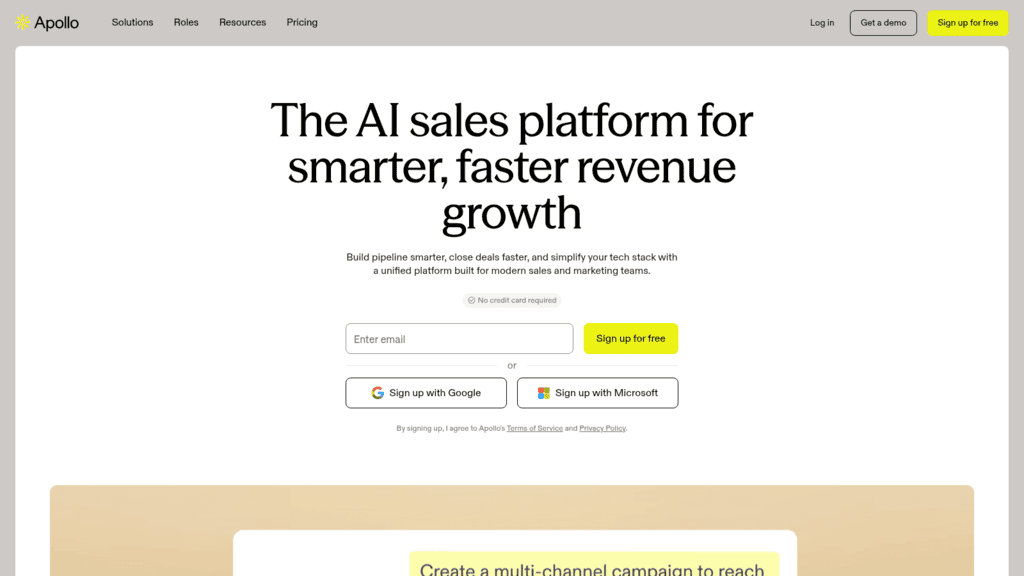
6. Apollo.io

Apollo.io as one of the best b2b data apis

Overview: Apollo.io pairs a large prospecting database with sequencing, dialing and workflow features. Its API covers people and organization endpoints, and its free tier is genuinely usable, which is rare among database vendors.

Key features:

  • People and organization search and enrichment endpoints with bulk variants
  • A real free tier rather than a time-limited trial
  • Sequencing and dialer capability alongside the data

Pricing: there is a free plan. Basic is $49 per user per month, Professional $79 and Organization $119, all billed annually, with monthly billing running roughly 15% to 25% higher. Credit allotments scale by tier.

Pros: large database at a self-serve price, a genuine free tier for evaluation, one vendor covering data and outreach, transparent per-seat pricing

Cons: accuracy varies noticeably by segment and geography, per-seat pricing scales poorly for large teams, and credits attach to seats rather than pooling across the account

Why it’s a good B2B data API: for a team that wants breadth without a procurement process, it remains the fastest path from signup to usable records.

Final verdict: the strongest self-serve generalist, with quality that varies more by segment than its coverage claims suggest.

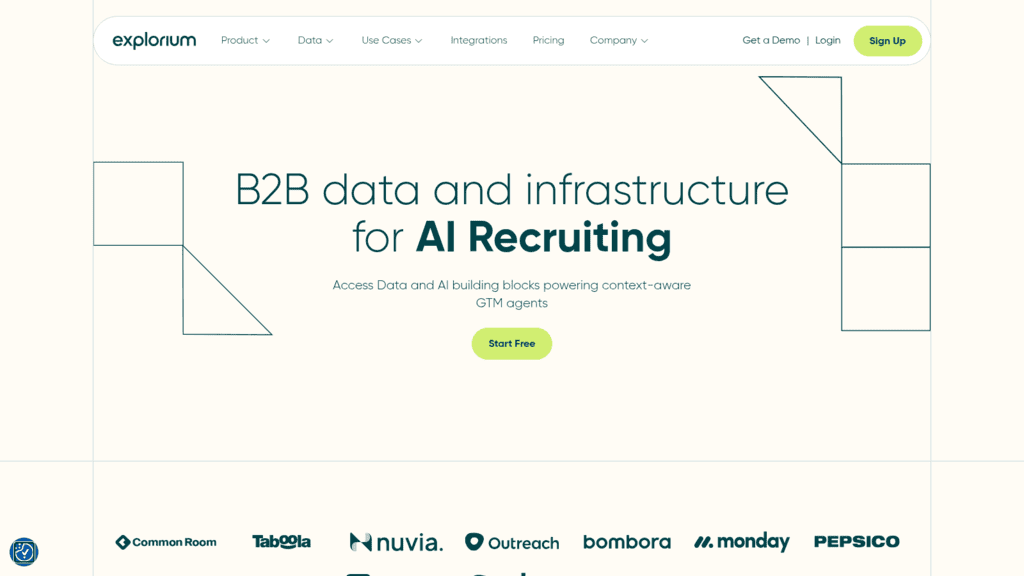
7. Explorium

Explorium as one of the best b2b data apis

Overview: Explorium describes itself as a B2B data layer for building GTM agents, and sells credit packages rather than subscriptions. The commercial terms are the thing to read carefully.

Key features:

  • Company and contact data exposed for programmatic and agent retrieval
  • Credit packages with no monthly commitment
  • Volume discounts, extra queries per minute and resale rights on enterprise

Pricing: the trial hands over 100 credits with a 90-day life and no renewal. After that you buy packages outright: $84.99 for 2,500 credits, $599.99 for 25,000, $5,624 for 500,000, or a quoted enterprise agreement. A single operation burns anywhere from 1 to 5 credits.

Pros: no subscription lock-in, clear agent-oriented positioning, substantial discounts at high volume

Cons: credits expire after 12 months with no carry-over, packages are non-refundable and non-renewing so re-buying is manual, and variable per-operation costs make forecasting imprecise

Why it’s a good B2B data API: buying credits outright fits project-based or seasonal data work better than a monthly subscription you underuse for half the year.

Final verdict: a reasonable fit for burst workloads, provided the expiry terms match your usage pattern.

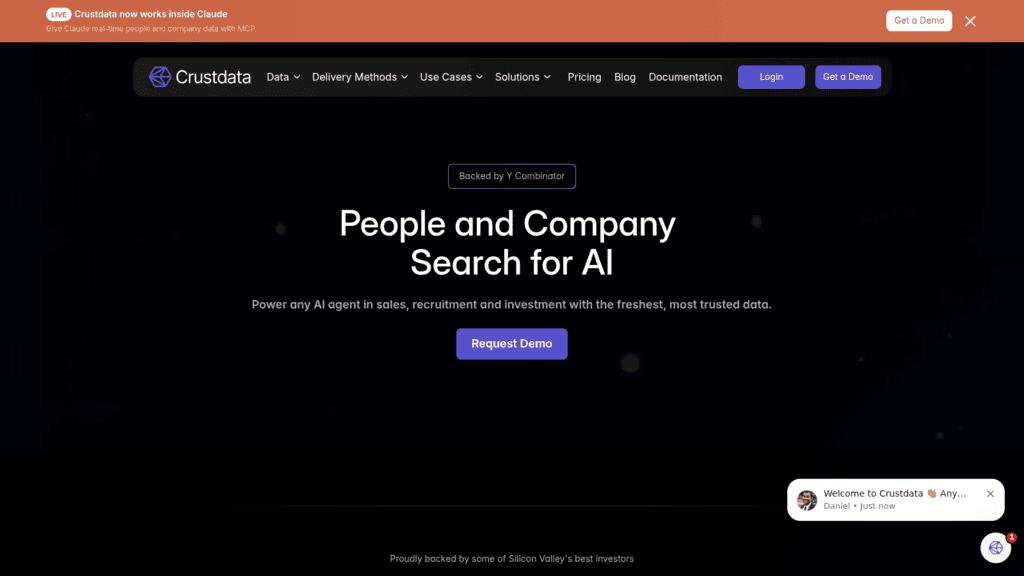
8. Crustdata

Crustdata as one of the best b2b data apis

Overview: Crustdata sells timing rather than description. Its real-time API surfaces hiring, funding and company events as they happen, and it ships an MCP server so an agent can consume them directly.

Key features:

  • Real-time hiring, funding and company-event signals
  • An MCP server for direct agent access
  • Flat-file datasets unified from 11+ sources, refreshed monthly

Pricing: nothing is published. Two commercial routes exist, a live API metered by credits on monthly or annual terms, and monthly-refreshed flat files. Both start with a sales conversation.

Pros: genuinely real-time rather than periodically refreshed, MCP support is uncommon among data vendors, unified across many upstream sources

Cons: the absence of any published pricing blocks self-serve evaluation, quote-only pricing typically excludes smaller teams, and signals require interpretation logic you must build

Why it’s a good B2B data API: reaching a company the week it closed funding beats reaching it six months later with a better-written email.

Final verdict: the right choice for event-triggered outbound, gated behind a sales conversation.

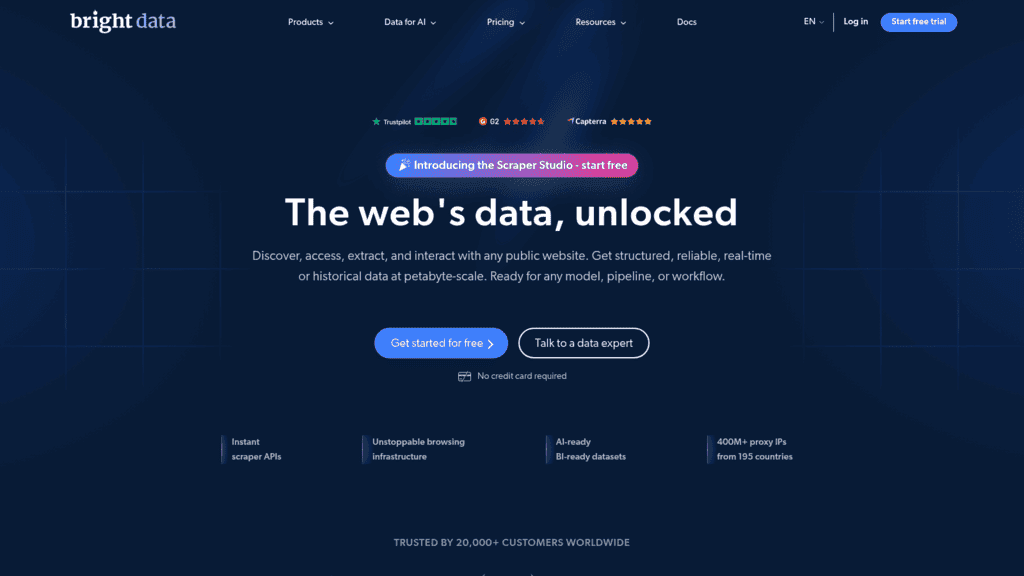
9. Bright Data

Bright Data as one of the best b2b data apis

Overview: Bright Data sells the raw material rather than a lookup service. Its dataset marketplace is the most direct commercial route to LinkedIn-derived company and people data at scale.

Key features:

  • LinkedIn People Profiles, Company Information and Job Listings datasets
  • Additional B2B datasets including Crunchbase, Google Maps and Glassdoor
  • Refresh options from one-time through to monthly

Pricing: records begin at $2.50 per thousand. Volume brackets run from 100,000 records up to complete datasets of roughly 3TB, and choosing a faster refresh cuts the rate, by 25% biannually, 50% quarterly and 80% monthly. You commit to a monthly minimum billed up front, and Bright Data does not publish what each bracket totals.

Pros: the lowest per-record cost in this list at volume, steep refresh discounts, mature infrastructure, direct access to LinkedIn-derived datasets

Cons: per-tier dollar totals are not published so you cannot model spend from the site, implementation is heavier than a REST call, and bulk web data carries compliance obligations you must assess yourself

Why it’s a good B2B data API: at $2.50 per 1,000 records, building your own queryable dataset is dramatically cheaper than paying per lookup once volume is high enough.

Final verdict: the infrastructure option, correct when you are building a data asset rather than consuming a service.

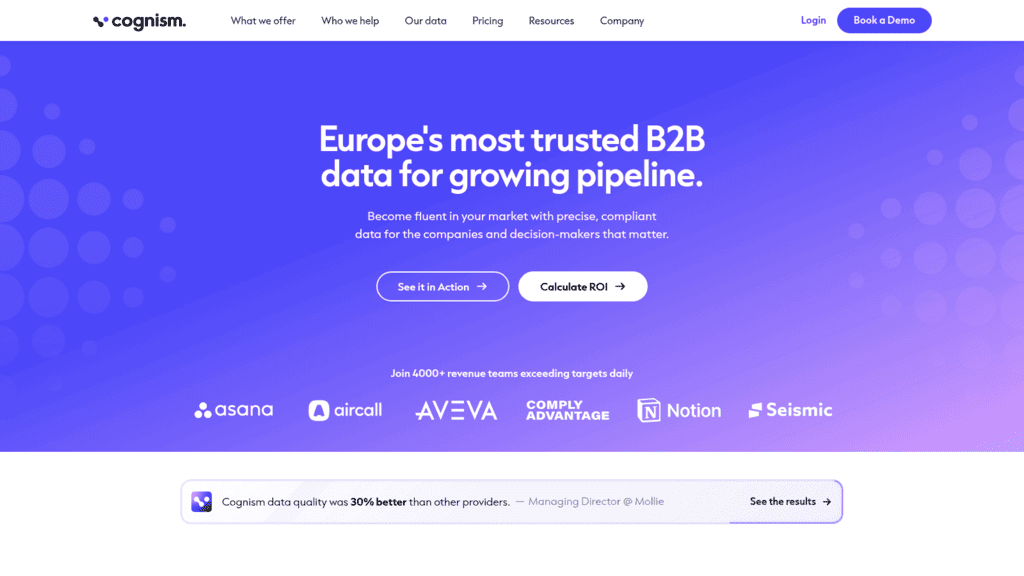
10. Cognism

Cognism as one of the best b2b data apis

Overview: Cognism targets enterprise buyers with compliance obligations, particularly across Europe. Programmable access is packaged as Data-as-a-Service, sitting outside the core subscription.

Key features:

  • CRM enrichment and Data-as-a-Service API delivery
  • Phone-verified mobile numbers sold as a distinct quality tier
  • Notified GDPR coverage across European markets

Pricing: every deal is quoted. Expect a prepaid annual platform fee stacked on per-seat licenses, with no monthly option and nothing free beyond a 25-lead sample. Procurement data gathered by third parties puts the entry tier near $15,000 for the platform plus $1,500 per user per year, and the tier above nearer $25,000 plus $2,500 per user. API volume is priced separately inside Data-as-a-Service. None of these numbers come from Cognism itself.

Pros: strong European coverage with a clear compliance position, phone verification reduces wasted dials, mature enterprise support and onboarding

Cons: contracts are negotiated and land in five figures a year, the API is billed as a separate Data-as-a-Service module, and nothing can be trialed without talking to sales first

Why it’s a good B2B data API: when legal and procurement carry as much weight as engineering, a notified GDPR position and a signed DPA outrank a pricing page.

Final verdict: an enterprise commitment that makes sense when compliance drives the purchase.

11. Seamless.AI

Seamless.AI as one of the best b2b data apis

Overview: Seamless.AI offers real-time search across a large contact database with a credit model and a free tier that includes API access. Its commercial terms attract more criticism than most in this category.

Key features:

  • Real-time contact search with exports and integrations
  • API access available from the free tier
  • Buyer intent and AI assistant features on paid plans

Pricing: the free plan gives one user 50 credits with no card required, and includes API access. Pro and Enterprise are custom annual credit packages with no published per-seat price; third-party sources report roughly $147 per user per month annually with a common five-seat minimum. One credit returns a phone number and email. Free-tier credits expire while paid credits do not.

Pros: API access on a genuinely free tier, large claimed database at 1.3B+ contacts and 121M+ companies, real-time search rather than a static index

Cons: credits are deducted even on failed lookups, with third-party reports citing 20% to 40% wasted on no-result contacts, contracts are annual and billed upfront with auto-renewal and widely reported cancellation friction, and there is no published per-seat price

Why it’s a good B2B data API: free API access with 50 credits lets you test integration and data quality before any commitment, which the enterprise vendors do not allow.

Final verdict: worth testing on the free tier, worth reading the contract carefully before signing an annual one.

What Actually Determines Data Quality

Every vendor in this category publishes a coverage figure and none of them has been independently audited. These are the checks that tell you something real.

Test Against Records Where You Know the Answer

Take 500 contacts from closed-won accounts, the same sample you would use to find B2B leads, where you know the correct title, employer and email, and run them through each candidate. Measure three things separately: how many returned anything, how many returned something correct, and how many returned something confidently wrong.

The third number is the one nobody measures and the one that causes damage. A provider that returns nothing is a gap in your pipeline; a provider that returns the wrong person is an email to the wrong human.

Weight the test toward your hardest segment, because every vendor performs well on large, well-documented companies.

Understand How the Data Was Assembled

Licensed databases, crawled knowledge graphs and contributory networks decay differently and fail differently. A crawled source like Diffbot finds obscure companies but may lag on a rebrand. A licensed source is cleaner on well-known companies and blank on the long tail.

Contributory models, where users share their contacts in exchange for access, produce excellent coverage in some segments and raise questions your legal team may want answered.

Ask which model a vendor uses before you ask about coverage, because it predicts the failure pattern better than any percentage.

Check Whether Buyers Even Want the Call

Data quality is not the only variable in whether outbound works. Gartner’s B2B buyer research, surveying 632 buyers, found 61% prefer a rep-free buying experience.

That does not make outbound pointless, but it does mean precision matters more than volume. Better data used to send fewer, more relevant messages outperforms the same data used to send more of them.

Any vendor whose pitch is built purely on record count is optimizing the wrong variable.

What B2B Data APIs Cost

Costs vary more by delivery model than by vendor, so the table groups by how you consume the data.

Delivery model Typical volume Realistic cost Best-fit picks
Free evaluation Under 10,000 records $0 Diffbot, Seamless.AI, Apollo.io, Coresignal trials
Per-record API 5,000 to 50,000 $49 to $299 Coresignal, People Data Labs, Diffbot
Orchestrated waterfall Any $185+ Clay Growth
Bulk dataset 100,000+ records $250 to $1,000+ Bright Data, Coresignal datasets
Enterprise contract Any $15,000 to $50,000/year Cognism, ZoomInfo, Crustdata
Data plus outreach 1,000 to 100,000 contacts $49 to $899 Reply.io, Apollo.io

The gap between the self-serve and enterprise rows is the striking part. A team paying $299 a month for Diffbot’s Startup tier and a team paying $31,875 a year for a median ZoomInfo contract are often solving similar problems with a hundred-fold difference in spend.

That does not make the enterprise option irrational, since it usually buys phone verification, compliance coverage and support. It does mean the enterprise route deserves justification rather than assumption.

Choosing Between B2B Data Providers

When you choose a B2B data provider via API, work backwards from what you will do with the record.

If you are building a data layer your own systems will query, People Data Labs is the cleanest foundation and Coresignal the better choice when employment history matters. If your ICP sits in the long tail of small or private companies, Diffbot finds what the list vendors miss.

If you want maximum coverage without integrating five vendors, Clay aggregates them for you from the Growth tier. If timing drives your outbound, Crustdata supplies the events, though you will need a sales call to learn the price.

If you are building your own dataset at scale, Bright Data is the cheapest per record by a wide margin. If compliance leads the decision in Europe, Cognism is the enterprise answer. If you want simple discovery instead, AI lead finders cover it. To test with no commitment, Apollo.io, Seamless.AI and Diffbot all offer free API access today.

Choose Reply.io if the data exists to power outbound you are already running, and holding one API key beats maintaining an integration between a data vendor and a sending platform. Choose one of the specialists above if you need records delivered into a warehouse, because that is not what we sell.

Real-world comparisons are worth reading with appropriate skepticism. In a thread on r/SaaS, one founder described a six-week test and reported roughly 65% usable contacts from Apollo against about 75% from ZoomInfo, at considerably higher cost. That is a single anecdote from one person’s segment rather than a benchmark, which is precisely why running the same test on your own list is the only figure worth trusting.

Frequently asked questions

What is a B2B data API?

It is an endpoint that returns business contact or company information on request, rather than as a bulk file export. You send an identifier such as a domain, email or LinkedIn URL, or a set of filters, and receive structured records back. The advantage over a purchased list is currency, since you retrieve the record at the moment you need it rather than storing a copy that decays.

What is the difference between an enrichment API for B2B data and a database?

A database is a store you search and export from, usually through an interface, and the records you take become a static snapshot. An enrichment API for B2B data is called programmatically against records you already hold, filling gaps and refreshing fields on demand. Many vendors sell both, and the pricing usually differs because API access is metered by call rather than by seat.

Which B2B data provider has the best coverage?

Nobody can answer that honestly, because no independent audit of this category exists and every published figure is vendor-reported. Coverage is also uneven by segment, so a provider strong on US technology companies may be weak on European manufacturers. Test two or three against 500 records where you already know the correct answer.

Can I get a business data API for free?

Yes, for evaluation and sometimes for light production use. Diffbot offers 10,000 credits per month free forever, Seamless.AI includes API access with 50 credits on its free plan, Apollo.io has a genuine free tier, and Coresignal provides 200 Collect credits for 7 days. These are sufficient to test integration quality and measure match rates before committing.

Why do B2B data API providers hide their pricing?

Because enterprise data pricing depends on volume, contract length, seat count and licensing terms, and publishing a rate card weakens negotiation. Cognism, Crustdata and ZoomInfo all work this way, with third-party procurement data putting ZoomInfo’s median annual contract at $31,875. The trade-off is a sales cycle before you can evaluate, which is why self-serve vendors with published credit costs are usually faster to test.

Subscribe to our blog to receive the latest updates from the world of sales and marketing.
Stay up to date.

In this article

Your Superhuman SDR

Jason learns your product, tone, and strategy — then runs outreach with the precision of your best rep.

Your Superhuman SDR
Book a demo

Related Articles

11 Best Intent Data APIs in 2026 to Find Ready-to-Buy Leads

11 Best Intent Data APIs in 2026 to Find Ready-to-Buy Leads

11 Best Intent Data APIs in 2026 to Find Ready-to-Buy Leads
11 Best Email Finder APIs in 2026 for Cold Email

11 Best Email Finder APIs in 2026 for Cold Email

11 Best Email Finder APIs in 2026 for Cold Email
11 Best AI Prospecting APIs in 2026 to Find More Leads

11 Best AI Prospecting APIs in 2026 to Find More Leads

11 Best AI Prospecting APIs in 2026 to Find More Leads