
Key takeaways:
- Technographic data tells you what software a company runs, which turns “companies like this” into “companies already running the thing your product replaces.”
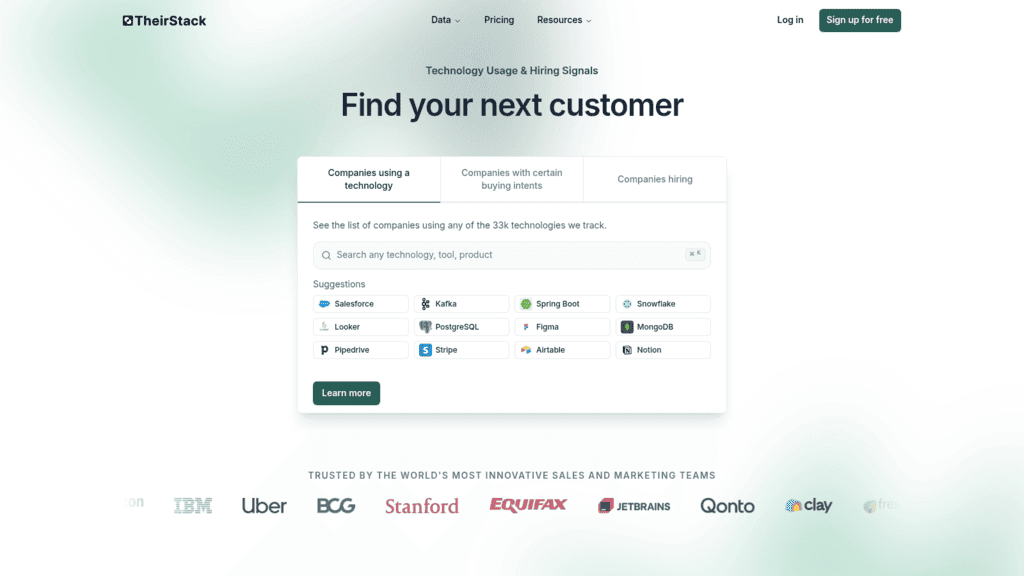
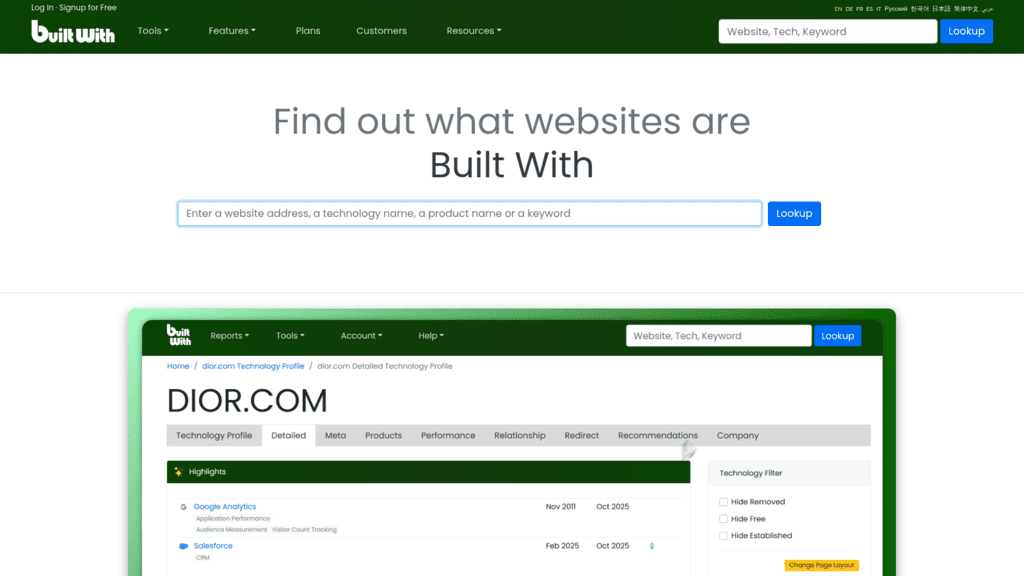
- Detection method decides everything. Crawl-based vendors like BuiltWith and Wappalyzer see public-facing tech; TheirStack infers it from job postings, catching internal systems a crawler never sees.
- Pricing splits violently. TheirStack starts at $59 a month while BuiltWith starts at $295 and HG Insights will not publish a number at all.
- We are honest below about what we do not have: a technology filter for AI SDR targeting is not a technographic lookup, and if you need a tech stack for a domain, one of the specialists here is your answer.
Knowing a company’s headcount tells you whether they can afford you. Knowing they run Salesforce, Marketo and Snowflake tells you whether they need you, when their contract renews, and which integration objection is coming.
That is the whole promise of technographics, and it has become more useful as software estates have grown. The US Census Bureau’s 2023 Annual Business Survey found 58.9% of businesses rate specialized software as “very important” to their processes, effectively tied with cloud technology at 59.0% and ahead of AI, robotics and specialized equipment.
A technographic data API turns that into something you can query, sitting alongside the intent data providers most teams already evaluate. You send a domain and get back the stack, or you send a technology and get back the companies running it.
This guide ranks the 11 technographic data APIs worth evaluating in 2026, with pricing fetched live. We are listed first, and our entry is unusually blunt about the boundary of what we actually provide.
What Technographic Data Actually Tells You
Two query directions matter, and vendors are rarely equally good at both.
Domain to stack is the enrichment direction: given example.com, what software does this company run? It is what you want when a lead arrives and you need context before the first call.
Technology to companies is the discovery direction: given “HubSpot,” which companies run it? This is where technographics overlaps with the marketing data providers market. This is the list-building direction, and it is where technographics earns its keep for outbound teams.
Detection method then decides what each vendor can see. Crawl and fingerprint vendors inspect public pages for scripts, headers, DNS records and markup, so they see anything customer-facing: analytics, chat widgets, ecommerce platforms, CDNs, payment processors.
Job-posting inference reads hiring listings for named tools, which surfaces internal systems no crawler can reach, including data warehouses, ERPs and internal CRMs. Panel and contributory sources such as HG Insights blend purchased telemetry with survey and spend data, reaching IT budget detail neither of the other methods produces.
No single method covers everything, which is why the honest answer to “which is most accurate” is “for which layer of the stack.”
How We Assessed These Technographic APIs
We required a callable API, verifiable pricing or an explicit statement that pricing is quote-only, and a genuine technographic dataset rather than a general company database with a technology field bolted on.
We fetched every price live, which mattered here because two well-known names failed on inspection.
Datanyze was checked and excluded. Its pricing verified fine, but its homepage now sells a contact-data Chrome extension rather than the technographics tool it once was, so listing it in an API roundup would misrepresent the current product. SimilarTech was excluded because its www domain fails DNS and its own tools now point at Similarweb properties, leaving no verifiable pricing.
Similarweb offers technographic intelligence with an API but publishes no tier prices and blocks automated inspection, so it is mentioned here rather than ranked.
Most technographic data providers API documentation is also thin on credit expiry, so we weighted that too, because several vendors here quietly time-limit them.
The 11 Best Technographic Data APIs Compared
Pricing is the cheapest tier that includes API access.
| Tool | Best for | Key features | Main limitation | Pricing (from) | Rating |
| Reply.io | Acting on a technology signal | Technology targeting in AI SDR, sequencing in one API | No domain-to-stack lookup | $49/month | ★★★★★ |
| TheirStack | Seeing internal, non-public tools | Job-posting inference, 49M technographic records | Inference lags actual deployment | Free (200 credits) | ★★★★★ |
| BuiltWith | The deepest detection catalog | 491.9M domains, 124,009 technologies, 41-year history | API priced separately from plans | $295/month | ★★★★☆ |
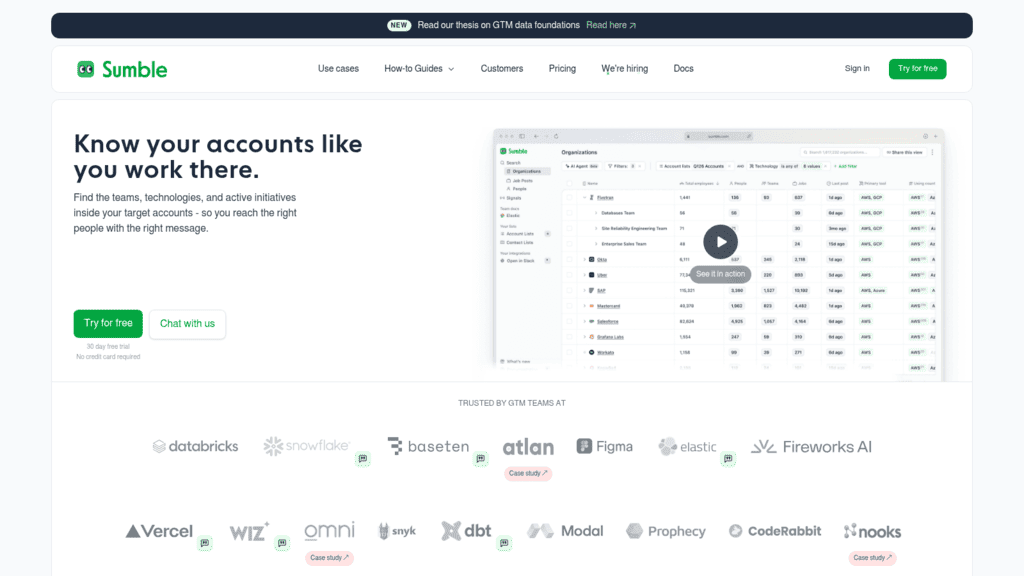
| Sumble | Agent-driven technology research | MCP server, org and reporting hierarchy | Newer vendor, smaller footprint | Free (500 credits) | ★★★★☆ |
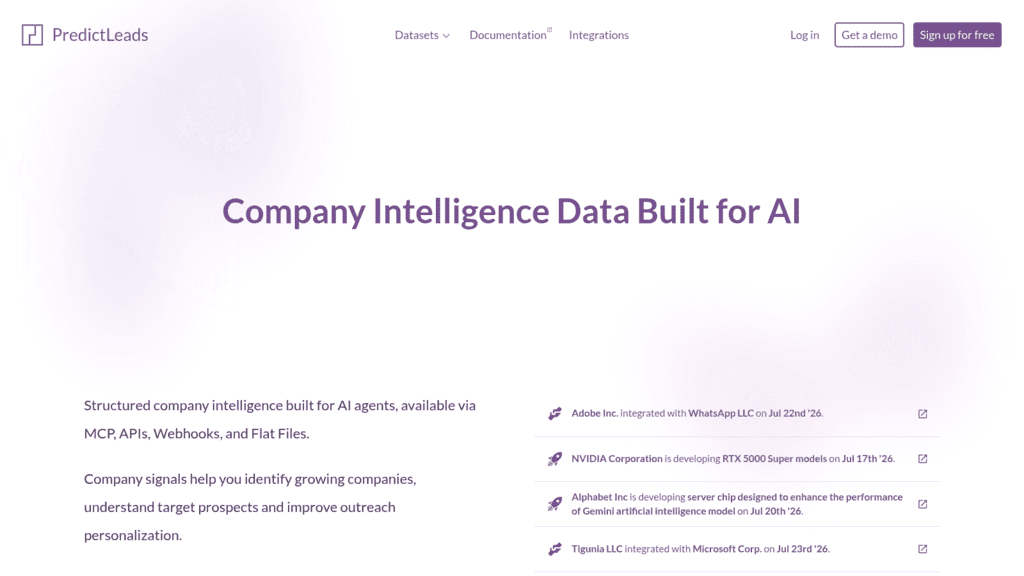
| PredictLeads | Pay-as-you-go signal volume | $0.04/credit sliding to $0.002, tech detections | Credits do not roll over | Free (100 calls) | ★★★★☆ |
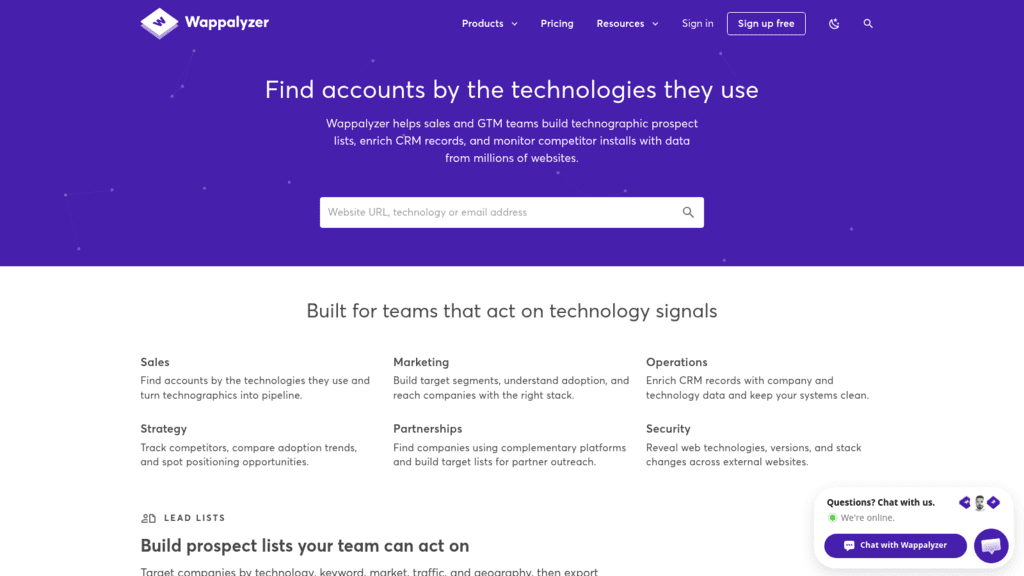
| Wappalyzer | Straightforward crawl detection | Clean fingerprinting, predictable tiers | API credits expire after 60 days | $250/month | ★★★★☆ |
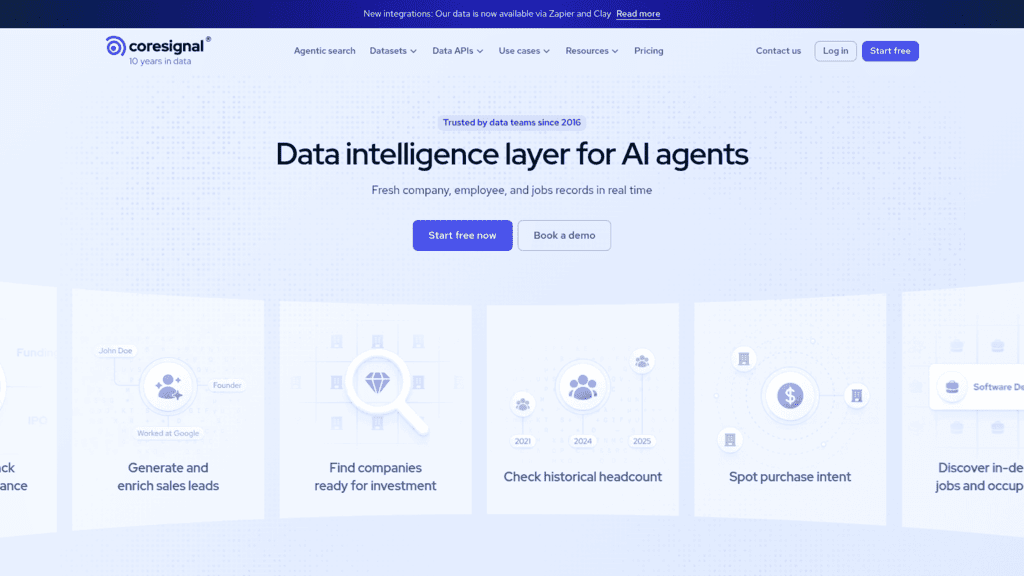
| Coresignal | Technographics beside employment data | 70M+ companies, 468M+ job postings | Search and Collect credits billed apart | $49/month | ★★★★☆ |
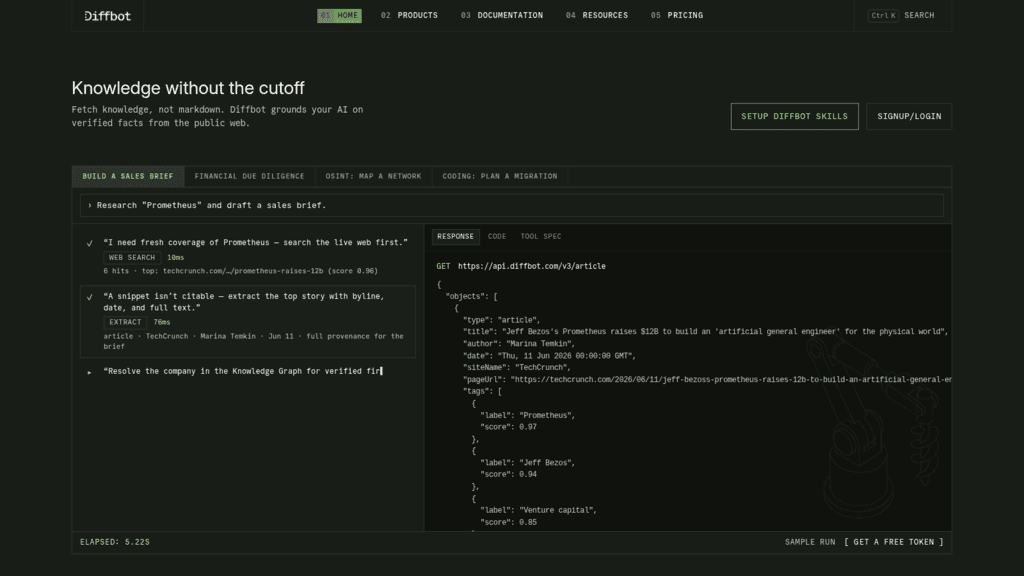
| Diffbot | Long-tail company coverage | Knowledge Graph, 10,000 free credits monthly | Not a dedicated technographic index | Free (10,000 credits) | ★★★☆☆ |
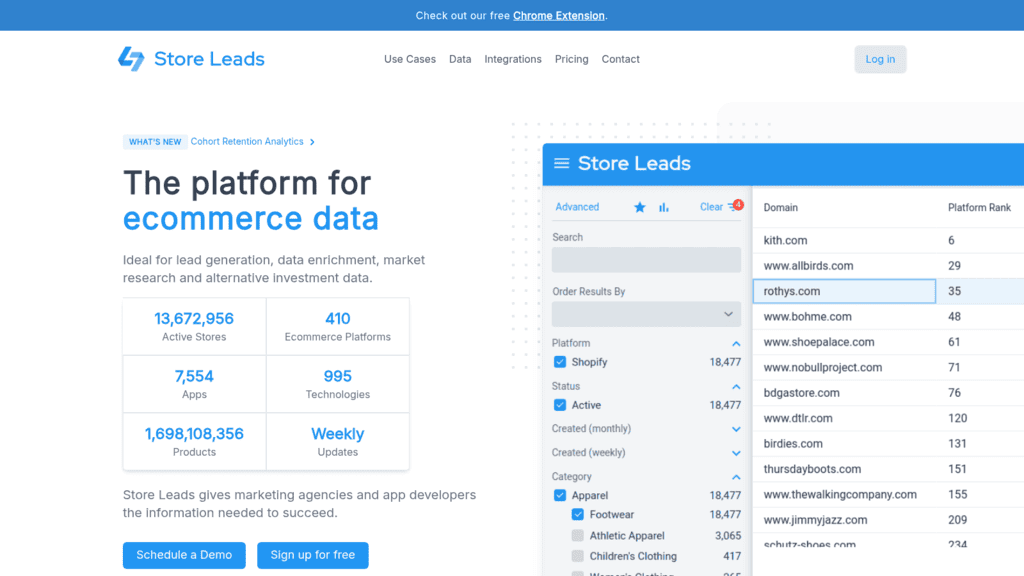
| StoreLeads | Ecommerce app stacks | 13.6M stores, 7,554 apps, app spend estimates | Ecommerce only, API from Pro up | $250/month | ★★★☆☆ |
| Explorium | Technographics inside a wider data layer | Agent-native design, credit packages | Credits expire after 12 months | $84.99 (2,500 credits) | ★★★☆☆ |
| HG Insights | Enterprise IT spend intelligence | Budget and contract-level detail | Quote-only, no public pricing at all | Quote only | ★★★☆☆ |
Ratings reflect fit for programmatic technographic work specifically. A vendor with unmatched enterprise depth scores lower here if you cannot get a price without a sales cycle.
1. Reply.io
Best for: Acting on a technology signal
Overview: This is the entry where we have to be most careful, because the category has a precise meaning and we meet only part of it.
What we have is a Technologies typeahead inside our AI SDR intent-signals endpoints, currently in beta. It lets you target accounts by the technology they run, so Jason can build and work a list of companies using a named tool. That is real, and it is useful.
What we do not have is a technographic lookup. There is no endpoint where you send example.com and receive its stack, and none is on our published roadmap. If that is your requirement, TheirStack or BuiltWith below are the right purchase and we are not.
Where we earn the top spot is the step nobody else in this list covers: turning a technology signal into a running multichannel campaign through the same API key, with no export and no second vendor.
Key features:
- Technologies typeahead in the Jason AI SDR intent-signals endpoints, for targeting accounts by the tools they run
- Industries typeahead alongside it, so technology and vertical filters combine in one targeting call
- Live Data search across our 1+ billion contact database to resolve those accounts into named people
- Multichannel sequence endpoints so a technology signal becomes an email, LinkedIn or call sequence
- Approval-mode endpoints, so a person confirms the list before anything sends
- Documented rate limits of 100 requests per minute and 3,000 per hour per user
Pricing: we meter on active contacts, not seats. A thousand contacts costs $49 a month billed annually or $59 monthly, scaling to $899 at 100,000. The base plan carries 50 live data credits a month, with additional packages from $20. Jason, sold as a managed AI SDR, starts between $500 and $1,000 a month.
Pros: technology targeting feeds directly into outreach without an export step, one API key covers targeting and sending, plan-level pricing so extra seats cost nothing, published rate limits, approval workflow built in
Cons: we have no domain-to-stack endpoint, so we cannot answer “what does this company run,” which is the core technographic question; the technology typeahead is a targeting filter inside AI SDR rather than a queryable technographic dataset, and it is in beta; and our data is bundled inside a sending platform rather than sold standalone
How to start using it:
- Start a 14-day trial and create an API key at Settings > API Key.
- Verify the credential against
https://api.reply.io/v3/whoami. - Query the technologies typeahead to see which tools are available as targeting filters before you design around it.
- Build a small AI SDR list filtered on one technology and inspect the accounts it returns.
- Run it in approval mode so you review the target list before any sequence starts.
Why it’s a good technographic data API: the point of knowing a company runs a competing tool is contacting them about it. We are the only entry here that closes that loop inside one credential.
Final verdict: the strongest option when a technology signal needs to become outreach, and genuinely the wrong option if you need to look up a stack. Buy TheirStack or BuiltWith for the data and us for the motion, or accept that a targeting filter is all you get from us on this axis.