Top 12 Bombora Alternatives for B2B Contacts in 2026

Top 12 Bombora Alternatives for B2B Contacts in 2026

Intent data is only valuable if your team can act on it before the buying window closes.


Bombora is a well-known platform for account-level intent, especially for ABM teams that want to see which companies are actively researching relevant topics. But for a lot of sales teams, that is really just the first step. Reps still need contact data, enrichment, CRM workflows, and outreach tools to turn those signals into qualified conversations.


That is why many teams look at Bombora alternatives that connect intent, prospecting, and execution more closely. Below, we’ll break down 12 Bombora alternatives for finding active accounts, identifying the right contacts, and moving from signal to outreach faster.

Brief overview: Top Bombora alternatives in 2026

Let’s kick things off with a simple comparison table for a quick overview (for those of you in a rush): 

Tool Best for Intent data source Built-in outreach
Reply.io B2B contact data and AI outreach Native database, LinkedIn, website visits,  hiring activity, technographics Yes
Demandbase ABM contact targeting First-party, third-party, technographic feeds No
Apollo.io Low-cost contacts Light in-platform intent filters Yes
Clearbit Contact enrichment Website visitor activity No
G2 Buyer Intent Buyer research contacts G2 platform activity No
TrustRadius Verified buyer contacts Authenticated review activity No
TechTarget Priority Engine Named leads B2B publication content engagement No
Dealfront EU contacts Website visitor tracking, firmographic data No
Albacross Site visitor contacts IP-based website traffic No
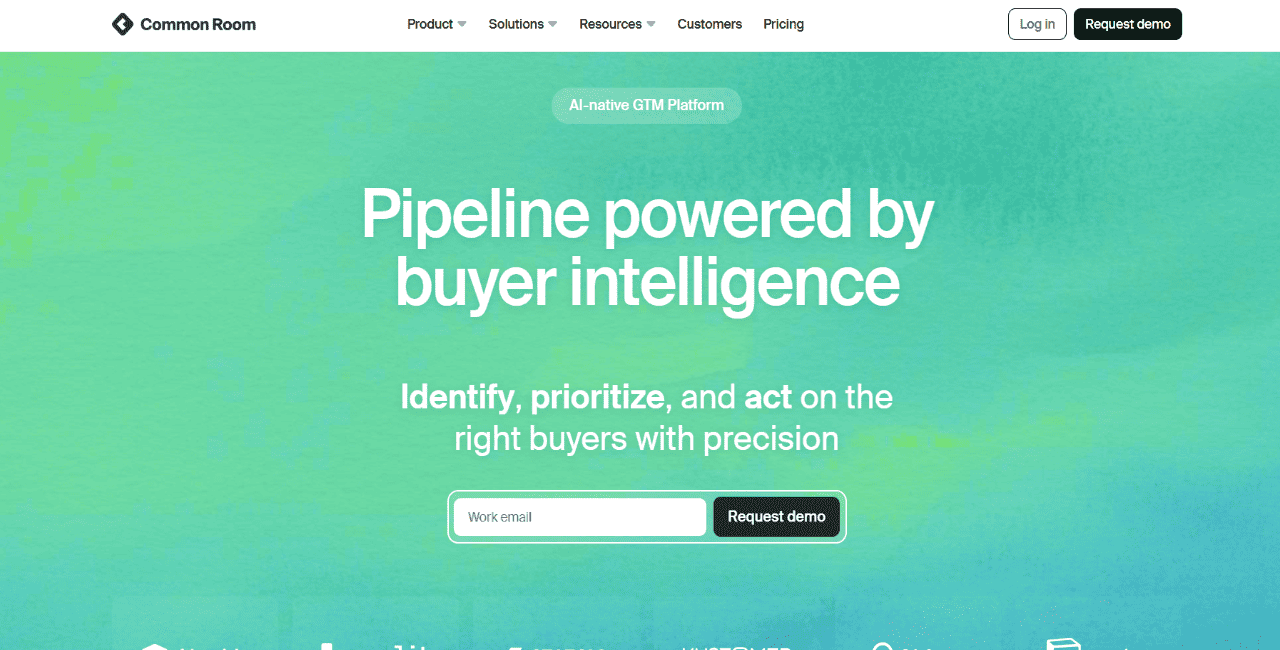
Common Room Community contacts Slack, GitHub, Discord, LinkedIn activity No
Lusha Quick contacts Basic buying signals No
SalesIntel Verified contacts Bombora co-op network No

How did we choose the Bombora competitors on this list?

There’s more to finding the right Bombora competitors B2B data intelligence than a quick Google search. So we dug into user reviews, features, and use cases to build this list.

Here are the main things we looked at for this list:

  • Contact-level data quality: intent signals are a lot more useful once reps can easily find the right people and their email addresses within those accounts. So tools with verified emails, phone numbers, decision-maker data, and enrichment had a clear edge here.


  • Intent data depth: not all intent data is built the same. Some tools rely on publisher networks, others provide first-party website activity, funding events, job changes, or technographic shifts.


  • Data freshness: intent goes stale fast, so platforms with live signals, frequent refreshes, or real-time alerts take the lead against tools where the data lags and the moment is already gone.


  • Built-in outreach: tools that help teams turn those signals into action right away — whether that means email and LinkedIn sequences, CRM sync, enrichment, or any other internal outbound workflow already in place.


  • CRM integrations and reporting: how well each platform fits into the rest of the stack. Can it sync cleanly, avoid extra manual work, and show which signals are actually turning into pipeline? Those moving pieces matter much more than most teams expect.


  • Usability, and reviews: then there’s the day-to-day reality of using the software — how easy it is to adopt, whether it scales well, and what verified users consistently say after using it in an actual sales environment.

So the final list is built around Bombora competitors that help teams spot active accounts, find the right people inside them, and act on intent while there’s still something to act on.

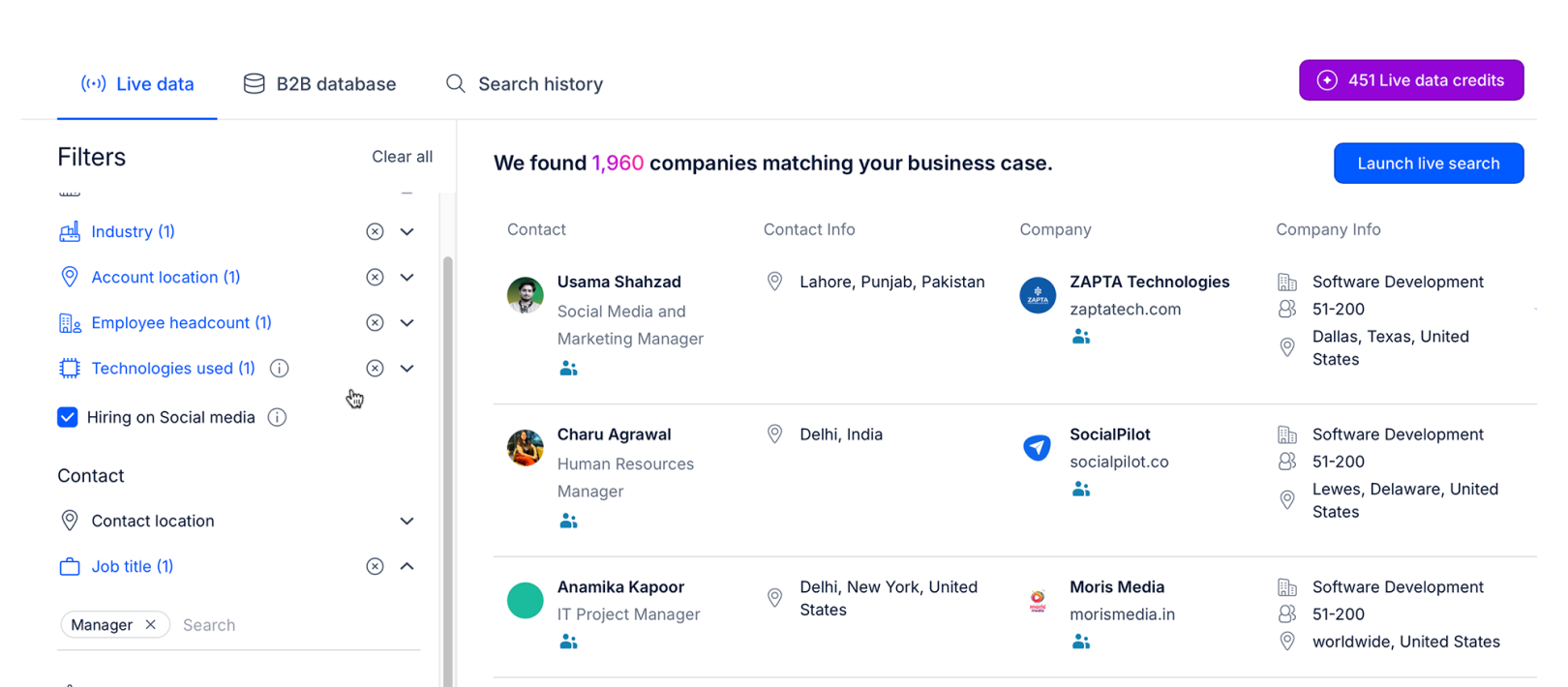
Convert Competitors` Fans Into Hot Leads

Stop chasing cold leads.
Start talking to people who already want what you sell.

Your competitors’ followers?
They know the problem. They’re paying attention.
Some are even looking for something better, right now.

This playbook shows you exactly how to turn them into hot leads:

→ Find and pull competitor followers in minutes
→ Clean, segment, and enrich your list for max fit
→ Launch outreach that’s personal, not pushy
→ Automate follow-ups so no lead slips away

Top Bombora alternatives in 2026

The alternatives to Bombora software below offer a range of capabilities, from giving contact-level data to faster refreshes, built-in outreach, and everything in between.

Let’s unpack that.

Reply.io: best for B2B data + multichannel outreach

For many teams comparing Bombora alternatives, the real question is not just where to find accurate leads. It’s how to turn those leads into actual sales conversations fast.

That’s where Reply.io stands out, because it covers both sides of the workflow. It is an AI sales engagement platform that helps teams find targeted prospects, enrich contact records, validate emails, pick up intent signals, and then launch personalized outreach across email, LinkedIn, calls, SMS, and WhatsApp from one place.

On the data side, Reply gives sales teams access to a live B2B database with 1+ billion contacts across 150+ countries, 60+ million company profiles, advanced search filters, intent signals, built-in email validation, and contact enrichment.

So instead of exporting static lists and moving them into a separate outreach tool, reps can take verified leads and move them straight into AI-powered multichannel sequences in a few clicks.

And once a lead enters a sequence, Reply’s AI engine uses that prospect data and those intent signals to personalize emails, follow-ups, and LinkedIn messages at scale. Teams can also create custom message templates with AI variables, then let Reply fill in the right details for each prospect automatically.

The sequences can also react to each prospect’s behavior individually. For example, if someone does not open an email, that can trigger an automated LinkedIn connection request a few days later. And once that request is accepted, a personalized LinkedIn message can go out while the scheduled email follow-up gets canceled.

how to send a second follow up email after no response with conditional sequences

For teams that want to automate even more of the process, Reply also includes Jason AI — an AI SDR that finds leads, researches prospects across LinkedIn and company websites, writes tailored outreach, handles replies, manages objections, and books meetings.

Key features

  • Reply Data: Live B2B database with 1+ billion contacts, 60+ million companies, intent signals, and advanced filters.
  • Contact enrichment: Adds missing prospect details like role, company size, LinkedIn URL, and more.
  • Multichannel sequences: Runs email, LinkedIn, calls, SMS, and WhatsApp in one workflow, personalizing each message with uncovered data 
  • Website visitor tracking: Identifies companies visiting your site and pushes them into targeted sequences.
  • Jason AI: Autonomous AI sales agent that sources leads, launches outreach, handles replies, and books meetings.
  • Email deliverability suite: Includes mailbox warm-up, sender reputation tools, email validation, and deliverability monitoring.

Pricing

Reply.io starts at $49 per user per month for email outreach and $89 per user per month for multichannel outreach. Jason AI starts at $500 per month as a standalone AI SDR plan.

Reply.io also offers a 14-day free trial, so teams can test the platform before committing.

Demandbase: best for ABM contact targeting

Demandbase is an ABM and sales intelligence platform built to bring account discovery, intent data, advertising, personalization, and CRM workflows into one system. It layers data from multiple intent feeds, including first-party, third-party, and technographic sources.

It then maps those signals to target accounts and helps teams identify relevant buying groups and contacts for coordinated ABM plays. Demandbase’s approach is useful for ABM-focused organizations keen to identify in-market companies and target the right people within them.

The platform also connects intent data to your CRM and ad channels. As a result, your sales and marketing efforts target the same accounts simultaneously. If you’re running coordinated ABM plays, that alignment can meaningfully improve conversion rates.

Indeed, Demandbase is a solid choice if account-level precision is your primary concern. Still, compared to Reply.io, it doesn’t offer a built-in outreach engine

Key features:

  • Multi-source intent data to give you a fuller picture of which accounts are actively researching your category
  • Stakeholder mapping to identify the right contacts within a target account for more precise outreach
  • CRM and ad integration to align your sales and marketing efforts around the same high-intent accounts

Pricing

Demandbase does not list pricing publicly. Costs are custom-quoted and usually depend on the products included, number of seats, data requirements, and the overall scope of the contract.

Apollo.io: best for simple prospecting and outreach

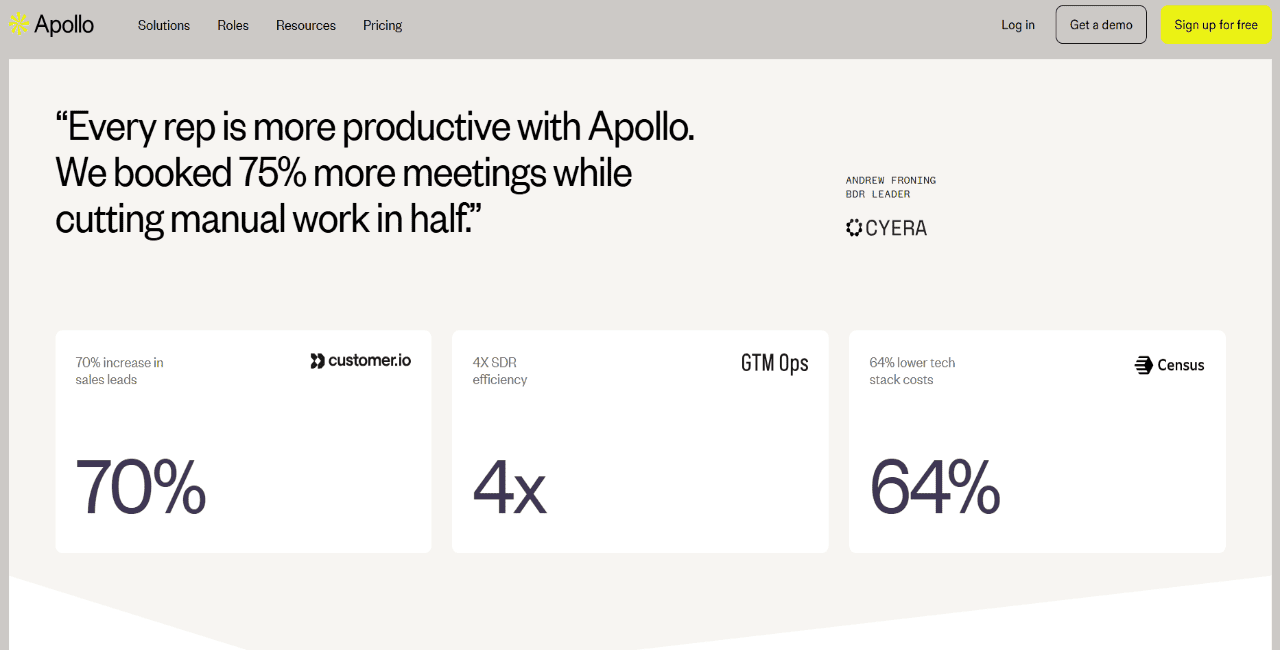
Apollo.io is a common Bombora alternative for teams that want contact data and outreach in the same platform, without needing any additional features like AI sales agents or advanced LinkedIn automation. 

The platform’s database holds over 275 million contacts, filterable by industry, role, company size, and technology used. That makes it fairly easy to build targeted prospect lists quickly.

Apollo.io offers contact data, email sequencing, and light intent filtering, so you can run a full prospecting workflow.

Meanwhile, the sequencing tool allows you to run basic email and LinkedIn outreach from the same platform.

That said, Apollo’s intent data is shallower than that of dedicated intent platforms. And compared to a more powerful outreach tool like Reply.io, the AI personalization, multichannel depth, and database size are noticeably limited. 

Key features:

  • Contact database to build prospect lists using filters like role, industry, seniority, location, company size, and technology used
  • Email sequencing to run automated follow-ups with A/B testing and performance tracking
  • Built-in dialer to place and log calls from the platform
  • LinkedIn tasks to add LinkedIn touches into outbound workflows
  • Intent data to help prioritize accounts showing relevant buying behavior

Apollo.io pricing starts at $49 per user per month, with a free plan available for basic prospecting.

Breeze Intelligence: best for contact enrichment

Breeze Intelligence, formerly Clearbit, is best for enriching contacts and companies inside HubSpot. So, if your CRM is full of incomplete records, you can use Breeze Intelligence to fill those gaps automatically using real-time data.

In addition, the platform pulls firmographic and technographic data and appends it to existing contact records as soon as they enter your system. Therefore, your sales reps can work with complete, accurate data.

Breeze Intelligence can also identify companies visiting your website and help teams prioritize accounts showing inbound interest.

However, Breeze Intelligence’s most advanced functionality lives within the HubSpot ecosystem.

So, unless you’re a HubSpot user, you may not realize the platform’s full potential. Plus, compared to Reply.io, Breeze Intelligence has no outreach capability whatsoever.

Key features:

  • Real-time enrichment to automatically append firmographic and technographic data to new and existing contact records
  • Website visitor identification to match anonymous site traffic to known companies and contacts
  • Lead scoring to prioritize contacts based on fit and behavior data automatically
  • HubSpot native integration to sync enriched contact data directly into your CRM workflows
  • Form shortening to reduce form fields while still collecting complete contact information behind the scenes

Pricing

Breeze Intelligence credits start at $45 per month for 100 credits. A HubSpot account is required, and total cost depends on your setup and credit usage.

G2 (Buyer Intent): best for buyer research contacts

G2 is one of the best alternatives to Bombora for intent signals if your buyers actively research software on review platforms.

The platform tracks which companies visit your G2 profile, read competitor reviews, and compare products in your category.

G2 Buyer Intent is great for the bottom of the funnel. And that’s because a company reading comparisons between you and a competitor is showing late-stage intent. Plus, with this info, your sales reps can reach out at the right moment.

Even so, G2’s intent data is limited to activity on the G2 platform.

Key features:

  • Profile visitor tracking to identify companies researching your product on G2 before they reach out
  • Competitor comparison tracking to flag accounts weighing your product against alternatives
  • Buyer intent scoring to rank accounts by purchase likelihood based on review activity
  • CRM sync to push high-intent account data into Salesforce and HubSpot automatically
  • Contact data export to pull contact details tied to intent activity for immediate outreach

Pricing

G2 Buyer Intent pricing is custom-quoted and depends on package, category, integrations, and traffic volume.

TrustRadius: best for verified buyer contacts

TrustRadius built its name on verified reviews, and its intent data follows the same logic. The signals come from authenticated professionals who are actively researching software.

That verification layer makes TrustRadius intent data feel more dependable than what you’ll get from a lot of Bombora alternatives and B2B data platforms.

If you get a signal from TrustRadius, it means real buyers from specific companies are looking into your product, your competitors, or the category itself. That’s a strong signal to work with.

The trade-off is scale. TrustRadius has a smaller user base, so the amount of intent data you get will be lower, especially if you’re selling into a niche market.

Key features:

  • Verified user signals, so every intent data point comes from authenticated professionals
  • Downstream intent data that helps surface buyers closer to a purchase decision
  • Account-level reporting for seeing which companies are showing the strongest research activity in your category
  • Salesforce and HubSpot integrations that push verified intent data into your sales workflow automatically
  • Competitor intelligence for tracking accounts researching your competitors alongside your product

Pricing

TrustRadius pricing starts at approximately $500 per month, with custom pricing available for larger teams and enterprise accounts.

TechTarget: best for prioritizing leads

TechTarget runs one of the largest networks of B2B technology publications. Priority Engine, its intent data product, leverages that network to identify professionals actively consuming content in your product category.

One thing that separates TechTarget from most Bombora competitors is its level of nuance. The platform provides named leads. We’re talking about the actual professionals who engaged with relevant content, along with their contact details. 

The function removes one of the biggest frustrations with traditional intent data: knowing a company is interested but having no idea who to call.

On the flip side, TechTarget’s coverage leans toward enterprise technology buyers. If your ICP sits outside that space, the lead volume can be disappointing. 

Key features:

  • Named lead delivery to give your sales reps actual contacts with verified details ready for outreach
  • Engagement scoring to rank leads by content consumption, so your reps prioritize the warmest prospects
  • Purchase intent data to identify professionals actively researching solutions in your category
  • CRM integration to deliver named leads directly into Salesforce and HubSpot automatically
  • Account watchlist to monitor target accounts and receive alerts when key contacts become active

Pricing

TechTarget Priority Engine pricing is custom-quoted and depends on markets, audiences, and lead volume.

Leadfeeder (formerly Dealfront): best for EU contacts

Dealfront offers company intelligence and website visitor tracking in a single platform. It has carved out a reputation as the go-to tool for intent data for businesses targeting European markets.

The platform’s strength is its GDPR-compliant database, built specifically for European contact data. That’s a huge advantage for businesses selling in the EU, where data compliance is strict, can’t ignore.

Dealfront gives you firmographic data, contact details, and intent signals. It also tracks website visitors and matches them to companies within your target market.

That said, Dealfront’s coverage outside Europe is noticeably thinner, so if your ICP spans multiple regions, the platform’s value may drop once you start scaling.

Key features:

  • GDPR-compliant database to give you legally sound contact data for European markets
  • Website visitor tracking to identify and match anonymous site traffic to target companies
  • Company intelligence to access firmographic data, including size, industry, and technology usage
  • Lead scoring to prioritize accounts based on website behavior and firmographic fit
  • CRM integration to sync contact and intent data with Salesforce and HubSpot automatically

Pricing

Dealfront pricing starts at approximately $99 per month, with custom pricing available for larger teams and enterprise accounts.

Albacross: best for site visitor contacts

Albacross specializes in identifying the companies visiting your website and connecting that activity to contactable individuals within those accounts.

The premise is simple. Your website already attracts potential buyers. Albacross helps you find out who they are before they leave.

The platform matches anonymous traffic to company profiles using IP data and third-party sources. Once identified, it surfaces contact details for relevant decision-makers within those companies. That way, your sales reps can follow up while the interest is still fresh.

Albacross also scores accounts by engagement level, factoring in pages visited, time spent, and visit frequency.

Albacross, however, is purely a website intelligence tool. It lacks an outbound prospecting database or sequencing capabilities, unlike Reply.io.

Key features:

  • IP-based company identification to match anonymous website traffic to named companies automatically
  • Decision-maker contact data to surface relevant contacts within identified visitor accounts
  • Account engagement scoring to rank visiting companies by behavior, page depth, and visit frequency
  • Real-time Slack alerts to notify your sales reps the moment a target account lands on your site
  • Segment-based targeting to filter visitor data by industry, company size, and location for precise follow-up

Pricing

Albacross pricing starts at approximately $179 per month, with custom pricing available for larger teams.

Common Room: best for community contacts

Common Room is one of the alternatives to Bombora software with a savvy approach toward intent data.

Common Room focuses on digital buying signals across communities, product activity, social channels, open-source activity, website activity, and other GTM touchpoints. Think Slack communities, GitHub, LinkedIn, Discord, product usage, website activity, and other first- or third-party engagement signals.

Let’s say someone asks a question in a Slack community that signals a pain point your product solves. Common Room flags the signal, enriches the profile where possible, and helps sales teams prioritize the right person or account.

Still, Common Room’s intent signals are only as strong as your audience’s community activity. And For B2B teams selling outside developer or product-led markets, the signal volume can be negligible.

Key features:

  • Community signal tracking to identify buying intent from activity on Slack, GitHub, Discord, and LinkedIn
  • Contact enrichment to build detailed profiles from aggregated community and social activity
  • Signal scoring to prioritize contacts showing the strongest buying intent across monitored channels
  • CRM integration to push enriched contact profiles and intent data into your existing sales workflow
  • Automated workflows to trigger outreach tasks when a contact hits a defined intent threshold

Pricing

Common Room pricing starts at $2,100 per month for the Essential plan, billed annually. Advanced plans are custom-quoted.

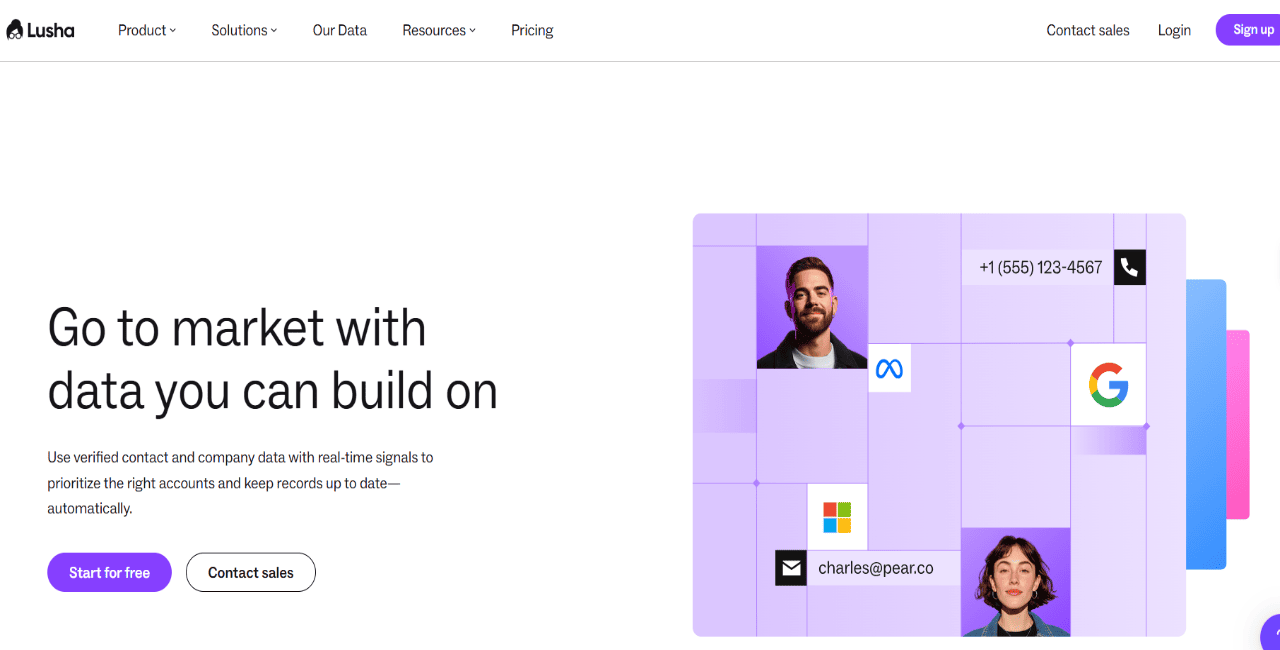
Lusha: best for quick contact lookups

Lusha is one of the more straightforward Bombora alternatives on this list. Its main strength is pretty simple: fast access to verified contact data. The workflow is easy enough.

You find a prospect on LinkedIn, open their profile, and Lusha’s Chrome extension can pull available emails and phone numbers right from LinkedIn or the company site. Very little friction there.

Lusha gives teams access to B2B company and contact data across different industries and regions. It also includes some lighter buying signals, helping flag accounts that may be starting to show purchase intent.

That said, the intent layer here is fairly limited. You’re not getting the same signal depth you’d expect from a platform built specifically around intent data.

Key features

  • Chrome extension for pulling verified emails and phone numbers straight from LinkedIn profiles
  • Bulk export for moving verified contact lists into your CRM or outreach platform
  • Basic intent signals that highlight accounts showing early buying activity
  • API access for pushing Lusha data into your existing sales tools and workflows
  • Team analytics for tracking credit usage and contact discovery across the team

Pricing

Lusha has a free plan with up to 40 credits per month. Paid pricing is credit-based and depends on the package, number of users, and billing term.

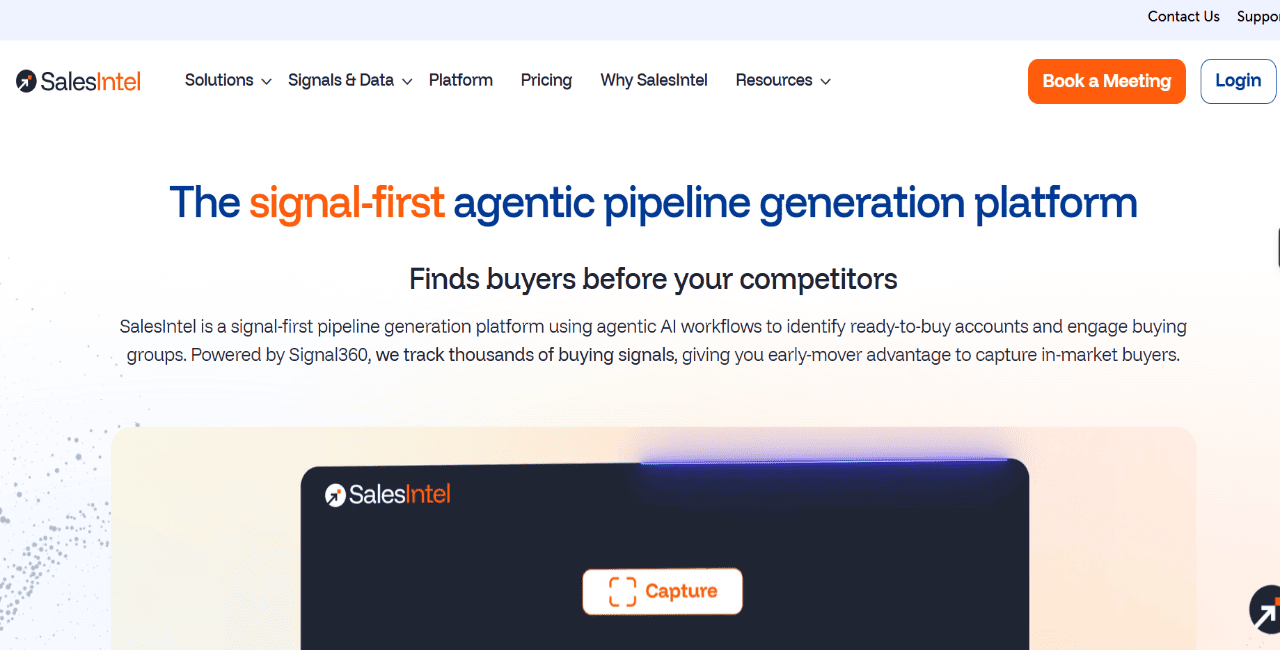
SalesIntel: best for verified contacts

SalesIntel is one of the stronger Bombora alternatives if your main priority is data accuracy.

The platform takes a more research-heavy approach to contact verification. Its biggest differentiator is human verification, with records tested and re-verified every 90 days.

SalesIntel is centered around human-verified B2B contact data, with a heavier focus on the US market. It’s also a Bombora-powered partner, which means Enterprise users get access to a limited portion of its intent data to increase their data pool.

That combination gives sales teams a cleaner way to prioritize outreach using both verified data and buying intent at the same time.

Key features:

  • Human-verified contacts that give reps more accurate emails and phone numbers at scale
  • Technographic filters for finding prospects based on the tools their company already uses
  • Intent data layered onto contact records to help teams prioritize outreach
  • Research on Demand for fresh verification or harder-to-find contacts
  • CRM integrations that sync verified data with Salesforce and HubSpot

Pricing

SalesIntel pricing is custom-quoted. The website does not list standard plan pricing.

Turn intent into actual sales conversations

The right Bombora alternative depends on how your team wants to use intent data — account prioritization, contact discovery, website visitor tracking, community-driven signals, or full outbound execution.

Before choosing a platform, look at what happens after an account shows intent. If reps still need separate tools for contact discovery, enrichment, email validation, message personalization, and outreach, the value of that signal drops fast.

Reply.io brings more of that into one platform with contact data, enrichment, intent signals, multichannel sequences, AI personalization, deliverability tools, and Jason AI SDR.

You can start with the free 14-day trial and see how it fits your sales workflow.

FAQ: Bombora alternatives

What are the best Bombora alternatives?

Some of the strongest Bombora alternatives are Reply.io, Demandbase, G2 Buyer Intent, TrustRadius, TechTarget Priority Engine, Dealfront, Albacross, Common Room, Lusha, and SalesIntel. The right one depends on whether your team needs account intent, contact data, website visitor tracking, or a direct path to outreach.

Who offers the best intent data?

That depends on the kind of signal you want. Bombora is strong for company-level topic intent. G2 and TrustRadius are useful for review-site intent. Reply.io is a strong fit for teams that want intent signals tied directly to contact data and outbound execution.

Who uses Bombora?

Bombora is mostly used by B2B marketing, sales, and ABM teams that need account-level intent data. It is especially useful for teams prioritizing target accounts based on topic research activity.

What should you look for in a Bombora alternative?

Look for contact-level data, reliable intent sources, fresh signals, CRM integrations, enrichment, and outreach capabilities. Intent data gets much more useful when your team can identify the right contact and act on the signal quickly.

Which platform is best for B2B lead generation?

Reply.io is one of the strongest options for B2B lead generation because it combines contact data, enrichment, intent signals, multichannel outreach, AI personalization, and meeting booking in one workflow.

Subscribe to our blog to receive the latest updates from the world of sales and marketing.
Stay up to date.

In this article

Your Superhuman SDR

Jason learns your product, tone, and strategy — then runs outreach with the precision of your best rep.

Your Superhuman SDR
Book a demo

Related Articles

Top 12 GTM Outbound Sales Platforms to Try in 2026

Top 12 GTM Outbound Sales Platforms to Try in 2026

Top 12 GTM Outbound Sales Platforms to Try in 2026
What’s New in Reply: New API, AI Custom Fields, LinkedIn Enrichment, and More

What’s New in Reply: New API, AI Custom Fields, LinkedIn Enrichment, and More

What’s New in Reply: New API, AI Custom Fields, LinkedIn Enrichment, and More
Best 12 CRM for Marketing Agencies in 2026

Best 12 CRM for Marketing Agencies in 2026

Best 12 CRM for Marketing Agencies in 2026