Best 11 BuiltWith Alternatives for 2026 You Should Try

Best 11 BuiltWith Alternatives for 2026 You Should Try

When we talk about sales intelligence, that is, data about prospects and companies, we often think about roles, industries, locations, budgets, and so on. While all very useful, there’s one crucial piece of information that doesn’t get enough credit. 

Knowing what software companies use can be a seriously powerful sales signal, especially in B2B. It helps you spot better-fit accounts, personalize outreach with even more highly relevant context, and perhaps most importantly, reach out when the timing makes the most sense. 

This is where BuiltWith comes into play as one of the top technographic data providers out there. But let’s be honest, tech stack data by itself isn’t enough to make meaningful decisions. 

That’s why this guide looks at the best BuiltWith alternatives for 2026, including tools that also offer broader sales intelligence, B2B prospecting, outbound automation, and AI sales workflows.

What is BuiltWith?

BuiltWith is primarily a website technology lookup platform that shows you what software sits behind a company, whether that’s analytics tools, ad pixels, hosting providers, CMS platforms, e-commerce systems, JavaScript libraries, payment tools, and so on.
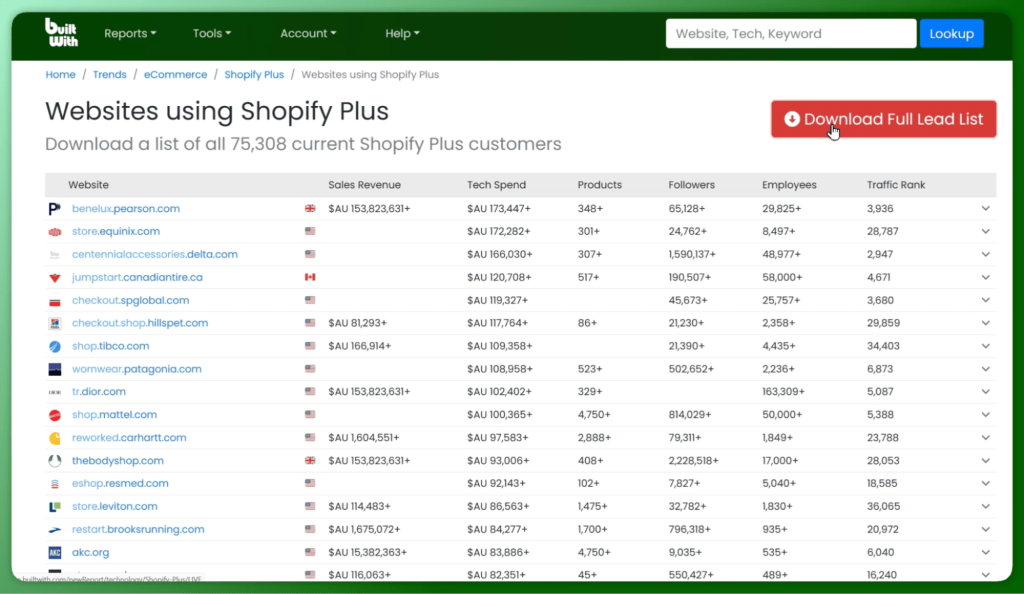
In simple terms, BuiltWith answers one simple question: what is this website built with? 

But in reality, the use cases go much further than a one-off check. Sales, marketing, research, and investment teams can use it to analyze tech adoption, spot companies using certain tools, follow market trends, build technology-based lead lists, and research e-commerce businesses.

BuiltWith is especially useful at the account discovery stage. For instance, if you sell to Shopify stores, HubSpot users, WordPress sites, or businesses using a competitor’s product, it can help you build entire lists of relevant accounts pretty quickly.

The catch? Most teams need more than pure tech stack detection to generate leads. They also need broader prospect/account data and verified contact emails. And then, they’ll still need another platform to actually turn that data into personalized outreach. 

Why sales teams look for BuiltWith alternatives

There’s probably not one sales team that doesn’t first search for some relevant context about the individual they’re reaching out to, as well as their company. 

Well, while BuiltWith is a solid tool for finding the technologies behind websites and building lists based on tech usage, there are quite a few reasons why teams look for BuiltWith alternatives:

  • Need for actionable contact data → technographic data is a good start, but teams still need verified emails and numbers, LinkedIn profiles, and other data to drop into CRMs.

  • Need for outbound execution → getting the right data is just step one. After that, the real work starts — turning that into messages, sequences, and meetings.

  • Need for AI-assisted prospecting → most companies now want AI to help with lead generation, especially finding relevant accounts and researching prospects.

  • Need for more signal types → as previously mentioned, most teams also need hiring signals, buying intent, firmographics, funding data, job postings, or account activity.

Need for better fit by workflow → developers may be okay with a simple website tech checker, but a sales team will need larger lead databases, better enrichment, and so on.

Convert Competitors` Fans Into Hot Leads

Stop chasing cold leads.
Start talking to people who already want what you sell.

Your competitors’ followers?
They know the problem. They’re paying attention.
Some are even looking for something better, right now.

This playbook shows you exactly how to turn them into hot leads:

→ Find and pull competitor followers in minutes
→ Clean, segment, and enrich your list for max fit
→ Launch outreach that’s personal, not pushy
→ Automate follow-ups so no lead slips away

Top 11 BuiltWith alternatives for sales teams in 2026

We’ve dug deep to find the best BuiltWith alternatives across different functions, from other dedicated tech stack detectors to more consolidated AI sales platforms that include sales intelligence features. The “best” pick for your team will be the one that best fits your lead generation and sales strategy, and naturally fits in with your existing software. 

1. Reply.io

For those looking for technographic insights, as well as more sales intelligence and the ability to turn that data into conversations and meetings, Reply.io is one of the top options out there. 

Reply is an AI-powered sales engagement platform built to help teams generate targeted leads, research prospects and accounts, use AI to turn that data into personalized messages, and automate multichannel sequences.

It’s an all-in-one sales suite that comes with a native lead database and an AI engine that runs multichannel outreach at scale, ensuring tailored sequences and emails/messages for each unique lead. 

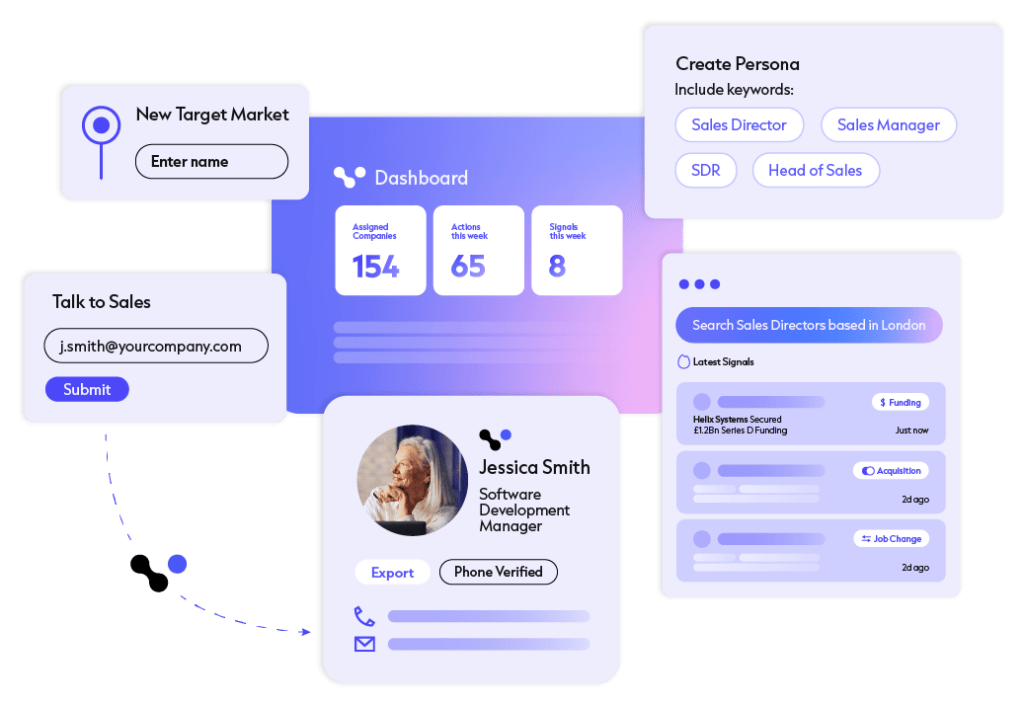
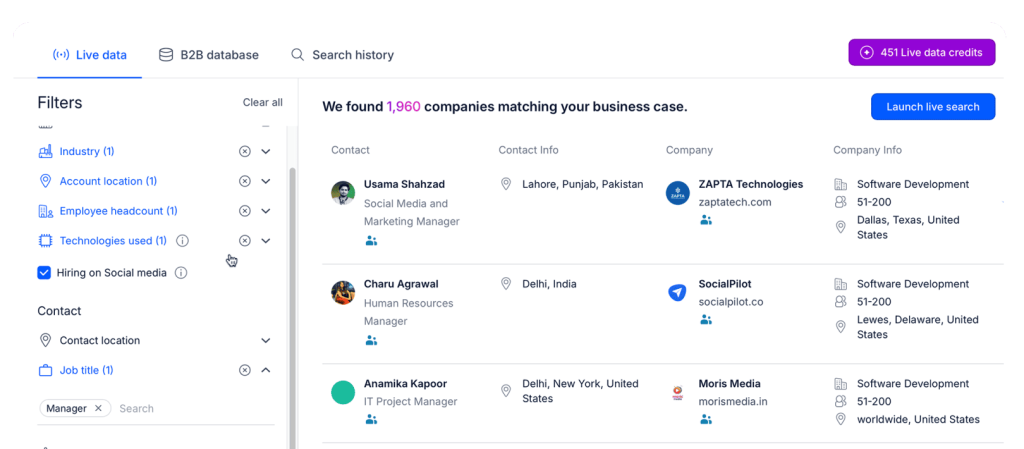
The lead database, Reply Data, offers over 1 billion live, verified prospects and accounts across industries and locations. With advanced search features, including technologies used, hiring signals, job titles, and many more, teams can narrow down the most relevant potential leads for outreach. Once found, those leads will also be enriched with additional data to create more complete profiles to give you more context for reaching out and building rapport.

data in Reply.io as an extra to your personal CRM

That’s what makes it one of the strongest BuiltWith alternatives on the market, not only offering technographic data but also all the tools needed to turn that data into conversations and, eventually, booked meetings. 

All in all, Reply.io helps you build and automate one unified sales workflow — finding leads, personalizing messages, coordinating email and LinkedIn touches, automating follow-ups, tracking performance, and managing replies without duct-taping multiple tools together. 

Key features:

  • Native B2B database with contact info and sales intelligence 
  • Multichannel outreach sequences (email, LinkedIn, SMS, calls, WhatsApp) 
  • AI personalization
  • Deliverability and email warm-up 
  • Campaign analytics
  • Jason AI (check it out below)

2. Jason AI

If Reply.io gives you an AI engine to generate leads, uncover technographic data and additional sales intelligence, and launch multichannel outreach, Jason AI actually runs the execution for you. 

Jason AI is an AI sales agent designed for teams that want to actually delegate most of the lead research and outreach workflow. Once it learns everything about your business, it will build your ICP (Ideal Customer Profile) and start finding targeted accounts. 

Jason then enriches each lead with additional context from LinkedIn, company websites, Reply Data, and other external sources to create more complete customer profiles. 

But that’s just the beginning. Next, Jason AI builds tailored outreach sequences across email and LinkedIn for each lead, using the uncovered data to hyper-personalize every message.

And finally, once replies start coming in, Jason will answer questions, handle common objections, and even book meetings on your behalf. Oh, and he’s multilingual in 50+ languages! 

So besides offering BuiltWith-style technographic data, Jason also helps identify promising accounts, launch personalized outreach, handle replies, and hand over qualified, ready-to-talk leads to your team. 

Key features:

  • AI-created ICP 
  • Real-time B2B prospect data and enrichment 
  • AI-powered email and LinkedIn outreach
  • AI personalization at scale 
  • Reply handling + meeting booking on your behalf 
  • Co-pilot and autopilot modes
  • 50+ language support

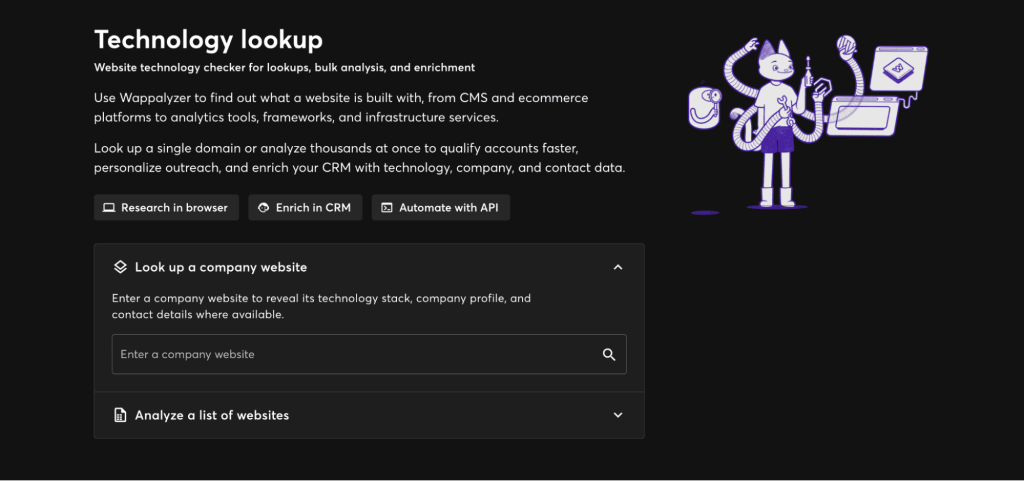
3. Wappalyzer

Wappalyzer is perhaps one of the most direct BuiltWith alternatives if what you simply need is technology lookup, technographic lead lists, and lightweight CRM enrichment. The way it works is pretty simple — it helps you see what technologies a website uses, build lists around those technologies, track competitor installs, and plug that data into your other business workflows.

For sales and GTM teams, it’s especially useful when a company’s tech stack is one of the most meaningful signals to show ICP fit. You can build technographic lead lists, enrich your existing prospect lists with detected technologies and company context, and plug all that data into your own systems through their API. 

The main limitation here is that Wappalyzer is still mainly a simple technographic intelligence tool, so sales teams will still need another platform for launching outreach, personalizing emails and messages, supporting email deliverability, and tracking progress with analytics. 

Key features:

  • Website technology lookup
  • Technographic lead lists
  • CRM enrichment
  • API access
  • Email verification
  • Filters by technology, keyword, traffic, industry, and location

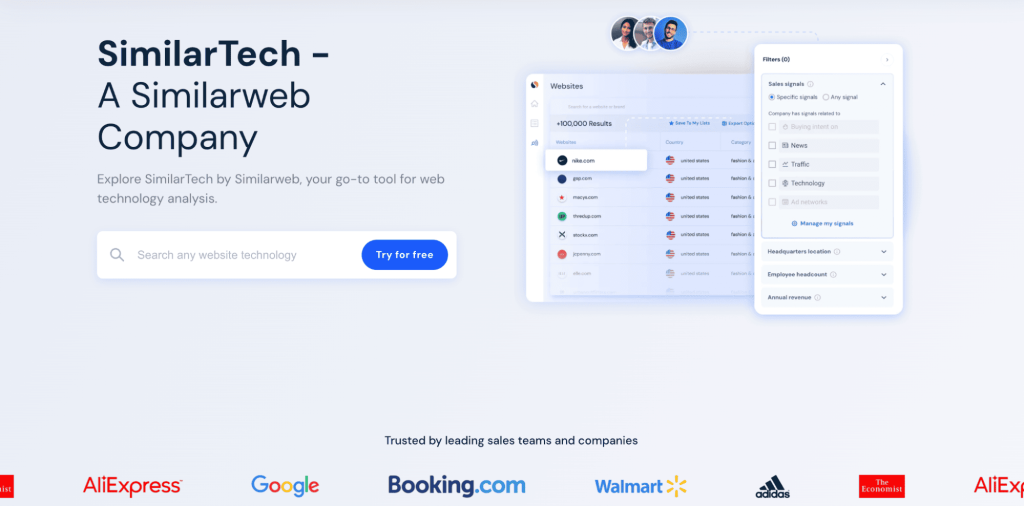
4. SimilarTech

SimilarTech is another specialized web technology and sales intelligence tool. It lets you see what tech stacks your target accounts are working with, see what tools competitors use, track changes in software use, and build targeted contact lists around specific technologies.

As a direct BuiltWith alternative, it’s potentially a better fit for teams that want more than basic tech discovery in terms of sales intelligence. It gives you more complete prospect profiles for more targeted outreach and competitor research. And honestly, it’s just a lot more intuitive and easy to use. 

The limitation with SimilarTech is the same as with any other dedicated data lookup tool, as it doesn’t really help with outbound execution. Yes, you’ll identify relevant companies and signals, but will still need a separate system like Reply.io for outreach sequences, AI personalization, LinkedIn and email touches, and so on. 

Key features:

  • Web technology analysis
  • Company technology checker
  • Contact lists by technology
  • Competitive intelligence
  • Market trend analysis
  • Neat Chrome extension

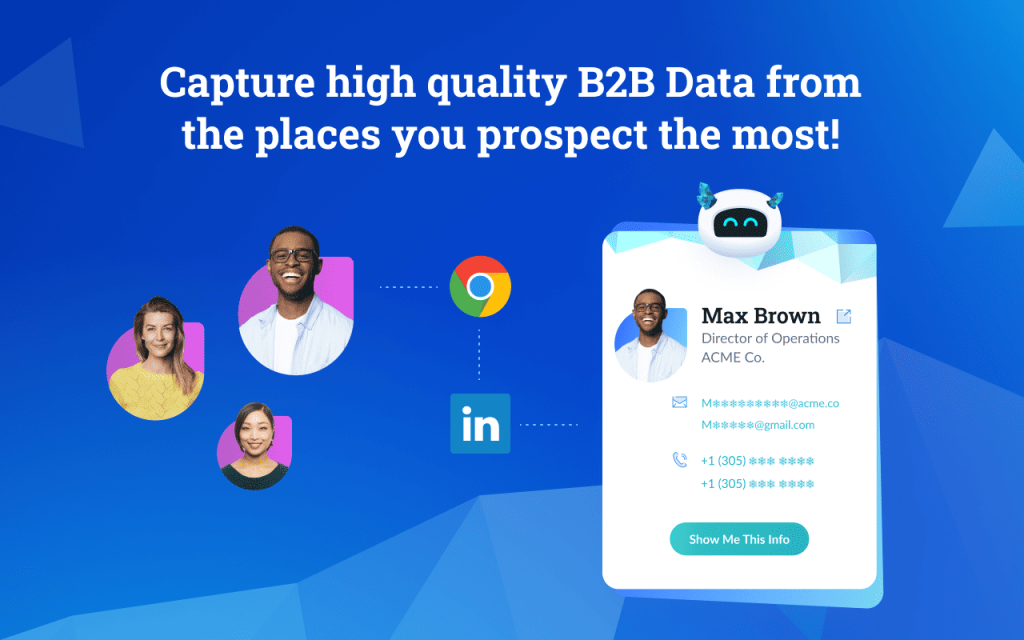
5. Datanyze

Datanyze is a dedicated B2B prospecting and contact data platform built around browser-based web research. Its main appeal is the Chrome extension, which lets reps pull contact information like email addresses and phone numbers straight from LinkedIn profiles and company websites while staying in the browser.

Back in the day, Datanyze used to sit closer to the classic technographics category, but today its positioning is more focused on contact discovery and lightweight prospect capture. It’s still a decent tool for understanding a company’s technology stack, but it’s no longer its main focus. 

So if your team works with a lot of manual research on LinkedIn or company sites and wants a fast way to grab contact and company data, this is a great pick.

The limitation is that Datanyze is less of a full technographic data platform like BuiltWith, but also less of a full outbound automation platform than tools like Reply.io.

Key features:

  • Powerful Chrome extension
  • LinkedIn prospecting
  • Email addresses and direct dials
  • Company data
  • Export workflows

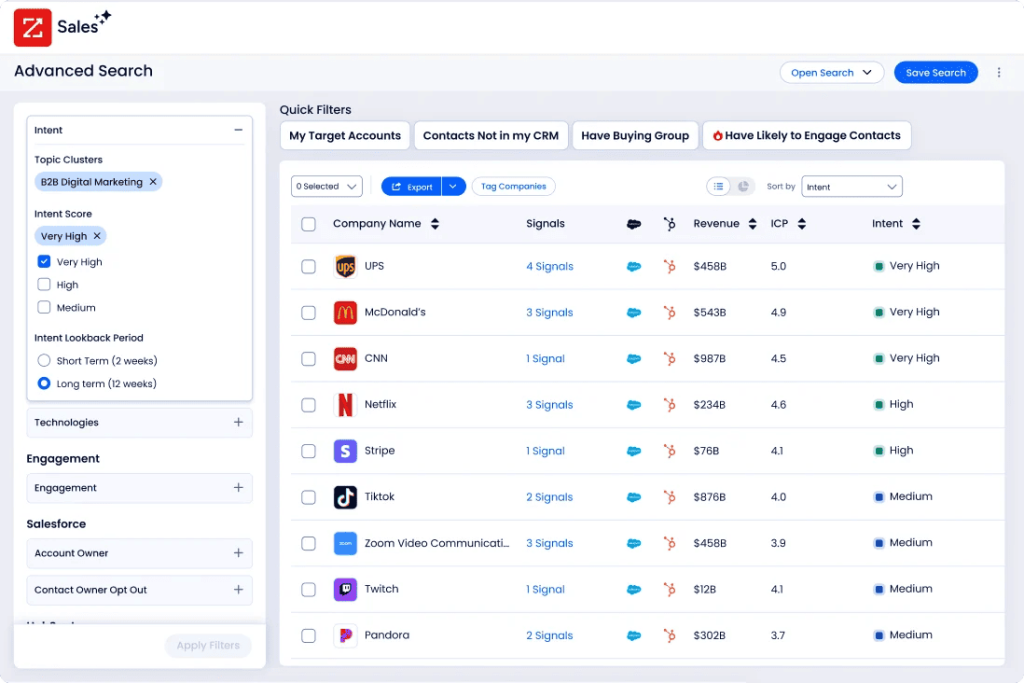
6. ZoomInfo Sales

ZoomInfo Sales is an established sales intelligence platform primarily aimed at enterprise teams, and includes technographic data as part of a much broader sales intelligence. 

It combines firmographics, technographics, contact data, intent signals, enrichment, and workflow automation in one central hub that most companies use as the main data layer of their entire business operations. 

For sales teams, ZoomInfo is a serious BuiltWith alternative when technology lookup is just one small part of prospecting, as it also comes with verified contact data, deeper company context, intent signals, enrichment, alerts, and CRM workflows. In other words, it’s for teams that need a full sales intelligence engine, not just a website technology checker.

The main drawback here is that it can be a bit too heavy, both in terms of features and pricing, for smaller teams that mainly need quick technology lookup or simple prospect lists. It’s better to look at it as a much broader GTM intelligence platform than a lightweight BuiltWith alternative.

Key features:

  • Contact and company database
  • Technographic data + alerts for tech changes
  • Intent signals 
  • Account intelligence
  • Sales automation
  • AI-powered insights

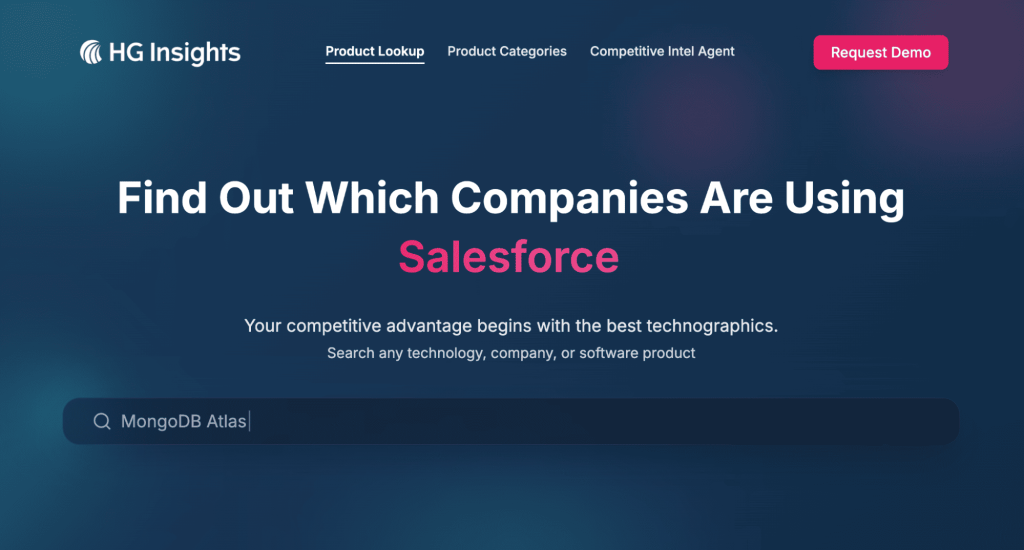
7. HG Insights

HG Insights is a technology and sales intelligence platform designed for companies that need deeper market and account-level insights. It combines technographic data, spend and funding info, buyer intent, and market intelligence, and then uses AI to turn that into structured, ready-to-use context. 

Worth noting that this platform is much less of a simple website technology checker and leans more towards a more enterprise intelligence layer. In fact, many teams use HG Insights for TAM analysis, territory planning, account prioritization, market segmentation, and broader GTM strategy, rather than simple workflows. 

As you can tell, it may be overkill for teams just looking for quick tech stack checks or lightweight prospecting. It’s still a game-changer for the planning and prioritization layer, though outbound execution still has to happen with a different platform.

Key features:

  • Technographic intelligence
  • IT spend data
  • Buyer intent signals
  • Market analysis
  • TAM and territory planning
  • Sales copilots and agents

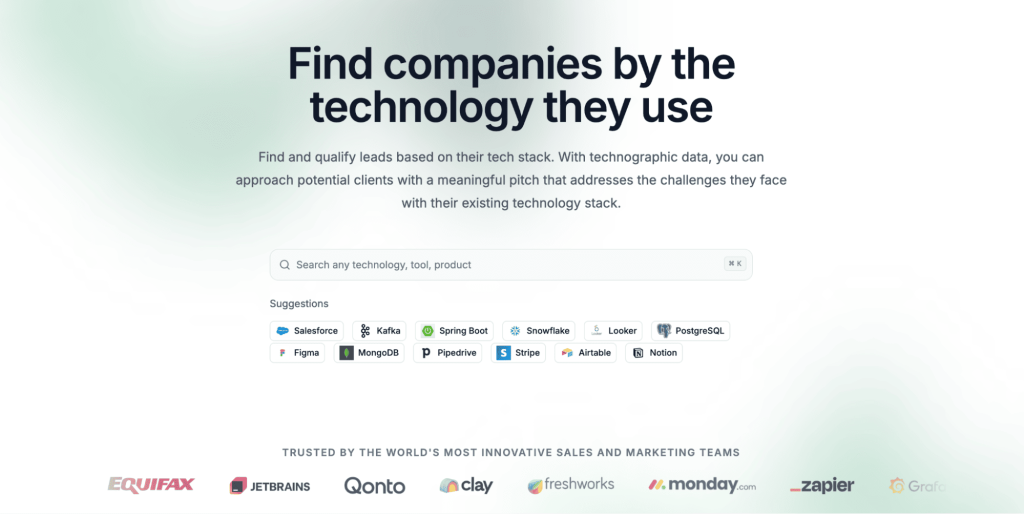
8. TheirStack

TheirStack is another specialized technographic and hiring-signal platform that helps users find companies based on the software they use and the specific roles they’re hiring for. In fact, that second part is more valuable to B2B teams than most realize. 

Instead of only relying on public website technologies, TheirStack also analyzes job postings to infer both software usage and buying intent. So rather than just spotting a visible website tag, it can also surface companies that are actively investing in certain tools or expanding certain teams behind the scenes.

That makes TheirStack especially useful for SaaS sales teams as an extra source of picking up interest signals. For instance, a company actively hiring Kubernetes engineers may be a far better fit for an infrastructure vendor than one that simply has a relevant public-facing script on its site.

Teams will still need another platform to actually turn those intent signals into timely outreach, but as an add-on to your existing sales stack, this platform is a solid choice. 

Key features:

  • Technographic data
  • Hiring signals + job posting intelligence
  • Company lookup with technology filters
  • Buying intent signals
  • API access

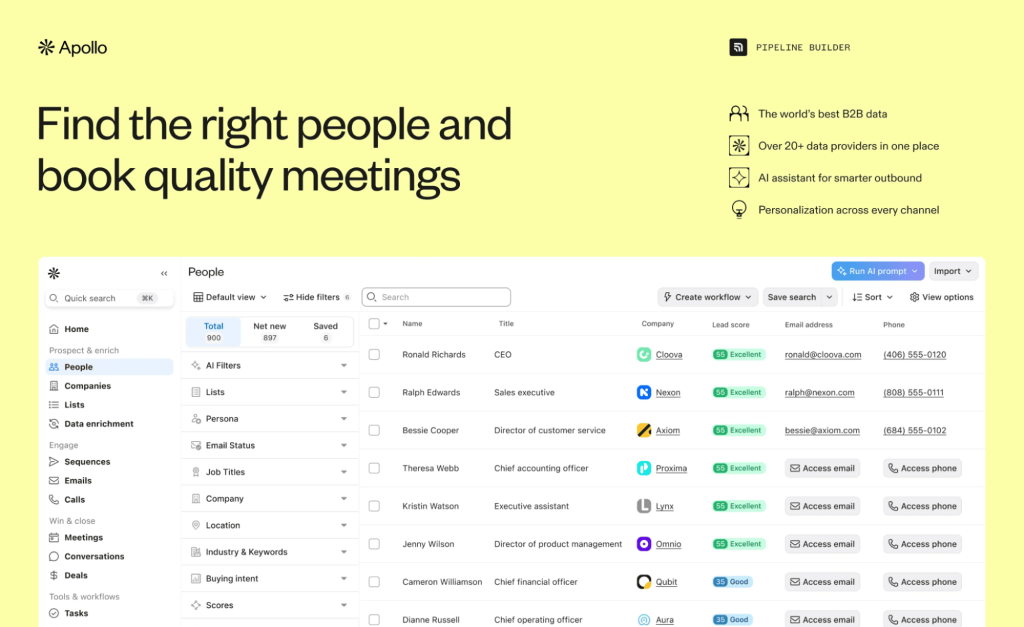
9. Apollo.io

Apollo.io is primarily a sales engagement platform that also combines B2B data, lead generation, enrichment, and outreach sequences. It’s not a pure BuiltWith alternative, but still offers a fair share of prospect and account data that teams can then turn into outreach right away.

Much like any other broader sales outreach platform, Apollo only makes sense for SDR teams, startups, and SMBs that need, besides simple technology lookup, an automated workflow to run high-volume prospecting with fewer moving parts. 

On the other hand, if your team only works with low-volume leads, or if you already have a dedicated outreach tool and are simply looking for an extra tech data layer, you’ll probably prefer a more specialized BuiltWith competitor.

Key features:

  • B2B contact database
  • Company data + enrichment 
  • Sales intelligence
  • Email sequences
  • AI-powered workflows

10. Cognism

Cognism is a well-known B2B sales intelligence platform focused on compliance, phone-verified mobile numbers, business emails, and a heavy emphasis on the European market, all of which are crucial for most outbound teams.

In the context of a BuiltWith alternative, Cognism is much more relevant for teams that care less about strict technology lookup and more about turning real-time account signals into contacts they can reach out to.

And if your sales motion depends heavily on compliant data, strong phone coverage, and a focus on the EMEA market, Cognism becomes an even more practical option.

It’s a valuable add-on to any sales and GTM stack, no doubt, but its primary focus isn’t on deep website technology analysis, so if that’s what you’re mainly after — other providers will be more suitable.

Key features:

  • B2B contact data
  • Phone-verified mobile numbers
  • Strong focus on compliance
  • Sales intelligence and intent signals 
  • Prospect enrichment 

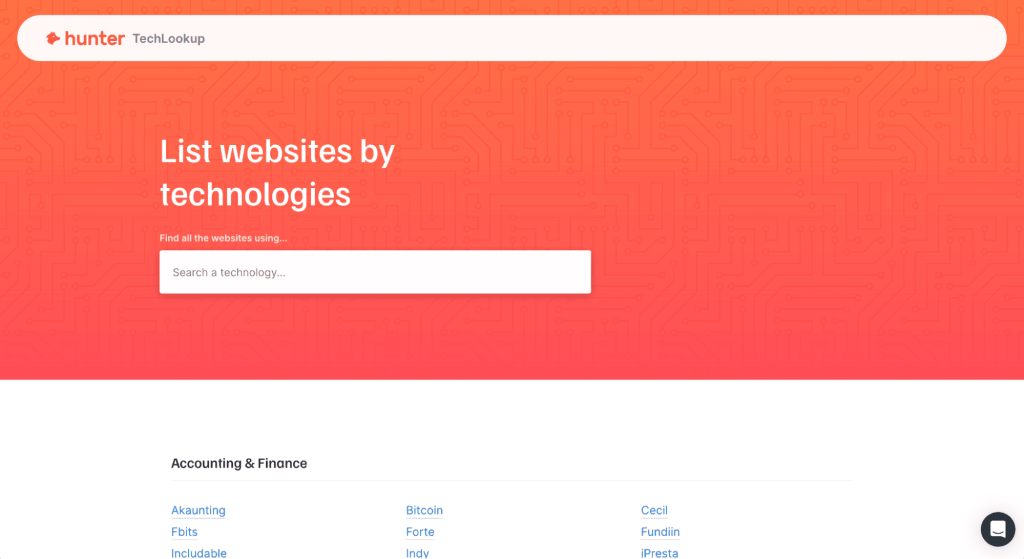
11. Hunter.io TechLookup

Hunter TechLookup is a free technology lookup tool that lets users create lists of websites using specific technologies. You’ll still need to create an account, but it’s one of the lightest and most straightforward options on this list, which is exactly why some teams like it.

If you just need a quick BuiltWith alternative for finding websites by technology, without paying for a much broader, feature-rich platform, Hunter TechLookup is a pretty straightforward option. 

It’s especially useful for lightweight list building, e-commerce research, and especially teams already using Hunter for finding and verifying emails. The downside here is that, being a free lightweight tool, the number of technologies covered is much lower than that of the other platforms on our list.  

At the same time, you’ll still need enrichment, verified contacts from within those firms, multichannel outreach, and AI personalization to turn those lists into actual pipeline.

Key features:

  • Website lists by technology
  • Technology-based prospecting
  • E-commerce technology lookup
  • Free list generation
  • Works alongside Hunter’s email finder and verifier

Final thoughts

All in all, BuiltWith is a solid provider of website technology data. And while it’s definitely a neat addition to many tech stacks, most teams will still need much more context about their potential leads and accounts. 

Besides, many tools now pull data directly from LinkedIn to give more complete lead profiles. Other tools offer real-time intent signals to pinpoint prospects who are interested in your offer at this very moment. 

If your goal is to discover targeted prospects along with enriched data, and then turn that into personalized outreach across email and LinkedIn, Reply.io gives you that full automated workflow. 

And once you do that, technographic data starts turning into something much more useful than research. It becomes action.

Subscribe to our blog to receive the latest updates from the world of sales and marketing.
Stay up to date.

In this article

Your Superhuman SDR

Jason learns your product, tone, and strategy — then runs outreach with the precision of your best rep.

Your Superhuman SDR
Book a demo

Related Articles

What’s New in Reply: New API, AI Custom Fields, LinkedIn Enrichment, and More

What’s New in Reply: New API, AI Custom Fields, LinkedIn Enrichment, and More

What’s New in Reply: New API, AI Custom Fields, LinkedIn Enrichment, and More
Top 12 Cognism Alternatives for Finding Leads in 2026

Top 12 Cognism Alternatives for Finding Leads in 2026

Top 12 Cognism Alternatives for Finding Leads in 2026
Mailtrap Review 2026: Is This Email API the Right Fit for Your Team?

Mailtrap Review 2026: Is This Email API the Right Fit for Your Team?

Mailtrap Review 2026: Is This Email API the Right Fit for Your Team?