
Top 12 Cognism Alternatives for Finding Leads in 2026

Top 12 Cognism Alternatives for Finding Leads in 2026

Lead data only matters if you can trust it, enrich it with extra context to fill in the gaps, and then turn all that into actual conversations.

Cognism is a strong sales intelligence platform for teams that care about verified contact data and compliant prospecting, especially those working in the European markets. But it’s obviously not the only option out there, and depending on your business workflows, you may be better off with another tool. 

Some teams need much wider database coverage for more precise and/or high-volume outbound lead generation, while others may want built-in outreach features that help them go from lead discovery to booked meetings a lot faster.

Below, we’ll break down 12 Cognism alternatives for 2026, including tools for B2B prospecting, contact enrichment, intent data, sales engagement, and outbound automation.

Top Cognism competitors: Quick overview

Let’s start with a quick comparison table. 

Tool Best for Database size Built-in outreach Starting price
Reply.io Lead generation + multichannel outreach 1B+ contacts Yes $49/user/mo
ZoomInfo Deep US market coverage + intent data 300M+ contacts Add-on only ~$15,000/year
Apollo.io Prospecting + built-in outreach 275M+ contacts Yes $49/user/mo
Lusha Quick LinkedIn contact lookups Not published No $36/user/mo
SalesIntel Human-verified contact data Not published No $69/user/mo
LeadIQ Live prospecting from LinkedIn Not published No $45/user/mo
RocketReach Massive global contact coverage 700M+ contacts No $53/user/mo
Clearbit Enriching inbound leads Not published No ~$100/mo
Lead411 Trigger-based prospecting 450M+ contacts Basic only $99/user/mo
LeadGenius Custom-built lead lists Not published No Custom pricing
LinkedIn Sales Navigator Relationship-driven prospecting Not published No $99.99/user/mo
Saleshandy Email-first lead generation Not published Yes $25/mo

How we evaluated the best Cognism alternatives

We picked these Cognism alternatives based on one thing above all — how useful they actually are in real lead gen and outbound workflows. Not just how big the database sounds on paper or how recognizable the brand is.

Here’s what we looked closely at:

  • Data quality and coverage: how accurate the contact data is, how deep the company data goes, how each platform handles verification, and how strong regional coverage is.

  • Prospecting and enrichment workflows: how easily each tool helps teams find targeted leads, enrich profiles, and keep data fresh without manual cleanup work.

  • Buying signals and sales triggers: whether the platform helps reps spot real intent signals — things like website visits, job changes, funding rounds, growth signs, etc.

  • Outreach capabilities: some Cognism competitors stop at data, while others help teams launch multichannel sequences (email, LinkedIn, more) based on that data.

  • CRM fit and automation: how well each platform connects with common CRMs and sales tools, how clean the sync is, how much repetitive work it can fully automate.

Pricing, compliance, and scalability: how clear the pricing is, whether there’s a free trial, how the platform handles GDPR and CCPA, and how much work onboarding takes.

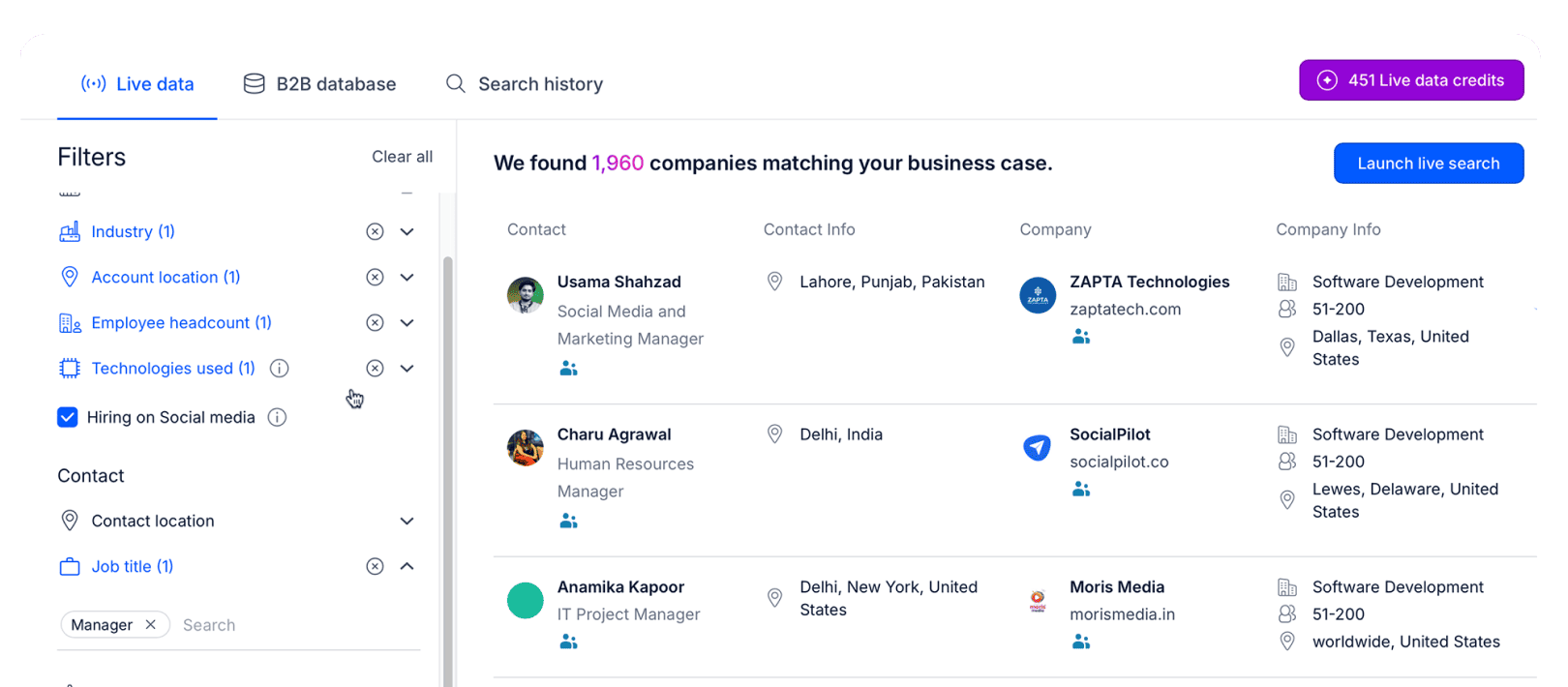
Convert Competitors` Fans Into Hot Leads

Stop chasing cold leads.
Start talking to people who already want what you sell.

Your competitors’ followers?
They know the problem. They’re paying attention.
Some are even looking for something better, right now.

This playbook shows you exactly how to turn them into hot leads:

→ Find and pull competitor followers in minutes
→ Clean, segment, and enrich your list for max fit
→ Launch outreach that’s personal, not pushy
→ Automate follow-ups so no lead slips away

What are the best alternatives to Cognism?

Now that we’ve covered our evaluation criteria, in the end, this list is really about tools that help sales teams find better leads, cut down the manual prospecting grind, and turn raw contact data into meaningful outreach with less friction. 

We’ve included all kinds of software, from dedicated sales intelligence tools to full AI-powered sales suites, depending on what it is you’re really looking for.

Reply.io: best for lead generation + multichannel outreach 

For many teams comparing Cognism alternatives, the real question is usually “Where do we get accurate leads and turn them into actual sales conversations, fast?”. 

That’s where Reply.io stands, covering both main sides of the sales workflow. It’s an AI sales engagement platform that helps teams find targeted prospects, enrich contact records, validate emails, pick up intent signals, and then launch personalized outreach across email, LinkedIn, calls, SMS, and WhatsApp from the same place.

On the data side, Reply gives sales teams access to a live B2B database with 1+ billion contacts across 150+ countries, 60+ million company profiles, advanced search filters, intent signals, built-in email validation, and contact enrichment. 

So instead of pulling static lists and pushing them into a separate outreach tool, reps can move verified leads straight into AI-powered, multichannel sequences with just a few clicks.

data in Reply.io as an extra to your personal CRM

And once a lead enters a sequence, Reply’s AI engine uses all that uncovered data and intent signals to personalize every email, follow-up, and LinkedIn message, even at scale. Teams can also use AI variables to build custom message templates, then let Reply fill in the right details for each prospect automatically.

The sequences can also individually react to each prospect’s behavior. For example, if someone doesn’t open an email, in ‘x’ days that triggers an automated LinkedIn connection request. Once accepted, a personalized LinkedIn email is launched while the scheduled email follow-up gets canceled. 

how to send a second follow up email after no response with conditional sequences

And for teams that want to automate even more of the process, Reply also has Jason AI — an AI SDR that finds leads, researches prospects across LinkedIn and company sites, writes tailored outreach, handles replies, manages objections, and books meetings.

Key features

  • Reply Data: Live B2B database with 1+ billion contacts, 60+ million companies, intent signals, and advanced filters.
  • Contact enrichment: Fills in missing prospect details such as role, company size, LinkedIn URL, and more.
  • Multichannel sequences: Runs email, LinkedIn, calls, SMS, and WhatsApp steps in one workflow.
  • Website visitor tracking: Identifies companies visiting your website and routes them into targeted sequences.
  • Jason AI: Autonomous AI SDR that sources leads, launches outreach, handles replies, and books meetings.
  • AI variables: Personalizes opening lines, value props, CTAs, and other message fields at scale.
  • Email deliverability suite: Includes mailbox warm-up, sender reputation tools, email validation, and deliverability monitoring.
  • A/B testing: Tests subject lines, hooks, CTAs, and messaging angles across outreach campaigns.

Pricing

Reply.io pricing starts at $49 per user per month for email outreach and $89 per user per month for multichannel outreach. Jason AI starts at $500 per month as a standalone AI SDR plan.

Reply.io also offers a 14-day free trial, so teams can test the platform before committing.

ZoomInfo: best for deep US market coverage and intent data

ZoomInfo is one of the biggest players in B2B sales intelligence, especially if your team sells heavily into North America.

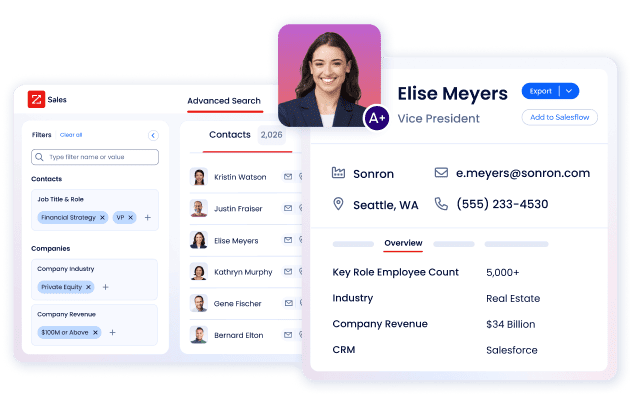
Its SalesOS product gives reps a huge pool of company and contact data to work with, plus firmographic filtering, org charts, intent signals, enrichment, and CRM sync. For enterprise teams building large prospect lists, that kind of depth is hard to ignore.

zoominfo as one of the prospecting tools that integrate with salesforce

The catch? Cost, mostly. And workflow sprawl too. ZoomInfo is strongest on the intelligence side, while more advanced outreach usually sits in other products like ZoomInfo Engage. So if your team wants prospecting, enrichment, and multichannel execution all under one roof, the setup can get pricey pretty quickly.

Key features

  • Large contact and company database with advanced filtering
  • Intent data for spotting accounts already showing buying activity
  • Firmographic segmentation by industry, revenue, headcount, geography, and tech stack
  • CRM sync with Salesforce, HubSpot, Microsoft Dynamics, and others
  • Chorus for call recording and conversation analysis

Pros

  • Especially strong for US-market coverage
  • Plenty of intent and enrichment data to work with
  • Filtering gets very granular

Cons

  • Usually overkill for smaller teams
  • No public pricing
  • Full outreach often means buying more than one product

Pricing

ZoomInfo does not publish standard pricing. Most third-party estimates put entry-level annual contracts somewhere around $15,000, then up from there depending on seats, credits, and add-ons.

Lusha: best for quick contact lookups from LinkedIn

Lusha is mostly known for doing one thing fast: pulling contact data while reps are already prospecting.

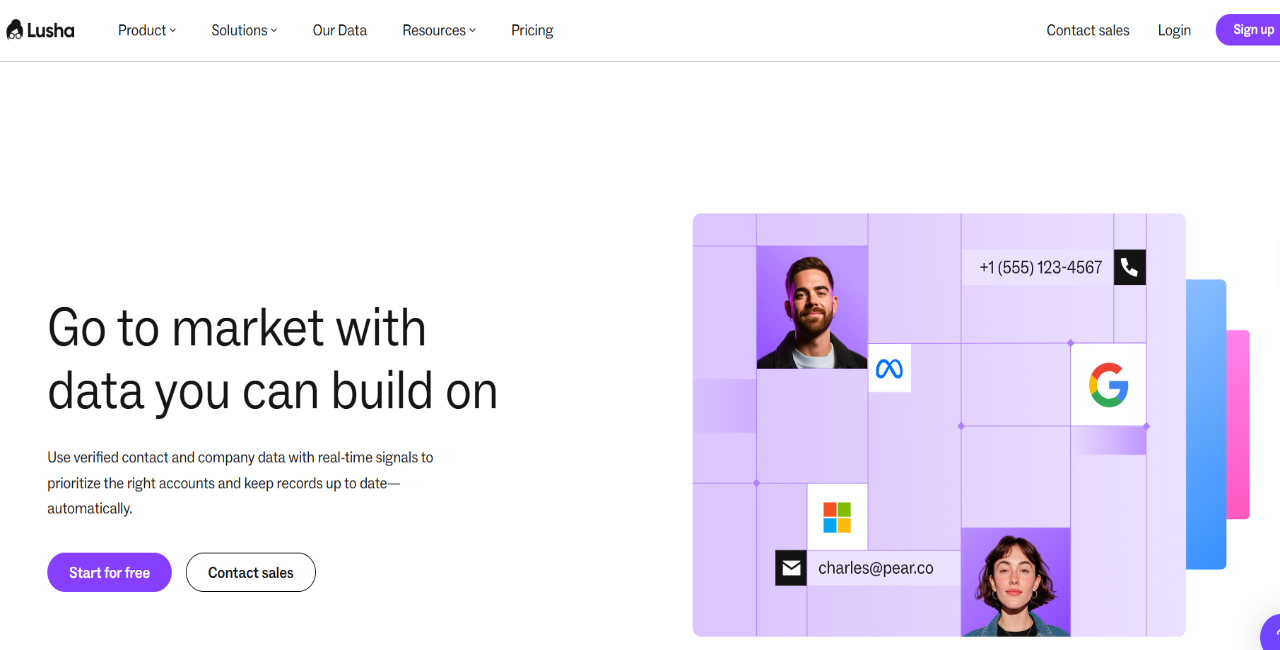
Its Chrome extension works well on LinkedIn and company sites, so reps can grab emails, phone numbers, and company details without breaking their flow. There’s also a web app for list building, enrichment, buying signals, and managing credits across a team.

Where Lusha works best is simple prospecting and quick lookups. Where it doesn’t? Full outbound execution. Teams still need other tools for sequencing, deliverability, inbox handling, and multichannel follow-up.

Key features

  • Chrome extension for LinkedIn and company-site lookups
  • Web app for bulk list building
  • CRM integrations
  • Data enrichment for missing company and contact fields
  • Buying signals to help time outreach a little better

Pros

  • Very easy to start using
  • Quick lookups from LinkedIn are the main strength
  • Free option exists

Cons

  • Not much on the outreach side
  • Coverage can vary depending on region
  • Not built to run full outbound from start to finish

Pricing

Lusha offers a free plan. Paid pricing is commonly listed from $37.45 per user per month, though final cost can shift depending on credits and the package you pick.

SalesIntel: best for human-verified contacts

SalesIntel leans hard into accuracy, which is really the whole point of the platform.

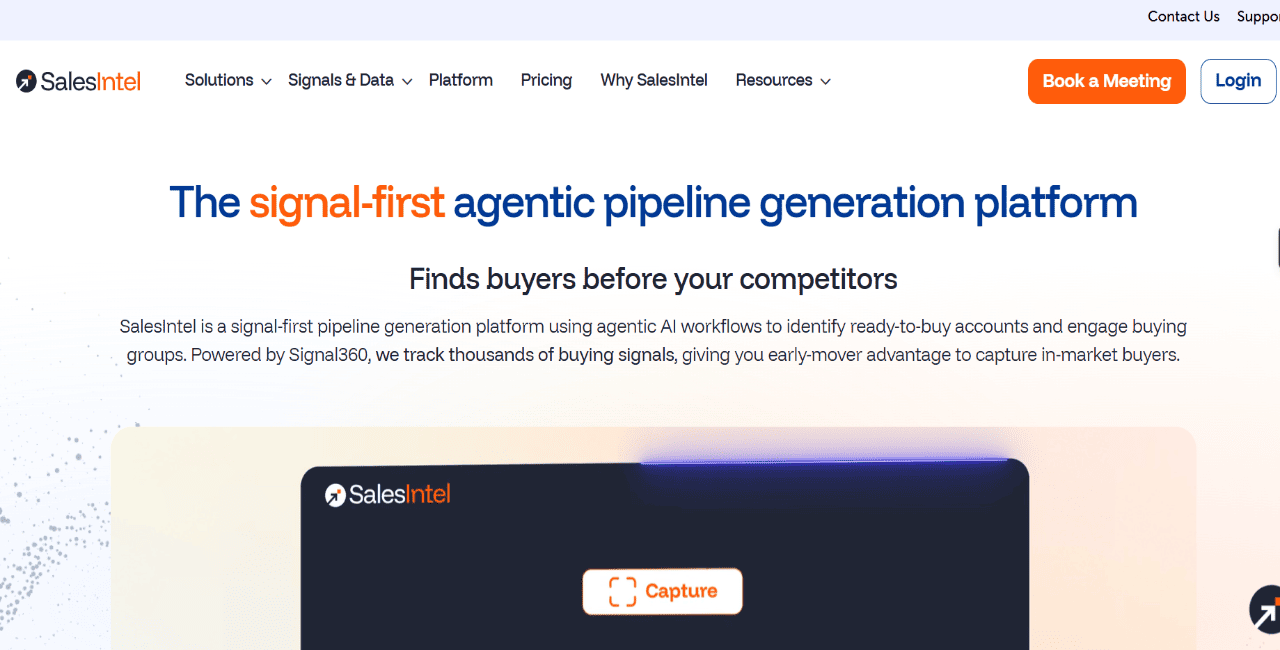
Its main differentiator is human verification. SalesIntel says its research team re-checks contact data every 90 days, which can help cut down on bounced emails, dead numbers, and all the usual prospecting waste. It also includes intent data, technographic filters, enrichment, and CRM integrations.

SalesIntel as one of the Cognism alternatives

The limitation is pretty straightforward: it is much more of a data product than an execution one. So while it can help teams find and verify the right prospects, outreach itself usually has to happen somewhere else.

Key features

  • Human-verified contact records
  • Intent data for accounts researching relevant topics
  • Technographic targeting
  • CRM integrations
  • Company alerts around hiring, funding, leadership moves, and other triggers

Pros

  • Accuracy is clearly a priority here
  • Human verification gives it a stronger trust factor
  • Intent and technographic data are useful additions

Cons

  • No real built-in multichannel engagement layer
  • Pricing is hidden behind a sales process
  • You will still need another tool for sequences and follow-up

Pricing

SalesIntel is custom-quoted. It does not list standard plans publicly, and outside estimates usually place contracts in the five-figure range annually.

LeadIQ: best for capturing leads during live prospecting

LeadIQ is built for reps who prospect in real time, not for teams that want to sit inside a giant static database all day.

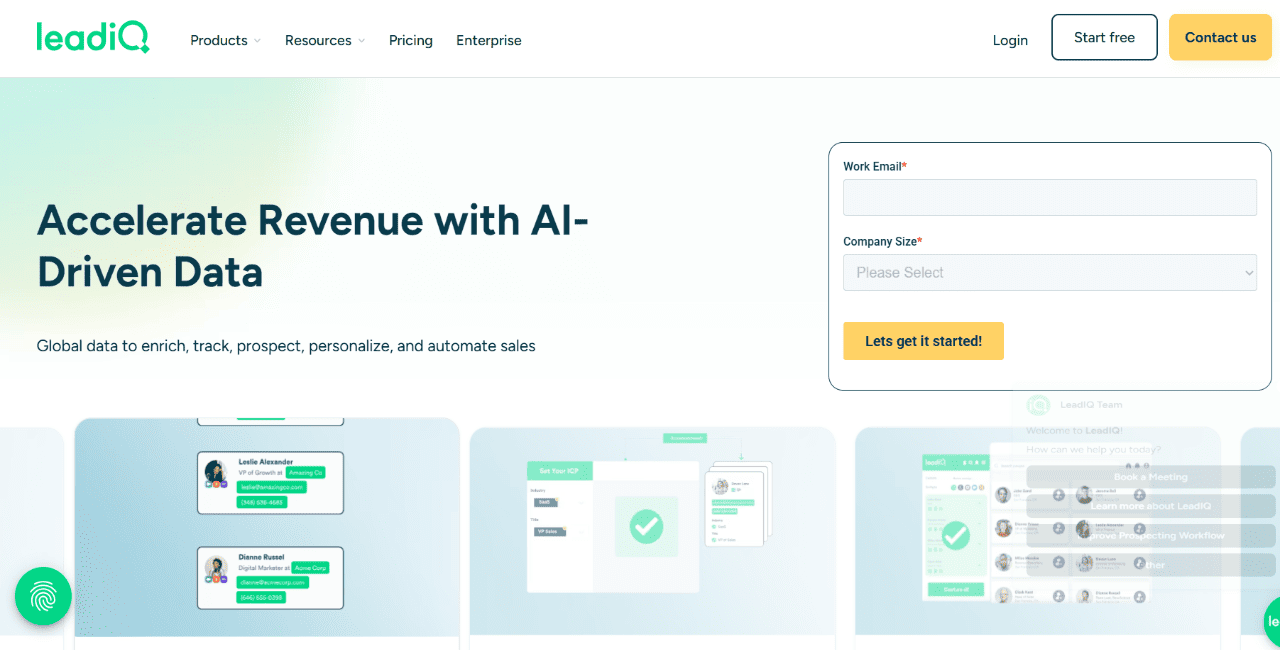
Its Chrome extension helps capture contacts while reps are on LinkedIn, company sites, or other sales tools. From there, it can enrich the data and push it into CRM or engagement platforms. It also tracks sales triggers like job changes, and Scribe AI can generate personalized email snippets from the data it finds.

LeadIQ as one of the Cognism alternatives

That makes it useful for live prospecting. But it is not a full outbound engine. Think of it more as the tool that helps reps gather and prep leads, while the actual sequencing and execution happen somewhere else.

Key features

  • Chrome extension for capturing leads while prospecting
  • Job change alerts and similar triggers
  • Scribe AI for personalized email snippets
  • Syncs with Salesforce, HubSpot, Outreach, Salesloft, and others
  • Enrichment for missing contact details

Pros

  • Strong fit for LinkedIn-heavy prospecting
  • Job change tracking is genuinely useful
  • Plays well with CRMs and sales engagement tools

Cons

  • Not made to run outreach end to end
  • Less useful for huge bulk list building
  • Data depth depends a lot on market and segment

Pricing

LeadIQ has a free plan and a 30-day trial. Paid plans are commonly reported to start around $45 per user per month, though that should be confirmed directly with them.

RocketReach: best for broad global contact coverage

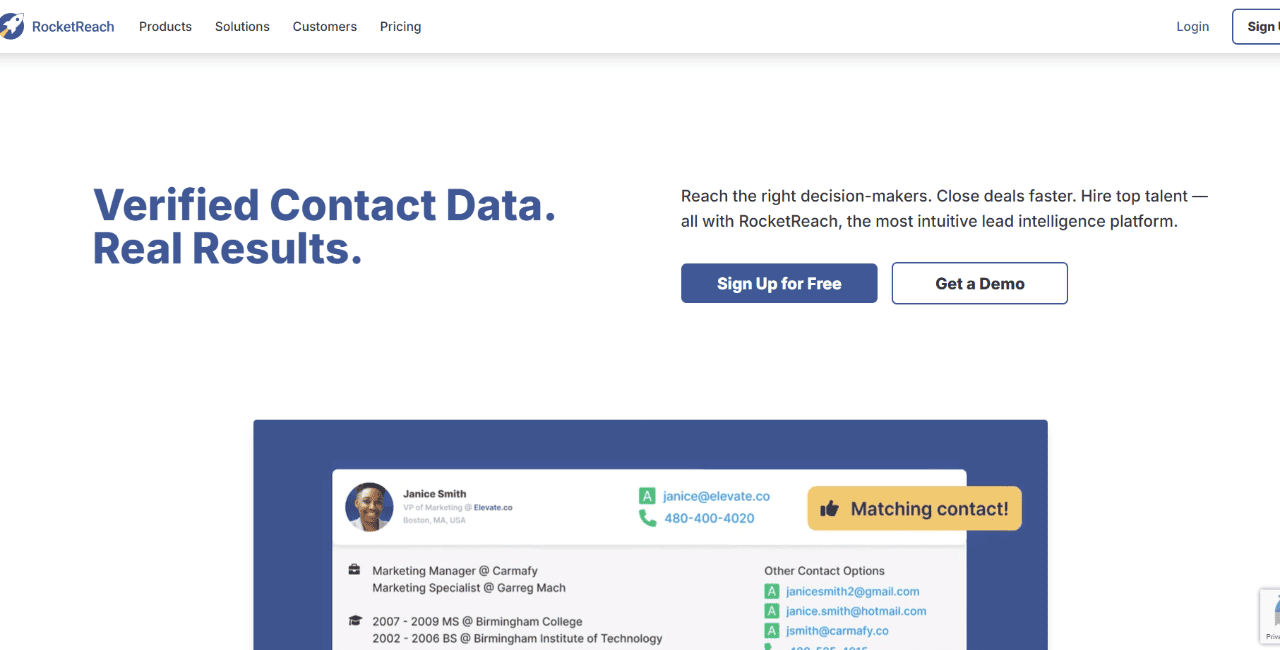
RocketReach is really about breadth.

It gives teams access to contact data across a wide range of industries and geographies, which makes it useful when you need emails, phone numbers, and social profiles beyond the usual US-centric prospecting lists. Search is flexible too — name, company, title, location, industry, all of that.

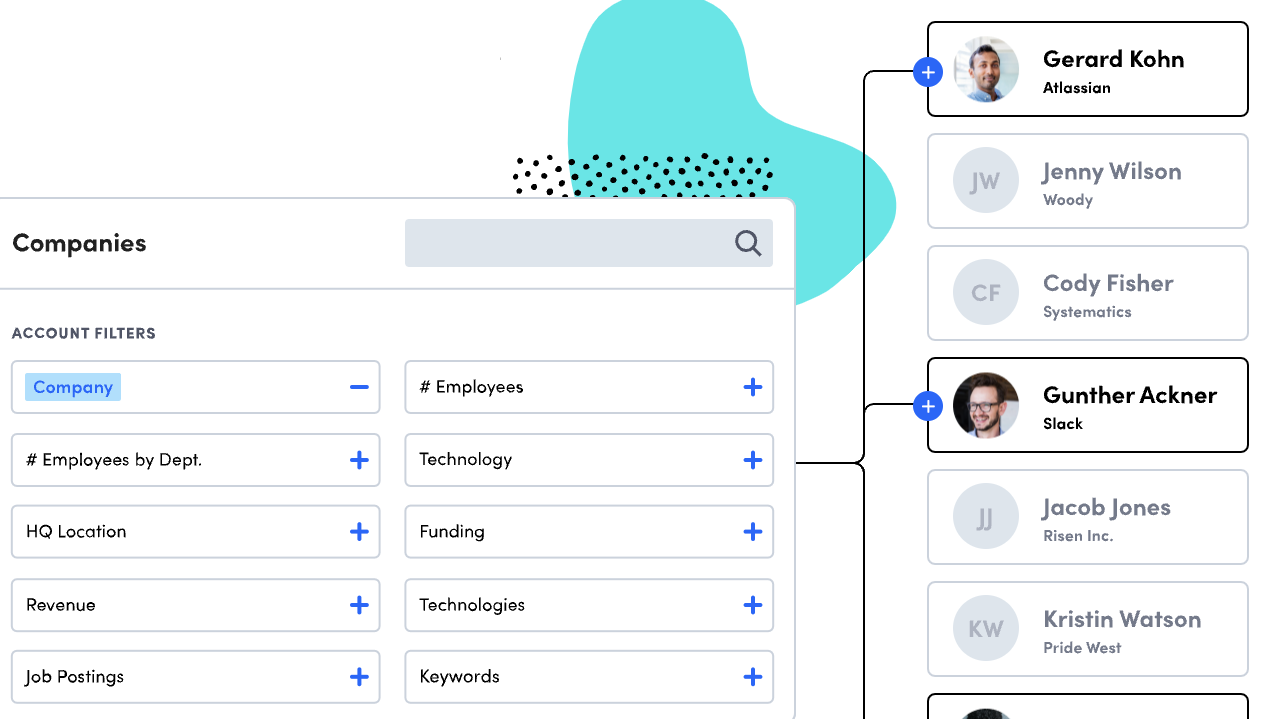
RocketReach as one of the Cognism alternatives

Where RocketReach shines is as a data source. Bulk lookups, API access, CRM integrations — all useful. But it is not trying to be a full outbound platform, and honestly it shows. For sequencing, personalization, deliverability, and reply handling, you will still need another layer in the stack.

Key features

  • Broad global contact and company database
  • Chrome extension for fast lookups
  • Bulk export functionality
  • API access for internal workflows
  • CRM integrations with tools like Salesforce and HubSpot

Pros

  • Good global reach
  • Covers a lot of industries
  • API is nice if you want to build around it

Cons

  • Weak on execution
  • Intent data is limited
  • Credit-based pricing can stack up faster than expected

Pricing

RocketReach pricing changes by plan and billing term. Most third-party pages list entry plans around $69 per month, then higher tiers for more lookups and added functionality.

Apollo.io: best for teams that want lightweight data and outreach

Apollo.io is a go-to option for teams that want prospecting and outreach living in the same place.

It combines a large B2B database with sequencing, calling, enrichment, buying intent, and some built-in sales automation. Reps can build targeted lists using filters like role, seniority, industry, company size, location, and technology used, then move those contacts straight into outreach.

That said, Apollo has a ceiling. It works well for teams trying to keep things simple and consolidated, but the AI personalization is not on the same level as more specialized AI SDR tools. And once deliverability, automation, or multichannel needs get more advanced, some teams start feeling those limits.

Key features

  • Prospecting database with filters for role, company, seniority, industry, and tech stack
  • Email sequences with follow-ups and A/B testing
  • Built-in calling
  • LinkedIn tasks inside outbound workflows
  • Intent signals for finding accounts already warming up

Pros

  • Data and outreach in one platform
  • Free plan is available
  • List building is pretty flexible

Cons

  • AI layer is still fairly basic
  • Credit limits can become annoying at scale
  • Deliverability features are decent, but not especially deep

Pricing

Apollo has a free plan. Paid tiers start at $49 per user per month, with higher plans typically landing at $79 to $119 per user per month on annual billing.

Clearbit: best for enriching inbound leads

Clearbit is now part of HubSpot’s Breeze Intelligence, so this one really makes the most sense for teams already living inside HubSpot.

Its strongest use case is inbound enrichment. It can add company and contact data to CRM records, help with lead scoring, reduce form friction, route prospects better, and identify companies visiting the site. For marketing and RevOps teams already running on HubSpot, that can clean things up a lot.

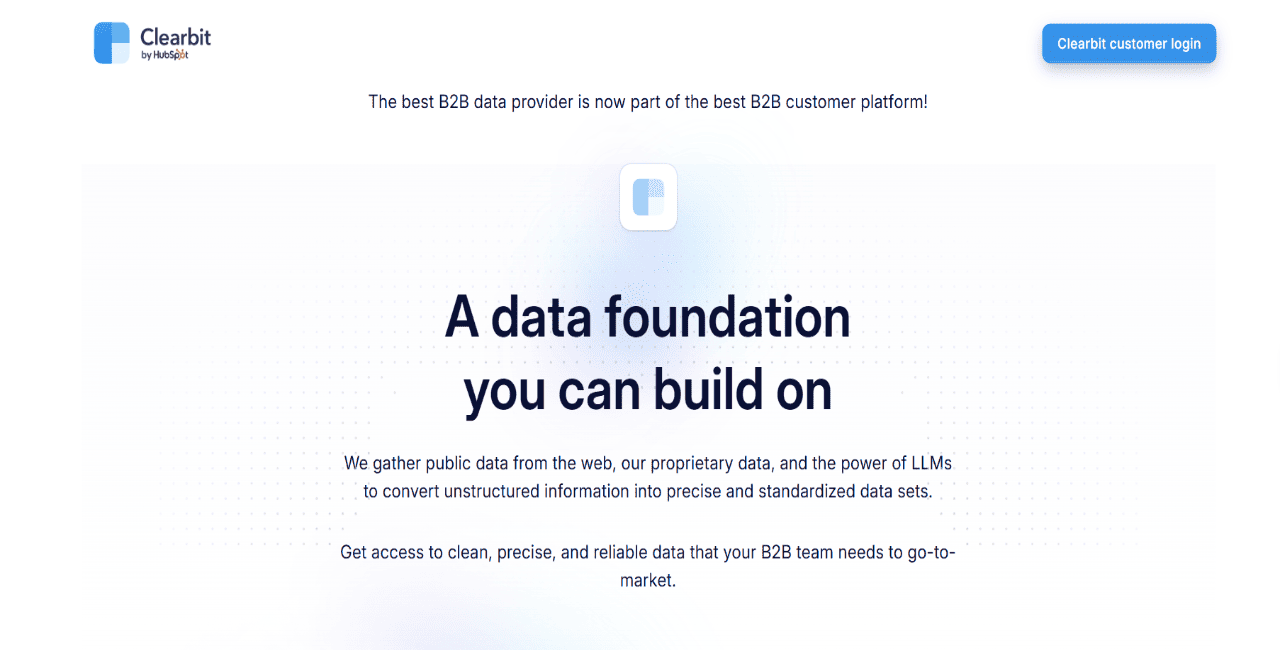
Clearbit as one of the Cognism alternatives

For outbound-first teams, though, it is less flexible. Clearbit is strongest once a lead is already entering the funnel. It is not the best fit when reps need to go find net-new prospects, enrich them, and launch outreach from scratch.

Key features

  • Company and contact enrichment inside the CRM
  • Lead scoring support
  • Website visitor identification
  • Form shortening using existing data
  • Native fit with HubSpot workflows

Pros

  • Makes the most sense for HubSpot users
  • Helpful for inbound routing and qualification
  • Good for keeping CRM data cleaner

Cons

  • Very tied to the HubSpot ecosystem
  • Not ideal for outbound-heavy prospecting
  • Pricing depends on credits and overall HubSpot setup

Pricing

Clearbit now sits under Breeze Intelligence. Credits start at $45 per month for 100, though the full cost depends on the HubSpot plan and setup around it.

Lead411: best for trigger-based prospecting

Lead411 is built around the idea that timing matters just as much as contact data.

It helps reps find prospects and then gives them reasons to reach out — funding rounds, hiring activity, leadership changes, company growth, and other buying signals. On top of that, it includes buyer intent data, verified emails, direct dials, CRM integrations, a Chrome extension, and a basic outreach tool called Reach.

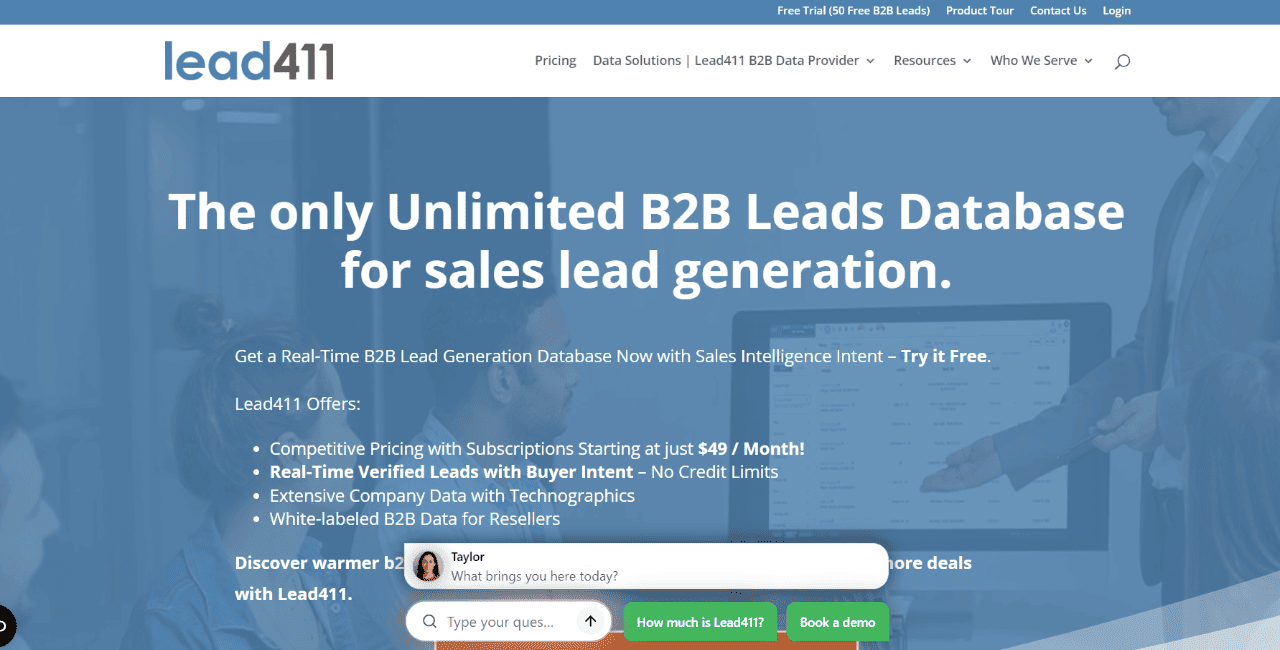
Lead411 as one of the Cognism alternatives

That trigger-based approach is where the value is. Reach helps a bit, sure, but it is still not a full sales engagement platform. Teams that want deeper sequences, AI personalization, and stronger reply handling will probably need something else layered on top.

Key features

  • Sales trigger tracking
  • Verified emails and direct dials
  • Buyer intent data
  • Reach for lightweight email outreach
  • CRM integrations

Pros

  • Good if your team wants a clear reason to reach out
  • Verified contact data is useful
  • Nice to have at least some outreach built in

Cons

  • Outreach is pretty limited
  • Some intent capabilities depend on plan
  • Not a full replacement for a real engagement tool

Pricing

Lead411 starts at $490 per year for Spark, while Ignite begins at $150 per month. There is also a 7-day free trial with 50 leads included.

LeadGenius: best for custom-built lead lists

LeadGenius is a different kind of tool.

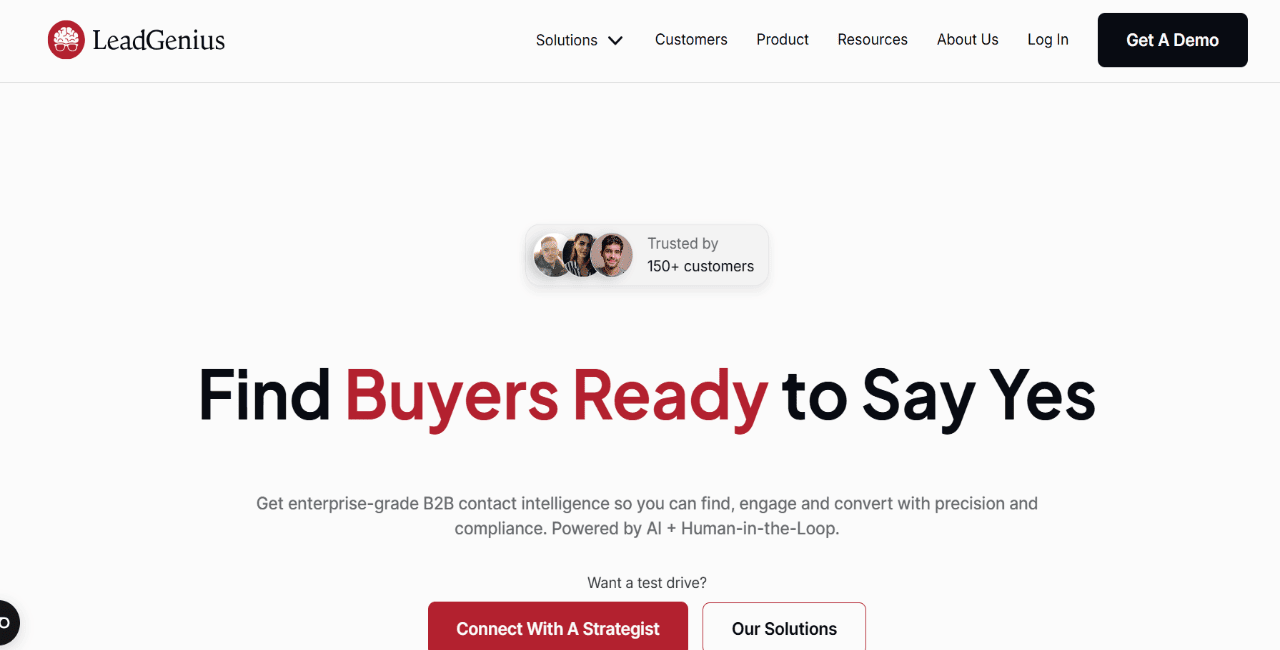
Instead of giving teams a big self-serve database, it builds custom lead lists using AI plus human research. That can be a strong option for companies targeting niche markets, weirdly specific job titles, hard-to-reach geographies, or segments that normal databases just do a bad job with.

LeadGenius as one of the Cognism alternatives

The downside is obvious enough: speed. You are not instantly searching and exporting leads the way you would in a self-serve platform. And there is no built-in outreach layer either, so campaign execution still has to happen elsewhere.

Key features

  • Custom lead list creation based on your ICP
  • Human-in-the-loop data research
  • Better support for niche segments and tougher regions
  • Flexible data structures
  • Delivery into the CRM or systems you already use

Pros

  • Strong fit for narrow or unusual ICPs
  • Useful when standard databases miss the mark
  • More custom than most tools in this category

Cons

  • No self-serve searching
  • Slower turnaround than instant prospecting tools
  • No native outreach functionality

Pricing

LeadGenius is custom-priced, with cost depending on the scope of the data project, volume, and complexity of the targeting.

LinkedIn Sales Navigator: best for relationship-driven prospecting

LinkedIn Sales Navigator is a strong option for reps who prospect through relationships, account research, and buying committee mapping.

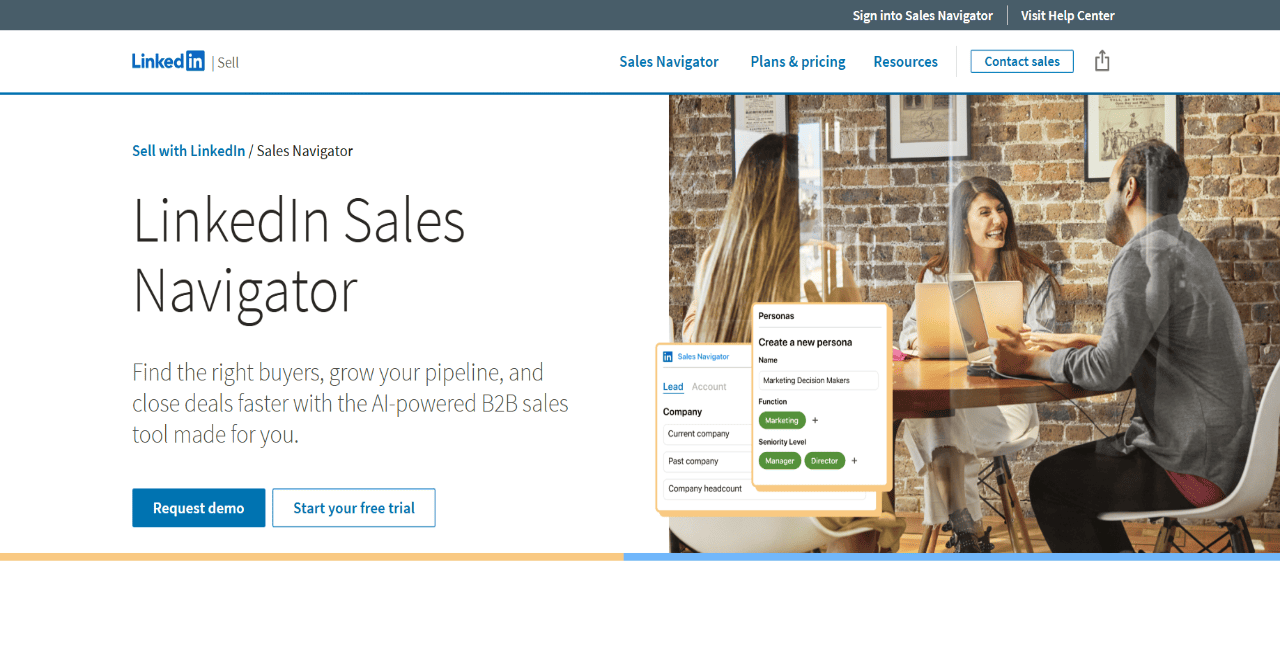
Because it runs on LinkedIn’s own data, reps can use advanced filters, save leads and accounts, track job changes, watch account activity, and send InMail. It is especially useful when the goal is to map stakeholders and find warmer entry points into target accounts.

LinkedIn Sales Navigator as one of the Cognism alternatives

But that is also where the boundary is. Sales Navigator is excellent for research and relationship-led selling, not for full prospecting and outbound execution. It does not give you verified emails at scale, and it does not run multichannel sequences. Most teams pair it with enrichment and outreach tools for that reason.

Key features

  • Advanced lead and account search
  • Buying committee mapping
  • InMail messaging
  • CRM integrations on higher plans
  • Real-time alerts for job changes and account activity

Pros

  • Built on native LinkedIn data
  • Great for account mapping
  • Works especially well for warmer, more relationship-led sales motions

Cons

  • No email sequencing
  • InMail credits are limited
  • Verified email and phone data still require other tools

Pricing

Sales Navigator Core starts at $119.99 per month, or $1,079.88 annually. Advanced starts at $159.99 per month, or $1,799.88 per year on annual billing.

Saleshandy: best for email-first lead generation

Saleshandy is built for teams that want to keep lead gen simple and email-first.

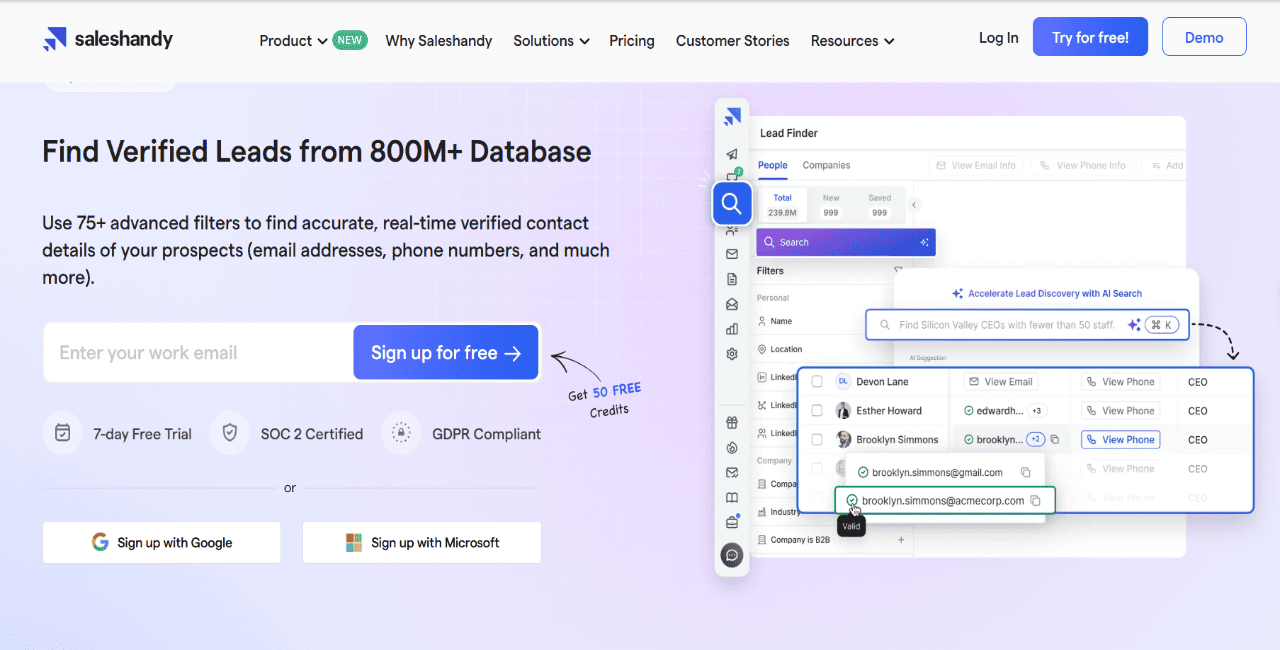
It combines cold email sequencing, deliverability tools, a lead finder, email verification, warm-up, and basic analytics. For founders, agencies, and smaller outbound teams mostly running on email, that can be a lean setup without all the overhead of a heavier sales engagement platform.

Saleshandy as one of the Cognism alternatives

The obvious limitation is channel breadth. Saleshandy is strongest when email is the whole game, or close to it. Once a team needs LinkedIn, calls, SMS, WhatsApp, AI SDR workflows, or deeper automation, it starts feeling narrow.

Key features

  • Multi-step cold email campaigns
  • Lead Finder for contact and company searches
  • Email verification before sending
  • Warm-up tools for sender health
  • Basic campaign reporting

Pros

  • Lower-cost entry point
  • Nice mix of lead finding plus email outreach
  • Deliverability tools are a helpful extra

Cons

  • Very email-centric
  • Not much depth across other channels
  • Some lead gen functionality comes through separate plans or credits

Pricing

Saleshandy offers a 7-day free trial. Email outreach plans start at $25 per month, while Lead Finder access and credits are priced separately.

Turn lead data into actual sales conversations

The right Cognism alternative really depends on what your team is missing right now, be it wider data coverage, better enrichment, stronger intent signals, or a platform that can handle outreach too.

Before picking anything, it’s a good idea to look at your current process from lead discovery to booked meetings. Because if reps still have to export lists, verify emails, enrich records, write messages, and run outreach across a bunch of separate tools, that process is going to drag no matter how good the sales data you get is. 

Reply.io pulls most of those moving pieces into one system — B2B data, enrichment, email validation, intent signals, multichannel sequences, AI personalization, deliverability, and analytics. 

There’s also a free 14-day trial, so you can test it in your actual outbound workflow and see if it fits.

FAQ: Cognism alternatives

What are the best alternatives to Cognism?

Some of the strongest Cognism alternatives right now are Reply.io, ZoomInfo, Apollo.io, Lusha, SalesIntel, and LeadIQ. Which one makes the most sense depends on what your team actually needs. If you want more than just lead data, like enrichment, intent signals, multichannel outreach, and AI personalization in the same workflow — Reply.io is one of the more complete options on the list.

Is Cognism worth it?

It can be, especially for teams that care a lot about verified contact data and do a lot of prospecting in EMEA. That’s where Cognism tends to stand out. But if your team also needs execution (outreach, personalization, analytics), then another platform may end up being the better fit.

What should you look for in a Cognism alternative?

Start with the basics: accurate contact data, solid coverage in the markets you sell to, email verification, enrichment, CRM integrations, intent signals, and some kind of outreach capability.

Is Cognism better than ZoomInfo?

Depends on where and how you sell. Cognism is often the better fit for teams that want compliant, phone-verified data, especially in EMEA. ZoomInfo usually has the edge for bigger US prospecting motions, broader intent data, and deeper account-level intelligence, but it comes at a higher price.

Which platform is best for B2B lead generation?

If we’re talking end-to-end B2B lead gen, Reply.io is one of the better picks because it covers the whole flow: finding leads, enriching them, verifying emails, reaching out, following up, and booking meetings. Other tools like ZoomInfo or SalesIntel are very strong on the data side.

Subscribe to our blog to receive the latest updates from the world of sales and marketing.
Stay up to date.

In this article

Your Superhuman SDR

Jason learns your product, tone, and strategy — then runs outreach with the precision of your best rep.

Your Superhuman SDR
Book a demo

Related Articles

What’s New in Reply: New API, AI Custom Fields, LinkedIn Enrichment, and More

What’s New in Reply: New API, AI Custom Fields, LinkedIn Enrichment, and More

What’s New in Reply: New API, AI Custom Fields, LinkedIn Enrichment, and More
Mailtrap Review 2026: Is This Email API the Right Fit for Your Team?

Mailtrap Review 2026: Is This Email API the Right Fit for Your Team?

Mailtrap Review 2026: Is This Email API the Right Fit for Your Team?
Top 11 6sense Alternatives in 2026 You Can Try Now

Top 11 6sense Alternatives in 2026 You Can Try Now

Top 11 6sense Alternatives in 2026 You Can Try Now