
Finding enough people to target with your offering stopped being that hard a while ago. Anyone with a credit card can pull ten thousand contacts before lunch, but in hindsight, that’s also the biggest problem.
What decides whether prospecting works in 2026 is precision, and precision entirely depends on the system you build. The building blocks haven’t changed — ICP, lists, personalization, channels, replies.
What changed is how they’re run, and not just in terms of more automation, but also how AI agents can now do the entire job for you, and that’s exactly what we’ll explore below.
What lead prospecting looks like in 2026
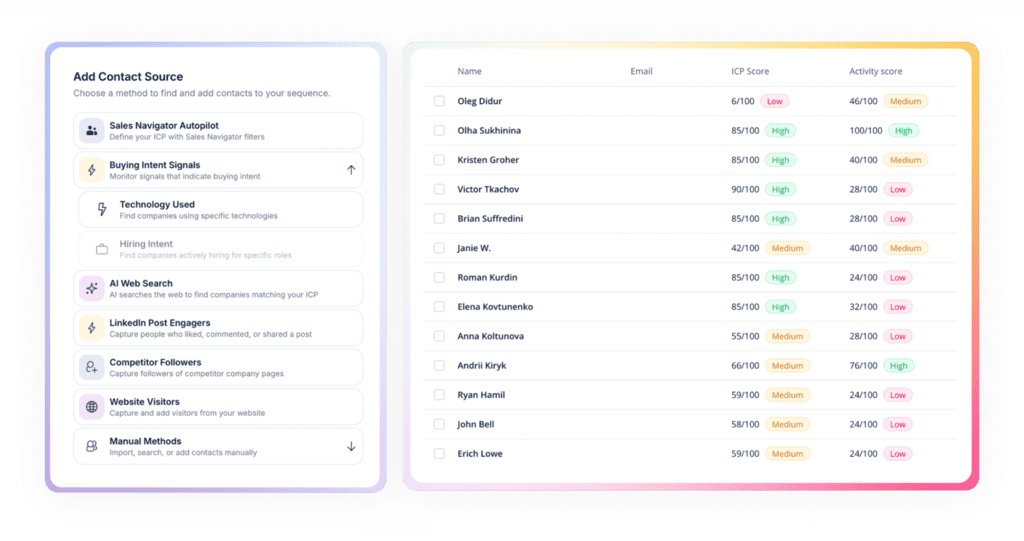
Lead prospecting is the work of turning a raw list of contacts into people worth a conversation, done by identifying who fits your target audience, researching them and their companies, qualifying them, and then starting the conversation. It’s the manual, judgment-heavy half of pipeline generation.
It gets confused with lead generation constantly, so let’s settle it. Lead generation is the wider category which covers everything that produces leads at all, inbound and outbound alike, from content and paid ads to partnerships, and outbound on a bought list of 5,000 accounts.
Prospecting is the narrower job you do to those leads, primarily reaching out to them directly, one at a time. Marketing usually owns lead generation and works one-to-many, whereas sales owns prospecting and works one-to-one. So a lead is anyone who landed in the pool, and a prospect is a lead you’ve qualified and decided is worth the effort.
Buyers now decide before you show up
Buyers finish most of their homework before they engage directly with a company. 6sense’s 2025 Buyer Experience Report, built on responses from more than 4,000 buyers, found that 94% of B2B buying groups had already ranked their preferred vendors before contacting a single seller, and the early favorite goes on to win roughly 77% of the time. That trend will only keep increasing given the role of AI in our day-to-day lives.
Read that as a deadline, since by the time your email lands, the shortlist is mostly written. Being on that list depends on reaching the right person at the moment their problem is live, which is a targeting and timing problem, and volume solves neither.
Why AI SDRs became the default answer
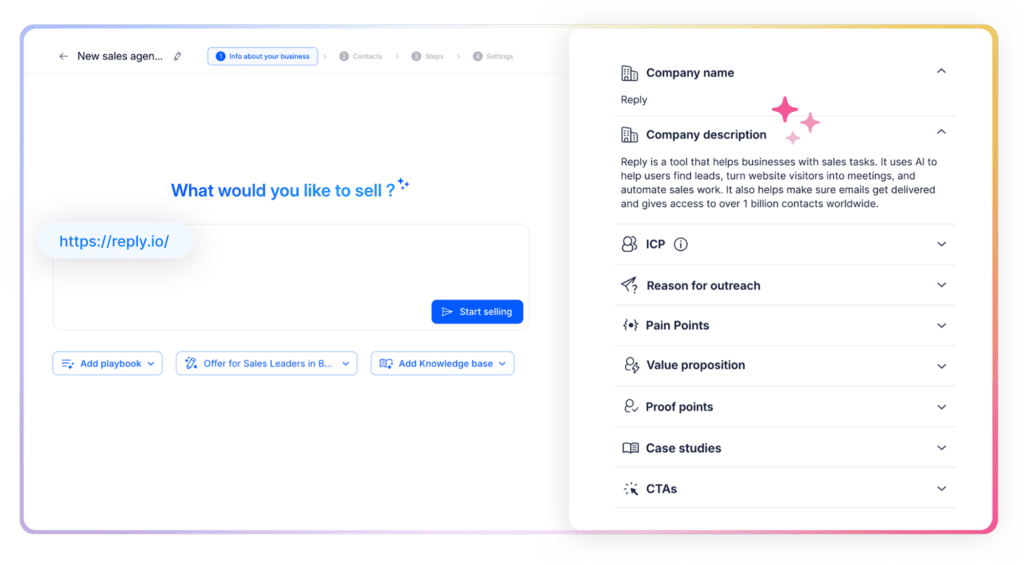
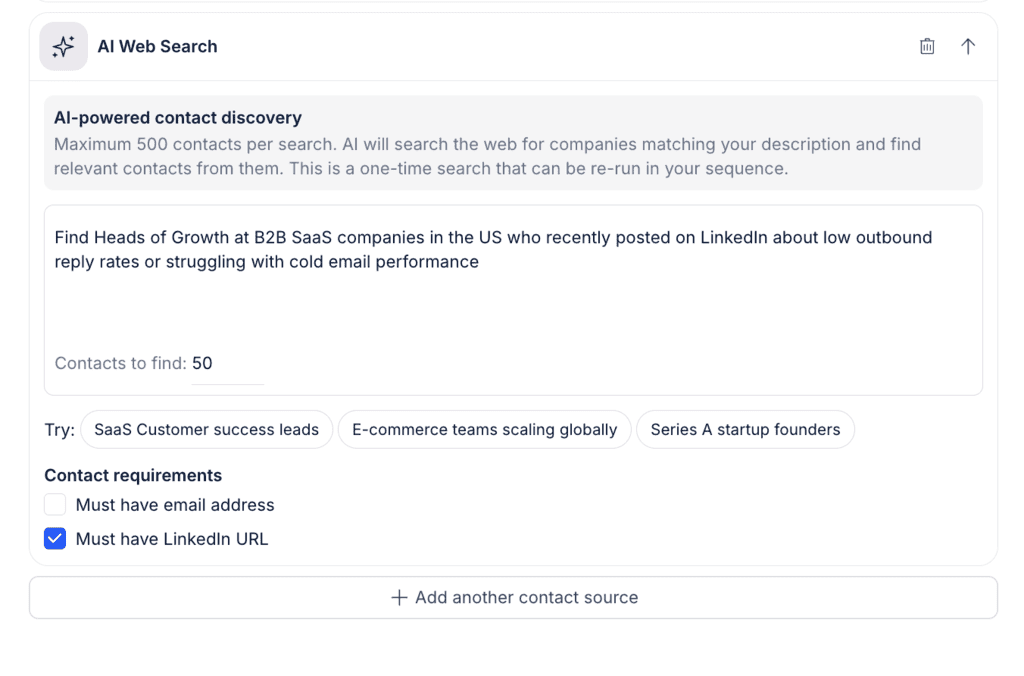
The case for AI SDRs, also known as AI sales agents, is the ideal solution to that targeting and timing problem. It isn’t just another type of AI software bolted onto step four of your lead prospecting system. It’s an agent that joins your team as a full-time rep that owns the motion end to end, finding the right accounts, researching them, writing, sending, branching, and even handling incoming replies.
Adoption is already past the early-adopter stage. Salesforce’s State of Sales 2026, a survey of 4,050 sales professionals across 22 countries, found 55% of sellers already using AI for prospecting, with top performers 1.7x more likely than underperformers to be running prospecting AI agents. The same research puts the average seller at 40% of their time actually selling.