
Many teams that say they automated prospecting really only have automated sending. The contacts are still found and researched by hand, nobody scores them, outreach campaigns follow the same structure and timing, relevant triggers and events aren’t picked up, and the only thing that actually scaled is volume.
That’s often the reason why the activity chart climbs, but the meetings chart doesn’t.
Truly automated sales prospecting runs on five key layers, and it pays off when all five work together. Below we’ll cover what those layers are, how much of the work AI agents can take on, the seven steps that take you from ICP to booked meeting, and the numbers that accurately tell you what’s working and what needs adjustment.
What is automated sales prospecting?
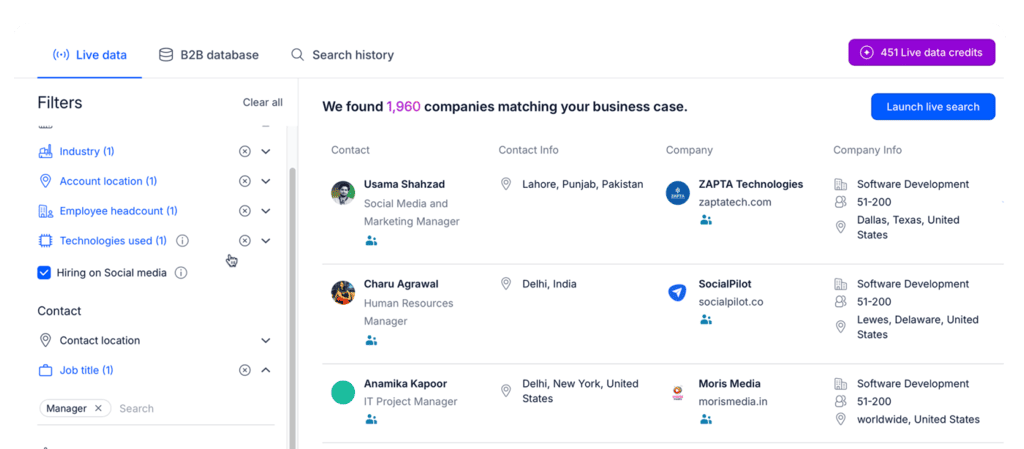
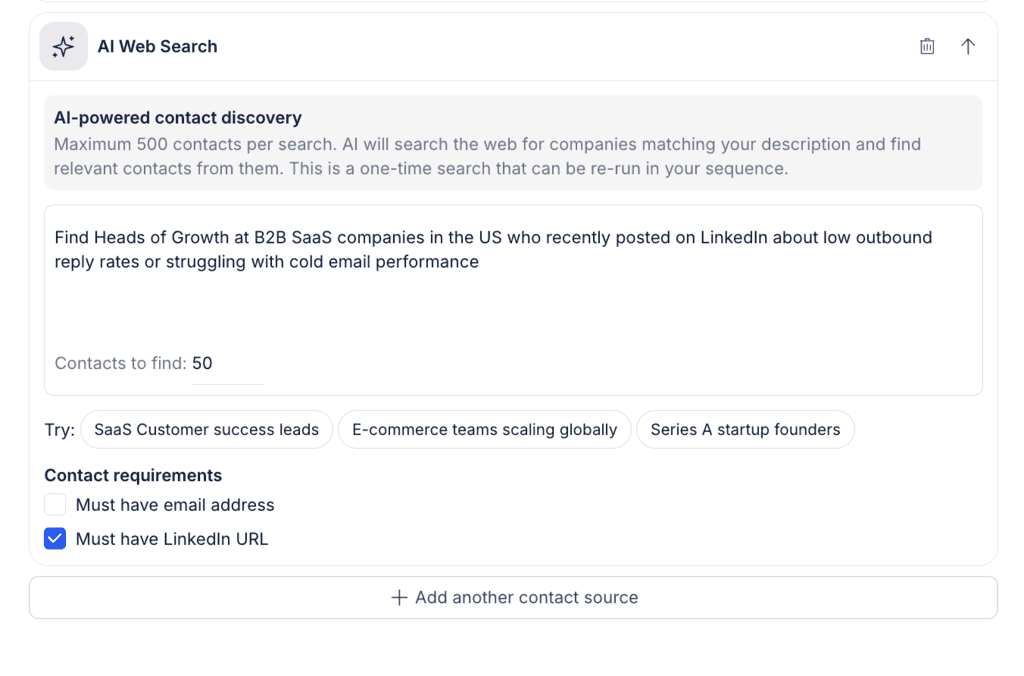
Automated sales prospecting is the use of software to run the top of your funnel, which includes finding accounts that fit your ICP, enriching them with additional data and scoring them, using that context to personalize outreach across multiple channels, and handling replies. As in any automated system, the human sets the rules, guardrails, hand-offs, and makes the judgment calls.
It ends at a qualified conversation, so everything past the booked meeting is still a human sales cycle, because in spite of automation and AI, virtually all buyers still want to buy from you, not your software. That preference shows up in the copy long before the call. A sequence drafted end to end by a model tends to land in an over-formal register, with evenly paced sentences and the same abstract phrasing across the whole list, which is exactly what tells a prospect a machine wrote it. Adding a step for humanizing AI drafts before the campaign goes live restructures those sentences rather than trading words for synonyms, and the detection score shown under each result flags the variants that still read as generated.
The five layers of an automated prospecting system
Five layers sit on top of each other, and each fails in its own specific way. When you aren’t seeing the results you’d hoped for, the layer that broke tells you what to fix, though keep in mind that each broken layer affects all the layers following it:
| Layer | What it does | What breaks when it’s weak |
| Data | Finds, verifies, and refreshes who to contact | You personalize beautifully to people who left in March, and the bounces burn your domain |
| Qualification | Scores fit and intent, sets the send order | Your team spends a week on accounts that were never going to buy |
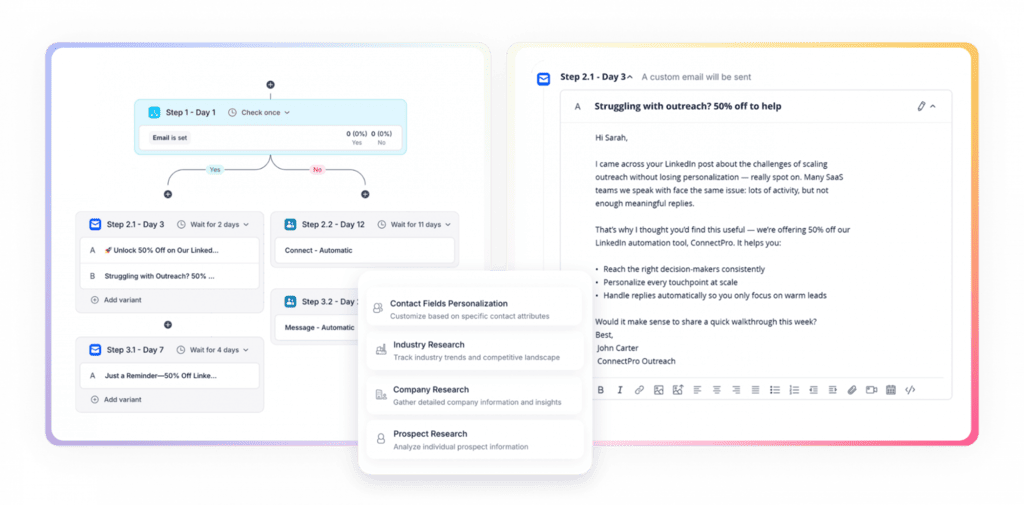
| Orchestration | Picks the channel, timing, and next step per prospect | Everyone gets the same five emails no matter what they did |
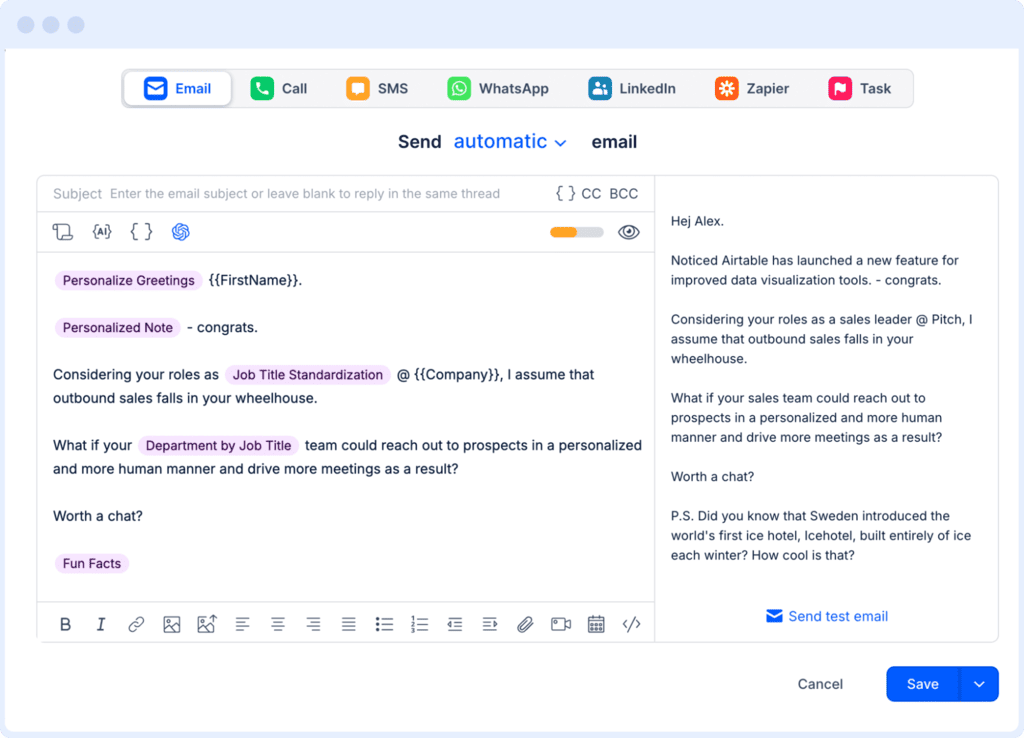
| Personalization | Turns research into copy the prospect recognizes | Merge-tag mail that reads like mass mail, because it is |
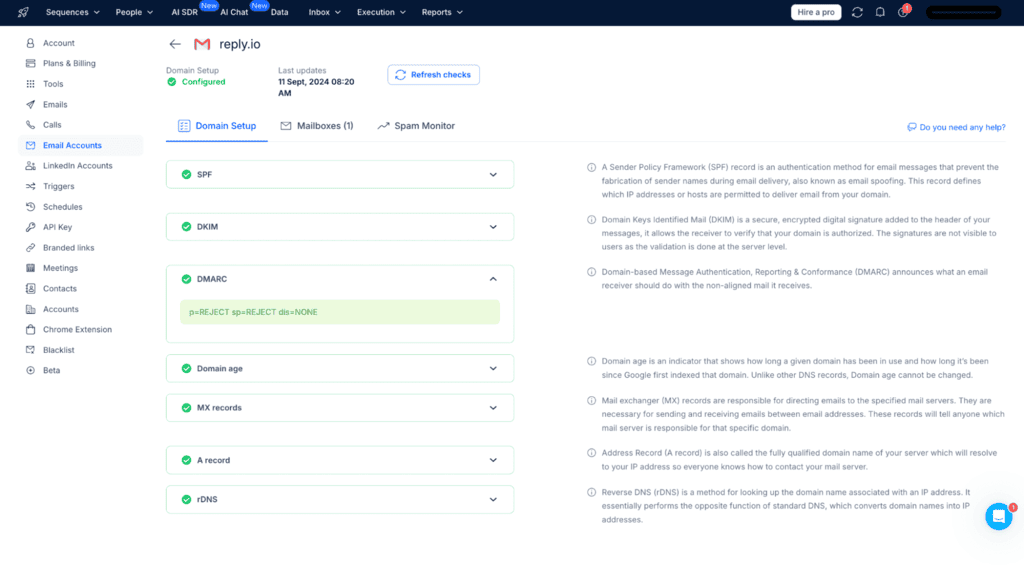
| Delivery | Authentication, warm-up, throttling, reputation | The best campaign you ever wrote lands in spam |
Where software ends and AI agents begin
There are three levels of autonomy here, and knowing which process requires each is how you can make the most use of your team’s skills and AI’s capabilities:
- Rule-based automation is you writing the logic and the tool executing it. A simple example is saying: if an email isn’t opened in three days, send a follow-up. Excellent for automating, but completely blind to context. This is what “sales automation” used to mean back in the day.
- AI-assisted automation adds a model inside a workflow that you still own, only it researches prospects and accounts, drafts the messages, scores each account, suggests the next step, and you approve. Faster, but you’re still in the loop.
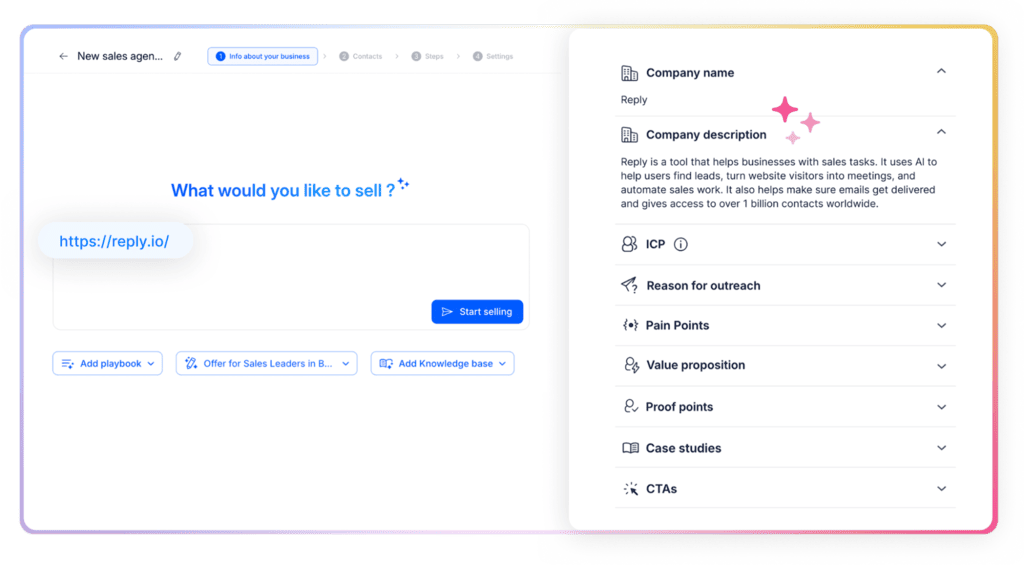
- Agentic automation hands over the loop itself. An AI SDR, also known as an AI sales agent, joins your team as a full-time sales rep that learns everything about your business, audience, and strategy, and then autonomously runs the entire cycle on its own, from finding the right leads to launching outreach and even booking meetings.
That third level stopped being theoretical. Salesforce’s State of Sales 2026, a survey of over four thousand sales professionals across 22 countries, found that 55% are already using AI for prospecting, and high performers were 1.7x more likely than underperformers to be running prospecting agents specifically. In fact, Gartner expects 90% of B2B buying to be AI-agent intermediated by 2028, so the other side of the table is automating too.
If you’re wondering whether agents can run prospecting end to end in 2026, the short answer is they do. What they can’t do is set your strategy or build personal relationships with clients/partners.