Key takeaways:
- No single API covers lead generation end to end. The category splits into sourcing, enrichment, qualification and activation, and most teams end up paying for three of the four.
- API access is often gated above the entry tier. Clay sells no API at all on Free or Launch; it appears from Growth, listed from $185 a month billed annually.
- Pricing models are not comparable without normalizing. Wiza sells unlimited email reveals per seat, Apify sells prepaid platform usage that expires monthly, and Exa bills per request.
- Personalization and persistence still do the heavy lifting. Backlinko’s analysis of 12 million outreach emails put the average response rate at 8.5%, with follow-ups roughly doubling it.
Nobody buys a “lead generation API.” They buy a way to find companies matching an ICP, a way to attach a working email address, a signal that says which accounts are worth the effort, and something that actually sends the message. Four jobs, usually four vendors, one line item nobody can explain to finance.
This guide maps ten APIs onto those four stages so you can see which one you are actually missing. Some cover a single stage properly, a few span two, and the pricing models differ enough that comparing headline prices tells you almost nothing.
Every figure below came from the vendor’s own pricing page. Where a vendor hides tier prices behind a slider or a sales call, that is stated rather than guessed at.
What Is a Lead Generation API?
A lead generation api is any programmatic interface that moves a prospect closer to a conversation: finding accounts, resolving contacts, appending an email or phone number, scoring intent, or triggering the outreach itself.
The term is loose because the category is. A search API that returns companies matching a description and a sending API that runs a sequence are both sold as lead generation, and they solve completely different problems. That is why this guide leads with stages rather than a ranked list of interchangeable tools.
The underlying records are a separate market again, which our roundup of B2B data APIs treats on its own terms.
What they share is a shift in how the work gets bought. Data used to arrive as a CSV somebody exported quarterly. Now it arrives per request, priced per credit, which means the cost of a bad ICP definition shows up on an invoice within days instead of being buried in an annual contract.
Gartner expects 60% of B2B seller work to run through generative AI interfaces by 2028, up from under 5% in 2023. Agents cannot use a CSV. They need endpoints, which is most of why this category is being rebuilt API-first.
The Four Stages a Lead Generation API Covers
Sorting the market by stage makes the gaps in your own stack obvious.
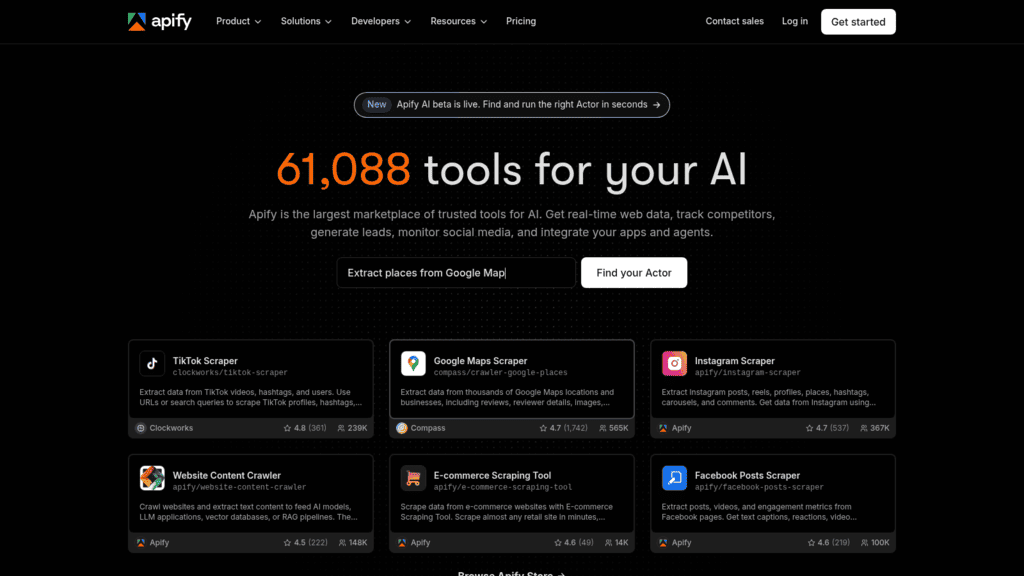
Sourcing answers “who should we talk to?” You supply an ICP, in filters or plain language, and get back companies or people. Reply.io’s Live Data search, Exa’s semantic search and Apify’s scrapers all live here, using very different methods.
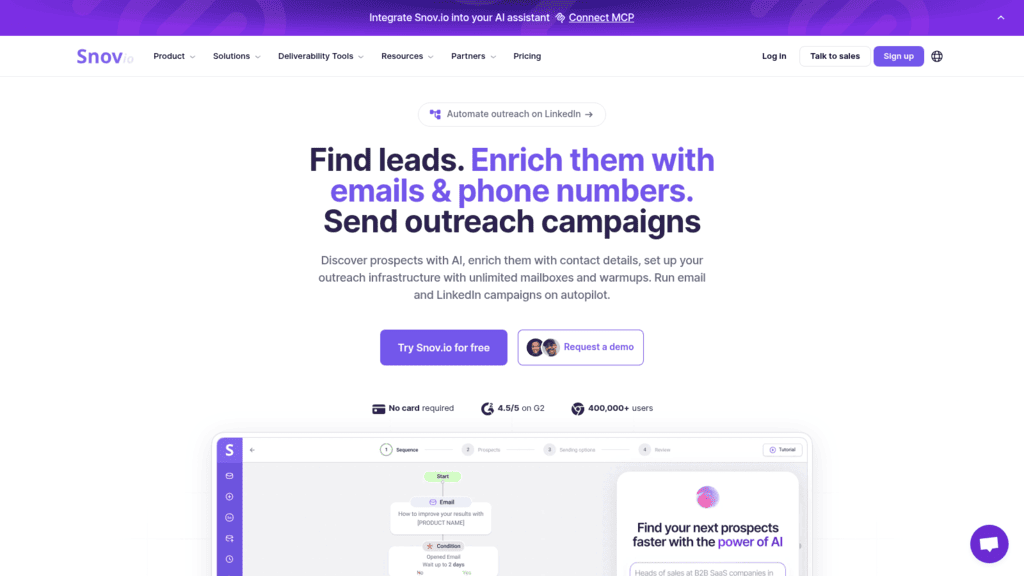
Enrichment answers “how do we reach them?” You supply a name and a domain, or a LinkedIn URL, and get back a verified email address or a phone number. Findymail, Wiza and Snov.io compete here, and it is the most commoditized stage.
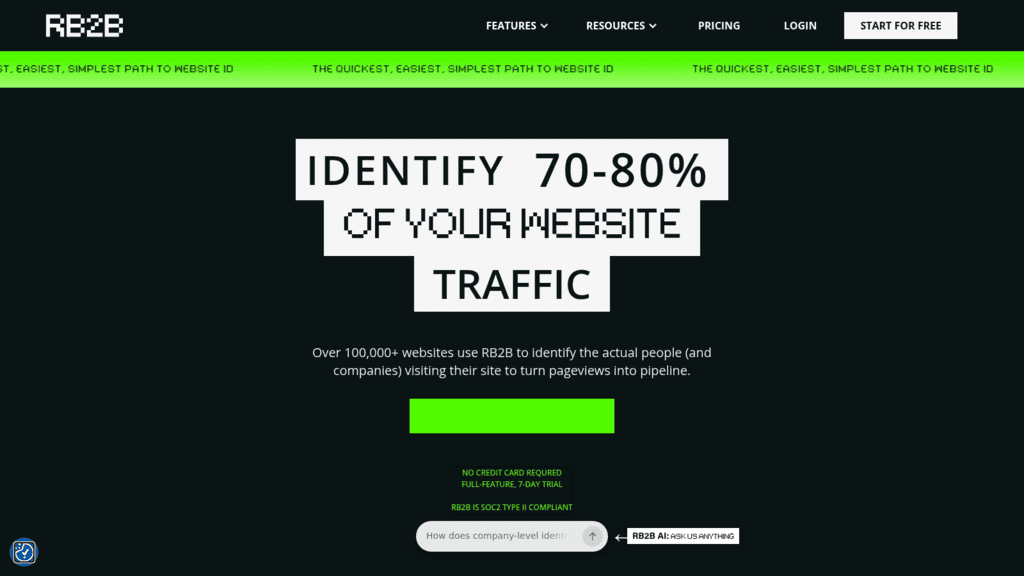
Qualification answers “which of these is worth the effort?” This is where visitor identification and intent signals sit. RB2B tells you which companies and, in the US, which individuals visited your site.
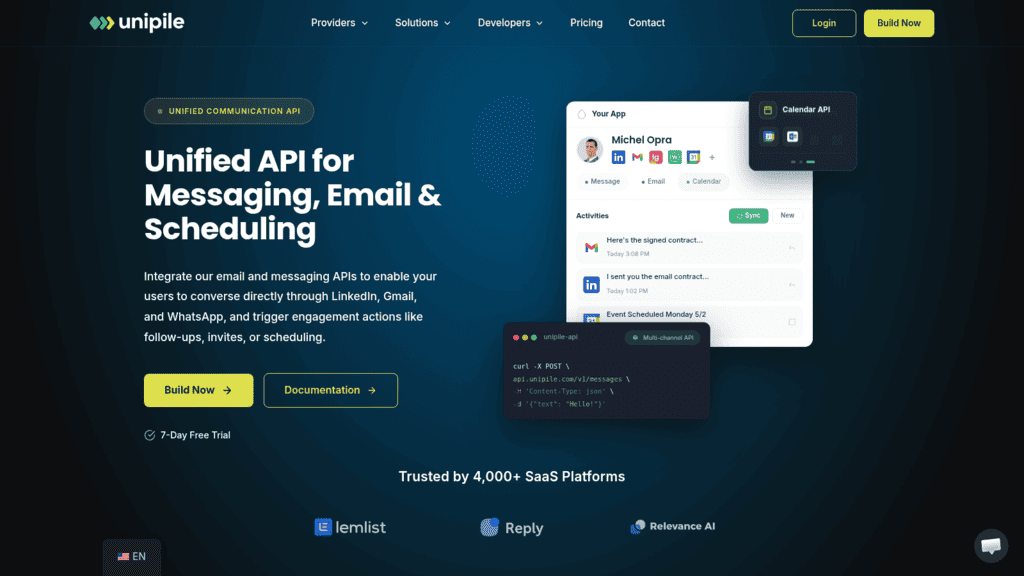
Activation answers “how does the message get sent?” Sequencing, multichannel steps, reply handling. Reply.io, Instantly and Snov.io operate here, and Unipile provides the LinkedIn transport underneath many tools that do.
Very few teams need all four from separate vendors. The useful exercise is identifying which stage is currently manual, because that is the one costing you the most.
Activation is also the stage most often reached through a sending API rather than a platform UI, a distinction we unpack in our guide to the outbound API.
The Best Lead Generation APIs
The second column matters more than the rating. A tool that is excellent at enrichment does nothing for a sourcing problem.
| Tool | Stage it covers | Best for | Main limitation | Pricing (from) | Rating |
| Reply.io | Sourcing and activation | Running sourcing and outreach on one API | Search endpoints are in beta | $49/month | ★★★★★ |
| Clay | Enrichment orchestration | Waterfalling many providers at once | No API below the Growth tier | $185/month annually | ★★★★★ |
| Exa | Sourcing | Describing an ICP in plain language | Returns pages, not contact records | $10 free credits monthly | ★★★★★ |
| Findymail | Enrichment | Verified emails with no wasted credits | Phone lookups cost 10 credits each | $99/month | ★★★★☆ |
| Wiza | Enrichment | Unlimited email reveals per seat | Phone reveals billed separately on lower tier | $83 per user/month annually | ★★★★☆ |
| Snov.io | Enrichment and activation | Finding and sending in one place | Shallower data than dedicated providers | $39/month | ★★★★☆ |
| Unipile | Activation | LinkedIn messaging through one API | Runs through a real logged-in account | EUR49/month | ★★★★☆ |
| RB2B | Qualification | Identifying who visited your site | Person-level identification is US only | $79/month | ★★★★☆ |
| Apify | Sourcing | Scraping sources no vendor sells | Prepaid usage expires each cycle | $29/month | ★★★★☆ |
| Instantly | Activation | High-volume sending and warmup | Database quality varies by segment | $47/month | ★★★★☆ |
Read that table against the four stages above rather than top to bottom, because the strongest tool for a stage you have already solved is worth nothing to you.
Reply.io
Best for: Sourcing prospects and sending to them
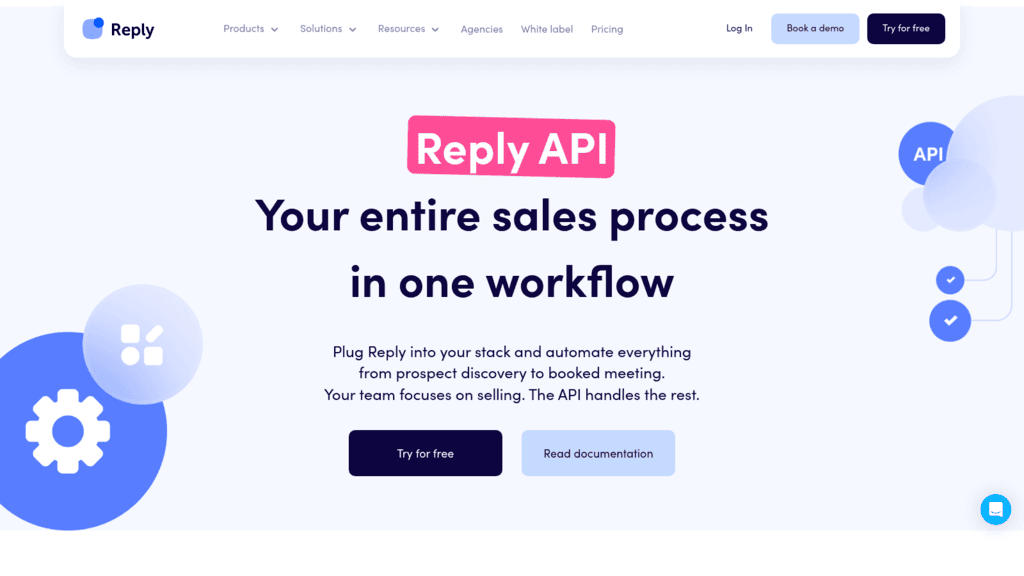
Overview: We cover two of the four stages through one API, which is the argument for putting us first here. Live Data search finds people matching an ICP, and the sequence endpoints send to them, without an export sitting between the two.
The contact database behind the search holds more than a billion contacts, including 220 million-plus in the US and over 60 million company profiles across 150-plus countries, supplied through Generect.
We should be straight about maturity. All nine Live Data search endpoints are marked Beta in our docs, which means parameters and response shapes can change without notice. Build against them with that in mind.
The contact enrichment endpoints are a separate matter: as of August 2026 all five are still marked Coming soon in our developer docs, so enrichment runs in the platform today but is not callable over the API yet.
Key features:
- Live Data search endpoints that start, poll, list and preview a people search by ICP filters
- Typeahead endpoints for departments, industries, job titles, locations and seniorities
- Programmatic control over enrolling, pausing and resuming a sequence
- Event webhooks covering replies, opens, clicks and booked meetings, so nothing polls
- Two live email validation endpoints so sourced addresses can be checked before sending
- Rate ceilings published up front at 100 calls a minute and 3,000 an hour
Pricing: Billing tracks how many contacts you hold, not how many people log in, which puts the floor at $49 monthly on an annual term for a 1,000-contact database. Watch the data allowance rather than the headline figure: 50 live data credits ship with the base plan each month, enough to test and not to operate, with further packages beginning at $20 monthly. Fourteen days of trial access, and no free tier.
Pros: sourcing and activation on one API, very large underlying database, event webhooks, published rate limits, live validation endpoints
Cons: the search endpoints are all beta and the enrichment endpoints are not callable yet, and the data is bundled inside the platform rather than sold standalone, with only 50 live data credits included on the base plan
How to start using it:
- Open a trial and issue a v3 token from the API Key panel inside Settings.
- Call the typeahead endpoints to resolve your ICP filters to valid IDs.
- Start a Live Data search, then poll it until the result set is ready.
- Validate the returned addresses through the email validation endpoints before sending.
- Enroll the surviving contacts into a sequence and subscribe to reply webhooks.
Why it’s a good lead generation API: Two stages on one contract, one auth model and one set of rate limits, with the outreach layer already built rather than assembled from parts.
Final verdict: The strongest fit when sourcing and sending should live together. If you need a mature, generally available search API today, the beta labelling is a real consideration.