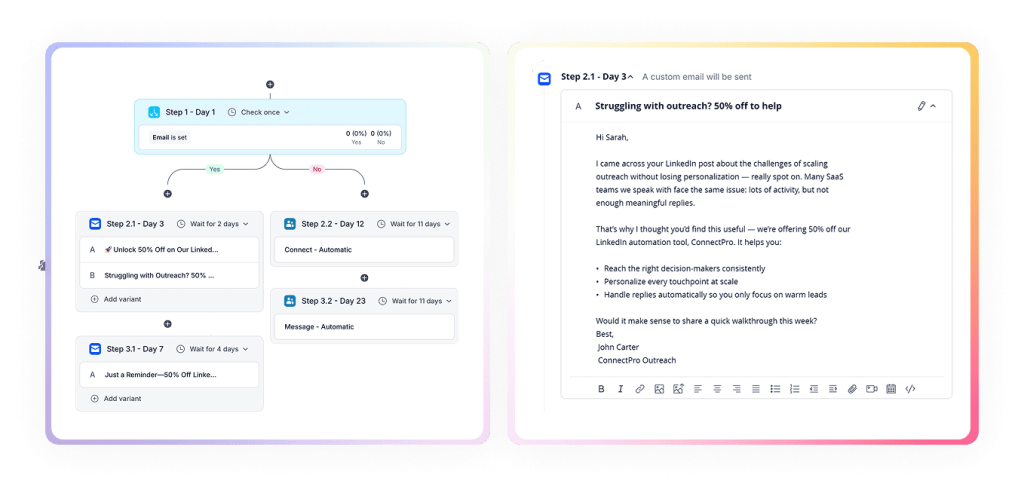

How to Outsource Demand Generation Without Hiring More in 2026

How to Outsource Demand Generation Without Hiring More in 2026

Demand generation is one of those functions that looks simple from the outside but gets messy fast in real life.

You need consistent pipeline, clean attribution, intelligent handoffs between marketing and sales, and enough speed to keep up with the market. At the same time, budgets are becoming tighter, and teams are staying lean.

That’s why outsourcing demand generation can be a smart move, and in 2026, you’re no longer limited to the classic agency model. Depending on what you’re trying to solve, you can outsource to an agency, keep it in-house, or outsource parts of the workflow to an AI agent like Jason AI

We’ll cover how to make the right choice, what to look out for, and what “successful” actually means in modern-day demand generation.

Is outsourcing demand generation the right move right now?

Outsourcing isn’t a simple “yes/no” question. It’s a matter of readiness.

Before you pay anyone, you need clarity on a few basics: who you sell to, what triggers their demand, and what messaging reliably moves people to the next step.

Ask yourself:

  • Do we know our ICP and buying committee?
  • Do we have messaging that already wins replies, meetings, or opportunities?
  • Is the pipeline flat or unpredictable?
  • Is bandwidth the real bottleneck, or is it clarity?

Based on that, most teams fall into one of three paths:

  1. Build in-house first → If you’re still changing your pitch every month, you’ll outsource confusion and get expensive noise back. In-house is where you test, learn, and lock in the foundation.
  2. Outsource to an agency to scale → If you already know what works and you simply need speed, volume, multi-channel execution, or broader coverage, an agency can be that necessary execution engine.
  3. Outsource to an AI agent → If your main gap is consistent outbound execution (research, generating leads, personalization, outreach, nurturing), AI agents like Jason AI are a cost-effective solution that can cover all those tasks without adding headcount. 

The bottom line is that if you can’t describe what a “good lead” means to you in one paragraph, don’t outsource yet. Fix that first.
Convert Competitors` Fans Into Hot Leads

Stop chasing cold leads. Start talking to people who already want what you sell.

Your competitors’ followers?
They know the problem. They’re paying attention.
Some are even looking for something better, right now.

This playbook shows you exactly how to turn them into hot leads:

→ Find and pull competitor followers in minutes
→ Clean, segment, and enrich your list for max fit
→ Launch outreach that’s personal, not pushy
→ Automate follow-ups so no lead slips away

What does outsourced demand generation actually cover?

Demand gen outsourcing can mean anything from “run our ads” to “own the pipeline numbers.” So you want the scope to be crystal clear before you commit to any agency or expensive AI software. 

Here’s what it usually includes, broken down by the parts that actually matter: 

Strategy and planning

This is where good programs are won or lost. Before anyone launches campaigns, a solid partner should help you nail:

  • audience and ICP
  • buying committee and personas
  • offer and value prop
  • channel mix and sequencing
  • success metrics and reporting expectations

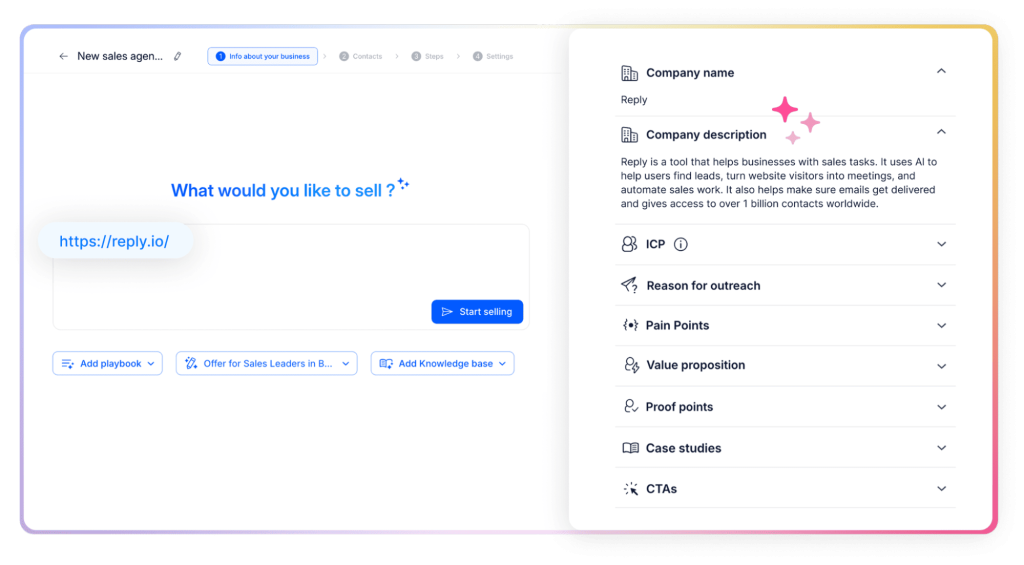
If strategy is skipped, execution becomes random, and random demand gen gets expensive. Even if you choose to outsource to an AI agent over an agency, reputable options like Jason AI begin their work by first learning everything about your business and product, and outlining exactly who to target and how:

Top-of-funnel execution

This is the visibility and demand capture layer. Depending on the partner, it can include:

  • content assets (blog, landing pages, lead magnets)
  • paid distribution (LinkedIn, Google, programmatic, paid social, syndication)
  • channel-level testing (creative, targeting, messaging angles)

The key is that TOFU should have a clear job — get the right accounts into your ecosystem, not inflate vanity metrics.

Mid-funnel programs

This is where interest becomes sales-ready intent. Typical mid-funnel work includes:

  • nurture sequences (email and retargeting)
  • webinars and event follow-ups
  • Account-based-marketing (AMB) for target accounts
  • scoring and routing logic

If mid-funnel is weak, you get leads that look good on paper but never convert.

Data and intent signals

Data drives targeting and timing. You’ll usually see three layers:

  • Zero-party: what buyers tell you directly (forms, surveys, conversations)
  • First-party: what they do on your site and content (visits, downloads, engagement)
  • Intent signals: research behavior that suggests they’re in-market

Good partners don’t just collect this. They use it to prioritize accounts, adjust messaging, and trigger follow-ups at the right moment.

Sales-adjacent outcomes

This is where your demand generation workflows start being directly accountable to revenue outcomes, such as: 

  • qualified meetings
  • demos booked
  • sourced opportunities
  • pipeline attribution

Depending on your product and business model, this could be identifying targeted leads, launching multichannel outreach campaigns (email, LinkedIn, etc.), AI personalization at scale, and the list goes on. 

This is also where AI agents can replace the entire chunk of the traditional outsourcing process. 

For example, Jason AI joins your team as a full-time rep and starts identifying potential buyers, researching prospects and companies, personalizing outreach with relevant context, running multichannel sequences, and even handling replies and booking meetings on your behalf. 

The big win with AI agents, besides being much more cost-effective than agencies, is consistency and speed, especially when you don’t want to increase headcount. 

Tech stack setup and integrations

Outsourcing breaks when systems and data don’t talk to each other. Chances are, you won’t be outsourcing your entire sales and marketing processes, whether it’s to an agency or an AI agent, so at a minimum, you need clean connections between:

  • CRM (Salesforce, HubSpot, Zoho)
  • marketing automation (for nurture, routing, scoring)
  • ad platforms and ABM tooling (for targeting and retargeting)
  • reporting (GA4, Looker, Tableau, whatever your team trusts)

If this isn’t set up properly, attribution gets messy, follow-up slows down, and everyone starts arguing about whether the program is working.

Which outsourcing models should you consider?

There are a few common ways companies outsource demand gen. The “best” one isn’t universal. It depends on what you’re trying to buy: execution, pipeline conversations, better targeting, or accountability tied to outcomes.

1. Agency-led model

You pay a monthly retainer (and usually add media spend separately), and the agency runs execution: campaign strategy, creative, channel management, optimization, reporting.

Pros

  • Strong if you need multiple channels coordinated (paid + content + nurture)
  • Works well when your ICP and offer are already clear and you want more volume

Cons

  • Easy to drift into “busy work” if KPIs aren’t tied to pipeline
  • Needs tight oversight on targeting, routing, and attribution

2. Demand-as-a-service (DaaS) model

Packaged demand gen delivered as a subscription. Usually comes with defined deliverables, a repeatable process, and a standard cadence.

Pros

  • Faster start, more predictable monthly output
  • Useful when you want a system, not a custom build every month

Cons

  • Can feel generic if your sales cycle is niche or your differentiation needs deeper positioning
  • Less flexibility than a true agency engagement

3. Appointment or meeting-based model

You’re paying for booked meetings (or qualified appointments), not for hours or “campaign activity.”

Pros

  • Very clear output and easier week-to-week tracking
  • Can ramp quickly if targeting and qualification are nailed

Cons

  • Meeting quality can vary if definitions are loose
  • Incentives can skew toward quantity unless quality is enforced

If you use this model, the contract needs a written definition of a qualified meeting (role, company profile, pain, timing) and what happens when meetings don’t match it.

4. Intent or signal provider model

This isn’t “outsourcing demand gen end-to-end” but paying for better timing and prioritization. The provider gives you signals (research behavior, hiring, tech changes, category interest) so you can focus effort on accounts that are more likely to be in-market.

Pros

  • Improves timing and account selection (especially for ABM and enterprise)
  • Helps your outbound and paid efforts feel less random

Cons

  • Signals don’t execute campaigns for you
  • If activation is weak, you end up with expensive dashboards and no pipeline

5. Hybrid or performance-based model

A base retainer plus outcome-based fees (meetings, opportunities, influenced pipeline, sometimes revenue share). This can work well, but only with clean definitions.

Pros

  • Better alignment than pure retainer
  • Encourages accountability when measurement is transparent

Cons

  • Bad definitions create disputes fast
  • Some providers optimize for “report-friendly” outcomes unless quality is enforced

6. AI sales agent model

In 2026, there’s another option: outsource parts of demand gen execution to an AI agent. This is most relevant for outbound-driven demand gen: lead sourcing, enrichment, personalization, follow-up, reply handling, and meeting booking.

Pros

  • Scales outbound coverage without adding headcount
  • Consistent follow-up across time zones and segments
  • Faster iteration on messaging and sequences

Cons

  • Needs clear guardrails (ICP, tone, qualification rules)
  • Still requires deliverability discipline and quality oversight

How to compare the outsourcing models

The best piece of advice here is to not pick based on the pitch, and instead pick based on your main bottleneck(s).

Use these questions as your filter:

  • How quickly do we need results?
  • How predictable do results need to be?
  • How much control do we want over execution and messaging?
  • How much can we afford upfront before ROI shows up?
  • How much risk are we willing to take on quality and attribution?

Then match the model to the situation:

  • You need multi-channel execution (and already have a clear ICP/offer) → Agency-led

  • You want predictable monthly output with a repeatable system → DaaS

  • You need more pipeline conversations and your qualification is tight → Meeting-based

  • You’re selling ABM/enterprise and timing is your problem → Intent/signal provider (paired with a real activation motion)

  • You want accountability tied to outcomes → Hybrid/performance-based

  • You want more outbound demand gen without hiring SDR capacity → AI sales agent model

One practical rule to keep in mind is that if you’re still guessing who your ideal customer is, don’t outsource scale yet. Do the learning in-house first, then outsource execution once the basics stop shifting every week.

How should you evaluate and choose an outsourcing partner?

  • Start with the outcome → define what you’re actually paying for (inbound leads, pipeline, qualified meetings, target-account penetration). If you don’t define the outcome, you’ll end up paying for activity.

  • Make scope and ownership explicit → channels, deliverables, routing rules, follow-up SLAs, and who owns what after a lead responds.

  • Ask for proof that matches your motion → same market, similar deal size, comparable sales cycle. Generic “we helped SaaS companies” doesn’t count.

  • Validate data + quality definitions → where leads come from, how data is refreshed, and what “qualified” means in writing (especially for meeting-based models).

  • Demand reporting that ties to revenue → you should see lead-level data, stage conversion, and pipeline outcomes, not just CTRs and form fills.

  • Pressure-test the contract → pilot terms, exit clauses, asset/data handover, and what happens if targets are missed.

  • Know the red flags → CPL guarantees without funnel transparency, refusal to share raw data, vague quality definitions, and long lock-ins with no performance protections.

Picking a demand gen partner is less about the pitch and more about alignment. If scope, definitions, and reporting aren’t locked, you’ll end up debating processes while pipeline stays flat.

Here’s the short checklist that keeps you out of trouble:

  • Define the outcome upfront → pipeline, opportunities, qualified meetings, target-account penetration — pick the one you’re optimizing for and make it the yardstick.
  • Make scope and ownership explicit → channels, deliverables, SLAs, handoffs, and who owns follow-up (and what happens on no-shows).

  • Demand proof that matches your situation → same market, similar deal size, comparable sales cycle. Generic case studies don’t count.

  • Validate data sourcing + lead quality rules → where leads come from, how often data is refreshed, and what “qualified” means in writing.

  • Audit the reporting and attribution → you should have access to raw lead data, funnel-stage conversion, and pipeline outcomes — not just clicks and form fills.

  • Pressure-test the contract → pilot structure, exit terms, asset/data handover, and what happens if targets aren’t met.

  • Watch for obvious red flags → CPL guarantees without funnel visibility, refusal to share raw data, vague reporting promises, long lock-ins with no performance protections.

That’s more than enough to filter out most bad-fit partners fast.

How can Jason AI SDR improve outsourced demand generation?

Jason AI is an AI sales agent that helps you fully automate and scale the outbound side of demand gen without adding headcount or relying on an agency to run day-to-day execution.

What to do next if you want demand gen scale without hiring

Outsourcing demand generation works best when you already have clarity on who you sell to, what messages perform well, and what a qualified opportunity looks like. 

From there, the decision is mostly about execution capacity — do you want an agency partner, an automation-first approach, or a hybrid of the two? 

A practical next step is to pick one bottleneck (pipeline volume, targeting, multi-channel coverage, etc.), run a short pilot with your potential agency or AI software, and only scale after you see repeatable performance.

If outbound is your main challenge and you want more coverage without adding headcount, testing an AI agent like Jason AI in an approval-first setup is the most straightforward and cost-effective way to scale execution while keeping quality under control.

Subscribe to our blog to receive the latest updates from the world of sales and marketing.
Stay up to date.

Related Articles

Top 12 GTM Outbound Sales Platforms to Try in 2026

Top 12 GTM Outbound Sales Platforms to Try in 2026

Top 12 GTM Outbound Sales Platforms to Try in 2026
What’s New in Reply: New API, AI Custom Fields, LinkedIn Enrichment, and More

What’s New in Reply: New API, AI Custom Fields, LinkedIn Enrichment, and More

What’s New in Reply: New API, AI Custom Fields, LinkedIn Enrichment, and More
Best 12 CRM for Marketing Agencies in 2026

Best 12 CRM for Marketing Agencies in 2026

Best 12 CRM for Marketing Agencies in 2026