
How to Improve Your Pipeline Coverage in 2026 with Multichannel Outreach

How to Improve Your Pipeline Coverage in 2026 with Multichannel Outreach

Every sales leader has seen this play out at least once. The quarterly review shows a comfortable 3x pipeline coverage, everyone nods, and the quarter still closes short. The problem sat in what the ratio was built on, like a win rate the team doesn’t have, deals that had already gone cold, and pipeline created too late to close in time.

In this guide, we’ll cover what pipeline coverage actually measures, how to set the ratio your team needs, why “healthy” coverage can be misleading, and how multichannel outreach fills that gap faster.

What is pipeline coverage?

Pipeline coverage is the total value of open, qualified pipeline expected to close in a given period, divided by the revenue target for that same period. So if your team has $1.5M in qualified opportunities set to close this quarter and a $500K quota, your coverage is 3x.

The pipeline coverage ratio definition sales teams work with comes down to this formula:

Pipeline coverage = qualified pipeline for the period ÷ revenue target for the period

The formula itself is simple, but deciding what is pipeline coverage and what’s just noise in your CRM is the real challenge, and getting this wrong means wrong input into the formula, and therefore wrong results.

Sales pipeline coverage only tells you something useful when every deal in it meets three conditions:

  • Same period → the deal’s expected close date falls inside the period you’re measuring, so next quarter’s deals don’t inflate this quarter’s number.
  • Qualified → it has passed a defined stage, such as a held discovery call with a confirmed need, which takes more than a contact opening three emails.
  • Alive → it shows recent buyer activity. Closed-lost deals, long-term nurture accounts, and “circle back next year” opportunities belong in a separate list.

Run the same calculation by rep and by pipeline source, too. A team-wide 3x can hide one rep sitting at 6x and two others at 1.5x, and those reps need completely different help this week.

Pipeline coverage ratio: weighted vs unweighted

Unweighted coverage counts every deal at its full value. It’s a quick volume check that tells you whether there’s enough pipeline in play at all.

Weighted coverage multiplies each deal by the probability of its current stage. A $100K deal in discovery with a 20% stage probability counts as $20K, while the same deal in contract negotiation at 80% counts as $80K. This version is closer to what you can realistically expect to close, as long as those stage probabilities come from your own historical conversion data, since the default percentages in most CRMs are placeholders.

The practical approach is to track both — measure unweighted coverage against the ratio your win rate requires (more on that below), and expect weighted coverage to sit at or above 1x your target. When unweighted coverage looks fine but weighted coverage is well below 1x, your pipeline is top-heavy with early-stage deals that need to move.

Pipeline Cleanup That Books Meetings cover

Sales Pipeline Cleanup Playbook

You probably already have enough leads in your pipeline. The problem? Too many good opportunities get lost because of poor targeting, weak follow-ups, or unclear next steps.

What’s inside this guide:

→ A step-by-step breakdown of the sales pipeline, from lead generation to closing

→ A practical framework for building a clear ICP and finding your best micro-segments

→ A simple 7-step demo call structure to move prospects toward the next step

→ Ready-to-use examples for re-engaging prospects who stopped replying

→ A breakdown of AI tools you can use across prospecting, outreach, follow-ups, and meetings

Grab your copy and start getting more meetings from the leads already in your pipeline.

What is a good pipeline coverage ratio?

A good pipeline coverage ratio is 1 divided by your win rate. If your team closes one in three qualified opportunities, you need 3x coverage. If you close one in five, you need 5x.

This is where the famous “3x rule” comes from, and also why it fails so many teams. It quietly assumes a 33% win rate, while the Ebsta x Pavilion 2025 GTM Benchmarks, built on $48B of pipeline across 655,000 deals, put the average new-business win rate at just 18%.

And at 18%, a team needs roughly 5.5x coverage on new business. The same report puts expansion deals at a 45% win rate, which only requires about 2.2x.

That gap is why one blended coverage target hides two very different motions. A team with strong expansion revenue can show a healthy 3x overall while its new-business pipeline sits well below what it needs.

Win rate Coverage you need Where you usually see it Is 3x enough?
45% ~2.2x Expansion deals with existing customers Yes, 3x lands about 135% of target
33% 3x Referrals, partner-sourced deals, warm inbound Barely, with no buffer for slipped deals
25% 4x Mixed inbound and outbound in mid-market No, 3x lands about 75% of target
18% ~5.5x Average new-business deal No, 3x lands about 54% of target
12% ~8.3x Cold outbound into new segments or enterprise accounts No, 3x lands about 36% of target

Sales cycle length matters just as much as win rate. Ebsta’s data puts the average new-business cycle at 91 days, which means pipeline for next quarter has to be in place by the time next quarter starts. A deal created in week 10 of a quarter almost never closes in that same quarter, so it can’t count toward that quarter’s coverage either.

Why a healthy coverage ratio still misses quota

Hitting your target ratio doesn’t mean your pipeline will convert at your historical win rate. Several things inflate coverage without adding real revenue potential.

The biggest one is slippage, and the same Ebsta x Pavilion data shows how quickly it eats into win rates. Deals that slip by one week still close at around 18%, but the win rate falls to 13% after a one-month slip, 8% after three months, and just 5% once a deal slips six months. A pipeline full of deals that have been pushed twice looks great on a coverage report and closes like a pipeline half its size.

Concentration causes a different kind of problem. If one $400K deal makes up 40% of your coverage, your forecast now depends on a single buying committee’s timeline. Single-threaded deals carry similar risk, because new-business deals involve around eight stakeholders on average, according to Ebsta, and an opportunity with one engaged contact can stall the moment that person changes priorities or leaves the company.

A few working rules keep the ratio honest:

  1. Review coverage weekly, using only deals with close dates in the period.
  2. Set an age limit for each stage, and flag or remove deals that exceed it.
  3. Count a slipped deal at a lower probability every time its close date moves.
  4. Track coverage by rep and by source alongside the team total.
  5. Track pipeline created per week next to coverage, since it’s the leading indicator that coverage lags behind.

For a structured way to run these rules with clear stages and review rhythms, see our guide to business development pipeline management.

How to turn a coverage gap into a weekly outreach plan

The more useful move for pipeline coverage is to work backwards from your coverage gap to the exact outreach volume needed to close it, which takes five key steps:

  1. Size the gap → Multiply your target by your required coverage, then subtract the qualified pipeline you already have for that period.
  2. Convert the gap into opportunities → Divide the gap by your average deal size.
  3. Convert opportunities into meetings → Divide by your meeting-to-opportunity rate.
  4. Convert meetings into new contacts → Divide by your reply-to-meeting rate, then by your positive reply rate.
  5. Spread the volume across the weeks you have left → Only count the weeks that still leave enough time for a full sales cycle before the period you’re filling.

Here’s a worked example with illustrative conversion rates, so you can simply swap in your own numbers from your CRM and outreach reports:

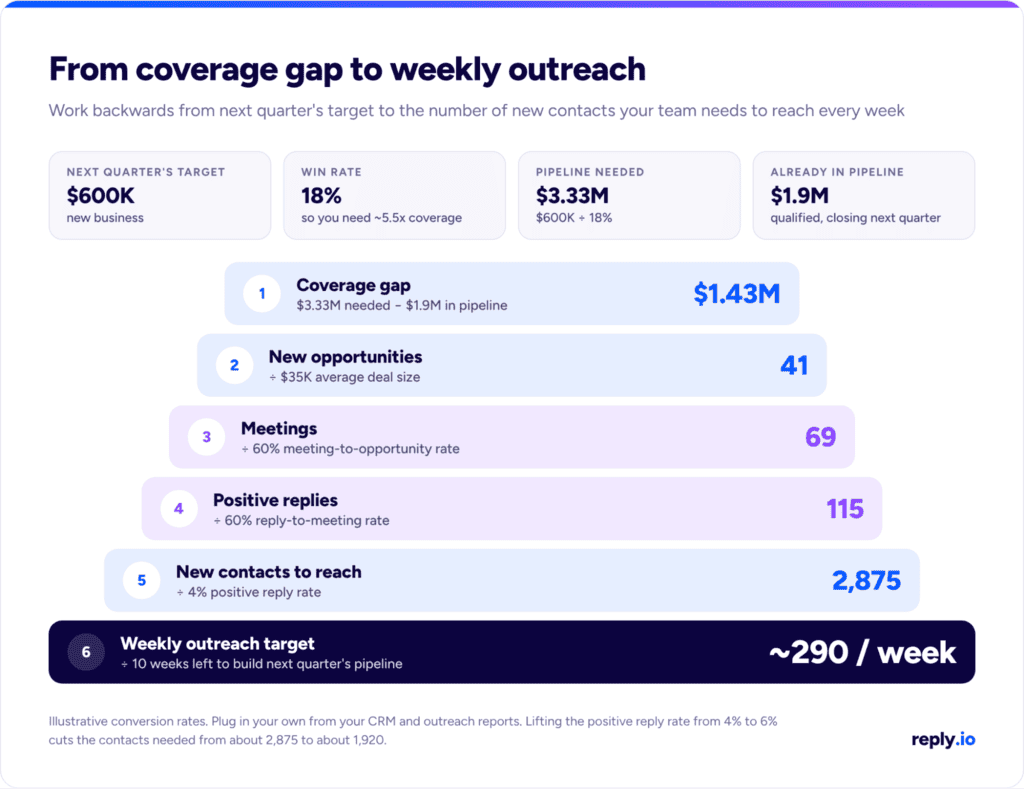
A team needs $600K in new business next quarter and wins 18% of qualified deals, so it needs about $3.33M in pipeline. It already has $1.9M, which leaves a $1.43M gap. At a $35K average deal size, that’s 41 new opportunities. If 60% of meetings turn into opportunities, the team needs 69 meetings, and a 60% reply-to-meeting rate means it needs 115 positive replies. At a 4% positive reply rate, the team needs to reach around 2,875 new contacts, which comes to roughly 290 per week over the 10 weeks left this quarter.

Pipeline coverage ratio worked example: from a $600K target and 18% win rate to a $1.43M gap and about 290 new contacts per week

The math does come with one practical problem — it only works with real conversion rates per channel and sequence, and most teams can’t pull those numbers without stitching together exports from three different tools.

Reply.io is an AI sales engagement and lead generation platform that keeps the whole chain in one place, from finding and enriching targeted leads in its database to running tailored multichannel sequences and reporting on contact-to-meeting conversion, so you can plug your actual numbers into the plan and then run the outreach it calls for.

The math also shows where the real leverage sits. Raise the positive reply rate in our example from 4% to 6%, and the number of contacts needed drops from about 2,875 to roughly 1,920. Improving conversion at any step shrinks the volume every step above it has to carry.

If the final number is more than your team can handle, you have two options: add capacity through automation or bring in outside help. Many teams at this point may also compare outbound agencies that can run part of the pipeline generation for them.

How multichannel outreach improves pipeline coverage

Buyers move between channels throughout a deal, so outreach that stays in one channel only reaches them only part of the time. McKinsey’s B2B Pulse research found that B2B customers now use an average of ten interaction channels in their buying journey, up from five in 2016.

Most sales teams already use several channels, and The Bridge Group’s 2025 SDR Metrics report shows that SDRs log a median of 112 activities per day, including 44 phone, 41 email, and 19 LinkedIn touches.

What’s usually missing is coordination, since those touches tend to run separately, with no shared, cohesive logic deciding which channel comes next for which prospect. Coordinated multichannel outreach improves coverage in four specific ways:

1. It reaches more of the buying group

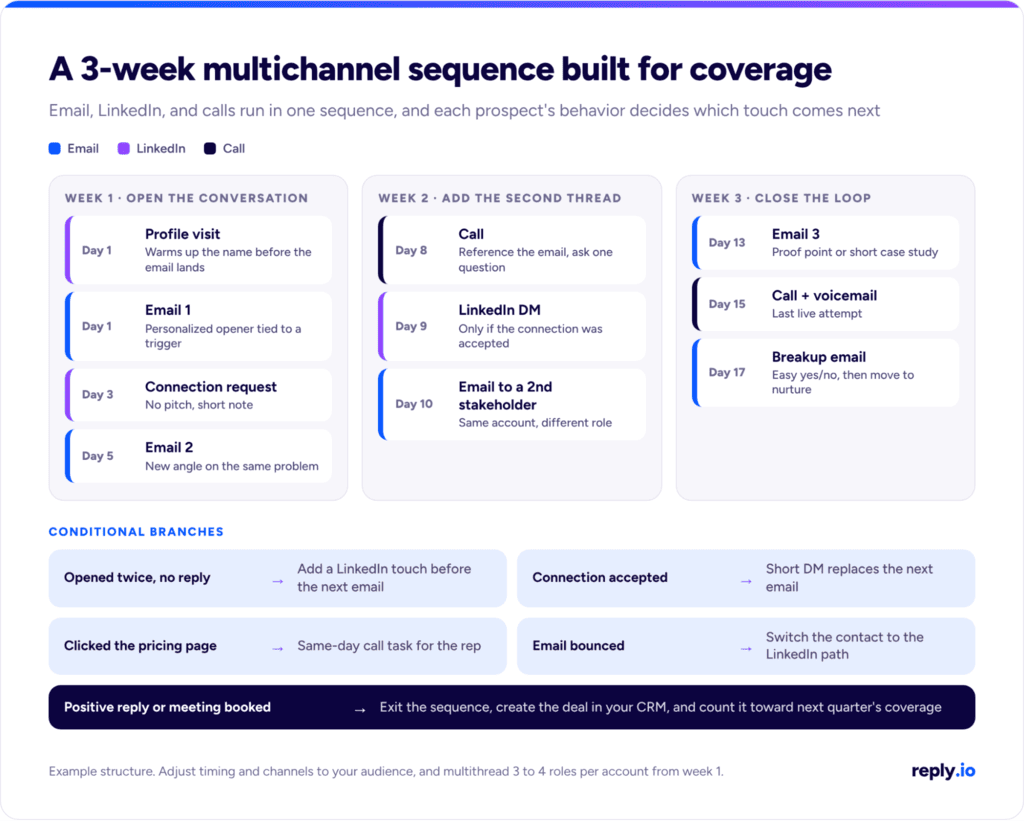
Each channel reaches people the others miss, simple as that. A VP who ignores cold emails may accept a relevant LinkedIn connection request, while an operations lead may be easiest to reach by phone. Running email, LinkedIn, and calls in one sequence lets you multithread three or four roles in the same account from the start. When an email bounces, the prospect stays in the sequence and simply moves to the LinkedIn path.

2. It converts more replies into meetings

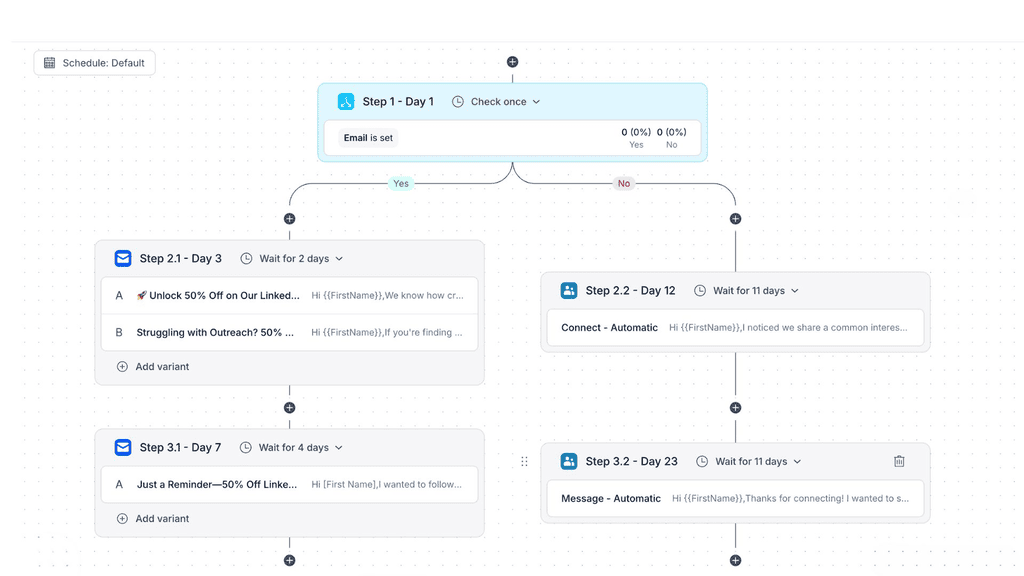
Reply-to-meeting conversion is step 4 in the math above, and it’s where a lot of pipeline leaks out. Behavior-based conditional sequences close that leak by reacting to what the prospect does. A prospect who opens twice without replying gets a LinkedIn touch, an accepted connection request triggers a short DM in place of the next email, and a click on your pricing page creates a same-day call task for the rep. Here’s how that looks with Reply.io:

Reply.io conditional sequence builder branching a contact to email or LinkedIn steps depending on whether an email is set

3. It creates pipeline faster

Coverage only counts pipeline that has time to close inside the period. Multichannel sequences shorten the time from first touch to booked meeting because they run several touchpoints in parallel. In a single-channel email sequence, the same touchpoints have to wait in line one after another, sometimes for weeks. With a 91-day average cycle, every week saved at the top of the funnel is an extra week of selling time before the quarter closes.

4. It revives pipeline you already have

Before you cut a stalled deal from your coverage report, try a different channel and a different stakeholder. A champion who went quiet on email might respond to a LinkedIn voice note, and a second contact in the same account can restart a deal that’s been stuck at the same stage for a month. Closed-lost deals from two or three quarters ago are worth a structured multichannel re-engagement sequence, too, since their circumstances may have changed since you last spoke.

Sales pipeline coverage plan: a 3-week multichannel sequence mixing email, LinkedIn and calls with conditional branches

How to improve pipeline coverage with Reply.io

Everything covered so far can run in coordinated workflows in Reply.io, so here’s how each part of the process maps to specific features:

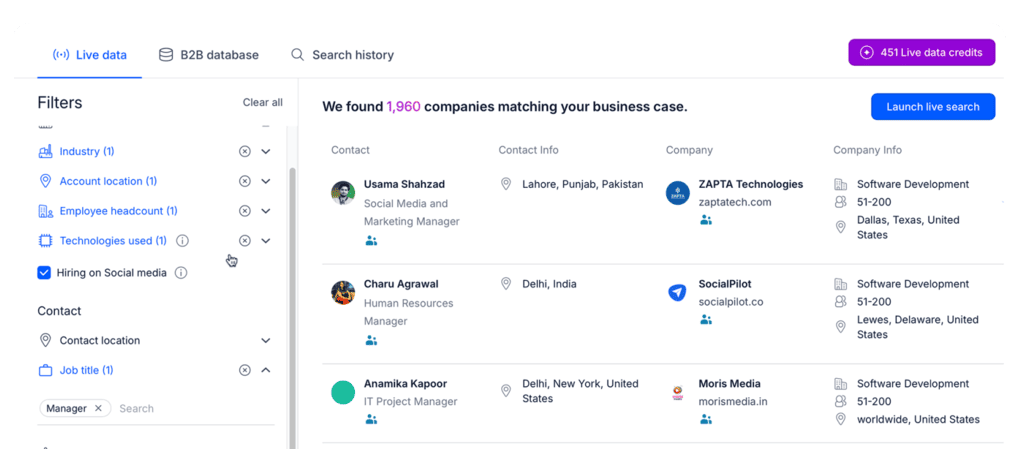
  • Fill the top of the funnel with in-ICP contacts → Reply Data gives you access to 1B+ B2B contacts across 150+ countries, with filters for industry, headcount, tech stack, seniority, and more. Emails are verified before they enter a sequence, records get enriched with missing details, and Findy pulls verified emails straight from LinkedIn and Sales Navigator.

Reply.io Data live search with filters for industry, headcount and job title returning matched companies and contacts

  • Build multichannel sequences with conditional logic → combine email, LinkedIn (profile visits, connection requests, DMs), calls through the built-in dialer, SMS, and WhatsApp in a single sequence. Branches react to opens, clicks, replies, and accepted connections, and A/B tests on subject lines and opening hooks show which version earns more replies.
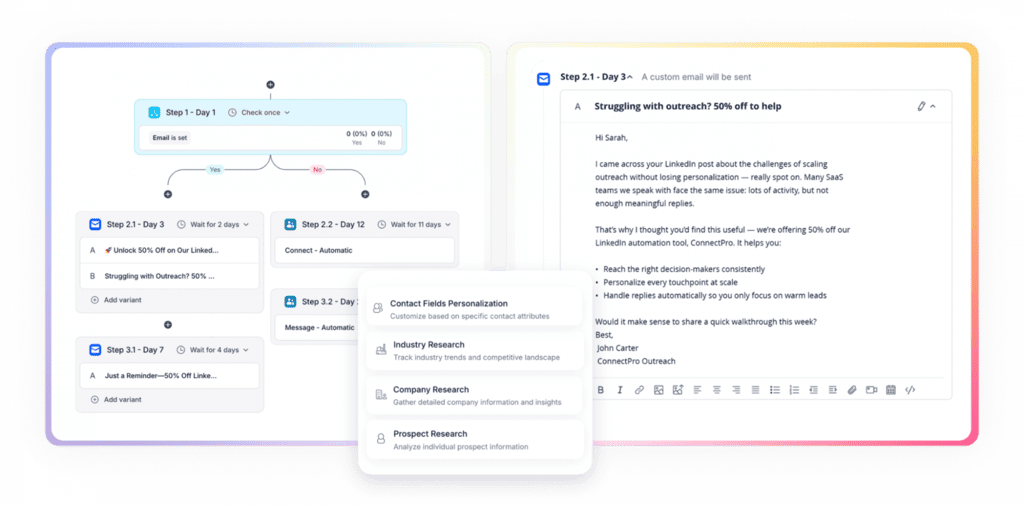
  • Lift your positive reply rate → AI Variables generate a relevant opener, value prop, or CTA for each contact based on researched data from LinkedIn profiles, company websites, and other public data, so personalization keeps up with the volume from step 5.

Reply.io sequence with a conditional branch next to an AI-personalized email and AI Variables research options

  • Protect your sending volume → the Email Health Checker monitors SPF, DKIM, and DMARC, MailToaster warms up new and inactive mailboxes, the Google Postmaster integration tracks spam rates, and unlimited mailboxes let you spread volume safely across domains.
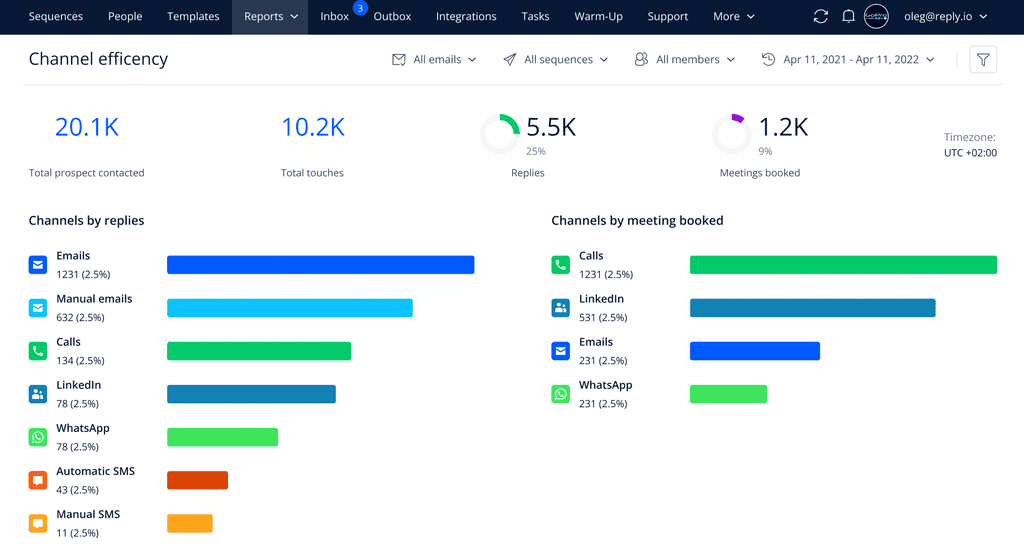
  • Feed real numbers back into your coverage math → analytics break down replies, meetings booked, and contact-to-meeting conversion by sequence, channel, and rep. With the n8n integration, a positive reply can create a deal in your CRM automatically, so your coverage report updates as pipeline gets created.

Reply.io channel efficiency report showing replies and meetings booked by email, calls, LinkedIn, WhatsApp and SMS

Let Jason AI run the outreach for you

And if you’d rather have an AI agent handle the execution end to end, Jason AI takes over the full outbound workflow.

Once trained on your product, ICP, and messaging rules, Jason finds ICP-matching prospects on its own, including through AI Web Search where you simply describe your ideal buyer in plain language, and Competitor Followers (people already following companies in your category, filtered against your ICP). Its Custom Research feature then pulls the specific insight you define for every prospect and turns it into personalization.

From there, Jason launches tailored multichannel sequences, handles replies and common objections, and books meetings directly into your calendar through Google Calendar or Calendly. You can keep it in Approval Mode to review every response before it goes out, then switch routine scenarios to Automatic Mode once you trust the output. In practice, that gives you a steady flow of new opportunities going into your coverage report every week, without adding headcount.

Closing thoughts

Pipeline coverage only works when the ratio matches your real win rate and the pipeline behind it is alive, qualified, and timed to close. Set your target ratio from your own data, clean out slipped deals every week, and then work backwards from the gap to a weekly outreach number your team can actually hit. Multichannel outreach is what makes that number more realistic, since it reaches more of the buying group and converts more conversations into meetings.

To put the plan into practice, try Reply.io free for 14 days and build your first multichannel sequence right away.

FAQ

Is 3x pipeline coverage good?

3x pipeline coverage is good only if your win rate is around 33% or higher. For the average new-business motion, with an 18% win rate, 3x would land roughly half of your target, so most outbound-led teams need 4x to 6x on new business.

How often should you measure pipeline coverage?

Measure pipeline coverage weekly, at both the team and rep level. Weekly reviews catch slipped deals and pipeline gaps while there’s still enough time in the quarter to fix them, while monthly reviews usually catch them too late.

What’s the difference between pipeline coverage and pipeline velocity?

Pipeline coverage shows whether you have enough pipeline to hit a target. Pipeline velocity shows how fast that pipeline turns into revenue, based on the number of opportunities, deal size, win rate, and cycle length. You need both, because a 5x pipeline that moves too slowly will still miss the quarter.

Subscribe to our blog to receive the latest updates from the world of sales and marketing.
Stay up to date.

Related Articles

B2B SaaS Marketing Strategy in 2026 [Step-by-Step Guide]

B2B SaaS Marketing Strategy in 2026 [Step-by-Step Guide]

B2B SaaS Marketing Strategy in 2026 [Step-by-Step Guide]
How an Automated Voice Messaging System Will Improve Outreach in 2026

How an Automated Voice Messaging System Will Improve Outreach in 2026

How an Automated Voice Messaging System Will Improve Outreach in 2026
Outbound Marketing Software in 2026 (Top Picks)

Outbound Marketing Software in 2026 (Top Picks)

Outbound Marketing Software in 2026 (Top Picks)