How to Use Reply.io + Jason AI for Local Lead Generation in 2026
Vlad Oleksiienko11 Mar 2026
Lead generation in 2026 is complex as it is, and when you narrow your focus on the local market — it’s a whole different game
Local growth means a much smaller pool of potential leads, so it ultimately comes down to precise targeting and truly relevant messaging that can scale across different markets without losing that tailored approach.
That’s exactly where Reply.io and Jason AI come into play. Used together, they provide teams with a powerful AI lead generation engine for finding local leads, launching multichannel outreach, and turning replies into booked meetings.
What successful local lead generation looks like in 2026
Successful local lead generation now depends on how well a team connects local targeting, reliable data, outreach infrastructure, and execution. A broad list of businesses in one city won’t get you very far, nor will a generic pitch mass-sent to all your leads. Even strong messaging starts to struggle when it lacks local relevance, reaches the wrong people, or ends up in spam.
On the other hand, successful teams work with a much more connected system — they define the local markets that matter most, narrow down the right business profiles within those markets, identify decision-makers, prioritize leads using intent signals, and then run automated multichannel outreach with enough flexibility to adjust each sequence based on lead behavior.
In the end, you have a system that not only generates you that local attention but also turns that attention into qualified conversations and, ultimately, closed deals.
The Warm Outreach Playbook That Gets 3x More Replies
There’s a smarter way to do cold outreach → by using content your audience already engages with.
Inside this free guide:
→ Find LinkedIn posts your buyers interact with → Pull and segment engaged leads (no tech headaches) → Write outreach that’s personal, not pushy → Scale with Clay + AI (without sounding robotic) → Follow up without being annoying
Grab the guide. Learn the system. Start better conversations.
Why local outreach needs a different approach
When it comes to local lead generation, buyers often want to know whether a business serves their area, understands their local market, and can offer them that personal customer service.
General outbound campaigns usually assume one message can work across multiple buyer segments with just a few minor tweaks, but local outreach rarely works like that. When the audience is tied to a city, region, or service radius, the message often has to reflect local business context, local pain points, and even differences in urgency or response behavior from one market to another.
That makes local market targeting even more sensitive to timing and relevance. For instance, a fast-growing metro area may respond to one value proposition, while a smaller regional market may react better to another. Some territories may be more responsive over email, some may engage more after a LinkedIn message, while others are best reached with a call.
This is one of the main reasons why multichannel outreach software like Reply.io is a game-changer for teams, building coordinated sequences with emails, follow-ups, LinkedIn touches (connection requests, messages, voice messages, post likes, and more), calls, SMS, and WhatsApp, tailored for each unique lead.
Example of an effective local lead generation workflow
An effective local lead generation workflow runs like a system, with every stage feeding relevant data to the next one, while automation software reduces manual effort without losing local relevance.
A typical workflow may look like this:
Define the target market by city, region, territory, or service area.
Build local ICP criteria based on business type, size, role, geography, and pain points.
Find local companies that match those criteria.
Find key decision-makers within those companies.
Use intent signals and contextual indicators to prioritize outreach timing.
Enrich contact records with company, role, and market-specific context.
Set up email and LinkedIn infrastructure before launching campaigns.
Build a multichannel sequence tailored to each local segment.
Use AI personalization to make each email/message feel tailored to each lead.
Handle replies quickly and move qualified leads toward booked meetings.
Review analytics by channel, message type, and region to improve performance over time.
Sounds complicated, but with a solid, AI lead generation engine like Reply.io, virtually all of these steps are fully automated, making it easy to not only run the system effectively but also scale when the time comes.
What is Reply.io, and what is Jason AI?
Reply.io is an all-in-one AI lead generation and sales engagement platform built for teams that want a fully automated prospecting and outreach engine for their business.
It combines an extensive lead database, multichannel outreach, solid email deliverability, AI-powered workflows, and analytics in one system. Businesses can find local leads, organize campaigns by territory or market segment, and run coordinated outreach without stitching together multiple tools and worrying about complex integrations.
Jason AI, on the other hand, is an autonomous AI sales agent that works on top of that same core engine. If Reply.io helps teams create an AI lead generation engine, Jason AI handles a large part of the entire workflow on its own.
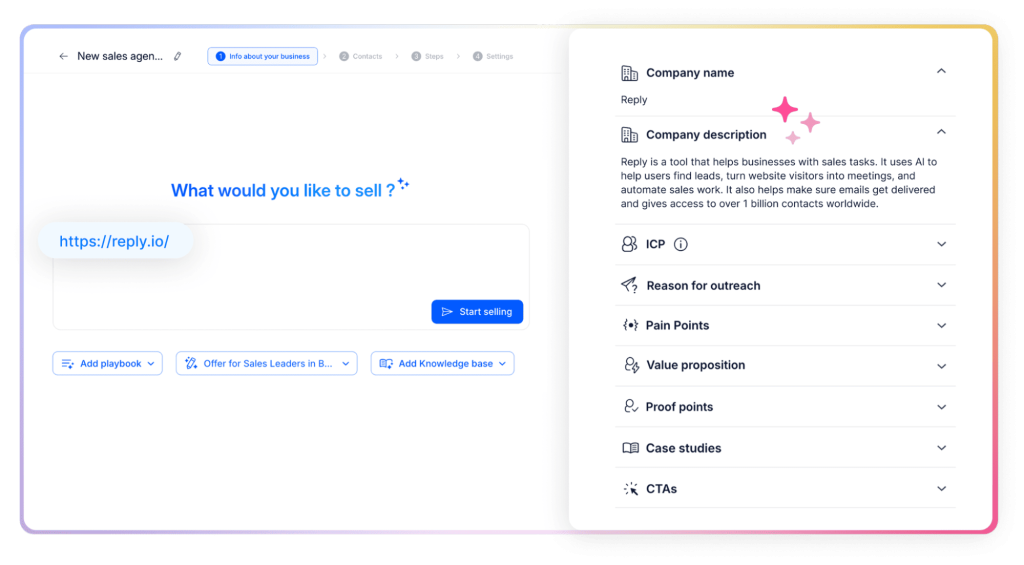
It learns everything about your business, understands your ICP, finds targeted leads, enriches them with researched context, launches multichannel outreach, and even handles replies and books meetings on your behalf.
Together, they offer a far more scalable way to approach local business lead generation, especially for sales teams and agencies working across several local markets at once.
How to use Reply.io and Jason AI for local lead generation
The workflow below shows how to build a powerful lead generation engine with Reply.io to generate more closed deals in local markets, and then, optionally, use Jason AI as the final layer to actually run the execution on your behalf.
Start with your local market segments and targeting logic
Unlike mass-market sales, local lead generation starts with geography, not just audience type. So first things first, your team needs to define exactly which markets matter most: city, metro area, territory, region, service radius, or a mix. Once that’s clear, the next step is narrowing the audience within each market by company type, industry, size, job role, budget fit, or likely need.
One universal pitch will rarely work across every local segment, as the businesses you target in one market may have very different priorities, competitive pressure, or urgency compared to similar businesses in another.
Strong local market targeting gives structure to all of the next steps of the system, setting direction on who to prioritize, how to segment and tailor your messaging, and where you are most likely to generate qualified local leads.
Jason AI’s journey starts here too. As an AI sales agent that joins your team, before it starts finding potential buyers and launching outreach, it first learns everything about your business — offer, strategy, and target audience.
That gives Jason the context it needs to align prospecting and messaging with the right local segments from day one.
Use Reply Data to find and enrich local leads
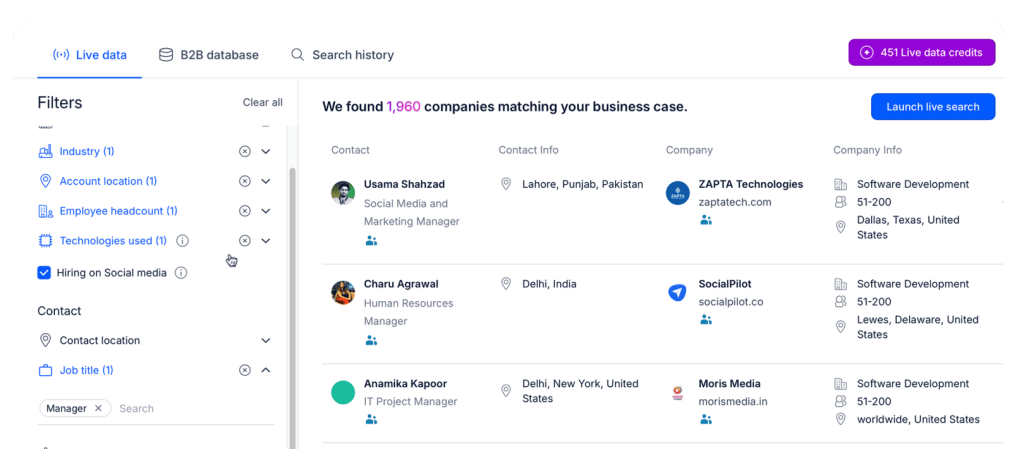
Once the local targeting logic is clear, the next step is building a real list of leads that fully match your ICP. This is where Reply Data becomes a core part of the process — a native B2B lead database containing over 1 billion prospects and companies across broad geographic coverage, along with social profiles, built-in email verification, and numerous advanced targeting filters.
This removes a major point of friction for most teams that would otherwise bounce between databases, LinkedIn, spreadsheets, and lead enrichment tools just to build their lead lists.
In practice, that means you can search for local businesses and their key decision-makers based on your exact criteria, then move straight to outreach inside the same platform.
This step is crucial because if the data layer is weak, AI personalization gets weaker, email deliverability becomes harder to protect, and your outreach campaigns have much less chance of creating meaningful conversations.
Reply’s built-in intent signals take this a step further and are especially useful in local markets, where timing can make a huge difference. Some local businesses may be actively hiring, expanding, adopting new tools, or showing other signs that make outreach more relevant right now.
Prepare your local outreach infrastructure before you scale
This is the uninteresting and so-often overlooked aspect of any lead generation strategy. Even if you find strong local leads, outreach efforts may underperform if the setup foundation is weak.
In local lead generation, infrastructure can be a real deal-breaker because smaller markets can burn out faster. And if your sending reputation slips, it gets much harder to sustain good performance in a tightly defined region.
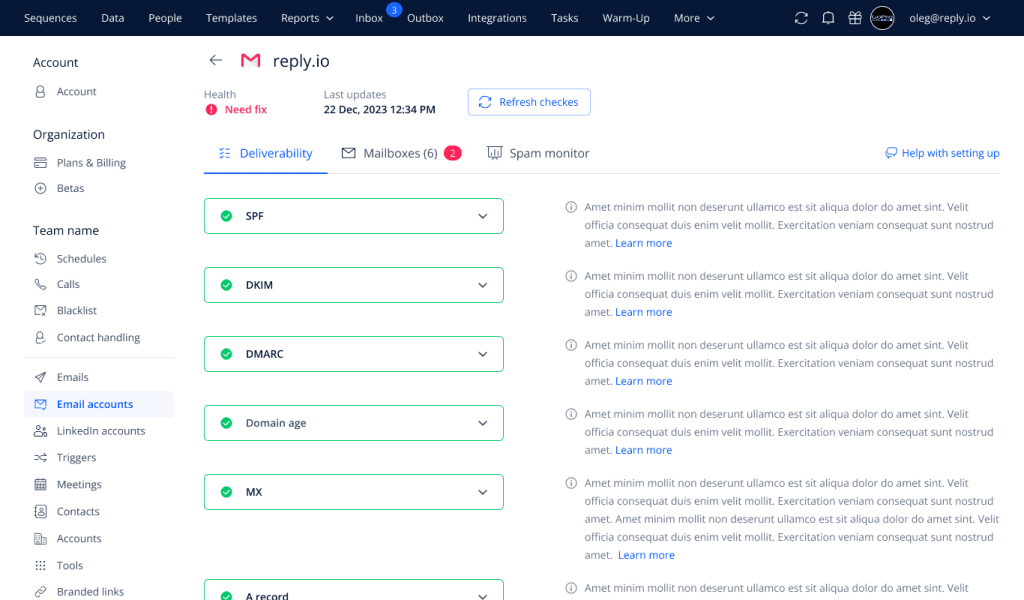
This starts with the technical basics — SPF, DKIM, and DMARC should be correctly configured so that your recipients’ mailbox providers can trust emails sent from your company domain.
Reply.io offers a rock-solid email deliverability suite, helping teams set up and maintain their email infrastructure, warm up email accounts, and protect their sender reputation over time.
Teams can connect unlimited mailboxes and multiple LinkedIn accounts (for multichannel outreach campaigns). In the meantime, Reply monitors bounce and spam rates in real time, identifies and fixes any issues with email setup, and ensures your team stays within the volume limits of LinkedIn and email providers.
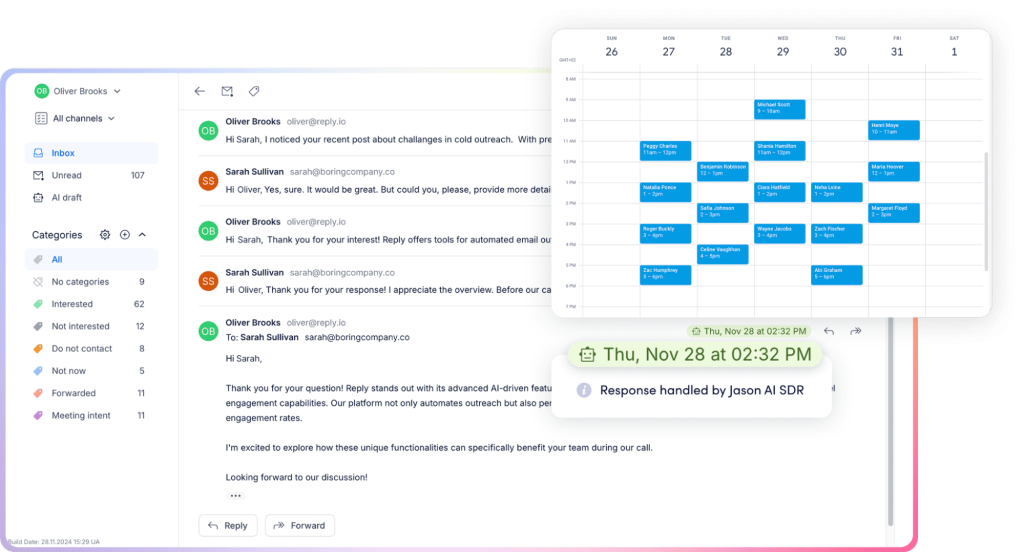
Finally, Reply’s unified inbox centralizes emails, LinkedIn messages, and follow-ups, which is especially useful when local lead generation depends on responding quickly before a prospect turns to a nearby competitor.
Build multichannel outreach that feels relevant in each local market
Once the data and infrastructure are in place, this is where local lead generation goes from setup to execution.
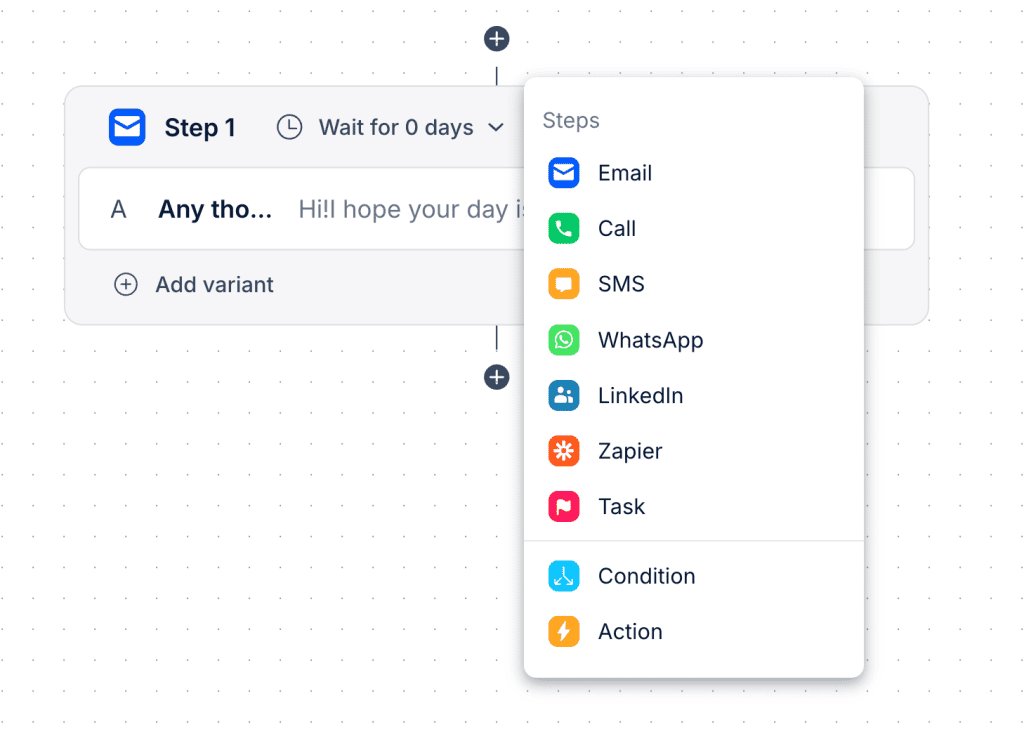
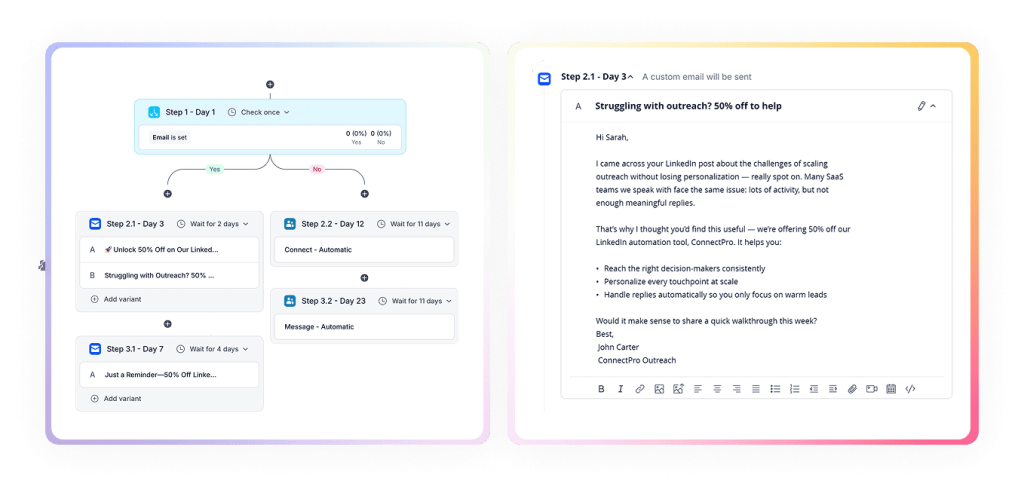
Reply.io supports multichannel outreach across email, LinkedIn, calls, SMS, WhatsApp, and additional workflow steps, giving your team a practical way to reach local leads through the channels they are actually paying attention to.
Local lead generation performs much better when outreach reflects the specific market being contacted instead of pushing every prospect through the same static buyer journey.
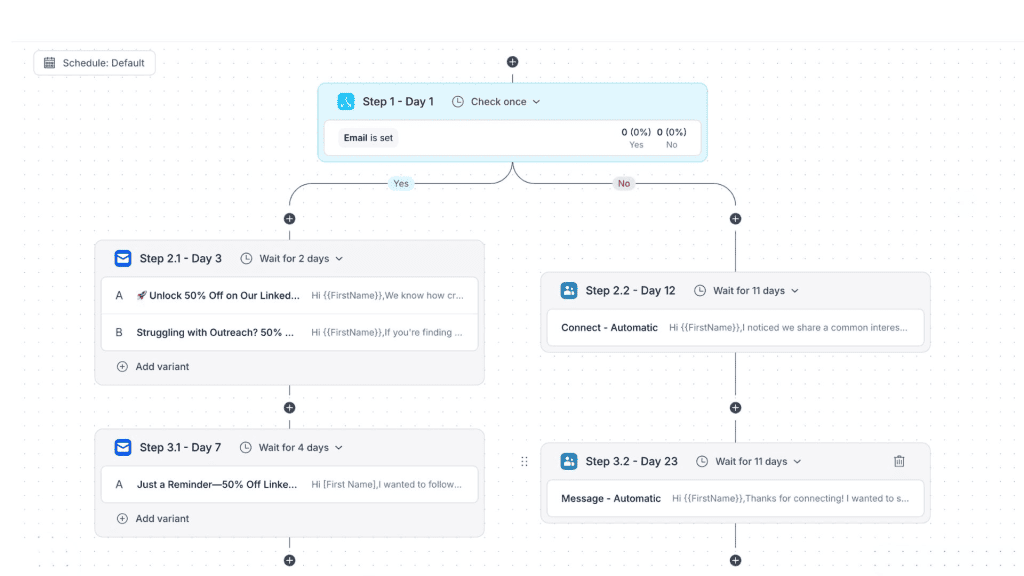
The real advantage here is the coordination, and this is where Reply’s conditional sequences are a real game-changer, adapting each sequence’s messaging, timing, and channel choice based on real-time data and prospect behavior.
Here’s what that may look like in practice:
if a prospect ignores the first email, the next step can shift to an automated LinkedIn connection request
if a LinkedIn connection request is accepted, Reply launches a personalized LinkedIn message and cancels the scheduled email follow-up to avoid repetition
if a lead shows clear engagement, Reply moves them from a slower nurturing sequence into a more sales-driven sequence, and vice versa
Some territories may respond better to emails and faster follow-ups, while others may show better engagement after a few LinkedIn touches to build trust and familiarity over time.
As a result, teams get automated, market-aware outreach that adjusts in real time and ensures each territory gets the most tailored and optimal engagement flow.
Use AI personalization to make local outreach more specific
Personalization is especially important when it comes to local lead generation because if your message sounds generic, your recipients will notice right away. But if it reflects the right company context, local pain point, or service-area relevance, the conversation has a much better chance of moving forward.
The challenge with meaningful personalization, of course, is scale. Manually researching every lead, every territory, and every messaging variation becomes unrealistic pretty fast.
Reply.io’s AI personalization features solve that by helping your team turn the previously-uncovered prospect data into tailored outreach for each unique lead, even in the context of hundreds or thousands of recipients.
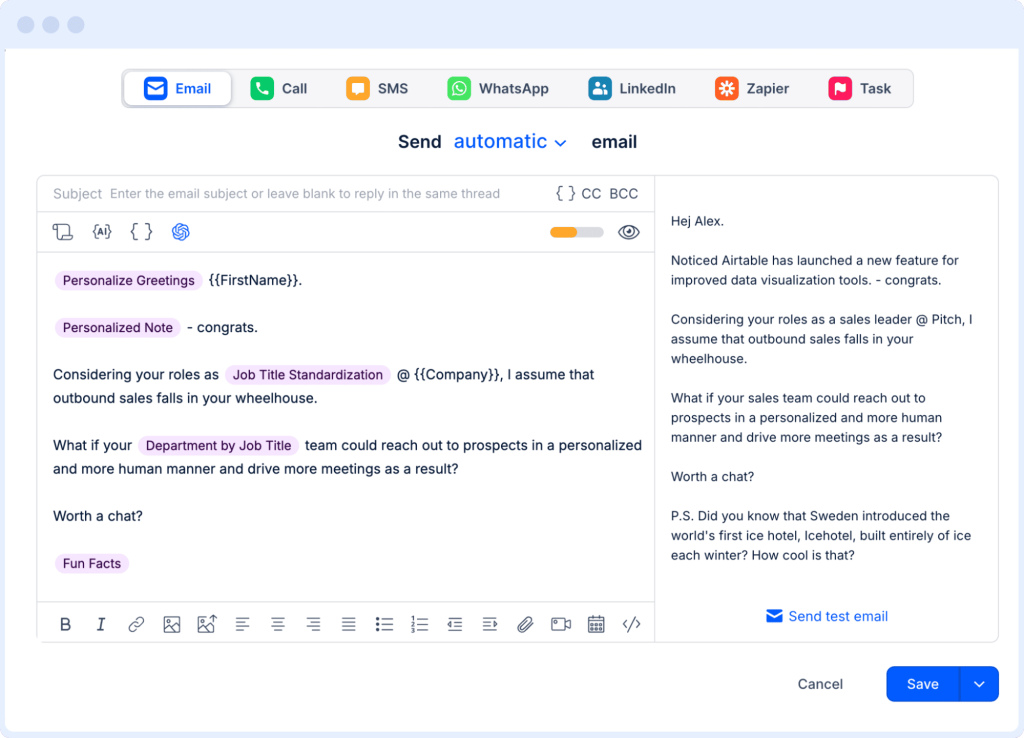
Its AI Variables feature lets you build your own templates with custom advanced variables. Each email has your brand’s consistent structure, but is highly personalized for each recipient as Reply’s AI engine conducts research to fill in the gaps:
Once you’ve found targeted leads in Reply Data, the platform automatically enriches each contact with additional prospect and account details, including role, company context, local market, industry, LinkedIn info, and likely pain points.
That’s why Reply’s AI personalization can create outreach that feels researched rather than mass-produced, helping teams scale across new markets without sacrificing quality, and leading to better reply rates, smoother qualification, and more booked meetings over time.
Let Jason AI run local lead generation at scale
At this point, Reply.io already gives your team a full, AI-powered lead generation engine, including prospect data, outreach infrastructure, multichannel outreach, AI personalization, and analytics.
Jason AI is Reply’s AI sales agent that autonomously runs the execution of virtually the entire system.
After learning about your business, offer, and strategy, Jason AI starts continuously looking for leads and accounts that match your criteria. It then finds decision-makers within targeted companies, enriches them with context from LinkedIn, company websites, and other external sources.
Jason then launches tailored multichannel outreach using the same core engine that powers Reply.io, personalizing every email and LinkedIn message, and adapting the outreach to the lead context.
On top of that, Jason handles incoming replies based on your custom business rules and sales playbooks. That includes answering common questions, handling objections, and moving qualified leads toward booked meetings through integrated calendars. As a result, your Jason will be handing over to your reps a steady flow of qualified leads, ready for closing.
For local lead generation, this is a major advantage because it lets teams scale across multiple territories without multiplying manual work at the same pace. Jason will keep finding new leads, personalizing messages, and scheduling follow-ups while your human team focuses on higher-value conversations and meetings.
You can either choose approval mode for more oversight before messages go live, or autopilot mode to let Jason run the show. With multilingual support across 50+ languages, it’s also very easy to expand into new regions or multilingual markets.
How to improve local lead generation performance over time
Automation definitely improves speed, but long-term effectiveness can only improve when the team keeps refining the system over time. In local lead generation, that means looking beyond activity volume and paying attention to the performance drivers that actually shape results:
lead quality by region or territory
response quality
meeting conversion by market
channel efficiency
personalization quality
deliverability health
If open rates are weak, the issue may be email infrastructure rather than messaging. If replies are low but email deliverability is healthy, the problem may be targeting, timing, or lack of local relevance. If replies are coming in but booked meetings are not, the team may need stronger qualification logic or better reply handling.
This is why analytics is a non-negotiable element of any lead gen system. The good news is that the leading tools like Reply.io have built-in reporting across channels, teams, and workflows, making it easier to understand what is happening in each market and where the process needs adjustment.
Over time, that’s exactly what allows teams to scale their lead generation efforts while staying confident in the overall strategy.
Building a smarter local lead generation engine
Local lead generation in 2026 works best when accurate data, strong deliverability, multichannel outreach, and AI personalization all work together in one unified system.
Reply.io is designed exactly for this, helping teams find relevant local leads and engage them with personalized outreach across multiple channels, while Jason AI takes over most of the actual execution.
For teams that want a more automated and scalable way to grow in local markets, the next step is to start building a custom lead generation engine and letting AI do the heavy lifting, while reps can focus on building long-term relationships, handling meetings, and actually closing deals.
Subscribe to our blog to receive the latest updates
from
the world
of sales and marketing. Stay up to date.
We use cookies to enhance your browsing experience, serve personalised ads or content, and analyse our traffic. By clicking "Accept All", you consent to our use of cookies.