
Top 10+ AI Personalization Tools Every Sales Team Needs in 2026

Top 10+ AI Personalization Tools Every Sales Team Needs in 2026

Your prospects are making decisions before you even hit send. 

They’ve already compared options, skimmed reviews, and formed an opinion. 

When your message lands, it has one job: prove you understand why they’re here now. Anything less gets ignored.

The numbers explain why personalization is a top priority for sales teams now:

  • McKinsey links advanced personalization to revenue lifts of up to 40 percent
  • 71% of buyers expect personalized interactions, and 76% get frustrated when they don’t get it
  • Zendesk’s CX Trends points out that businesses that integrate AI with a focus on empathy and personalization experience 33% higher customer acquisition rates and 22% higher customer retention rates

That’s why you need AI personalization tools in your stack. They read intent signals and shape outreach that feels thoughtful. 

In this article, we’ll look at the AI tools making this possible, how they fit into real sales workflows, the benefits they unlock, the features worth paying attention to, and what it takes to make AI-driven personalization work without losing your voice.

Also read: Will AI Replace Salespeople? What You Need to Know 

What is AI personalization and how does it work?

AI personalization makes digital experiences feel tuned to each user instead of pushed to the crowd. 

It learns from how someone browses, clicks, buys, or engages, then uses those patterns to deliver content or offers that fit what they’re likely looking for in that moment.

The process starts with data flowing in from different touchpoints. 

Once the system has enough context, it analyzes behavior, predicts next steps, and selects the best message or action through real-time decisioning. Dynamic content delivery updates the experience instantly across whichever channel the user touches next.

You already see this everywhere:

  • Netflix reshapes your homepage based on your watch history, and even swaps artwork to match the genres you click most
  • Spotify curates playlists like Discover Weekly by looking at your listening habits and skip patterns
  • Amazon adjusts product suggestions using your browsing and purchase history, updating them the moment your behavior shifts

Behind the scenes, machine learning, NLP, predictive analytics, conversational AI, and generative models handle the bulk of the tasks. 

As users interact, the system keeps learning and refining, so personalization stays accurate.

Why do sales teams need AI personalization tools?

Drive sharper engagement

AI reads signals like browsing patterns, email activity, and intent cues.

It lets sales teams craft outreach that reflects what a buyer is focused on right now rather than relying on broad assumptions.

Boost conversions with better timing

Personalized recommendations, adaptive offers, and context-aware prompts reduce drop-off and help prospects move naturally toward the next step. 

AI highlights the moments when a buyer is most ready to act, so reps can connect at that very moment.

Strengthen retention across channels

As buyers switch between email, web, chat, and mobile, AI keeps the experience consistent by adjusting content based on evolving behavior. 

The continuity builds trust and keeps customers engaged longer.

Cut manual work from daily workflows

AI takes over repetitive tasks like segmentation, campaign setup, and message drafting. 

With next-best-action guidance and automated orchestration, reps can focus on conversations rather than admin work.

Scale personalization without extra headcount

Tailoring outreach for large audiences becomes manageable because AI handles the data processing and content adjustments. 

Teams can deliver relevant experiences at volume, even with leaner resources.

Also read: Guide to Using AI to Write Personalized Sales Emails
What are the top AI personalization tools for sales teams in 2026?

Jason AI SDR 

Best for: B2B teams that want to scale outbound prospecting and meeting booking without hiring more SDRs

Jason is Reply.io’s AI SDR agent that automates outbound prospecting end to end. 

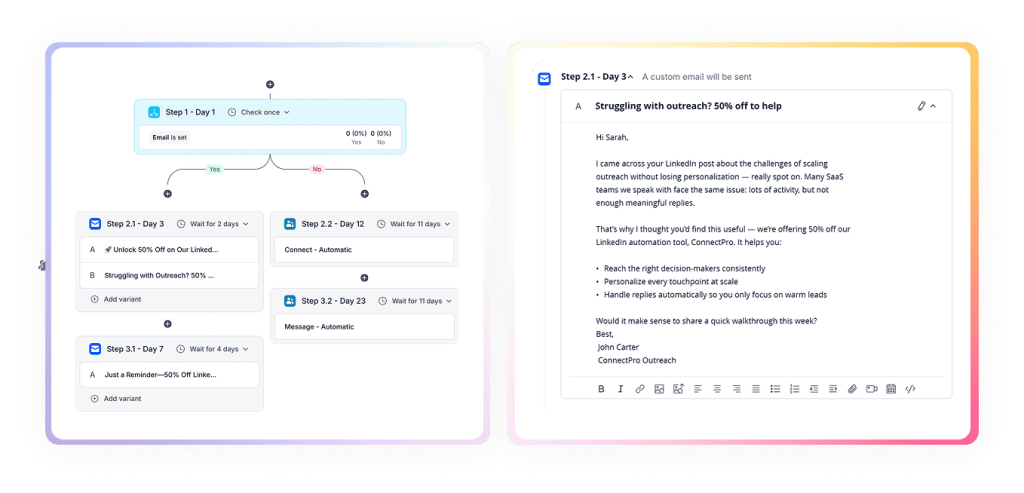
Jason learns your offer and playbook, finds leads from a large B2B database, personalizes multichannel outreach, handles replies, and books meetings for you.​​

Here are Jason’s key features:

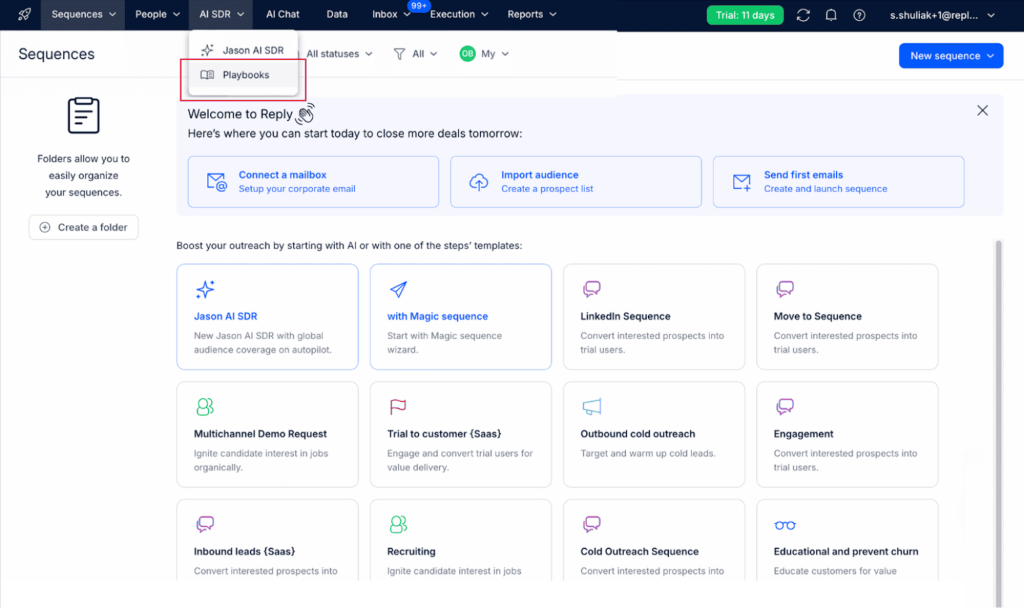
Define your sales playbooks and let Jason execute personalization consistently

You start by setting the rules. Define playbooks with templates, prompts, tone, language, offers, pain points, and proof points.

Jason uses these to generate prospect-specific messages that stay aligned with your sales motion.

It enriches every message with real context by researching each contact on LinkedIn, company websites, and other public sources.

You decide how much freedom the AI has. Choose which data points can be used for personalization and enable approval mode when every outbound email or reply needs review.

Run multichannel outreach that adapts to markets and behavior

Jason builds coordinated sequences across email, LinkedIn connections, messages, follow-ups, AI voice notes, and call scripts. 

Each touch is tailored to the channel instead of copied across.

Outreach is localized by design. Jason supports more than 50 languages and adjusts tone and phrasing to match local business norms, so messages feel native to the market.

Also, the tool ensures sequences stay responsive. Conditional logic changes follow-ups based on opens, replies, profile views, or inactivity, keeping outreach relevant.

Automate reply handling and move prospects straight to meetings

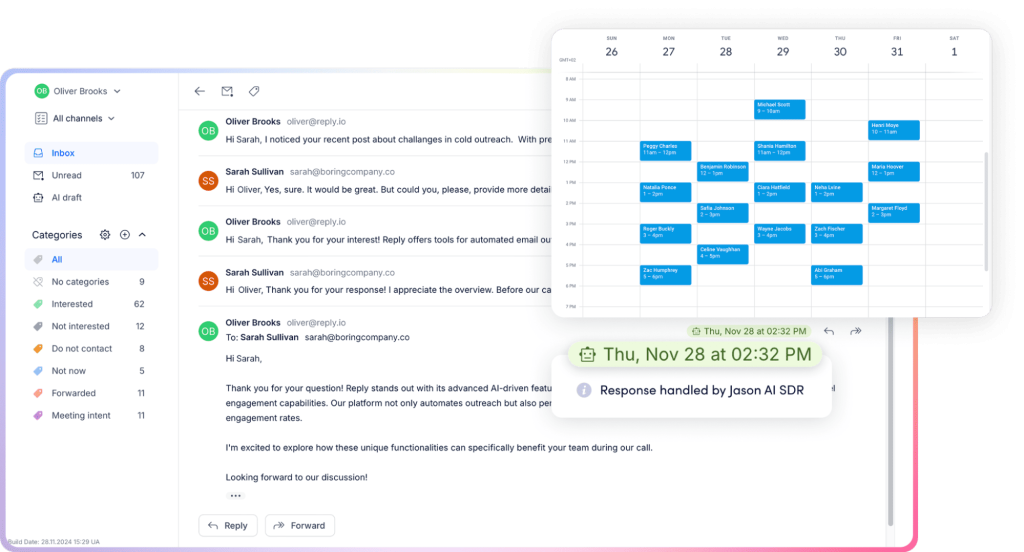
Jason manages inbound replies using your instructions and knowledge base. 

It responds in your voice and follows your objection-handling rules. It can also re-engage leads that stall mid-conversation.

You control execution. Use automatic mode to move fast or approval mode when accuracy and compliance matter more.

Once a prospect is ready, Jason checks availability, proposes conflict-free time slots, and books meetings directly through Google Calendar, and removes friction at the handoff stage.

Pricing: Free demo available; paid plan starts from $500 

“We booked a demo for a prospect worth $15k-$20k in revenue! Jason Al is amazing! I had never run an email campaign before, but with Jason Al, I launched my first campaign-and booked a meeting within the first 40 emails! Blown away by this product!” – Jarod Smith, VP/Al Specialist RiskX

Insider One

Best for: Sales teams in e-commerce and retail that need omnichannel personalization to drive revenue through real-time customer engagement across channels.​

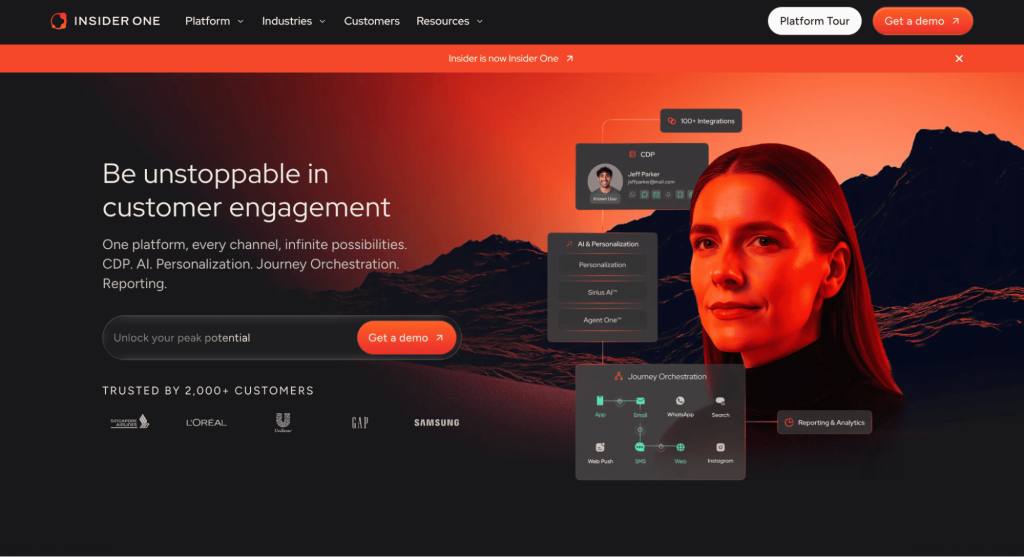
Insider One is an AI-native customer engagement platform that unifies CDP, personalization, journey orchestration, and AI to deliver individualized experiences at scale. 

It powers marketing and sales with predictive, generative, and agentic AI to boost conversions, engagement, and customer lifetime value.​

Key features:

  • AI-native CDP for 360° customer profiles by combining online/offline data from CRM, POS, and contact centers for precise segmentation
  • Predictive AI for real-time propensity scoring, event-based triggers, and personalized offers to target high-value buyers
  • Generative AI (Sirius AI™) automates content creation, predictive segments, and campaign optimization 
  • Agentic AI (Agent One™) deploys autonomous agents for emotionally resonant conversations and decision-making at scale
  • Cross-channel delivery including web personalization, site search recommendations, mobile app experiences, email, SMS, and WhatsApp
  • Journey orchestration to automate multi-step, behavior-driven customer paths without IT dependency

Pricing: Custom

Braze   

Best for: Sales teams managing high-volume, real-time customer interactions across channels in consumer brands and e-commerce.​

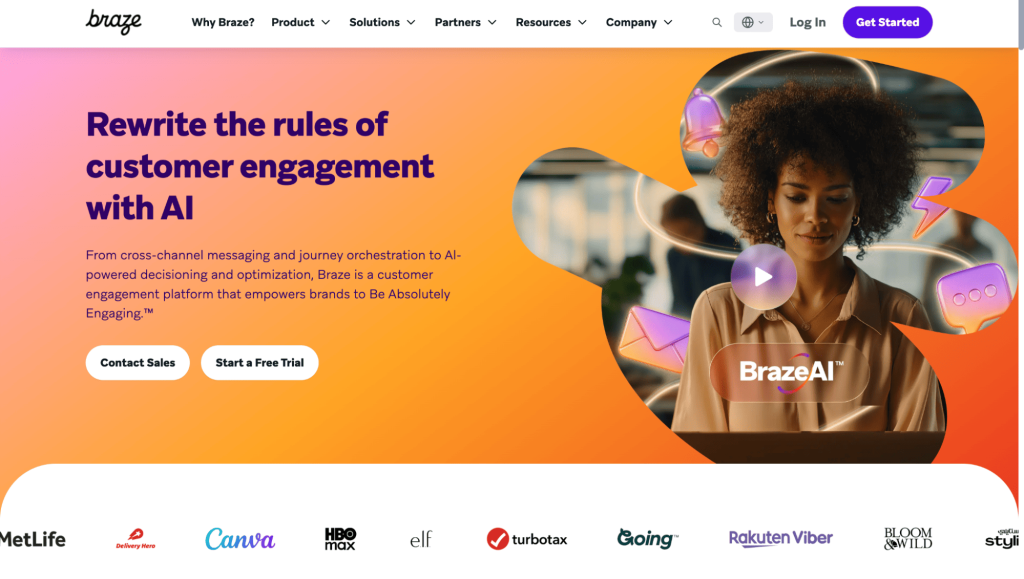
Braze is a customer engagement platform that unifies real-time data, AI-powered orchestration, and cross-channel messaging to deliver personalized experiences at scale. 

It enables sales and marketing teams to act on customer signals instantly through Canvas journeys, boosting retention and revenue.​

Key features:

  • Braze Data Platform for real-time unification of first-party data from apps, websites, warehouses, and CRMs into comprehensive 360° profiles
  • BrazeAI™ for predictive personalization, intelligent optimization, A/B/n experimentation, and automated decisioning on content, timing, and channels
  • Canvas orchestration with drag-and-drop journeys, branching logic, real-time triggers, and Personalized Paths to match individuals with optimal messages and offers
  • Cross-channel delivery across email, SMS, push notifications, in-app messages, WhatsApp, web push, and in-product experiences
  • Real-time segmentation and activation using behavioral data, custom events, and attributes for hyper-targeted sales campaigns
  • Reporting and analytics for journey performance, engagement metrics, and business impact measurement 

Pricing: Custom

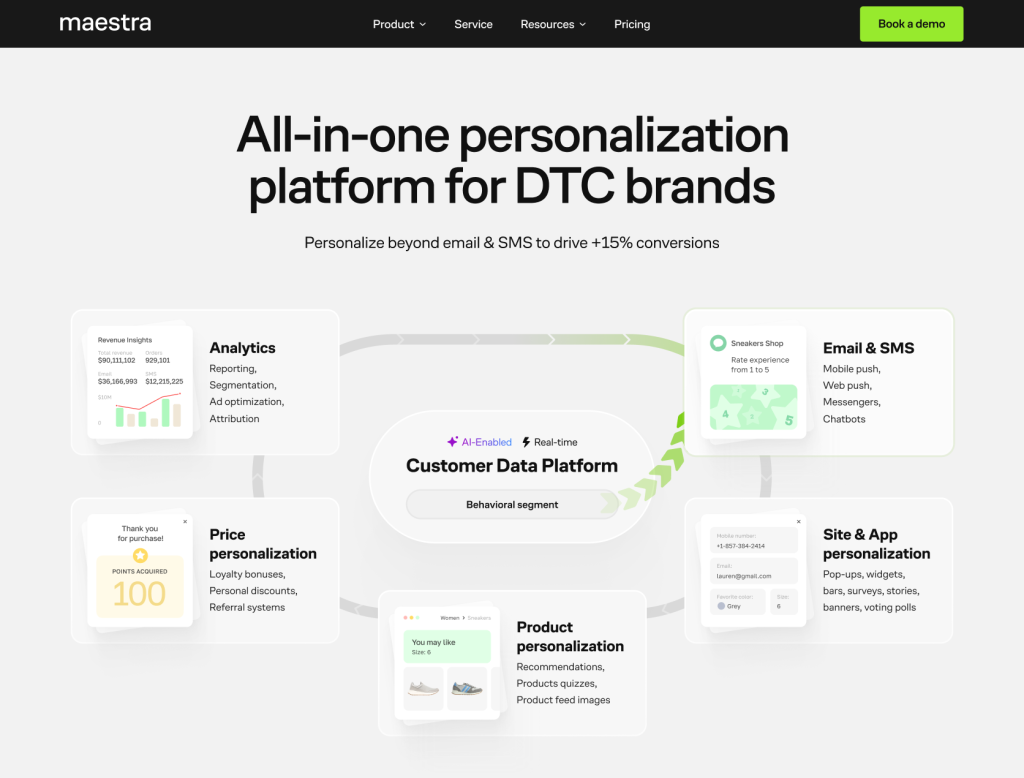
Maestra

Best for: E-commerce and DTC brands with large customer bases looking to personalize every interaction across touchpoints to boost conversion and revenue.

Maestra Main page

Maestra is an all-in-one personalization platform powered by a real-time CDP. It combines omnichannel orchestration, on-site personalization, product recommendations, loyalty programs, promotions, and referrals in one system, so teams can personalize the entire customer journey on the fly. Maestra also delivers marketing analytics, with an AI Assistant that suggests actionable hypotheses for better performance.

Key features:

  • 14 AI-driven recommendation algorithms — from Bestsellers and Related Products to Personalized Post-Purchase Picks and Event-Based Personal Recommendations — for email, RCS, messengers, and all site pages
  • Advanced flows with a Next Best Action AI engine that predicts when each customer is ready to buy and recommends the optimal step to re-engage them
  • AI-driven send time optimization for email automatically schedules each email at the moment most likely to convert — layered on top of omnichannel messaging spanning email, SMS, MMS, RCS, push, messengers, and chatbots
  • Site and app personalization with upsell bars, gamified popups, promo banners, countdown timers, embedded recommendation blocks, social proof widgets, and more
  • Built-in loyalty, promotions, and referrals tiered membership, personalized promo codes, and trackable referral links
  • AI Assistant analyzes performance against business goals and recommends specific flows, segments, A/B tests, and optimization hypotheses
  • The real-time CDP unifies all customer data into a single source of truth to feed AI and enable granular segmentation

Pricing: Starts at $2,990/month for up to 150K active profiles, full features and a dedicated CSM included, month-to-month billing, no lock-in contracts.

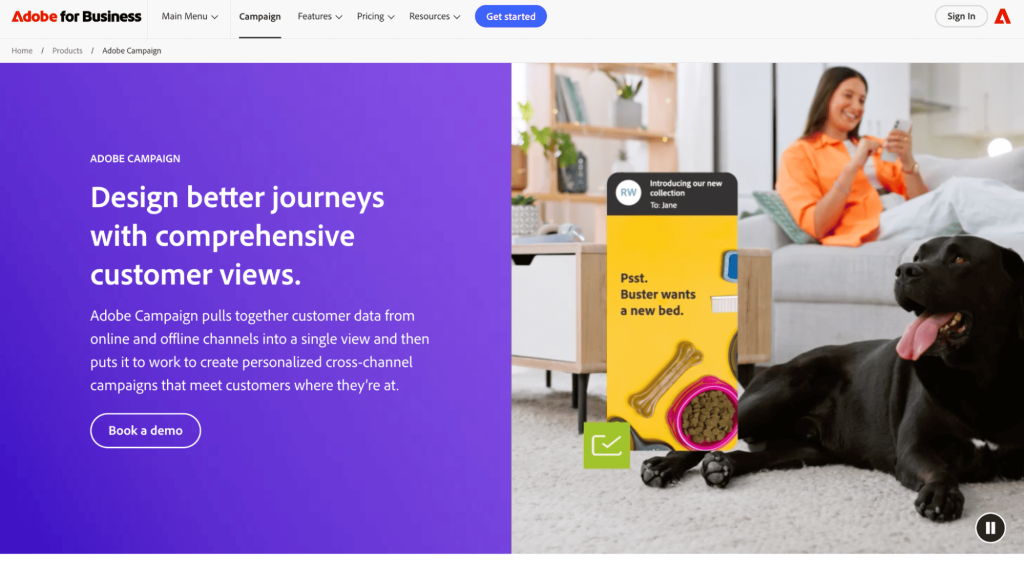
Adobe Campaign

Best for: Sales and marketing teams executing large-scale, omnichannel campaigns with personalized messaging across email, SMS, push, and more.​

Adobe Campaign is an omnichannel marketing automation platform that orchestrates personalized customer journeys and campaigns powered by Adobe Sensei AI.​

Key features:

  • Cross-channel orchestration for email, SMS, push notifications, in-app messages, mobile, direct mail, and web
  • Adobe Sensei AI for predictive analytics on open rates, send times, churn prediction, and content optimization
  • Real-time customer journey management with dynamic content, segmentation, and workflow automation
  • Unified reporting, preference centers, and offer management for scalable personalization

Pricing: Custom

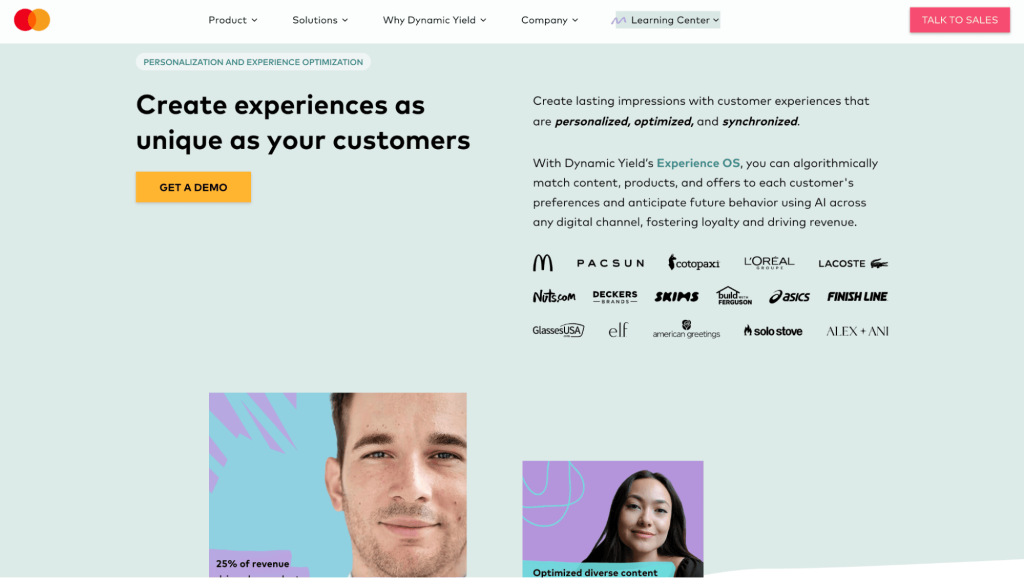
Dynamic Yield   

Best for: Sales teams in e-commerce and high-traffic sites seeking real-time, AI-driven personalization and A/B testing.​

Dynamic Yield is an AI-powered Experience OS platform. It delivers hyper-personalized digital experiences, product recommendations, and optimizations in real-time across all customer channels.​

Key features:

  • Real-time personalization engine that dynamically restructures page layouts, content, and elements based on user behavior, context, and segments
  • AI/ML-powered recommendations for products, content, and offers using advanced algorithms for affinity-based, trending, and contextual suggestions
  • Auto-optimization and A/B/n testing with machine learning to continuously improve experiences and identify winning variants automatically
  • Omnichannel support for web, mobile apps, email, ads, and more with unified data integration for consistent 1:1 experiences
  • Advanced segmentation and targeting using behavioral, predictive, and real-time data for precise audience activation

Pricing: Custom

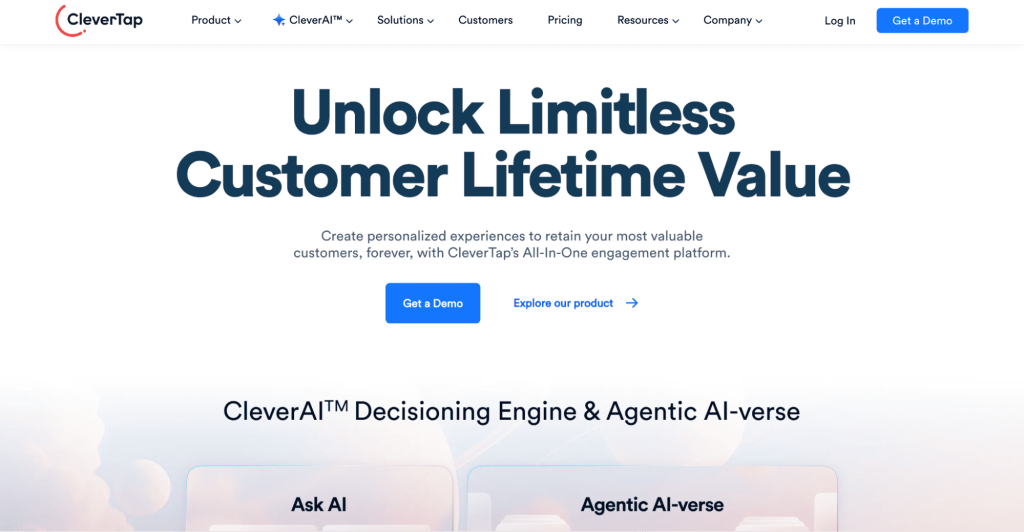
Clevertap   

Best for: Sales teams in e-commerce focusing on hyper-personalized omnichannel engagement for high-growth consumer brands.

CleverTap is an AI-powered customer engagement platform. The platform combines real-time analytics, advanced segmentation, and cross-channel orchestration to drive personalized experiences and maximize lifetime value.​

Key features:

  • Real-time behavioral analytics with user profiles, funnels, retention cohorts, and uninstall insights for precise sales targeting
  • Clever.AI engine with predictive modeling for churn prediction, next-best-action recommendations, and automated campaign optimization
  • Omnichannel messaging across push, in-app, email, SMS, WhatsApp, and web push with dynamic personalization and A/B testing
  • Advanced segmentation using behavioral, demographic, and predictive data for hyper-targeted sales journeys and win-back campaigns
  • Journey orchestration with event-triggered flows, pivots, and automation to engage users at optimal moments in their lifecycle

Pricing: Starts from $75/month

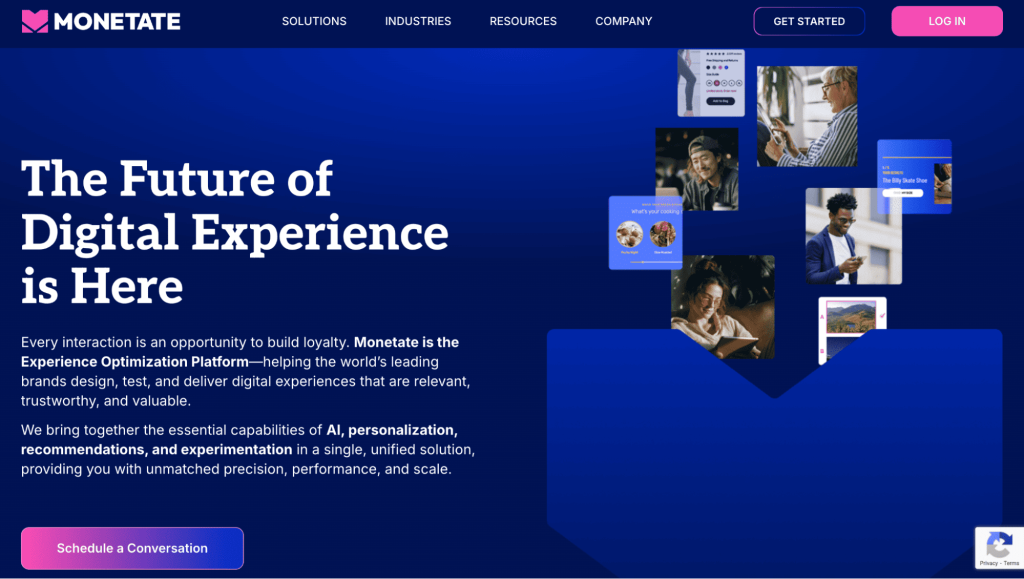
Monetate   

Best for: E-commerce sales teams optimizing high-traffic sites with AI-driven personalization.​

Monetate is an experience optimization platform that combines AI personalization (Symphony), experimentation (Maestro), and search/discovery (Overture) to deliver intelligent, individualized digital experiences at scale.​

Key features:

  • Symphony AI personalization suite uses machine learning for 1:1 experiences, automated decisions, and dynamic content based on real-time user data and context.​
  • Maestro experimentation for enterprise-grade A/B/n testing, auto-optimization, and feature experiments 
  • Overture search and discovery with AI-powered product recommendations, site search, and merchandising that adapts to shopper intent
  • MONET AI engine processes behavioral, contextual, and historical data for predictive modeling, content customization, and real-time adaptations
  • Unified analytics tracking personalized sessions, revenue influence, and KPI lifts 

Pricing: Custom

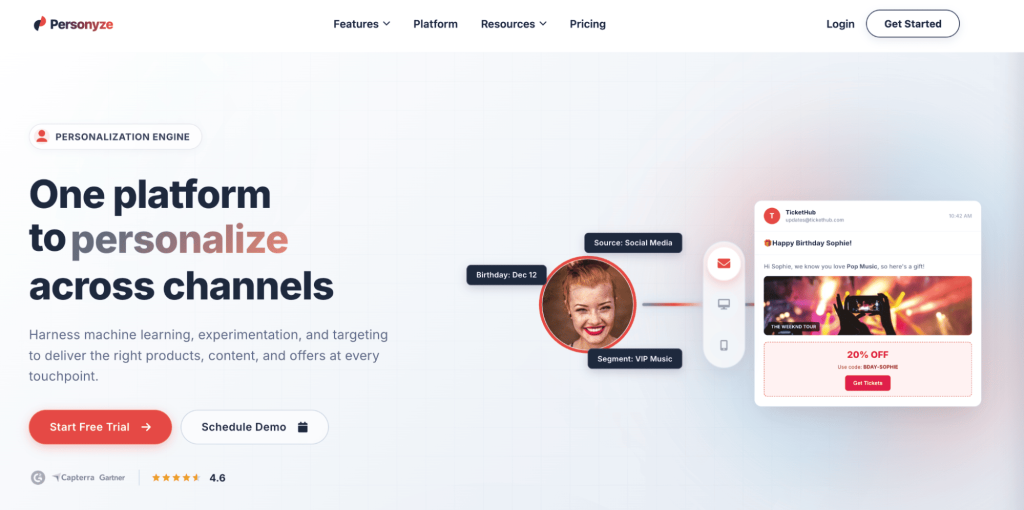
Personyze   

Best for: Sales teams in B2B and e-commerce that need no-code, real-time website personalization.​

Personyze is an AI personalization engine that turns visitor data into dynamic content, recommendations, A/B testing, and automated emails without coding or IT support.​

Key features:

  • 70+ behavioral targeting attributes including geo-location, weather, company data, session behavior, and CRM fields for precise segmentation
  • AI recommendations for products/content using visitor traits, crowd wisdom, and multiple algorithms delivered via widgets or emails
  • Real-time personalization for banners, popups, dynamic landing pages, and content swaps based on live visitor profiles
  • CRM/CDP/ABM integrations (Salesforce, HubSpot, Segment, Clearbit) plus APIs for unified 360° profiles and cross-channel consistency
  • Automated email drips, A/B testing with auto-shutdown, and detailed dashboards tracking clicks, conversions, and custom KPIs

Pricing: Free plan available; paid plan starts from $250/month

Webflow Optimize   

Best for: Sales teams building modern websites who want integrated A/B testing, rules-based personalization, and AI optimization without third-party tools or complex integrations.​

Webflow Optimize is a native experimentation and personalization tool within the Webflow platform. It combines A/B testing, audience targeting, and AI optimization to boost conversions directly from the visual editor.​

Key features:

  • A/B testing and multivariate experiments with easy setup to identify winning variations across pages, CTAs, and content
  • Rules-based personalization targeting segments by device, location, traffic source, new/returning status, and UTM parameters without cookies or PII
  • AI-powered optimization that automatically tests multiple variables, learns audience patterns, and dynamically serves the best-performing content to each visitor in real-time
  • Enterprise integrations with Salesforce, HubSpot, 6sense, and Demandbase for firmographic data, CRM fields, and account-based marketing personalization
  • Native analytics tracking conversions, audience insights, and performance metrics within Webflow’s dashboard

Pricing: Starts from $299/month

Klevu   

Best for: E-commerce sales teams optimizing product discovery through AI-powered search, merchandising, and personalized recommendations.

Klevu (now part of Athos Commerce) is an AI-driven search and discovery platform. 

It uses machine learning and natural language processing to deliver relevant results, smart merchandising, and personalized shopping experiences across e-commerce sites.​

Key features:

  • AI-powered Smart Search with natural language processing, spell correction, synonyms, and intent understanding, even from typos or vague terms
  • Personalization Engine uses clickstream data, segmentation, and collaborative filtering for tailored recommendations to new/anonymous and returning visitors
  • Smart category merchandising with AI optimization, A/B testing, and manual rules to boost click-through rates and conversions on category pages
  • Product recommendations integrated with platforms like Klaviyo for onsite banners, emails, and SMS using shopper-specific search data
  • Headless architecture, multi-storefront support, and integrations with Shopify, BigCommerce, Magento, Salesforce for seamless deployment

Pricing: Starts from $499

How to evaluate and choose the right ai personalization tool?

Here are some tips before you finalize an AI personalization tool for your team: 

Map your omnichannel needs

Start by identifying where you want personalization to operate: web, mobile, email, SMS, WhatsApp, push, or chatbots. 

Teams that need a unified experience often lean toward full-stack platforms, while more focused use cases can work with niche tools built for one or two channels.

Check the AI capabilities that matter most

Look for features that match your goals, such as predictive segmentation for smarter targeting, real-time personalization engines, conversational AI for chat-driven journeys, or generative AI to help produce tailored content. 

Not every platform excels at the same things, so match capabilities to your workflow.

Review integration fit with your tech stack

Strong personalization depends on connected data. 

Prioritize tools that offer native integrations with CRM and CDP systems like Salesforce, HubSpot, Shopify, Adobe Experience Cloud, or Segment. 

The smoother the data flow, the more accurate the personalization output.

Evaluate pricing and trial options

Personalization platforms vary widely in cost. Free trials, freemium tiers, or usage-based plans make it easier to experiment before committing. 

Make sure the pricing model aligns with your channel volume and long-term growth.

Confirm privacy and compliance readiness

Personalization relies on data, so compliance is non-negotiable. 

Check for GDPR and CCPA alignment, built-in consent management, data anonymization, and regional data residency options if you operate in regulated markets.

Consider vendor support and scalability

Review the level of customer success support, onboarding help, and training offered. 

SMBs may prefer lightweight guidance, while enterprise teams often need dedicated support and strong SLAs to manage higher complexity. 

How can sales teams use AI personalization in practice?

Let’s say you get the tool added to your stack. But how do you use it in real-life use cases? Let’s take a look. 

Boost cross-sell and upsell with smarter recommendations

AI highlights the products, add-ons, or upgrades a prospect is most likely to consider based on their browsing patterns and past interest. 

It gives reps a clearer angle for expanding deal size.

Tailor website and landing page experiences to sales-ready visitors

When prospects return to your site, AI can adjust banners, CTAs, and content blocks to reflect their industry, stage, or past activity. 

This ability keeps high-intent leads engaged even before a rep reaches out.

Guide prospects forward with predictive next steps

AI looks at behavior across touchpoints and suggests the most effective action to move a lead closer to a decision. 

That could be surfacing a case study, triggering a follow-up, or adjusting the nurture path.

Trigger timely nudges that revive stalled interest

Use AI to send automated reminders and offers to prospects at the right moment, such as after viewing pricing, abandoning a cart, or pausing mid-journey. 

With this approach, reps can re-engage accounts without constant monitoring.

Create sharper segments for more relevant outreach

Instead of relying on broad lists, AI groups prospects by their behavior and likelihood to convert. 

Sales teams get high-quality segments for emails, sequences, and outbound campaigns.

Keep messaging consistent across every channel

AI ensures that email, SMS, push, WhatsApp, and app notifications all reflect the same context from the CRM or website activity. 

Prospects get a unified experience no matter where they interact.

Handle early conversations with conversational AI

Chatbots and messaging assistants answer basic questions, qualify prospects, and collect context before handing them to a rep. 

The process reduces drop-off and helps sales teams focus on higher-value conversations.

Also read: AI Sales Role Play: Practice That Converts

What features make AI personalization tools effective?

Feature Why it matters
Real-time behavioral tracking Captures user activity across devices and sessions so personalization reflects what someone is doing right now instead of relying on outdated signals.
Advanced segmentation Creates precise groups using behavioral, contextual, predictive, or psychographic data, allowing teams to tailor outreach to a buyer’s actual intent and preferences.
AI/ML recommendation engines Uses machine learning models to predict what each user is likely to find useful or interesting, improving relevance for content, offers, and next steps.
Generative AI for dynamic content Produces tailored copy, visuals, and journey variations automatically, adjusting them as user behavior shifts to keep experiences fresh and aligned.
Predictive targeting and optimal timing Identifies the moments when a user is most receptive and selects the channel they’re likely to respond to, improving engagement and conversion efficiency.
Dynamic content delivery Updates website sections, app screens, or interface elements in real time so the experience evolves with each action a user takes.
Omnichannel personalization Ensures consistent messaging and experiences across web, mobile, email, SMS, push, chat, and voice, reducing disconnects as users switch devices.
Conversational AI Powers adaptive chat interactions through natural language understanding, enabling smoother, more context-aware conversations in support or sales flows.

Also read: The 10 Top AI Companies Driving Growth and Innovation

How to maximize impact with AI personalization in sales?

Fix your data before you fix your messaging

If lead records are outdated, duplicated, or missing activity, personalization will misfire. 

Start by making sure CRM data, website behavior, and engagement history are reliable and synced. 

Even a small cleanup here pays off quickly in better targeting and timing.

Personalize around buying signals, not personas

Sales teams see better results when personalization responds to actions like pricing page visits, repeat product views, or stalled deals. 

These signals tell you when to act, which matters more than static personas.

Run small pilots that mirror real sales motion

Test personalization on a specific motion such as demo follow-ups, re-engagement of cold accounts, or upsell after onboarding. 

That way you can keep experiments realistic and easier to evaluate.

Make AI insights visible to reps, not hidden in dashboards

Personalization works when reps can see why a lead is prioritized or a message is suggested. 

Surface insights directly in daily workflows so they can act quickly and confidently.

Set guardrails to avoid overdoing it

Too many nudges or overly specific references can backfire. 

Use simple limits on message frequency and regularly review feedback, replies, and opt-outs to keep personalization helpful.

What role does data strategy play in successful ai personalization?

AI personalization only works as well as the data behind it. 

For sales teams, a solid data strategy is what turns AI from a nice idea into something that actually improves conversations, timing, and deal outcomes.

Create a unified, reliable source of truth

AI needs clean, consistent, and enriched data to make accurate decisions. When CRM records, website behavior, and engagement history live in silos, personalization breaks down. A unified dataset gives AI the full picture of each buyer.

Put governance in place early

Clear rules around data access, privacy, consent, and ethical use protect both the business and the customer. Strong governance keeps personalization compliant and prevents misuse of sensitive buyer data.

Decide when real-time data matters

Real-time streaming allows instant responses to buyer actions, which is crucial for high-intent moments. Batch processing works for slower-moving campaigns. Knowing when speed matters helps sales teams act at the right moment.

Treat first-party data as a competitive edge

With third-party cookies fading out, data you collect directly from buyers becomes far more valuable. First-party signals from your CRM, product usage, and site activity are more accurate and more actionable for sales.

Enrich data beyond basic contact records

Strong personalization blends CRM details with behavioral, transactional, demographic, and even psychographic signals. Thanks to this depth, AI can understand not just who a buyer is, but also why they might be ready to move.

Also read: AI Sales Strategy: How to Boost Revenue 

How AI personalization transforms sales success in 2026 and beyond

The next step is simple and practical. Evaluate tools by how well they fit your real sales strategy, not by how impressive the feature list looks. 

Run focused pilots tied to replies, meetings booked, and pipeline movement. Scale only what consistently moves deals.

Tools like Jason AI SDR show how personalization, multichannel outreach, and follow-through can operate as one connected workflow. Going into 2026, that level of execution is the standard sales teams are being measured against. 

Book a demo to see how Jason fits into your sales motion.

Subscribe to our blog to receive the latest updates from the world of sales and marketing.
Stay up to date.

Related Articles

How to Use Reply.io + Jason for Lead Generation for Software Companies in 2026

How to Use Reply.io + Jason for Lead Generation for Software Companies in 2026

How to Use Reply.io + Jason for Lead Generation for Software Companies in 2026
Top 12 GTM Outbound Sales Platforms to Try in 2026

Top 12 GTM Outbound Sales Platforms to Try in 2026

Top 12 GTM Outbound Sales Platforms to Try in 2026
How to Use Reply.io + Jason for B2B Demand Generation in 2026

How to Use Reply.io + Jason for B2B Demand Generation in 2026

How to Use Reply.io + Jason for B2B Demand Generation in 2026