
Key takeaways:
- An AI prospecting API is one an agent can drive end to end: find accounts, enrich them, decide who to contact, and act, without a human clicking through a dashboard.
- MCP support is the clearest signal a vendor is serious about agents, and it is still rare. Postman found 70% of developers aware of the protocol but only 10% using it regularly.
- Pricing models split sharply. Parallel and Exa bill per request with no subscription, while Clay gates API access behind its Growth tier and Relevance AI publishes no price at all.
- We rank ourselves first because our AI SDR surface is the deepest here at 72 endpoints, and we have been specific about which parts are beta and which land in late August 2026.
Prospecting used to mean a human filtering a database, then it meant AI prospecting tools. Increasingly it means an agent doing the same work in a loop, and the tooling has not entirely caught up. Plenty of vendors describe themselves as AI-powered while exposing an interface a human has to sit in front of.
The distinction that matters in 2026 is whether the whole motion is reachable from code. An agent that can search for accounts but cannot enrich them, or enrich them but cannot act on the result, is a demo rather than a system.
That gap is visible in the data. Postman’s State of the API Report, surveying more than 5,700 developers, found that 89% of developers use generative AI but only 24% actively design APIs with AI agents in mind. Most APIs were built for humans wearing a programming hat, not for autonomous callers.
This guide ranks the 11 AI prospecting APIs that are genuinely agent-ready in 2026. We built one of them and have placed ourselves first. Our entry states which of our endpoints are in beta and which are still dated.
What Makes an API an AI Prospecting API
Three properties separate an AI prospecting data API from an ordinary data endpoint with a marketing label.
It covers the whole loop. Search, enrich, decide and act should all be callable, which is what separates these from ordinary automated prospecting tools. A tool that only answers “who matches this filter” leaves the agent stranded at the point where it needs to do something.
It is priced for machine-scale calling. An agent makes far more calls than a human, and many of them return nothing useful. Per-seat pricing punishes that pattern badly; per-request pricing suits it.
It returns output an LLM can use. Token-dense, structured responses sized for a context window beat verbose HTML. Parallel makes this explicit in its product design, and it is a real differentiator once you are feeding results into a model rather than a table.
MCP support sits on top of these as a strong practical signal. The Model Context Protocol lets an agent discover and call a tool without you writing a bespoke integration first, which collapses days of glue code into a config entry. The same pattern drives our n8n MCP setup.
How We Chose These AI Prospecting APIs
We required an API a developer can call today, published pricing or an explicit statement that pricing is quote-only, and a genuine prospecting use case rather than a general-purpose search tool with a sales page.
We weighted agent-readiness heavily, meaning MCP or equivalent tooling, per-request rather than per-seat billing, and documentation aimed at machine callers. We also checked whether API access sits on the entry tier or behind an upgrade, because that changes the cost of experimenting considerably.
Two candidates came out. Common Room was dropped because a Zoom acquisition was announced in July 2026 and we could not confirm from public sources whether it had closed, which makes any statement about its independence or future pricing unreliable. ZoomInfo was excluded for having no public API pricing at all.
The 11 Best AI Prospecting APIs Compared
Pricing shown is the cheapest tier that actually includes API access.
| Tool | Best for | Key features | Main limitation | Pricing (from) | Rating |
| Reply.io | Agents that prospect and then act | 72 AI SDR endpoints, MCP server, Live Data search | Much of the AI SDR surface is beta | $49/month | ★★★★★ |
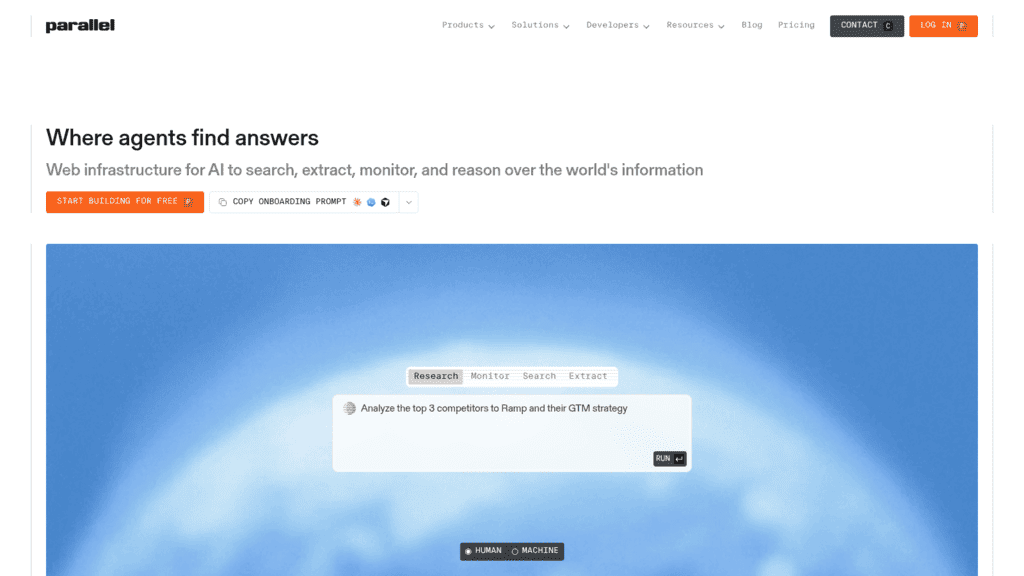
| Parallel | Per-request agent economics | Search, Task, Extract and Monitor APIs, no seats | Deep research runs can cost $2.40 each | Free ($5/month credits) | ★★★★★ |
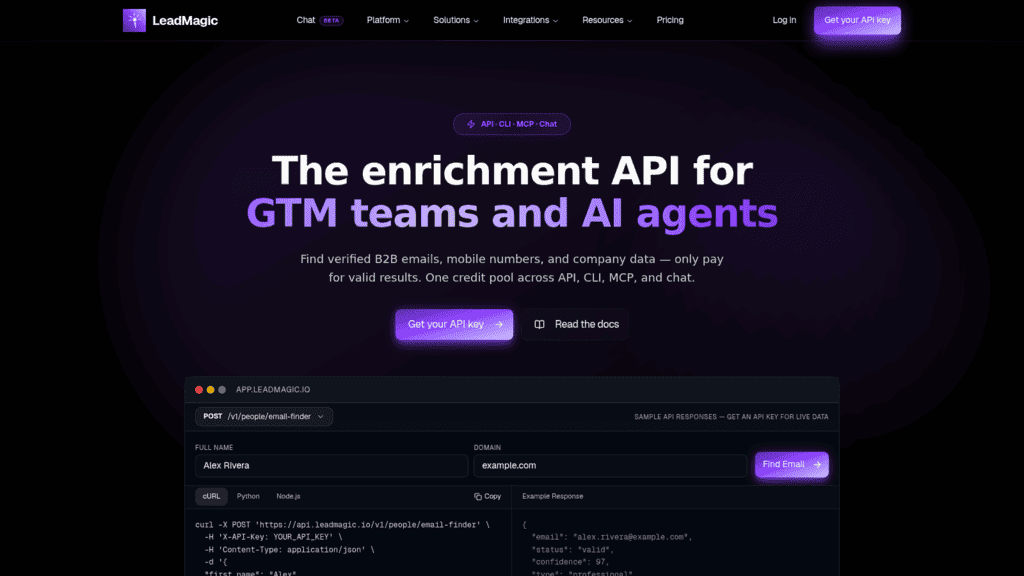
| LeadMagic | Fastest agent integration | MCP server and CLI on every plan | Basic credits do not roll over | $49/month | ★★★★☆ |
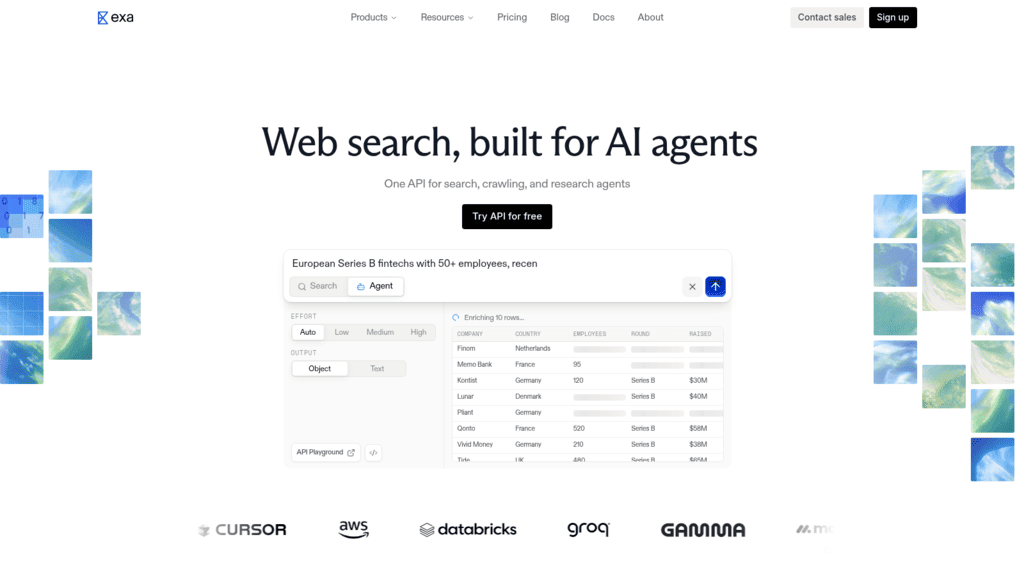
| Exa | Semantic search over people and companies | Neural search, 1B+ profile index, enrichment runs | Pay-as-you-go only, no support tiers | Free (20,000 requests) | ★★★★☆ |
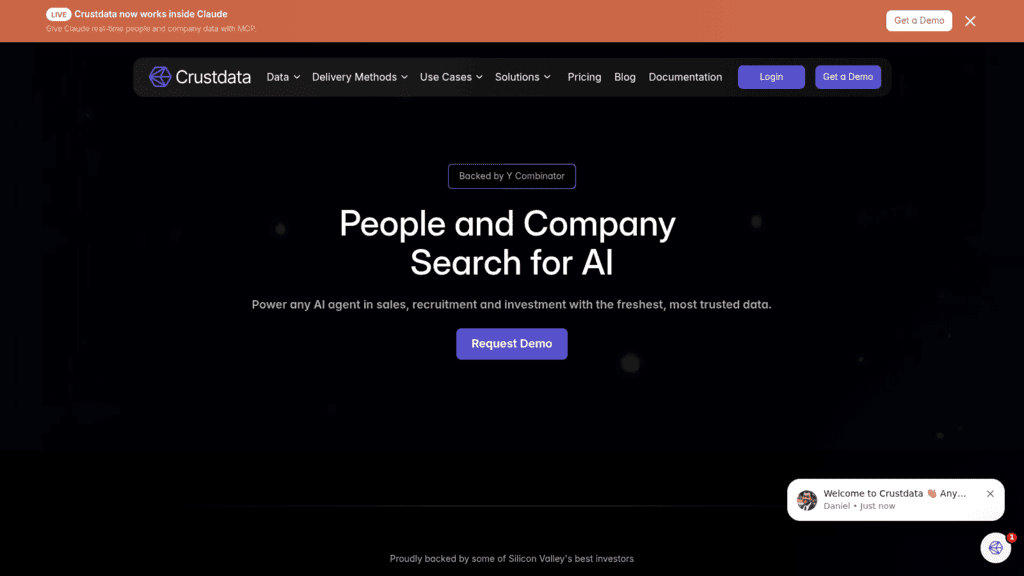
| Crustdata | Real-time buying signals | Hiring, funding and headcount events, MCP server | No published pricing | Quote only | ★★★★☆ |
| Clay | Complex multi-provider workflows | 100+ provider waterfalls, Claygent | API gated to the Growth tier | $185/month | ★★★★☆ |
| Tavily | Grounding agents in live web data | 1,000 free credits, no charge for failed calls | Web search, not a prospect database | Free (1,000 credits) | ★★★★☆ |
| Explorium | Agent-native B2B data layer | Credit packages, no subscription | Credits expire after 12 months | $84.99 (2,500 credits) | ★★★☆☆ |
| LinkUp | Cheap high-volume retrieval | Search, Fetch and Research endpoints | General web data, not sales-specific | Free (4,000 queries) | ★★★☆☆ |
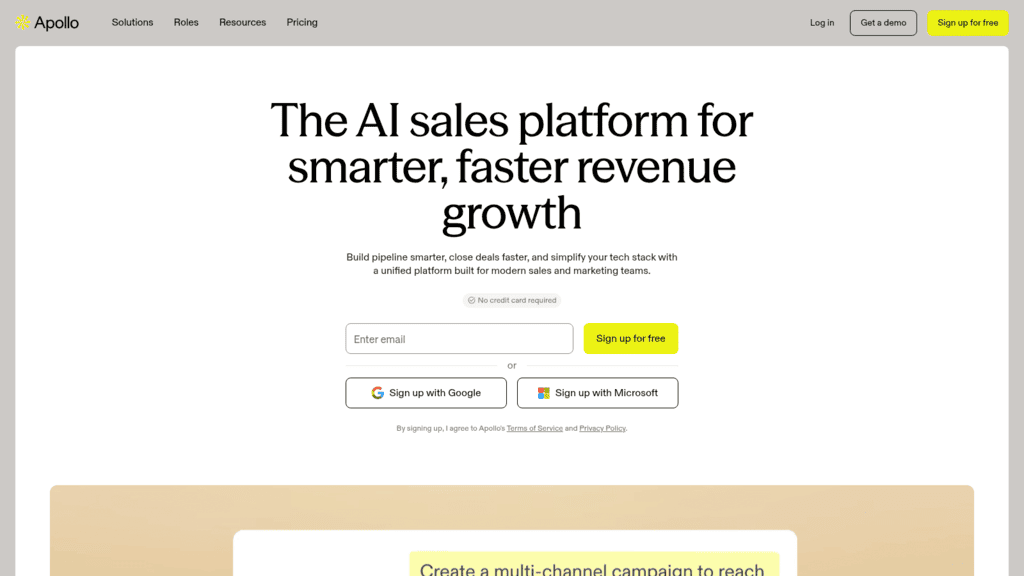
| Apollo.io | One vendor for data and sending | Large database, real free tier | Per-seat pricing suits humans, not agents | $49/user/month | ★★★☆☆ |
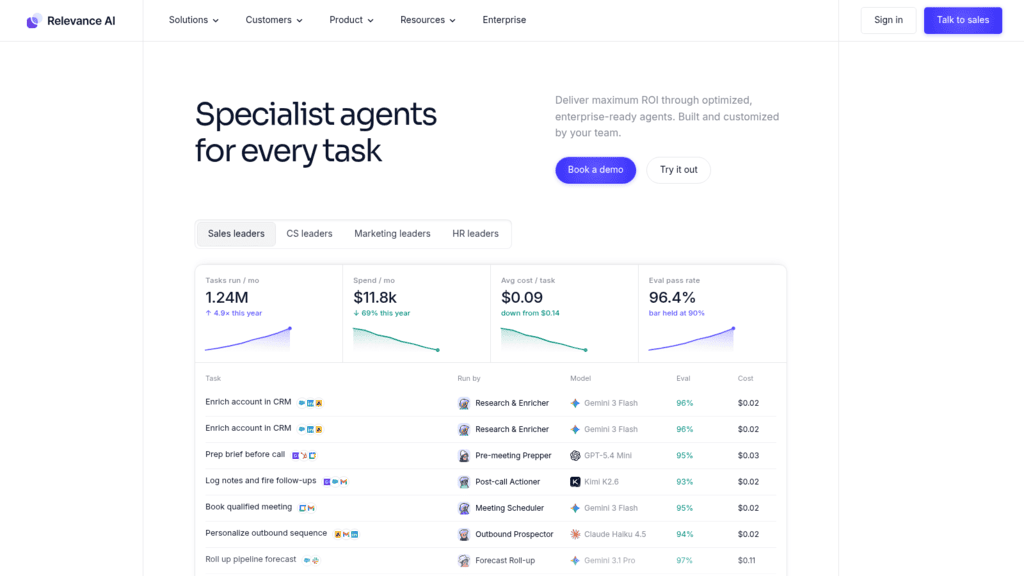
| Relevance AI | Building the agent itself | Agent builder, 2,000+ integrations | Enterprise-only, no public pricing | Quote only | ★★★☆☆ |
Ratings reflect agent-readiness rather than raw data quality, which is why a pure search API can outscore a larger database here. The entries explain each call.
1. Reply.io
Best for: Agents that prospect and then act
Overview: Most tools in this list hand an agent data and stop. We built the other half, which is why we rank ourselves first here even though we would not claim the top spot in a pure data comparison.
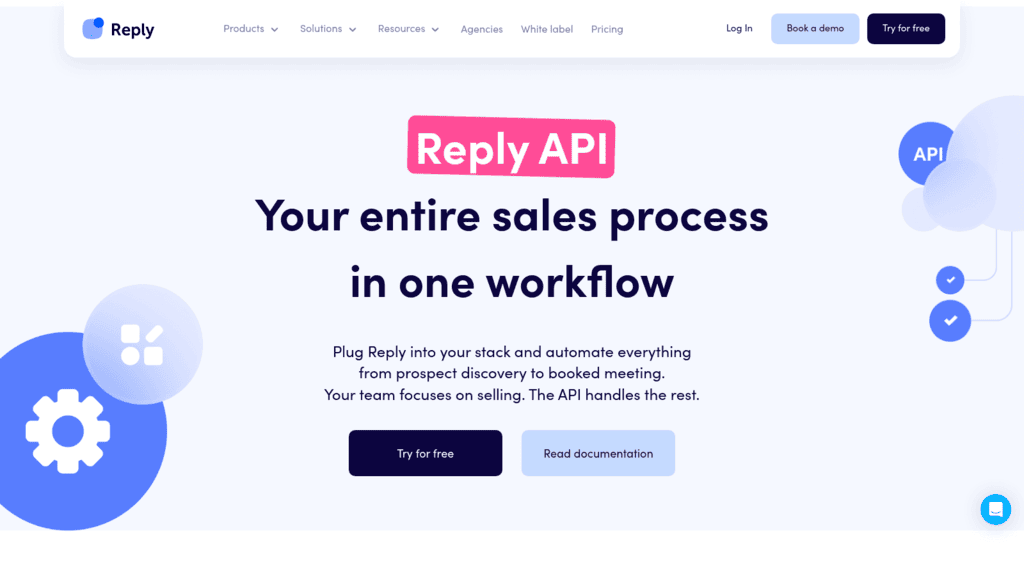
Our v3 API documents 359 endpoints, and 72 of them are AI SDR endpoints: knowledge bases, playbooks, offers, intent signals, sequence strategy and pending approvals. An agent can source a prospect, decide the angle, draft the sequence, request human approval and start sending, all through one authenticated surface.
Jason, our AI SDR, is the same capability packaged as a product rather than a set of calls. You can hire the agent or build your own against the endpoints it uses. If the category is new to you, start with what an AI SDR is.
We also ship an MCP server, so Claude, Cursor or another MCP client can list sequences, add contacts, start or pause campaigns and pull statistics without a custom integration.
Key features:
- 72 AI SDR endpoints spanning knowledge bases, playbooks, offers, intent signals and approval workflows
- An MCP server for Claude, Cursor and other MCP-compatible clients, included in the trial
- Live Data search across 1+ billion contacts with department, industry, title, location and seniority filters
- Approval-mode endpoints, so an agent proposes and a human confirms before anything sends
- Multichannel sequence endpoints covering email, SMS and calls with branching logic, plus LinkedIn as a $69 per month per-account add-on
- Published rate limits of 100 requests per minute and 3,000 per hour, with async jobs for long-running work
Pricing: the platform ladder is keyed to active contacts, opening at $49 a month annually ($59 monthly) for 1,000 and reaching $899 at 100,000. Jason is bought separately as a managed AI SDR rather than as raw endpoints, from $500 to $1,000 a month on Starter, which is roughly ten times what the entry platform tier costs.
Pros: the deepest AI SDR endpoint surface here, prospecting and outreach behind one key, MCP server included, approval mode built in rather than bolted on, plan-level pricing that does not penalise high call volume
Cons: a large share of the AI SDR surface is marked beta so response shapes can change without notice, the AI web search and contact enrichment endpoints are not callable until late August 2026, and our data is bundled inside the platform rather than sold standalone, so an agent that only needs records is buying a sending tool it will not use
How to start using it:
- Sign up for the 14-day trial and mint an API key from Settings > API Key.
- Prove the credential works against
https://api.reply.io/v3/whoami. - Connect the MCP server to Claude or Cursor and list your sequences to check the tool loop works.
- Build a knowledge base through the AI SDR endpoints so the agent has product context to draw on.
- Run in approval mode first, so you can inspect what the agent proposes before it sends anything.
Why it’s a good AI prospecting data API: an agent that finds a perfect prospect and then cannot contact them has done half a job. Closing that loop inside one API is the thing this list is actually about.
Final verdict: the best choice when you want an agent to run outbound rather than just research it, provided you can work with beta endpoints and plan around the August 2026 dates. If you need only data retrieval, Parallel or Exa will serve you more cheaply.