
Best 12 PitchBook Alternatives for 2026

Best 12 PitchBook Alternatives for 2026

Fair enough. PitchBook is a decent platform for private capital market intelligence.

However, if you’re a sales rep, SDR, or growth marketer trying to find and reach the right prospects, it can be overly elaborate. It’s also expensive.

In fact, PitchBook reviews on platforms like G2 and Trustpilot point to pricing that locks premium features behind costly tiers.

So, if you’re looking for other options, for whatever reason, we’ve handpicked the best alternatives to PitchBook to enable you to make a more informed decision.

The tools in this collection offer a range of capabilities spanning outbound automation, startup intelligence, raw B2B data access, and more.

How did we pick the best PitchBook alternatives?

To narrow down good alternatives to PitchBook, we applied a consistent set of criteria that involved the following parameters:

  • Data accuracy and freshness: We looked at how up-to-date the contact and company data are, since stale data wastes time and yields poor outreach results.
  • Database size and coverage: We checked how many contacts and companies each platform covers, as well as their geographic reach.
  • Contact and company-level data: We assessed whether each tool provides verified email addresses, phone numbers, firmographics, and technographic data in a single place.
  • Intent data: We evaluated whether the platform signals active buying behavior, enabling sales reps to prioritize the right accounts at the right time.
  • Search and filtering: We tested the granularity of the filters — industry, headcount, funding stage, tech stack — to see how precisely users can build targeted lists.
  • Outreach capabilities: We noted whether each tool connects data to actual outreach or hands you a list and stops there.
  • CRM integrations: We checked compatibility with tools such as Salesforce and HubSpot, as disconnected workflows can slow sales cycles.
  • Pricing and value: We compared each platform’s cost against what it delivers for small- to mid-sized sales teams.
  • Ease of use: We considered how quickly a new user can get productive without lengthy onboarding.

In short, this roundup represents solid PitchBook data competitors selected based on user feedback, verified reviews, and hands-on platform evaluation.

By the way, these are the same parameters you should use when looking for PitchBook alternatives on your own.

TL; DR – quick comparison table

Before we get into the nitty-gritty, below is a table summarizing how these alternatives to PitchBook compare at a glance.

Tool Best for Who it suits Database size Outreach capabilities Starting price
Reply.io Outbound outreach + sales engagement SDRs, lead gen specialists, outbound sales teams 1B+ verified contacts Yes — email, LinkedIn, SMS, WhatsApp, calls $49/user/mo
Apollo.io Contact data + outbound prospecting Sales teams, growth marketers 210M+ contacts Yes — email sequences only $49/user/mo
ZoomInfo B2B company data + buyer intent Sales and RevOps teams 230M+ contacts Limited — via add-ons $15,000/year
Owler Competitor tracking and alerts Marketing and strategy roles 15M+ company profiles No $39/user/mo
Dealroom Ecosystem mapping Public sector, accelerators, ecosystem builders 2M+ startups No €37,500/year
Harmonic.ai Early-stage startup signals Seed investors, scouts 35M+ companies No $25,000/year
AngelList Startup and syndicate access Angel investors, founders 13,000+ active startups No $1,600/year
CB Insights Market trends and industry reports Corporate strategy, innovation teams Millions of companies No $50,000/year
AlphaSense Financial document intelligence Investment analysts, hedge funds 10,000+ premium sources No Custom quote
Coresignal Raw data via APIs Data teams, product builders 792M+ employee records No $49/month
Grata Off-market private companies Private equity, M&A teams 21M+ private companies No Custom quote
Tracxn Sector-level startup analysis Thesis-driven VCs 2,500+ sector feeds No $4,400/user/yr

Which are the top alternatives to PitchBook?

In this section, we’ll zero in on the PitchBook alternatives that made it to our list and what they bring to the table.
Reply.io

Reply.io kicks off the PitchBook alternatives data platform roundup for good reasons.

For starters, Reply doesn’t just give you a contact list and leave you to figure out the rest. It goes a step further.

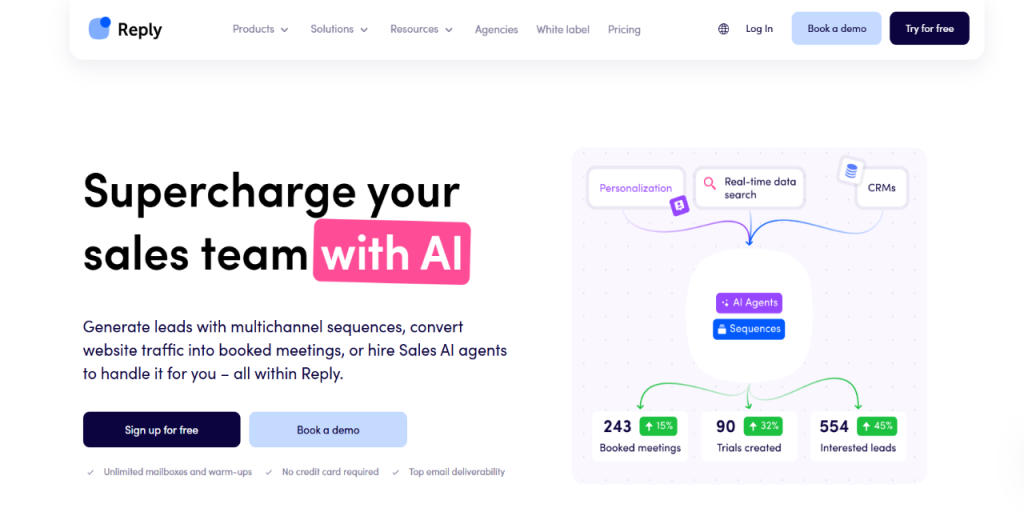
It connects verified B2B data directly to multichannel outreach. That way, you can find a prospect and contact them within the same platform.

For SDRs and outbound sales teams, that convenience is paramount. It saves you the hassle of jumping between a data tool, an email sequencer, a LinkedIn automation, and a deliverability checker. 

Speaking data, Reply boasts a live database of 1B+ verified contacts across 150+ countries. In addition, it allows you to build targeted lists using filters like industry, seniority, tech stack, and funding stage.

You can also use it to launch multichannel sequences combining email, LinkedIn, SMS, WhatsApp, and calls from a single workflow.

And then there’s the AI personalization engine. The feature lets you tailor messages to each prospect based on their LinkedIn activity, company news, and role-specific context. The ripple effect is that reps send fewer generic blasts, which sets the stage for more replies.

Meanwhile, the email deliverability toolkit helps protect your domain, ensuring outreach messages land in inboxes.

Cherry on top, Reply comes with Jason, an AI-powered sales agent.

Jason AI SDR works autonomously 24/7, finding contacts and launching campaigns. It also enables you to personalize messages at scale and book meetings on your behalf.

Key features:

  • Reply Data: Provides 1B+ live, verified contacts to build precise prospect lists without relying on a separate data tool.
  • Multichannel sequences: Runs email, LinkedIn, SMS, WhatsApp, and calls from one sequence builder to reach prospects on the channels they actually use.
  • AI personalization: Auto-generates tailored openers, value props, and follow-ups for each prospect, enabling high-volume outreach without sacrificing relevance.
  • Jason AI SDR: Deploys an AI agent that automatically finds leads, launches campaigns, and books meetings around the clock.
  • Email deliverability toolkit: Warms up mailboxes, monitors domain health, and sends messages via Gmail API to protect sender reputation at volume.
  • Conditional sequence logic: Creates sequences that adapt in real time based on prospect behavior.
  • Findy Chrome extension: Grab verified emails directly from LinkedIn and push contacts into active sequences instantly.

Pros:

  • All-in-one outreach platform
  • 1B+ verified contacts
  • Strong AI personalization
  • Multichannel in one workflow
  • 14-day free trial

Cons:

  • Initial learning. Reply, however, has a super-responsive customer care desk to get you up and running fast and to resolve glitches.

Pricing:

Reply.io pricing starts at $49 per user per month for the Email Volume plan. The Multichannel plan tier costs $89 per user per month. Meanwhile, Jason AI SDR pricing starts at $500 per month.

Reply.io offers a 14-day free trial, with no credit card required, to test-drive the platform.

Apollo.io

Apollo.io can be a good choice for an outbound sales team looking for pitchbook alternatives with contact data and email sequencing.

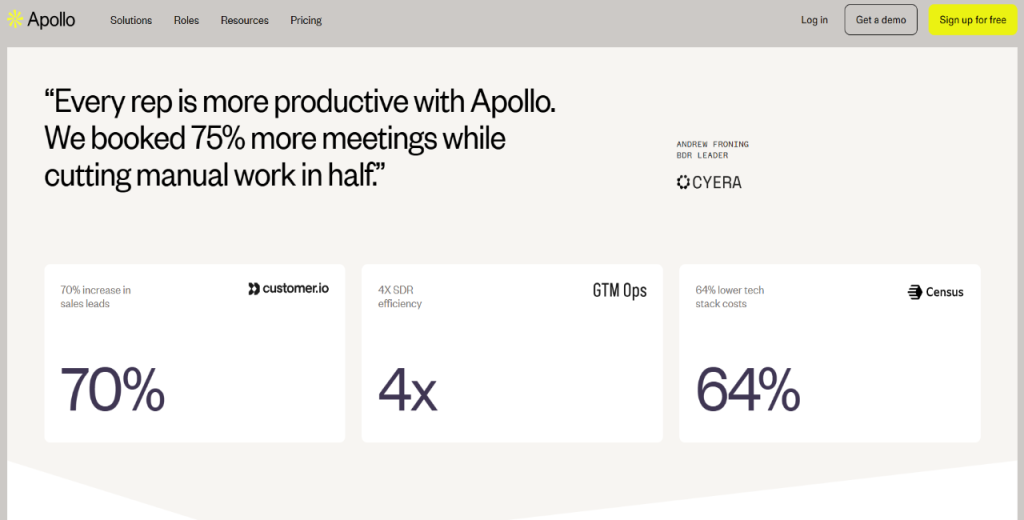
It offers a reasonably large database with 210M+ contacts. You can search leads by title, company size, industry, funding stage, and tech stack. Meanwhile, the integrated sequence builder lets you run email campaigns and monitor key metrics.

That said, Apollo’s credits expire monthly, with phone numbers costing significantly more than emails. So, if you’re doing heavy outbound, that’s worth noting. Besides, unlike Reply.io, Apollo.io doesn’t natively offer LinkedIn automation.

Key features:

  • Contact database: Searches 210M+ contacts using filters including seniority, funding stage, and tech stack.
  • Email sequences: Runs automated campaigns with A/B testing, open tracking, and follow-up automation.
  • CRM integrations: Syncs with Salesforce and HubSpot to push contacts and activity data automatically.
  • Chrome extension: Finds verified contact data while browsing LinkedIn or company websites.

Pros:

  • Built-in email sequencer
  • Robust search filters

Cons:

  • Credits expire monthly
  • Phone numbers cost extra
  • Costs can be unpredictable at scale

Pricing:

Apollo.io pricing ranges between $49 to $119 per user per month. A free plan is available, albeit with limited credits.

ZoomInfo

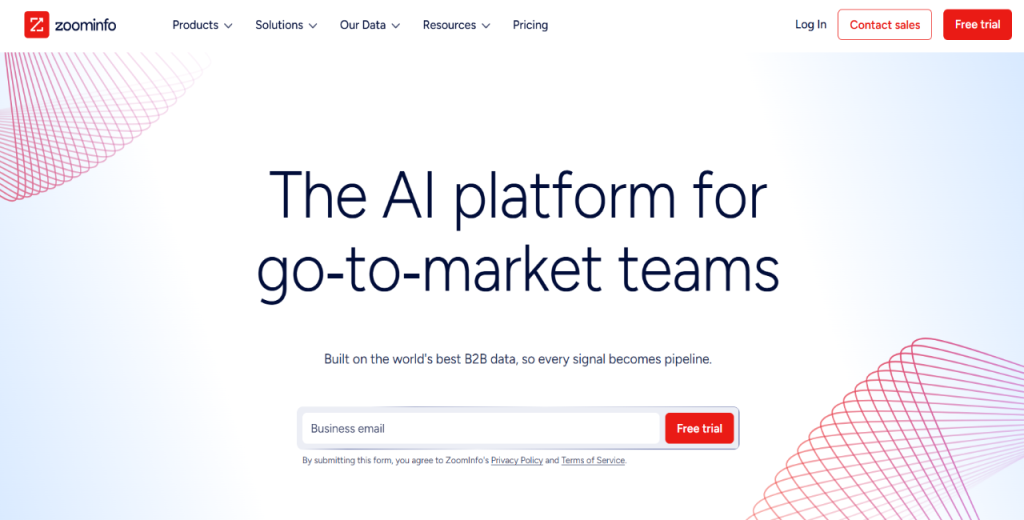
ZoomInfo is one of those PitchBook competitors at the enterprise end of the spectrum.

It comes with 230M+ contacts, buyer intent signals, and org-chart-level data that’d benefit large GTM teams. With intent signals, RevOps can prioritize in-market accounts. As a result, they can reduce the time wasted on cold, low-fit outreach.

However, ZoomInfo reviews reveal that the platform can cost $15,000 to $60,000+ annually. You’ll also pay significantly more once credits, seats, and add-ons stack up.

Sure, ZoomInfo will give you data. Reply.io, by comparison, gives you data and multichannel support without a five-figure price tag.

Key features:

  • Contact database: Covers 230M+ verified contacts with direct dials, org charts, and email addresses.
  • Buyer intent data: Identifies companies actively researching solutions, helping teams prioritize high-fit accounts.
  • Copilot AI: Analyzes CRM data and suggests next actions, email copy, and account summaries.
  • CRM sync: Maintains bi-directional sync with Salesforce, HubSpot, and Microsoft Dynamics.

Pros:

  • Large B2B contact database
  • Direct dial coverage

Cons:

  • Expensive
  • Annual contracts only

Pricing:

ZoomInfo pricing ranges from $15,000 to $60,000+ annually, depending on add-ons, extra seats, and credit overages.

Owler

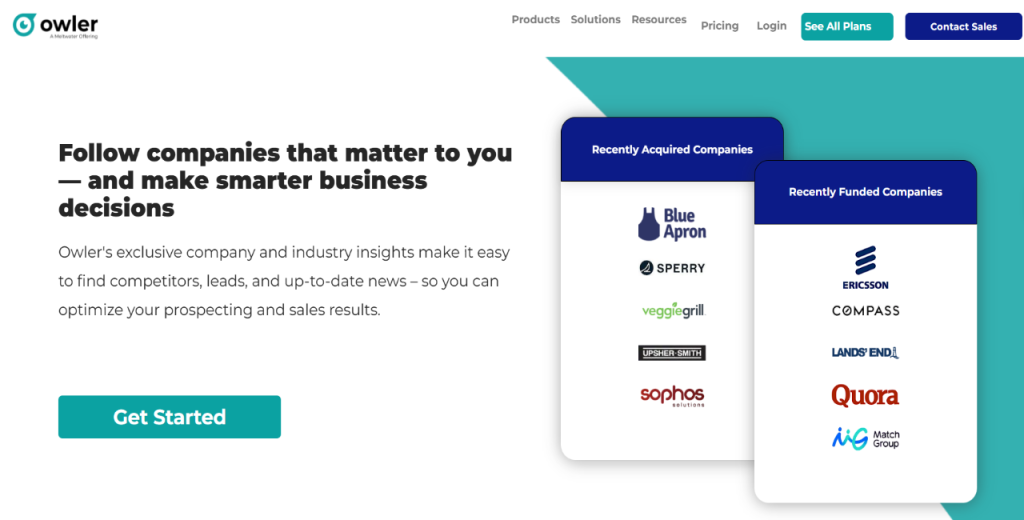
Owler is one of the PitchBook data competitors that can be useful for tracking competitors, monitoring industry news, and spotting market changes.

What it does well is surface real-time company updates and estimated revenues. It’ll also show you leadership changes and competitor activity across 15M+ company profiles.

For marketing and strategy teams, Owler’s daily digest and customizable alerts can save significant time on research. Sales reps also use it to time outreach around trigger events, such as funding announcements.

That said, Owler stops at business intelligence. It doesn’t connect that intelligence to outreach, unlike Reply.io, which does both.

Key features:

  • Daily Snapshot: Sends a curated daily digest of updates on followed companies to reduce manual research time.
  • Sales triggers: Flags events such as acquisitions and product launches that signal the right moment to reach out.
  • Owler AI: Generates personalized outreach messages using real-time company news and contact data.
  • CRM integrations: Syncs alerts and insights with Salesforce, HubSpot, Slack, and Microsoft Teams.

Pros:

  • Real-time competitor alerts
  • Trigger-based outreach prompts

Cons:

  • No contact-level outreach

Pricing:

Owler pricing starts at $39 per user per month, with custom Enterprise pricing available.

Dealroom

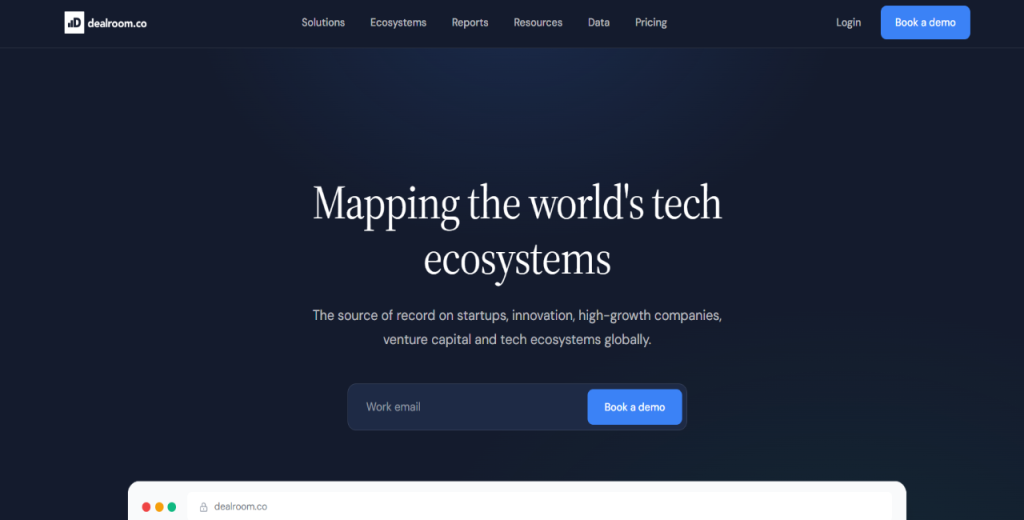
Dealroom is arguably one of the best alternatives to PitchBook for ecosystem-focused use cases. It covers 2M+ startups and scaleups with 100+ B2B data points per company.

The platform is API-first, making it adaptable for teams that want to embed startup intelligence into their own tools or dashboards. Dealroom is big on European tech ecosystems compared to most US-centric platforms.

Still, Dealroom is more of an ecosystem analysis tool than a sales outreach platform. If your goal is to find companies and then contact them, Reply.io is a better option.

Key features:

  • Ecosystem mapping: Benchmarks innovation ecosystems across cities, regions, and countries using 100+ data points.
  • Startup database: Covers 2M+ startups and scaleups with funding history, investor data, and team information.
  • API-first architecture: Integrates startup intelligence into internal tools, dashboards, and workflows programmatically.
  • Funding flow tracking: Monitors capital movement across sectors and geographies to spot emerging investment trends.
  • Sector analysis: Identifies high-growth niches across European and global tech ecosystems.

Pros:

  • Strong European coverage
  • Ecosystem benchmarking tools

Cons:

  • Expensive
  • Three-seat minimum required
  • Limited US private company depth

Pricing:

Dealroom pricing starts at €37,500 per year for Premium access, with enterprise pricing available on request.

Harmonic.ai

Want to get wind of startups before they appear on mainstream databases? Harmonic.ai is one of the alternatives to PitchBook you can use for early-stage intelligence.

It tracks 35M+ companies and 195M+ professional profiles to identify startups at the formation stage, well before a funding round goes public.

Harmonic.ai is ideal for seed investors and scouts looking to build proprietary deal flow. The platform’s biggest limitation, however, is workflow depth. While Harmonic can surface companies, it doesn’t manage relationships or run outreach.

Key features:

  • Early-stage discovery: Identifies startups at the formation stage using hiring signals, tech adoption, and web activity data.
  • Scout AI agent: Narrows large company sets into a thesis-aligned shortlist, reducing manual filtering time.
  • Network mapping: Maps team connections and relationship paths to surface warm introduction opportunities.
  • Bulk data delivery: Delivers full datasets to data warehouses via S3, BigQuery, or Snowflake for internal analysis.

Pros:

  • Pre-funding startup signals
  • Dynamic data refresh rate

Cons:

  • No built-in outreach tools
  • No relationship management
  • Not built for sales use cases

Pricing:

Harmonic.ai pricing starts at $25,000 per year for Enterprise Console access.

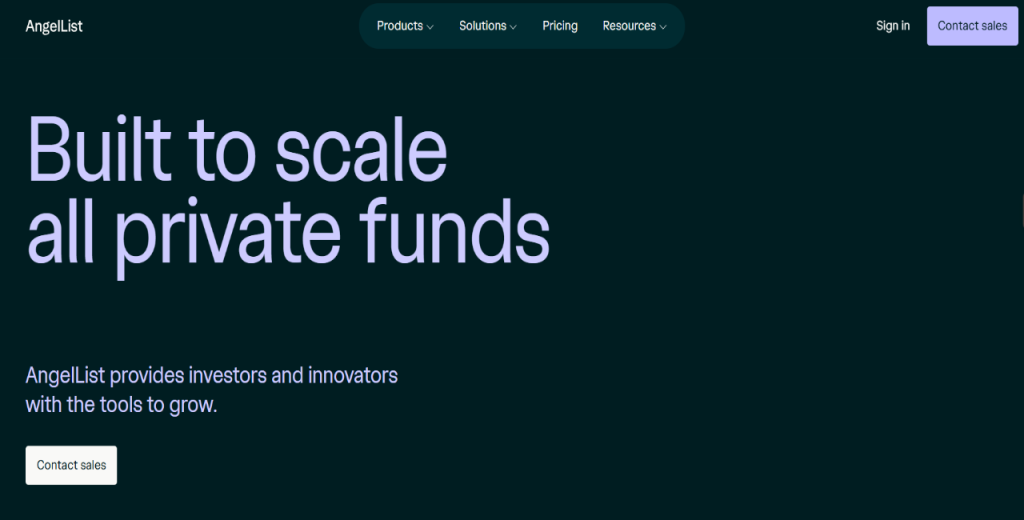
AngelList

AngelList occupies a unique position among PitchBook competitors. Unlike pure data platforms, AngelList connects investors directly to live deals and active founders.

On one hand, founders use it to raise capital through syndicates, rolling funds, and SPVs. On the other, Angel investors use it to co-invest alongside experienced leads and access deal flow they wouldn’t otherwise see. The platform supports 13,000+ active startups and manages over $171 billion in assets.

Worth noting, AngelList doesn’t support outbound prospecting and contact-level targeting you’d get with a platform like Reply.io.

Key features:

  • Syndicates: Pools capital from multiple investors into a single SPV, reducing administrative complexity per deal.
  • Rolling funds: Enables fund managers to raise capital on a quarterly subscription basis from committed LPs.
  • Wellfound integration: Tracks startup hiring activity as a proxy for growth and operational momentum signals.
  • SPV infrastructure: Manages legal, compliance, and fund administration for single-deal investment vehicles.

Pros:

  • Live deal access
  • Large startup network
  • Free for founders to list

Cons:

  • Accredited investors only
  • Limited later-stage data

Pricing:

AngelList pricing starts at $1,600 per year for cap table management. Meanwhile, SPV setup fees start at approximately $8,000 plus regulatory costs. 

Venture fund pricing involves a flat administrative fee plus a percentage of fund size, billed quarterly.

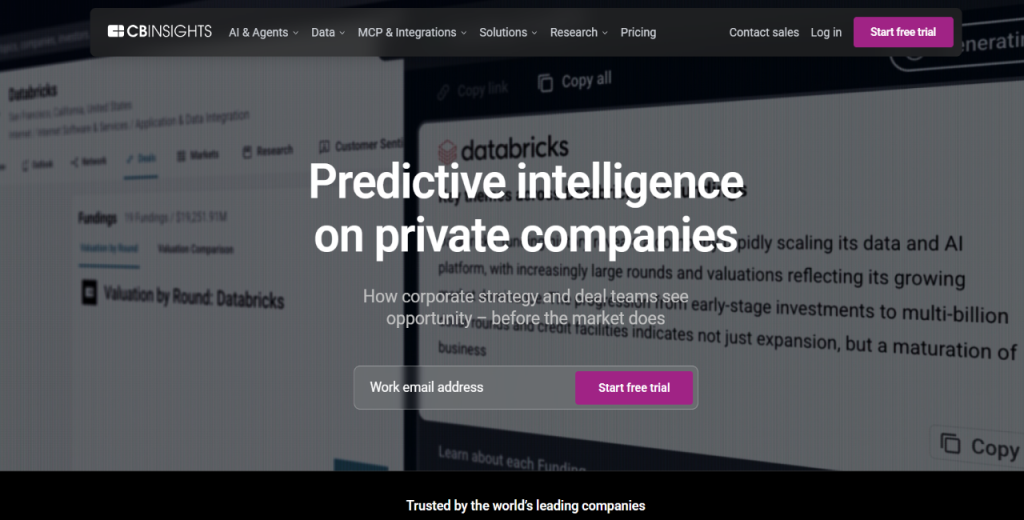
CB Insights

CB Insights is a noteworthy mention in the PitchBook alternatives data platform collection, thanks to its ability to deliver proprietary research reports backed by AI-powered company scoring.

It also offers market maps and in-depth analyst briefings that go beyond raw deal data. With CB Insights, you can answer strategic questions like which markets to enter and startups pose a disruption threat.

The platform tracks millions of private and public companies. It then layers on predictive models to forecast company trajectories and exit probabilities.

Compared to Reply.io, CB Insights can help you find and understand target companies. Reply, however, adds an outreach layer that CB Insights doesn’t provide.

Key features:

  • Market maps: Visualizes competitive landscapes across emerging technology sectors for strategic planning.
  • ChatCBI: Answers research questions using CB Insights’ proprietary data combined with generative AI capabilities.
  • Company scoring: Applies predictive models to assess company growth momentum, commercial maturity, and exit probability.
  • Analyst reports: Delivers proprietary sector research with three-year market trend forecasts written by in-house analysts.
  • Browser Analyst: Provides one-click company insights and SWOT analysis directly from any webpage or LinkedIn profile.

Pros:

  • Deep market intelligence
  • Proprietary analyst research

Cons:

  • Expensive
  • No outreach capabilities
  • Limited SMB company coverage

Pricing:

CB Insights pricing starts at $50,000 per year based on customer-reported data. Enterprise contracts can reach $ 265,000 or more annually.

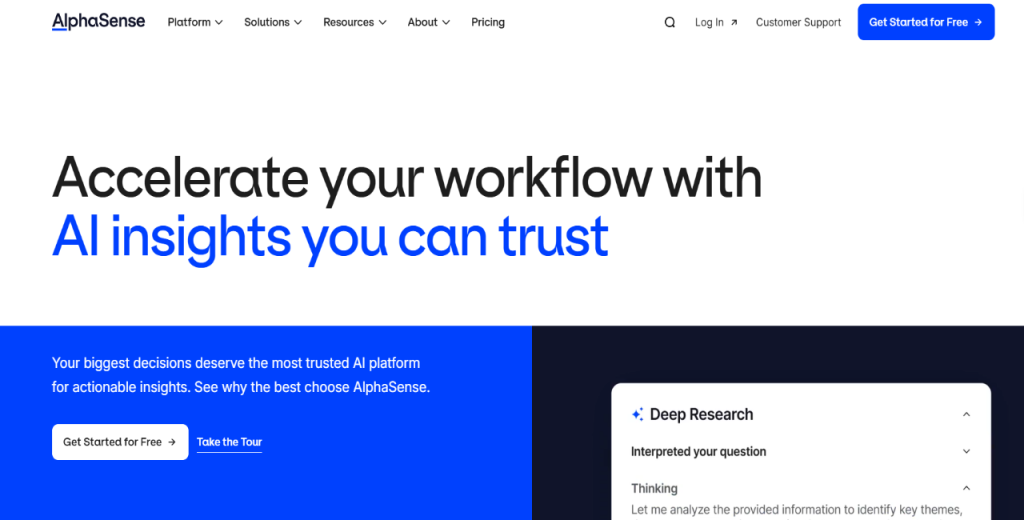
AlphaSense

AlphaSense targets investment professionals who need to extract insights from dense financial documents quickly.

The platform offers one of the most dynamic search experiences among Pitchbook data competitors. It indexes SEC filings, earnings call transcripts, broker research, expert interviews, and news across 10,000+ premium sources.

Its Smart Synonyms technology understands search intent, returning results that include relevant variations of terminology. That way, a search for TAM also returns results referencing addressable market or market size.

However, like most PitchBook alternatives in this roundup, AlphaSense still drops the ball on outreach execution.

Key features:

  • Semantic search: Returns intent-matched results across millions of financial documents using Smart Synonyms technology.
  • Sentiment analysis: Tracks tone shifts across filings and transcripts, helping analysts monitor changing company outlooks.
  • Expert transcripts: Accesses 200,000+ vetted expert interviews with competitors, suppliers, customers, and industry specialists.
  • Generative Grid: Automates structured research summaries from both internal and external content sources with source citations.
  • Earnings intelligence: Extracts instant insights from earnings calls, reducing research time during active reporting seasons.

Pros:

  • Semantic search technology
  • Expert transcript library
  • Strong earnings intelligence

Cons:

  • Pricing requires a custom quote
  • Built for analysts, not sales
  • Reported steep learning curve

Pricing:

AlphaSense pricing is available on request only.

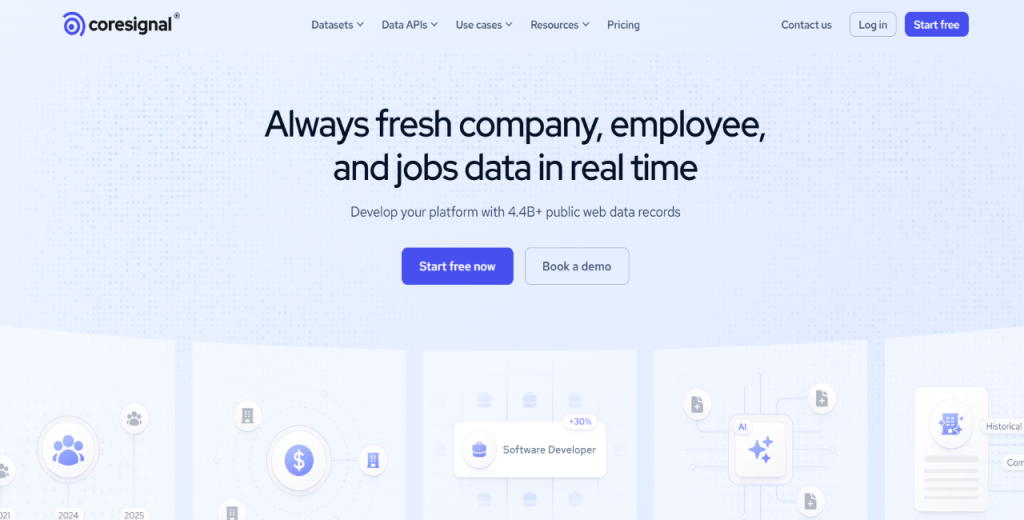
Coresignal

Coresignal offers structured public web data. It provides company records, employee profiles, and job postings via APIs and bulk datasets. Coresignal is a good PitchBook data competitor for engineering teams looking to build their own intelligence products.

The platform stands out for its depth of coverage, with 792M+ employee records and 103M+ company records refreshed at high frequency.

Sure, Coresignal can get the job done if its customer reviews are anything to go by. But for revenue teams looking to outreach without writing code, Reply.io offers enriched contact data and automated campaigns out of the box.

Key features:

  • Company API: Queries 103M+ company records with firmographic and technographic filters for downstream enrichment use cases.
  • Jobs API: Retrieves job posting data to track hiring signals as leading indicators of company growth and intent.
  • Historical data: Provides up to five years of historical records for trend analysis, forecasting, and model training.
  • Bulk data delivery: Delivers complete datasets in CSV or JSONL formats directly to data warehouses or cloud storage.

Pros:

  • High-frequency data refresh
  • API-first architecture

Cons:

  • Requires engineering resources
  • No native CRM sync
  • Not suited for non-technical teams

Pricing:

Coresignal pricing ranges from $49 to $1,500 per month, depending on your plan.

Grata

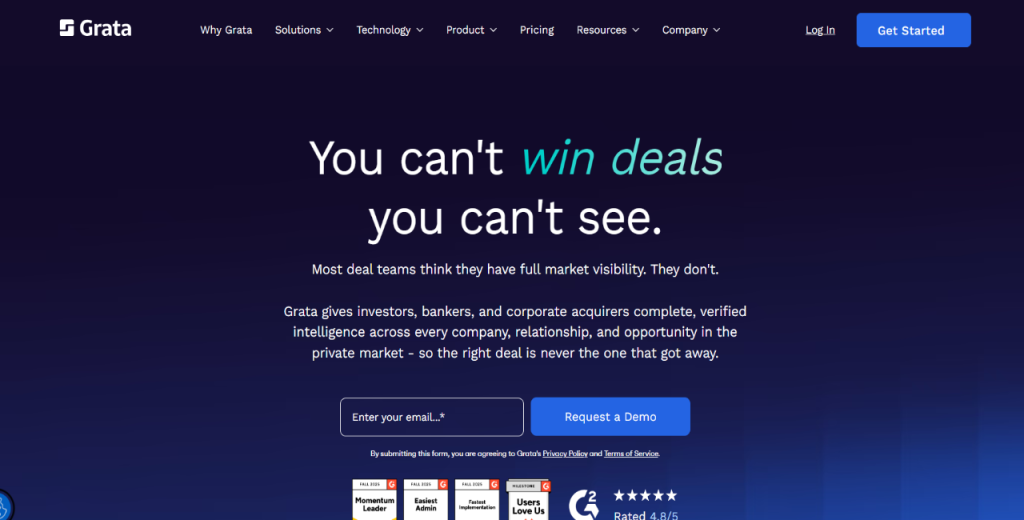
Grata is purpose-built for dealmakers seeking companies that don’t typically appear in conventional databases. It covers 21M+ private companies, complete with an AI-powered search that helps users find founder-owned, bootstrapped, and unsponsored businesses.

Its most notable feature, Agentic Search, reasons through your investment criteria and surfaces opportunities you might not have considered filtering for directly. And, with verified executive contacts for 10M+ private companies, Grata makes it easier to initiate outreach once you’ve identified a target.

Even so, Grata identifies targets but does not automate outreach. You can pair it with Reply.io to connect identified targets to multichannel sequences that automatically book meetings.

Key features:

  • Private company database: Covers 21M+ private companies with revenue estimates, ownership data, and employee counts.
  • Executive contacts: Provides verified contact information for 10M+ private company executives for direct outreach.
  • Market mapping: Sizes markets, tracks competitive landscapes, and identifies investment trends across private-sector companies.
  • CRM integrations: Syncs with Salesforce, HubSpot, and DealCloud to manage targets and track deal pipeline activity.

Pros:

  • AI-powered natural language search

Cons:

  • No outreach automation

Pricing:

Grata pricing is available on request only.

Tracxn

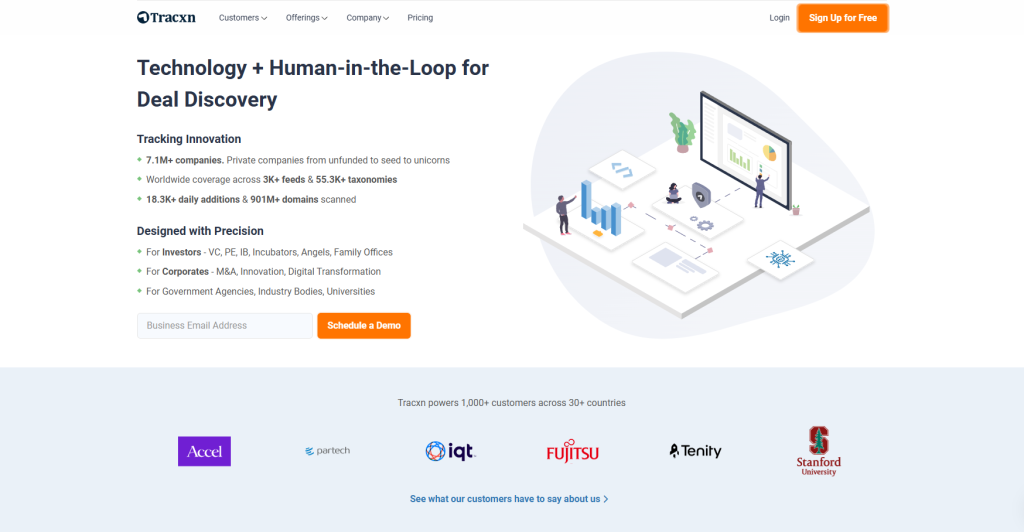
Tracxn rounds out this list of PitchBook competitors with something few platforms offer. It boasts granular sector coverage spanning thousands of micro-categories across global markets.

The platform tracks companies across 2,500+ sector feeds from fintech and health tech to climate tech and web3. It is particularly a solid pick for VCs with a specific thesis and a global mandate.

Indeed, Tracxn is great for thesis validation and market research. For outbound sales, however, you’ll still need a platform like Reply.io to identify target companies and book meetings through automated, personalized multichannel outreach.

Key features:

  • Sector feeds: Tracks 2,500+ micro-sector feeds updated continuously using ML and human analyst curation.
  • Emerging market coverage: Provides startup data for Southeast Asia, Africa, Latin America, and other underserved geographies.
  • Quarterly reports: Delivers sector-specific reports covering funding trends, top players, and competitive dynamics.
  • Company profiles: Covers funding history, team data, investor details, and product information for tracked startups.
  • Investor tracking: Monitors active investors within specific sectors to identify co-investment and outreach opportunities.

Pros:

  • Strong emerging market coverage
  • Analyst-curated data
  • Quarterly sector reports

Cons:

  • Expensive
  • Not great for outreach

Pricing:

Tracxn pricing starts at $4,400 per user per year with a minimum of three users.

Are PitchBook free alternatives worth it?

The uncomfortable truth is that PitchBook free alternatives come with serious limitations. You’ll almost always need to upgrade to a paid tier to max out the platform’s capabilities.

So instead of looking for PitchBook free alternatives, go for a PitchBook alternative with a free trial. That way, you can have a first-hand experience of what the platform offers before committing.

Pick the right PitchBook alternative for your needs

Most of the pitchbook data competitors on this list do several things well, including providing data, enabling research, and ecosystem mapping. 

Cracks, however, start to appear when you need to act on that intelligence. You see, finding a company is only half the job. You also need to get a response from the right person at that company.

Platforms like ZoomInfo, Harmonic, and CB Insights give you the former.

Reply.io gives you the best of both worlds. It delivers verified contact data, multichannel sequences, AI personalization, and a deliverability toolkit that protects your domain at volume.

Want to see what Reply can do without paying a dime?

Start your 14-day free trial and turn prospect data into booked meetings.

PitchBook competitors (FAQs)

Who competes with PitchBook?

PitchBook has no shortage of competitors. However, the choice of one competitor depends on your needs. Reply.io, for instance, is one of the best alternatives to PitchBook for outbound sales teams that need verified contact data paired with multichannel outreach automation.

Does PitchBook cost money?

Yes, and it is expensive. Contracts typically start around $15,000 annually and climb significantly from there. Reply.io pricing, by comparison, starts at $49 per user per month, making it a far more affordable option for sales teams.

Is Tracxn better than PitchBook?

It depends on your use case. Tracxn wins on sector granularity and emerging markets. PitchBook, on the other hand, offers deeper financial data and deal-level intelligence. For outbound, Reply.io outperforms both.

Subscribe to our blog to receive the latest updates from the world of sales and marketing.
Stay up to date.

Related Articles

Top 12 GTM Outbound Sales Platforms to Try in 2026

Top 12 GTM Outbound Sales Platforms to Try in 2026

Top 12 GTM Outbound Sales Platforms to Try in 2026
What’s New in Reply: New API, AI Custom Fields, LinkedIn Enrichment, and More

What’s New in Reply: New API, AI Custom Fields, LinkedIn Enrichment, and More

What’s New in Reply: New API, AI Custom Fields, LinkedIn Enrichment, and More
Best 12 CRM for Marketing Agencies in 2026

Best 12 CRM for Marketing Agencies in 2026

Best 12 CRM for Marketing Agencies in 2026