
Spam accounts for 46% of the more than 347 billion emails sent daily. With these numbers set to surge in 2026, email providers are turning to adaptive AI spam filters to curb the trends.
These next-gen filters do more than detect trigger words. They analyze sender behavior, engagement signals, and content context.
But here’s the problem — AI-powered spam filters are making it harder for legitimate marketing and sales emails to reach the recipient’s inbox.
For marketers, sales, and business development teams, bypassing these AI spam filters is now a mission-critical challenge.
This guide provides practical strategies spanning content, technical setup, automation, and monitoring to help you improve deliverability and inbox placement.
Let’s dive in.
What are AI spam filters, and how do they work?
An AI-based spam filter uses artificial intelligence to determine whether an email is legitimate or unsolicited.
Unlike older rule-based filters, AI filters rely on Machine Learning (ML), Natural Language Processing (NLP), and generative models to evaluate the following:
- Message content quality and intent: Assesses grammar, tone, structure, and potential manipulation tactics.
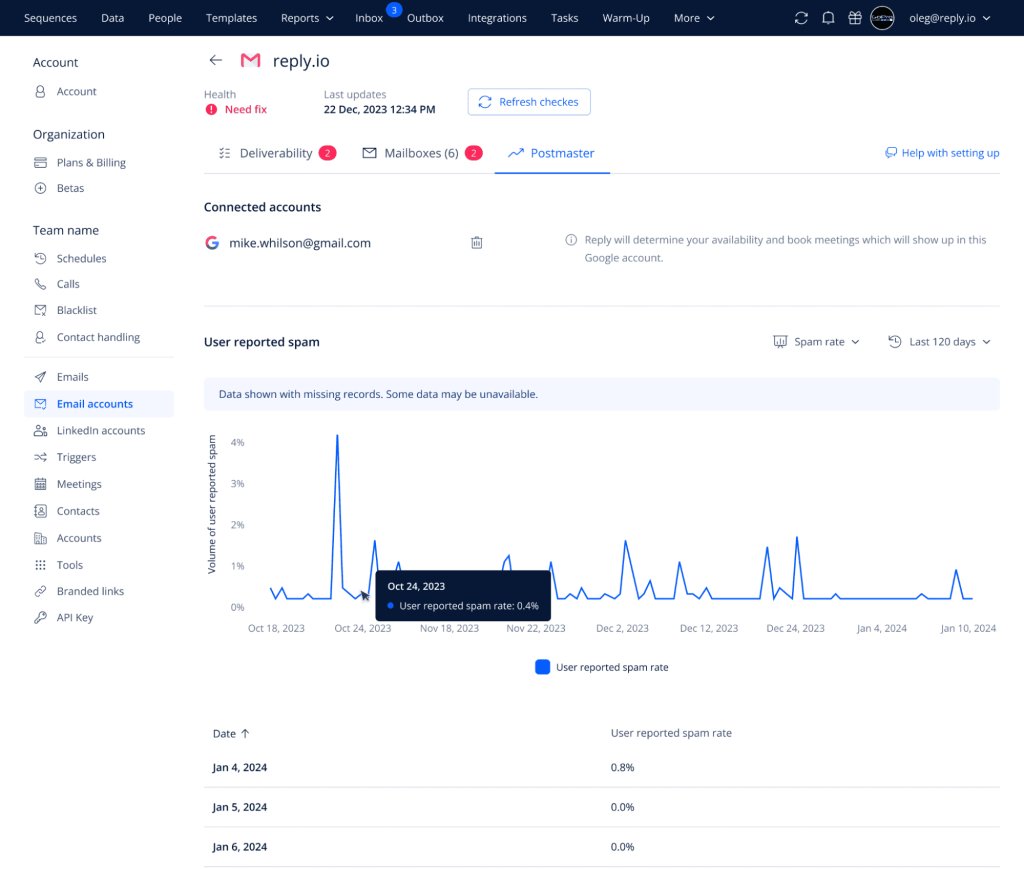
- Sender reputation and historical behavior: Scores emails based on bounce rates, complaint history, and sending patterns.
- Metadata signals like headers and routing: Reviews technical headers, return paths, and relay chains.
- Engagement signals such as opens and replies: Tracks recipient interactions to assess relevance and trust.
- Contextual and semantic meaning: Uses NLP to understand message purpose and detect subtle spam indicators.
- Link and attachment analysis: Scans embedded URLs and files for suspicious or malicious payloads.
AI filters differ from one platform to another.
Gmail, for instance, uses AI models like RetVec, Gemini Nano, and TensorFlow. Microsoft Defender for Office 365, on the other hand, applies behavioral modeling and threat intelligence. Enterprise platforms such as Proofpoint and Mimecast also have their own AI engines.
Behind the scenes, developers train spam models using NLP libraries like spaCy, NLTK, and transformer architectures such as BERT.
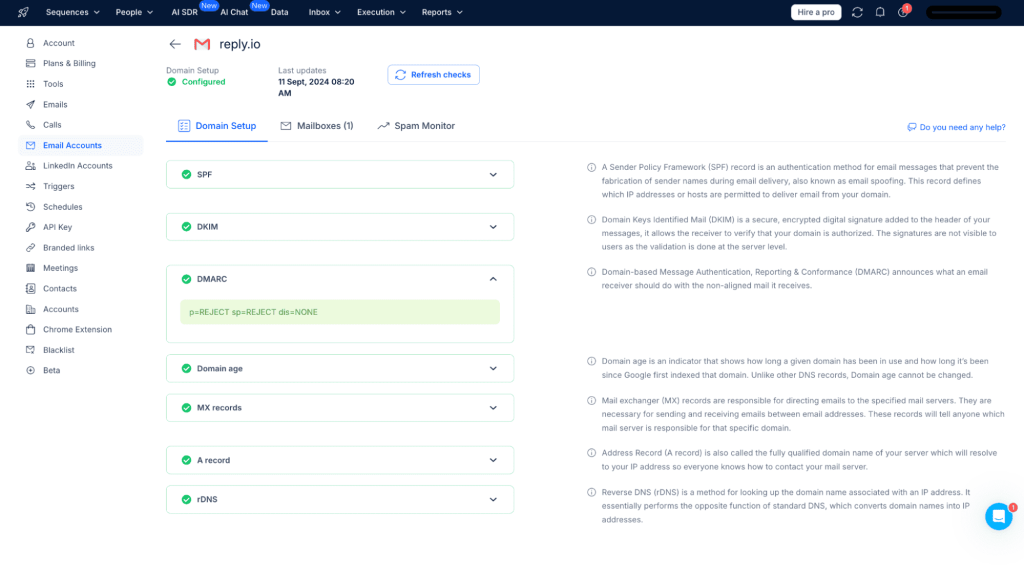
That said, email authentication is still part of the equation. AI filters use SPF, DKIM, and DMARC protocols to establish sender legitimacy and trust signals.
Why do traditional spam filters fail against AI-generated spam?
First, traditional spam filters use static detection methods. They scan for keywords, apply fixed rules, and block known sender domains or IPs. In addition, they analyze statistical word frequency and run basic technical checks on headers.
Sure, these techniques can filter large volumes of low-quality spam with reasonable accuracy. However, AI is here, and it’s exposing the limits of traditional spam filters.
For instance, these outdated filters can’t detect nuanced content or contextual manipulation. They therefore often trigger false positives or miss highly personalized spam altogether.
Worse, static rules are easy for AI spammers to reverse-engineer and exploit.
Meanwhile, phishing and spam threats evolve by the day. Polymorphic spam, for instance, can alter its structure, message, and delivery channel, which overwhelms blacklist-based defenses.
AI spammers bypass traditional filters through:
- Perfect grammar and tone: Messages avoid obvious linguistic spam markers
- Deep personalization: Emails reference roles, companies, and recent activity
- Text obfuscation: Leetspeak, homoglyphs, and spacing tricks bypass pattern matching
- Identity spoofing: Fake or cloned social profiles add perceived legitimacy
- Automation bypass: CAPTCHA solving and inbox probing test filter reaction
How can smart email sequences help avoid AI spam filters?
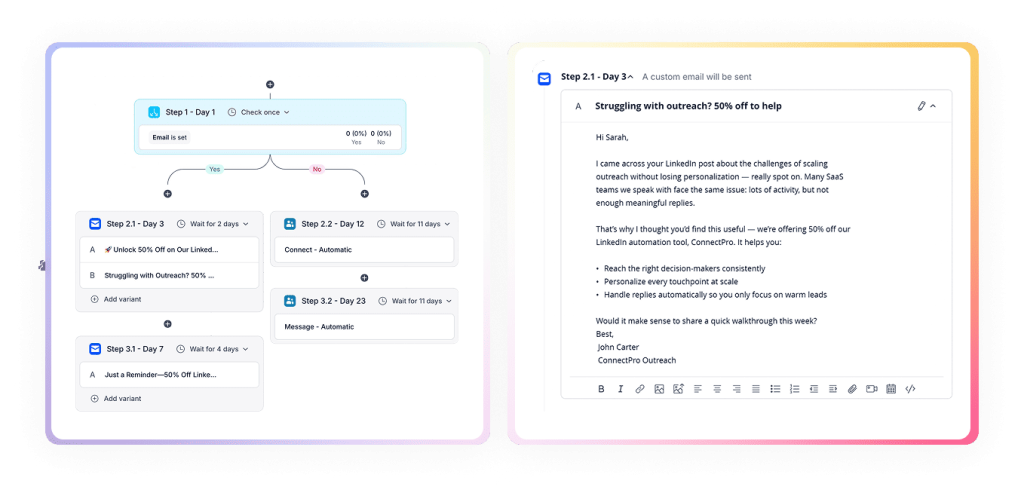
Smart email sequences spread outreach over time instead of one-off blasts, ensure all the recipients are relevant and potentially interested in your message, and personalize each message with meaningful data.
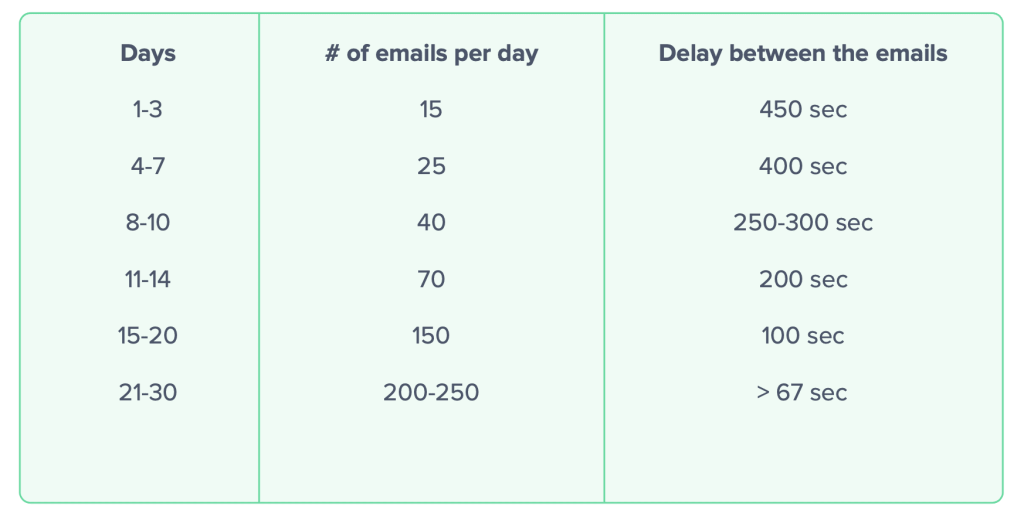
With spaced follow-ups and behavior-based emails, the idea is to build engagement gradually, which also builds up your email deliverability and domain reputation — both crucial in ensuring long-term safety and avoiding AI spam filters.