How to Build a Systematic Cold Outreach Marketing Strategy in 2026

How to Build a Systematic Cold Outreach Marketing Strategy in 2026

Cold outreach works best when it’s built like a system.

Your list has to match the ICP, the message has to hit a real pain point, the channel mix has to fit how the buyer actually communicates, and follow-ups need to go out when they’re supposed to. Without that structure, outreach quickly becomes random activity: emails sent, replies missed, and not much pipeline to show for it.

This guide breaks down how to build a cold outreach marketing strategy with AI that helps you find the right buyers, reach them with relevant messages, and turn replies into booked meetings.

What is outreach marketing?

Outreach marketing is the process of starting conversations with people who can influence your growth before they come to you.

That can mean potential buyers, partners, investors, influencers, podcast hosts, newsletter owners, journalists, or decision-makers inside target accounts. The goal changes by campaign, but the motion is usually the same: find the right person, reach out with a relevant reason, and move the conversation toward a clear next step.

In B2B, outreach marketing usually supports one of four goals:

  • Sales pipeline: reaching ICP-fit prospects to start qualified sales conversations.
  • Partnerships: contacting companies, creators, or communities that already have access to your target audience.
  • Content and PR: pitching expert quotes, guest posts, podcast appearances, product stories, or other inbound lead generation efforts.
  • Market validation: testing a new segment, offer, pain point, or positioning before putting more budget behind it.

Cold outreach marketing is different from inbound because you’re not waiting for demand to show up. You’re creating the first touch with buyers or partners who may have the problem, even if they haven’t raised their hand yet.

Relevance does most of the work here. A cold message needs to show why you’re reaching out, why the timing makes sense, and why the recipient should care enough to reply.

The 2026 Product Marketing Resources Playbook

Everything a product marketer needs to learn faster and do better work, collected in one place.

We’ve done the research for you and gathered the best books, courses, newsletters, podcasts, communities, experts, templates, and tools product marketers actually use every day.

What’s inside:

→ 15 product marketing experts worth following in 2026

→ 15 must-read books on positioning, messaging, launches, and GTM

→ 12 podcasts + top YouTube channels packed with practical product marketing advice

→ 15 online courses for beginners and experienced PMMs

→ A product marketer skills checklist covering both hard and soft skills

→ A collection of useful PMM tools, resources, and key terms

Whether you’re new to product marketing or looking to level up your skills, this free playbook will help you spend less time searching and more time learning.

Outreach marketing vs cold outreach marketing 

While outreach marketing and cold outreach marketing are related, they are not the same, as summarized in the table below.

Outreach marketing Cold outreach marketing
Who you contact Partners, press, influencers, prospects Prospects who’ve never heard of you
Main goal Awareness, links, partnerships, sales Booked meetings and new pipeline
Relationship Sometimes warm or introduced Always cold, no prior contact
Primary channels Email, social, PR, guest posts Email, LinkedIn, calls, SMS
Owned by Marketing, PR, growth Sales reps and SDRs

Outreach marketing is the broad practice — partnerships, PR, link building, influencer collaborations, and direct sales all sit under one roof. 

Cold outreach marketing, on the other hand, narrows the idea to one job — contacting prospects who’ve never spoken to your business and turning that first message into a conversation. 

Why do you need a system for cold outreach marketing campaigns?

Sending more emails won’t save weak outreach if the wrong people get the wrong message at the wrong time. A proper outreach system connects targeting, messaging, channels, follow-up, deliverability, and reporting, so each campaign has a clear path from first touch to booked meeting.

  • Generic outreach gets ignored → prospects can spot a lazy pitch fast, especially when it starts with a vague compliment and jumps straight into a call request. Stronger outreach ties the message to the buyer’s role, company context, pain point, timing, and likely business goal.

  • Manual follow-up creates missed opportunities → plenty of replies happen after the second or third touch, but reminders, spreadsheets, late LinkedIn messages, and unlogged calls make manual follow-up unreliable. A structured sequence keeps the next step moving without depending on reps to remember every touch.

  • Deliverability decides whether the campaign gets seen → a strong message can’t perform if poor sender reputation, high bounce rates, weak authentication, spammy wording, or aggressive sending patterns push it into spam. Deliverability needs to be part of the campaign setup, not something you fix only after reply rates drop.

  • Campaign data should guide every improvement → open rates can help diagnose issues, but the real scorecard is bounce rate, reply rate, positive replies, unsubscribes, meetings booked, objections, and segment performance. Those numbers show whether the campaign is reaching the right buyers and creating pipeline.

How to do effective cold outreach marketing step by step

Strategy beats volume. Every. Single. Time.

In fact, the reps who book the most meetings run the same loop on every campaign. They know the buyer, build a clean list, write to the problem, plan the channels, sequence the follow-up, and route the reply.

Here’s how to do outreach marketing that gets you conversations, one step at a time.

Step 1: Define the buyer and buying trigger

You can’t write relevant outreach until you know who you’re targeting and why they would care right now.

Start with the basics: industry, company size, buyer role, ownership area, daily pain, current workflow, likely objection, and trigger event. The trigger is what makes the timing logical, like a funding round, new leader, hiring push, market expansion, tool change, missed growth target, or visible operational bottleneck.

That context shapes the rest of the campaign — who makes the list, what message they get, which channel you use, and what CTA actually makes sense.

Step 2: Build and verify the prospect list

A strong message sent to the wrong person, an outdated title, or a dead inbox won’t create pipeline.

Build the list around firmographic, role-based, and trigger-based criteria instead of pulling a broad export from a random database. Verify emails before sending, check that job titles are still current, remove companies that no longer fit your ICP, and enrich the records with enough context to support real personalization.

List quality sets the ceiling for everything that comes after. If the data is weak, reply rates, deliverability, personalization, and sales efficiency all take the hit at the same time.

Step 3: Segment before writing

One message for everyone usually lands with no one.

Segment prospects by role, company type, use case, pain point, and trigger before writing the campaign. Founders, sales leaders, RevOps leaders, marketers, agency owners, and operators may all buy the same product, but not for the same reason, so the value prop needs to shift by segment.

A founder may care about first-market conversations. A sales leader may care about booked meetings and rep output. A RevOps leader may care about workflow gaps and reporting. An agency owner may care about client pipeline and campaign performance.

Segmentation gives the message a sharper angle before you write the first line.

Step 4: Write around the buyer’s problem

Cold outreach should start with the buyer’s reality, not your company description.

Open with the pain they recognize, the bottleneck they are likely dealing with, or the outcome they are trying to reach. Once that problem is clear, introduce the value you can create and why it connects to their situation now.

An effective cold email makes the point easy to understand — why you reached out, why it connects to them, and what the next step is.

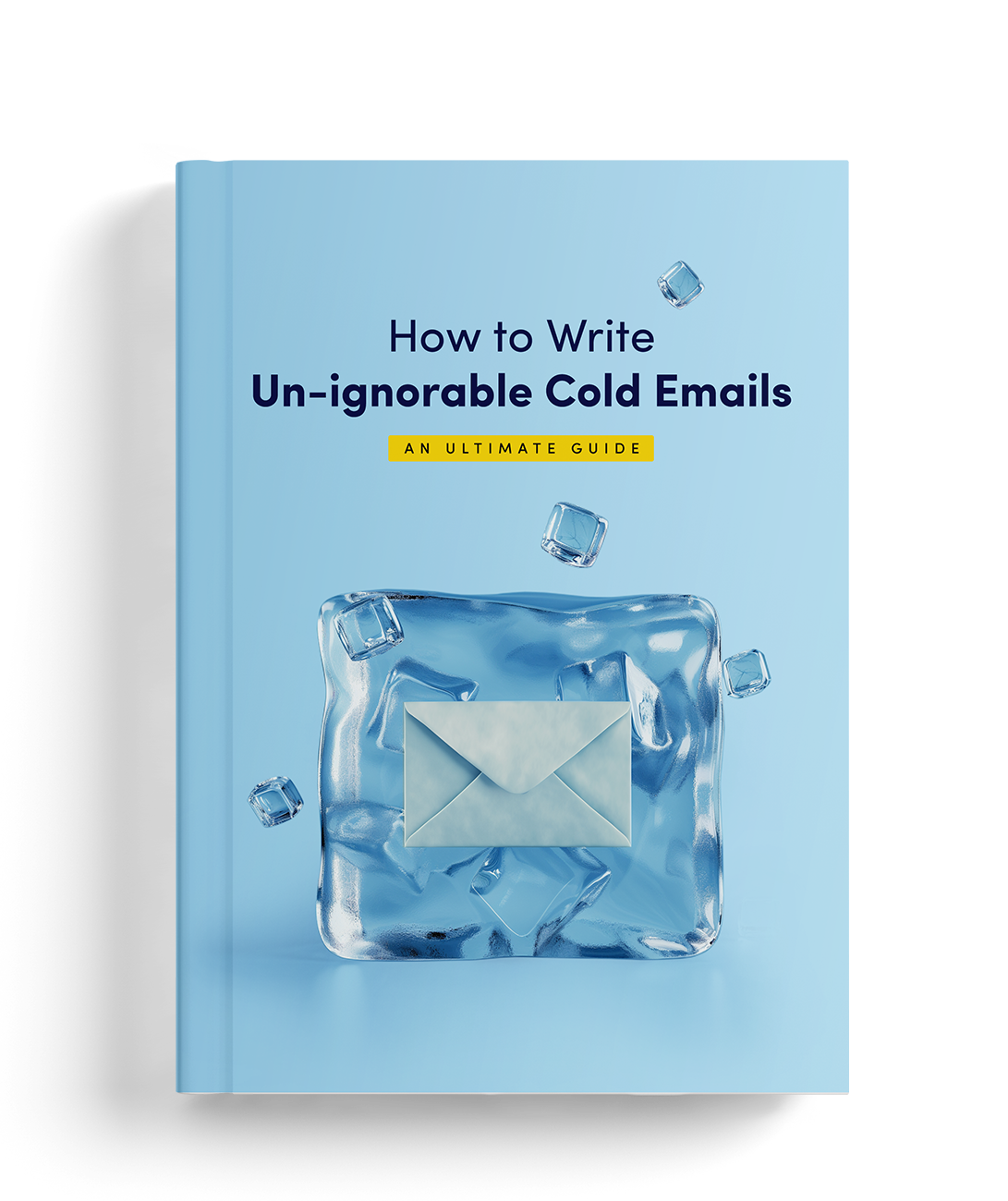
How to Write Un-ignorable Cold Emails: An Ultimate Guide

This e-book is your essential tool for mastering effective cold email outreach. Dive into a comprehensive guide that walks you through refining your outbound strategy, from crafting compelling subject lines to creating irresistible email templates tailored to your target audience.

Unlock the secrets of personalization, ensure your emails reach their destination with best practices for email copywriting and get practical and data-driven insights on cold emails, subject lines, email frameworks, and more.

Step 5: Match the channel mix to the buyer

Don’t add channels just to make the sequence look more advanced.

Email works well for the main message because it gives you room to explain the problem and CTA. LinkedIn adds context and visibility, especially when the buyer is active there. Calls are useful for high-value accounts where a direct conversation can speed up qualification. SMS or WhatsApp usually make more sense for warm follow-up, reminders, or approved conversations, not as the main cold touch.

The channel mix should reflect how the buyer pays attention and how much context the deal needs. A CEO may respond well to a short email and LinkedIn touch, while a sales manager may need a call after two emails.

Step 6: Build the follow-up sequence

Most replies don’t come from the first message, so follow-up needs to be planned before the campaign goes live.

A simple cold outreach sequence might look like this:

  • Touch 1: opener tied to the buyer’s pain
  • Touch 2: follow-up with a useful resource or insight
  • Touch 3: proof point, relevant result, or customer example
  • Touch 4: objection-based nudge that answers the most likely hesitation
  • Touch 5: short break-up message with a low-friction final CTA

Follow-up should not be the first email repeated five times. Each touch should add context, proof, or a slightly clearer reason to respond.

Step 7: Set campaign rules before sending

Campaign rules protect deliverability, consistency, and handoff quality.

Before launch, define sending windows, daily limits per inbox, email verification rules, domain and inbox health checks, unsubscribe language, reply routing, owner assignment, CRM sync, and the points where prospects should exit the sequence.

These details are not “admin stuff” to clean up later. They decide whether emails reach inboxes, whether reps act on replies quickly, and whether the team can scale outreach without wrecking sender reputation.

Step 8: Decide what happens after a reply

A reply is the main conversion point in cold outreach, so every response type needs a next action.

Interested prospects should move toward a meeting. Objections should get a relevant answer or proof point. Referrals should move the conversation to the right person. Poor-fit prospects should exit the sequence. Neutral replies should get a follow-up that clarifies need, timing, or ownership.

Without reply routing, outreach can create interest and still fail to create pipeline because nobody moves the conversation forward quickly enough.

Step 9: Review results and adjust the next batch

Cold outreach gets better when every campaign gives you cleaner inputs for the next one.

Track bounce rate, reply rate, positive replies, unsubscribe rate, meetings booked, objection patterns, channel performance, and segment-level results. Then look for practical answers: which segment replied best, which opener started conversations, which offer booked meetings, which objection kept showing up, and which channel added actual value.

Use those findings to adjust the next batch instead of scaling the same campaign blindly. Outreach marketing becomes systematic when targeting, messaging, channels, and follow-up improve from one send to the next.

How Reply.io turns cold outreach into a repeatable system

Cold outreach marketing has too many moving parts to manage from spreadsheets and disconnected tools: prospect lists, email validation, LinkedIn touches, calls, SMS, WhatsApp, follow-ups, replies, meetings, bounces, unsubscribes, and reporting.

Reply.io pulls that workflow into one coordinated outbound system. Teams can build targeted lists, personalize messages, run multichannel sequences, protect deliverability, manage replies, book meetings, and use performance data to improve the next campaign.

Here’s what Reply.io adds to a cold outreach marketing strategy:

  • Reply Data: access to 1B+ B2B contacts and account data for building targeted prospect lists around your ICP, with enrichment and email validation included.
  • Intent signals: better timing around accounts showing buying context, such as active hiring, technologies used, website activity, and other relevant signals.
  • Multichannel sequences: email, LinkedIn, calls, SMS, WhatsApp, and Zapier steps inside one workflow that can adjust based on prospect behavior.
  • AI Variables and AI sequences: personalized openers, value props, proof points, CTAs, and follow-ups based on prospect and company context.
  • Jason AI: an AI sales agent that can find prospects, personalize outreach, handle replies, qualify interest, and book meetings, with Copilot and Autopilot modes depending on how much control the team wants.
  • Deliverability tools: mailbox setup, warm-up, email validation, spam checks, sender reputation support, and SPF, DKIM, and DMARC configuration.
  • Analytics and integrations: reporting on replies, positive replies, meetings, sequence performance, and CRM activity, with integrations for HubSpot, Salesforce, Pipedrive, Zapier, Make, and other tools.

The main value for outreach marketing is control. Instead of running every channel and follow-up manually, Reply.io gives the team a system that keeps the campaign moving, reacts to prospect behavior, and shows what to fix before the next send.

How to build a cold outreach marketing workflow in Reply.io

A good cold outreach workflow should move from ICP to booked meeting without losing context between tools. Here’s how to build it with Reply.io by your side: 

Step 1: Define the buyer, segment, and trigger

Start with the buyer segment and the reason for reaching out.

Define the industry, company size, role, pain point, likely objection, and trigger that makes the timing relevant. A RevOps leader at a scaling SaaS company may care about broken handoffs and poor reporting, while a founder entering a new market may care about getting the first qualified conversations fast.

That gives Reply.io stronger inputs for list building, sequence logic, and AI personalization, while giving reps a clear reason behind every message they send.

Step 2: Build and verify the prospect list

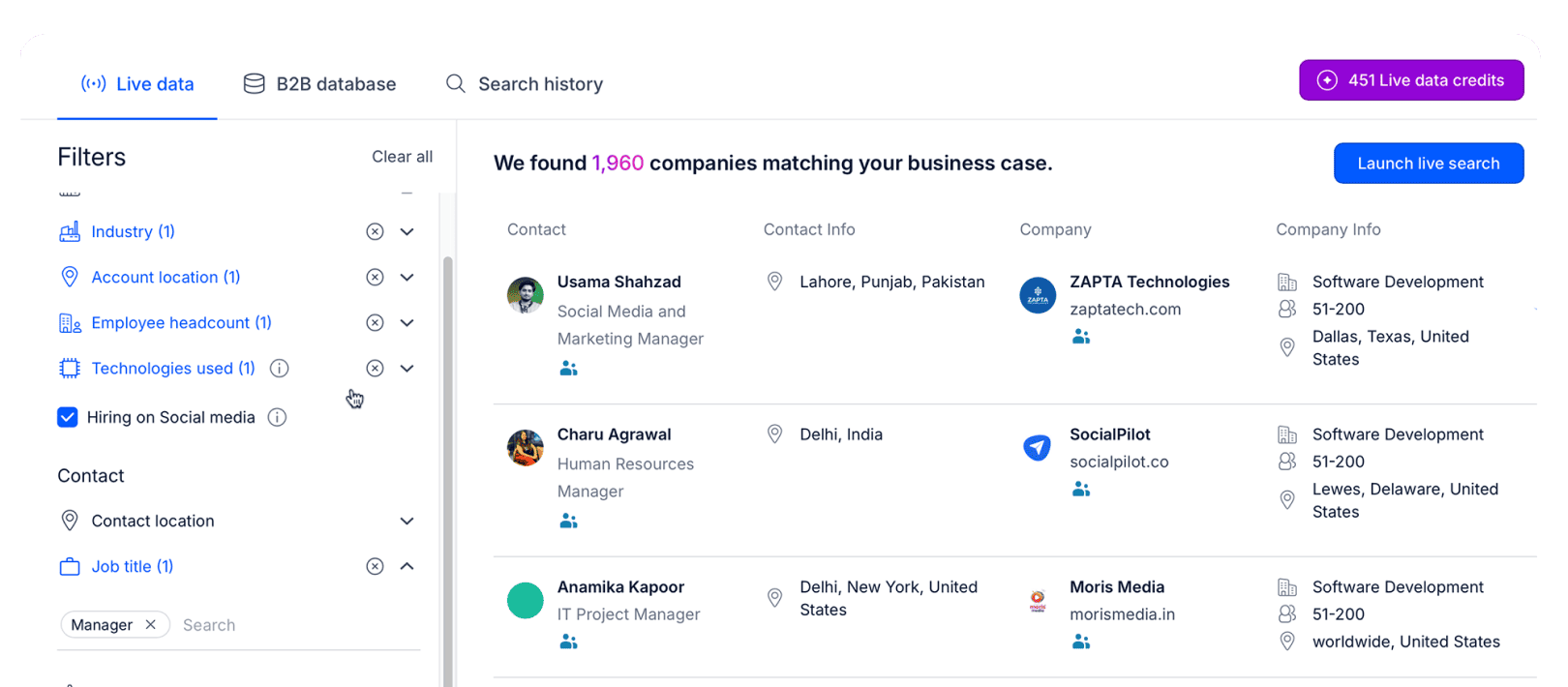
Use Reply Data to find contacts and accounts that match your ICP, then enrich and validate the records before they enter the sequence.

List quality protects the whole campaign here — verified emails reduce bounces, enriched records improve personalization, and tighter filters help the team avoid wasting sending volume on poor-fit prospects.

data in Reply.io as an extra to your personal CRM

You can also use intent signals like hiring signals and technologies used and website visitor tracking to prioritize accounts showing stronger buying context instead of treating every contact in the list the same.

Step 3: Create the multichannel sequence

Build one coordinated sequence across the channels your buyers actually use, instead of expecting one cold email to carry the full campaign.

A simple workflow might start with a personalized email, add a LinkedIn profile view or connection request, create a call task for high-value prospects, then send a follow-up with a proof point or useful resource. Reply.io keeps those steps inside one sequence across email, LinkedIn, calls, SMS, WhatsApp, and Zapier.

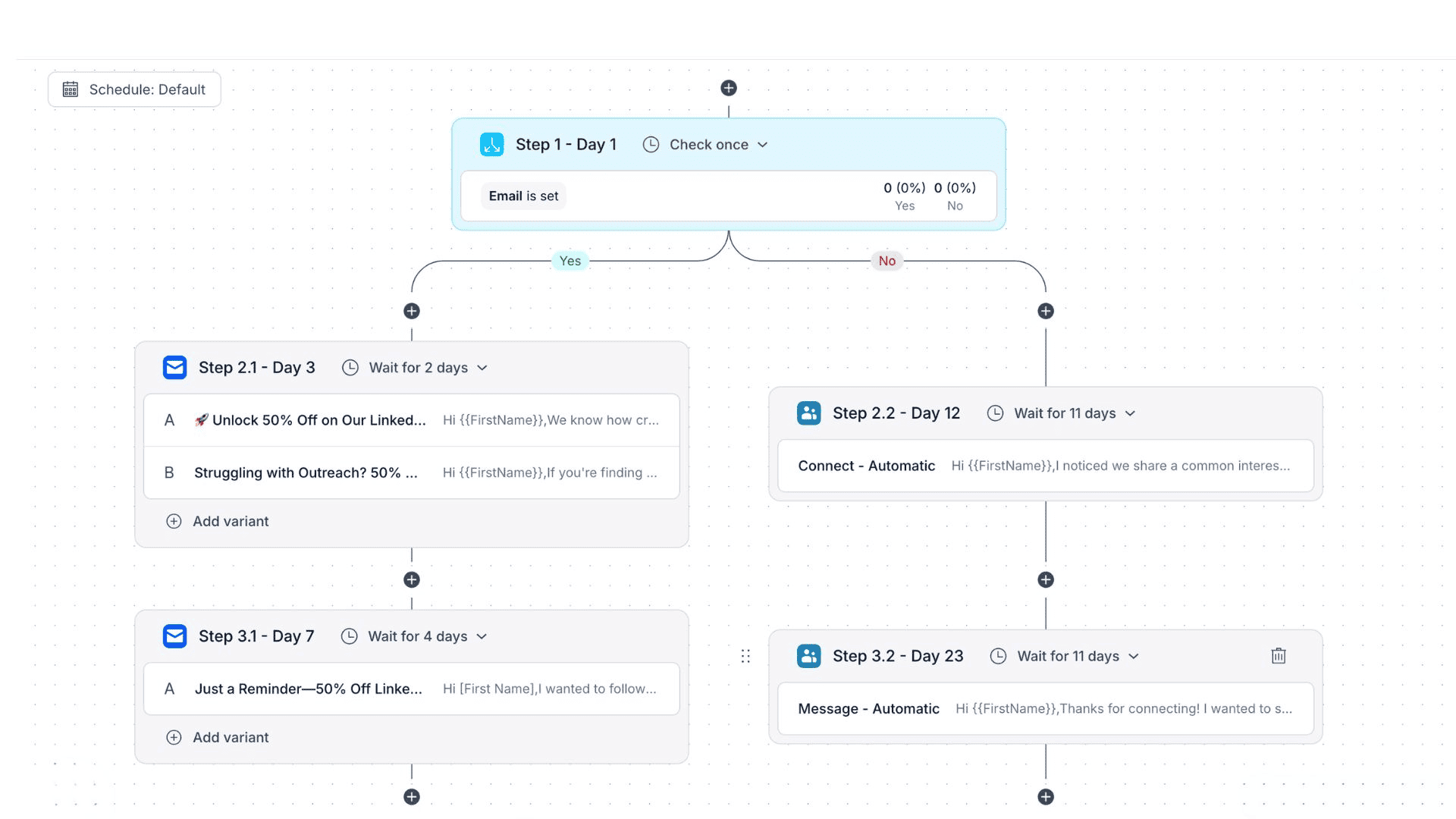
Conditional logic makes the workflow more precise. If the first email goes unopened, Reply can trigger a LinkedIn connection request. Once accepted, the sequence cancels the scheduled email follow-up and launches a personalized LinkedIn message, and so on.

how to auto send emails to a folder in gmail with conditional sequences

Step 4: Personalize around the reason to reply

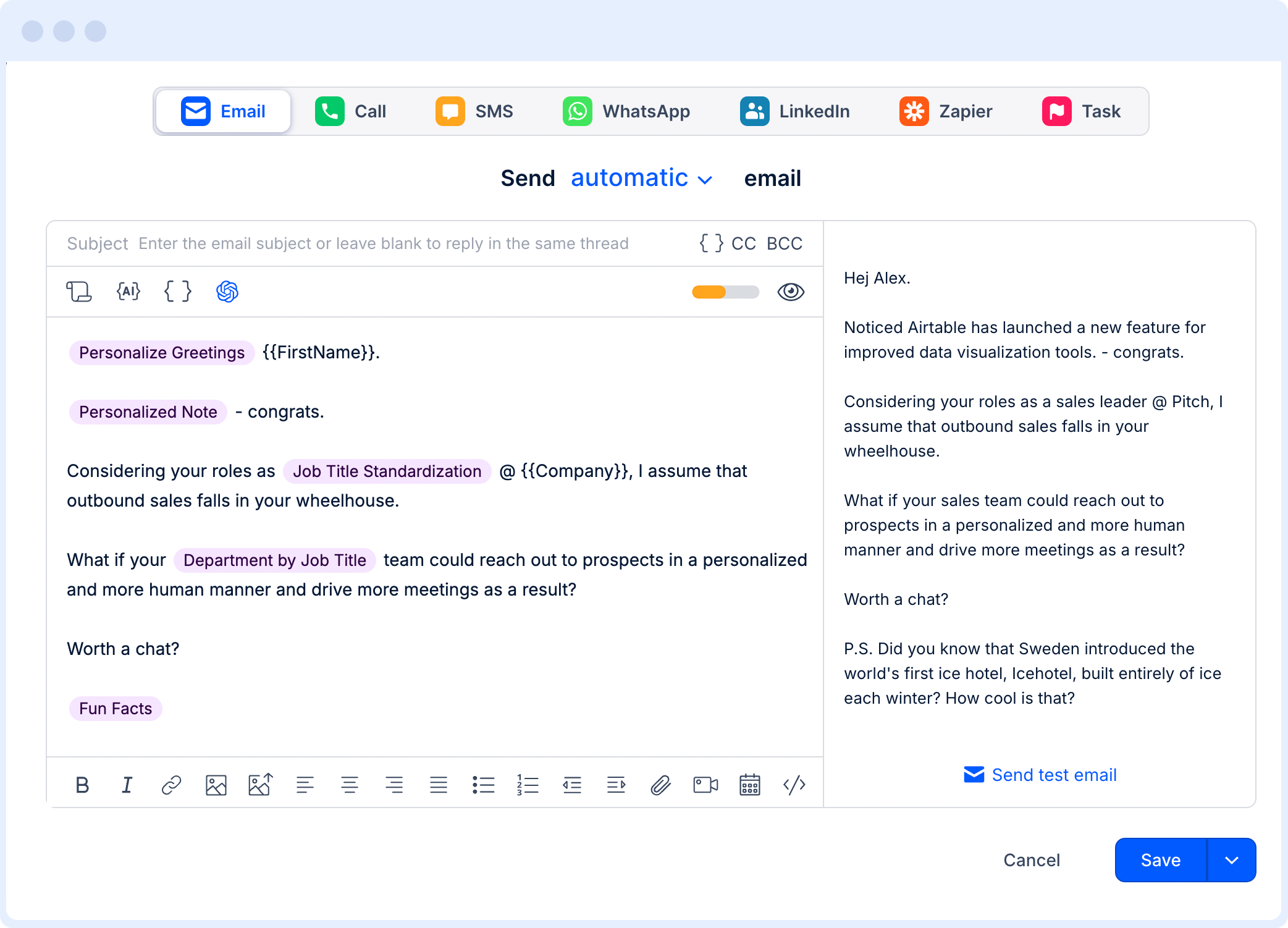
Use AI Variables to create your own brand templates with custom variables to personalize the parts of the message that affect reply quality most: opener, pain point, value prop, proof point, and CTA.

AI personalization

Good cold outreach doesn’t personalize just to sound friendly. It connects the message to something relevant about the buyer, such as their role, recent hiring, funding, website activity, tech stack, company growth, or a problem common to their segment.

That keeps outreach scalable without falling into the generic pitch buyers delete immediately.

Step 5: Use Jason AI for replies, qualification, and booking

Once replies come in, speed and routing decide whether interest turns into a meeting.

Besides finding targeted leads, enriching them, and launching tailored outreach campaigns at scale, Jason AI can read incoming replies, answer routine questions, qualify prospects, and book meetings through calendar sync. In Copilot mode, your team keeps approval over the workflow. In Autopilot mode, Jason AI can handle more of the outbound process automatically.

For cold outreach teams, this removes one of the most common bottlenecks — interested prospects sitting in an inbox while reps are busy with other tasks.

Step 6: Set up deliverability before scaling

Cold outreach only works if messages reach the inbox, so email deliverability should be configured before volume goes up.

Reply.io helps with mailbox setup, warm-up, email validation, real-time spam monitoring, sending limits, sender reputation support, and SPF, DKIM, and DMARC configuration. These safeguards are crucial because a damaged sending reputation can take weeks or months to recover, while a clean setup gives every campaign a better shot at being seen.

Step 7: Review the data and improve the next batch

Use Reply.io analytics to track the numbers that show campaign quality: bounce rate, reply rate, positive replies, meetings booked, sequence performance, channel performance, unsubscribes, and segment results.

The goal is to find the next practical change — a high reply rate with few meetings may point to weak qualification, a strong positive reply rate in one segment may deserve more volume, and a poor-performing sequence step may need a new opener, proof point, or CTA.

Cold outreach becomes systematic when each campaign gives you better targeting, sharper messaging, and a clearer next test.

How to choose an outreach marketing platform

One of the fundamentals of how to do outreach marketing that generates a positive ROI is choosing the right tool. 

The table below summarizes what to look for in an outreach marketing platform and why it’s important. 

What to look for Why it’s important 
Multichannel sequencing Reaches a buyer on email, LinkedIn, calls, and SMS in one planned cadence
Built-in personalization Tailors each message to the buyer’s role and context, even at volume
Reply management Sorts responses fast, so warm prospects move toward a meeting
Deliverability toolkit Protects sender reputation, so your messages reach the inbox
AI SDR Researches, drafts, qualifies, and books while your reps review
CRM integration Syncs every contact and reply, so nothing slips between tools
Analytics and reporting Shows reply rates, meetings booked, and which segment to scale
Quality control at scale Grows volume and protects your list and domain quality


The point is, an outreach platform should do more than just send scheduled emails. It should also connect your list, message, channels, replies, meetings, deliverability, and reporting. 

Reply.io is built for that kind of systematic outreach, which is why it works well for sales reps, marketers, SDRs, founders, and agencies running outbound campaigns. 

Build a cold outreach system that improves with every campaign

Cold outreach works when targeting, messaging, channels, follow-up, reply handling, and reporting are connected instead of treated as separate tasks.

Reply.io helps run that system across email, LinkedIn, calls, SMS, WhatsApp, Jason AI, deliverability tools, and analytics, so your team can move from prospect list to qualified meeting without managing every step manually.

Start your free Reply.io trial and build a cold outreach workflow your team can repeat, measure, and scale.

FAQ

What is outreach marketing?

Outreach marketing is the process of contacting buyers, partners, creators, journalists, or decision-makers before they come to you. In B2B, it’s used to create sales conversations, partnerships, PR opportunities, backlinks, co-marketing campaigns, and market feedback.

What is cold outreach marketing?

Cold outreach marketing means contacting people who have no existing relationship with your business. The goal is to make the first message relevant enough to start a conversation, then move the prospect or partner toward a clear next step.

How do you do outreach marketing?

Start by defining the buyer or partner you want to reach, then build a clean list, segment it by role or use case, write around a specific pain point or opportunity, choose the right channels, follow up consistently, and route each reply to the right next action.

What is outreach marketing automation?

Outreach marketing automation uses software to manage sequences, follow-ups, personalization, reply handling, meeting booking, deliverability, and reporting. It helps teams keep campaigns consistent without relying on reps to track every touch manually.

What are the best outreach marketing ideas?

Strong outreach ideas usually come from real context: hiring, funding, tool changes, market expansion, website visits, content engagement, event attendance, or recent company news. The point is to connect that signal to a relevant reason to talk.

Subscribe to our blog to receive the latest updates from the world of sales and marketing.
Stay up to date.

Related Articles

What’s New in Reply: Pre-Warmed Domains, Agentic Chat, LinkedIn Enrichment, and More

What’s New in Reply: Pre-Warmed Domains, Agentic Chat, LinkedIn Enrichment, and More

What’s New in Reply: Pre-Warmed Domains, Agentic Chat, LinkedIn Enrichment, and More
AI for Improving Your GTM Operations in 2026: No BS Guide

AI for Improving Your GTM Operations in 2026: No BS Guide

AI for Improving Your GTM Operations in 2026: No BS Guide
Lead Generation for Startups in 2026: How to Get Leads Fast

Lead Generation for Startups in 2026: How to Get Leads Fast

Lead Generation for Startups in 2026: How to Get Leads Fast