Top 11 6sense Alternatives in 2026 You Can Try Now

Top 11 6sense Alternatives in 2026 You Can Try Now

6sense is built for sales and revenue teams that want to spot in-market accounts, pick up buyer intent, and prioritize outreach based on those account-level signals.

Such sales intelligence is genuinely useful for teams running more targeted and focused outbound motions. But it’s not always the right fit for every team. 

Some companies need stronger built-in outreach automation. Others may want simpler prospecting workflows, more transparent pricing, or a platform that gives them everything they need to find, engage, and close prospects under one roof.

That’s where 6sense Sales alternatives come into the picture.

In this guide, we’re looking at the 11 best alternatives to 6sense Sales for 2026, covering tools across multiple categories, from other dedicated sales intelligence platforms to the more consolidated sales automation suites. The idea here is to help you figure out which one actually fits your sales process, budget, and goals.

What did we consider when selecting the best 6sense alternatives?

To put this list together, we looked at the things that actually matter when a sales team is comparing 6sense Sales alternatives, not simply who has the flashiest positioning or the longest feature list.

Each platform was evaluated using the following criteria:

  • Data quality and coverage: How accurate is the data, how complete is it, and how often does it update? Because if the data is off, everything built on top of it is off too. Reps waste time, sequences go nowhere, and good accounts get missed.

  • Intent and buying signals: Does the tool actually help teams spot accounts that are warming up, researching relevant topics, or moving closer to a buying decision? We looked at how useful the intent signals provided are in practice.

  • Prospecting and outreach capabilities: Some 6sense alternatives are mostly built around account visibility. Others go further and help teams actually do something with that insight. We gave more weight to tools that make it easier to go from signal to action.

  • Ease of use and implementation: A tool can look great on paper and still be a pain once a team starts using it daily. So we looked at setup time, learning curve, and how easily teams can launch the right automations to generate leads.

  • Integrations and workflow fit: No platform works in a vacuum, so it has to fit into the rest of your stack with ease. We looked at how well each tool connects with CRMs, sales engagement platforms, and the other systems most B2B teams already rely on.

  • Pricing, scalability, and support: We looked at the pricing too, that is, how clear it is, how flexible the contracts are, what onboarding looks like, how good the support actually is, and whether the platform still holds up once teams start to scale.

  • Compliance and user feedback: We also checked the compliance side, including GDPR and CCPA readiness anywhere that was publicly stated. And beyond that, we went through verified reviews on G2 and Capterra to see how these tools perform.

The result is a focused list of 6sense Sales competitors that give B2B teams better workflow fit, stronger sales intel, or a more complete way to actually execute.

Convert Competitors` Fans Into Hot Leads

Stop chasing cold leads.
Start talking to people who already want what you sell.

Your competitors’ followers?
They know the problem. They’re paying attention.
Some are even looking for something better, right now.

This playbook shows you exactly how to turn them into hot leads:

→ Find and pull competitor followers in minutes
→ Clean, segment, and enrich your list for max fit
→ Launch outreach that’s personal, not pushy
→ Automate follow-ups so no lead slips away

6sense vs competitors comparison table

Before we get into the details, here’s a quick comparison table: 

Tool Best for Suits Starting price
Reply.io Multichannel outbound execution SDRs, sales reps, and outbound-focused B2B teams $49/user/mo
Clay Custom prospecting workflows RevOps teams and technical sales teams $185/mo
Demandbase Enterprise ABM Large enterprise marketing teams with dedicated ABM ops ~$65,000/year
Clearbit Real-time enrichment HubSpot users and inbound marketing teams $45/mo
Cognism GDPR-compliant global data Sales teams targeting European and EMEA markets ~$38,000/year
Albacross EU visitor identification B2B marketing teams targeting European accounts €59/mo
RollWorks SMB account-based marketing Small to mid-sized B2B marketing teams Custom-quote
Terminus Multi-channel ABM campaigns B2B marketing teams running buying committee campaigns Custom-quote
Lusha Quick contact lookup SDRs and individual sales reps doing daily prospecting $29/mo
ZoomInfo Large-scale contact data Enterprise sales and ABM teams needing high data volume ~$14,995/year
Leadfeeder Anonymous visitor identification B2B teams with strong European website traffic €99/mo
UpLead Verified email accuracy Small sales teams prioritizing data accuracy over volume $99/mo

Best 6sense competitors

Now that we’ve covered the basics, it’s time to move into a detailed 6sense vs competitors, covering each tool’s standout features, pros and cons, pricing, and more, to help you find the right fit. 

Reply.io

A good sales tool should help you identify who to target. Well, Reply.io takes it a few steps forward. It’s an AI sales engagement platform that helps you find targeted leads, enrich them with additional data, and launch multichannel outreach (email, LinkedIn, calls, and more). 

Reply’s AI engine personalizes each email, follow-up, and LinkedIn message based on the uncovered data and intent signals, so each recipient gets the most relevant outreach at the most optimal time. Teams can also use its AI variables feature to create their own brand templates with completely custom variables, and Reply’s AI will then fill in those gaps on its own. 

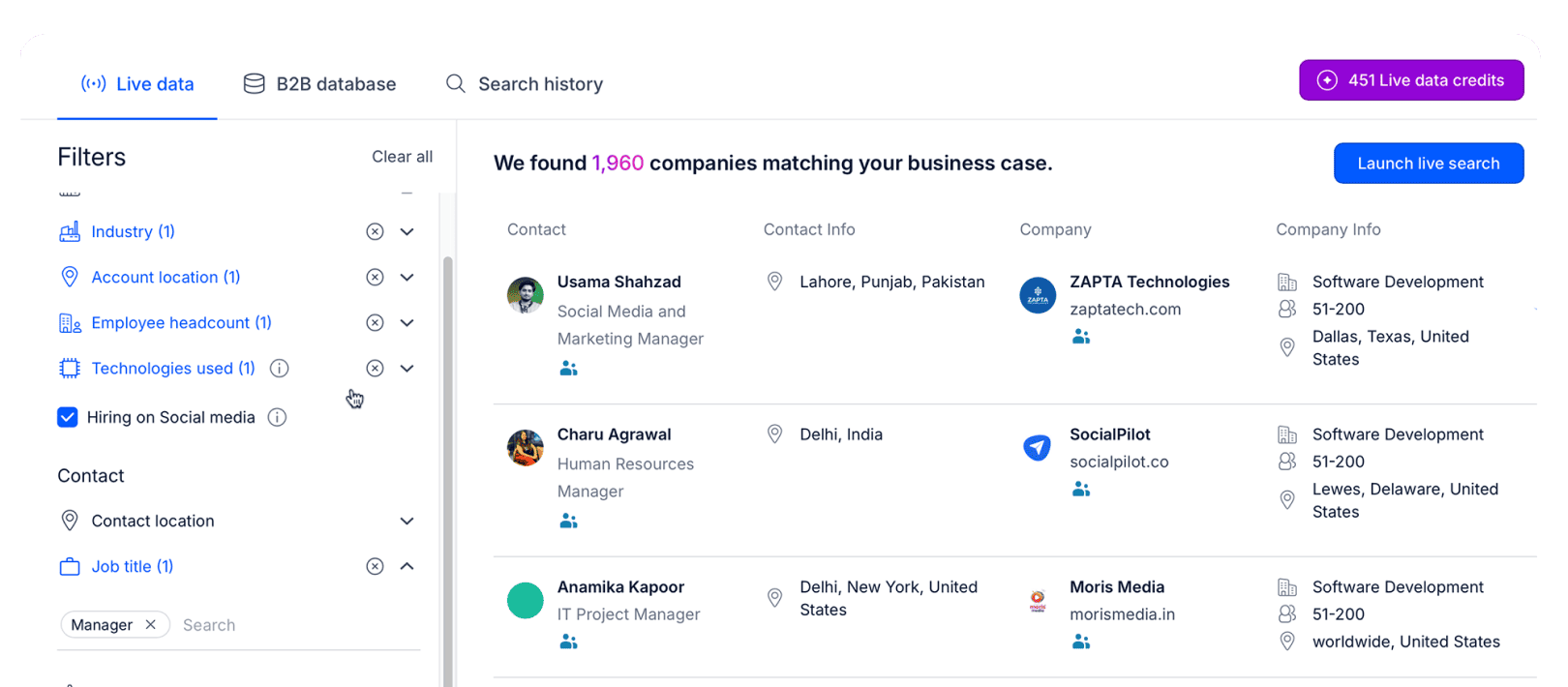
When it comes to the sales intelligence side, Reply comes with a native B2B database containing 1+ billion contacts across industries and locations, along with advanced search filters and built-in email validation and lead enrichment. 

data in Reply.io as an extra to your personal CRM

Indeed, 6sense is also good at predicting buying intent. However, it doesn’t quite get the job done for running outreach campaigns and actually turning those signals into action. 

With Reply, your sequence adapts in real time based on prospect behavior. Here’s how it works: an email open triggers a LinkedIn touchpoint. Meanwhile, a visit to your company’s pricing page routes the lead into a higher-intent sequence, and so on.

And if you’re looking to fully automate your entire sales process, Reply has its very own AI sales agent — Jason AI

After learning everything about your business, Jason will start finding targeted leads, uncovering additional data from LinkedIn, company websites, and more, and use that data to launch tailored multichannel outreach campaigns for each unique lead. Once replies start coming in, Jason will also answer questions, handle objections, and even book meetings on your behalf! 

Key features

  • Jason AI: An autonomous AI agent that sources leads, launches multichannel campaigns, and books meetings 24/7.
  • Multichannel sequences: Runs email, LinkedIn, calls, SMS, and WhatsApp steps within a single conditional sequence that adapts to prospect behavior.
  • Reply Data: Live database of 1+ billion contacts, filtering by role, industry, tech stack, and many more filters.
  • Email deliverability suite: Monitors sender reputation, warms up mailboxes, and verifies contacts before they enter any sequence.
  • Website visitor tracking: Identifies companies visiting your site and automatically routes them into targeted inbound sequences.
  • AI variables: Generates personalized opening lines, value propositions, and CTAs for each prospect automatically.
  • Contact enrichment: Fills in missing prospect details, including role, company size, LinkedIn URL, and more. That way, every lead entering a sequence has enough context for meaningful personalization.
  • A/B testing: Tests subject lines, messaging hooks, and CTAs across email and LinkedIn steps, then surfaces what moves prospects to reply.

Pricing:

Reply.io pricing ranges from $49 to $89 per user per month, while Jason AI starts at $500 per month as a standalone AI plan. With Jason AI, however, you’re not just paying for a “tool”, you’re basically hiring an AI sales rep who works around the clock. 

Reply.io also has a 14-day free trial to get a feel for the product and test out a small campaign before committing to a purchase. 

Clay

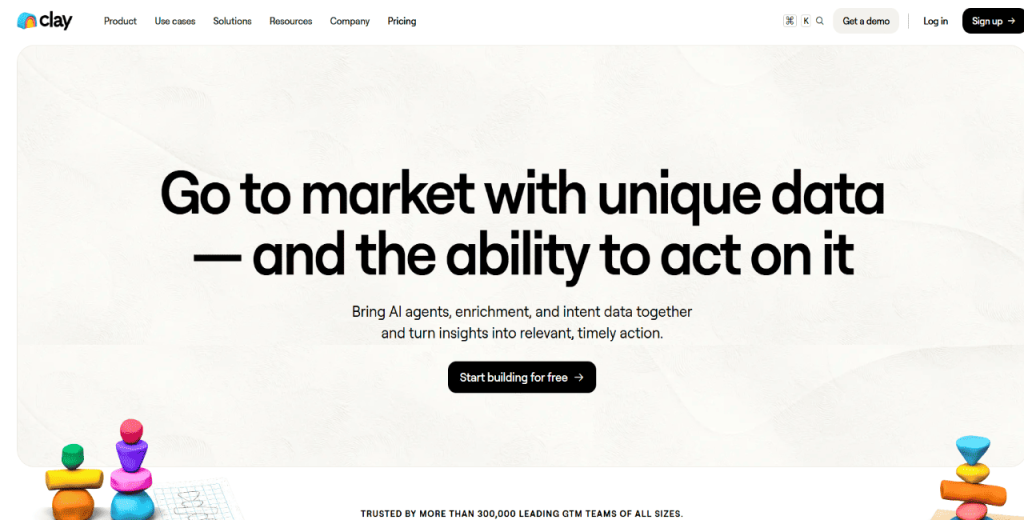
Clay is a GTM workflow platform built for teams that want a highly flexible way to handle prospecting, enrichment, and signal-based outbound.

It connects with 150+ data providers and lets you enrich records through multi-provider waterfalls instead of being tied to a single database. It also comes with Claygent, an AI research agent that pulls in publicly available web data to surface account- and prospect-level insights.

Clay is especially strong for RevOps and growth teams, but it is not the easiest tool to pick up quickly. And while it can support email campaign sending, teams that need full multichannel sequencing, deliverability controls, and inbox management will usually still want a dedicated outreach tool.

Key features

  • Waterfall enrichment: Enriches records across multiple providers to improve match rates.
  • Claygent: Researches prospects and accounts using publicly available web data.
  • Signal-based workflows: Helps teams act on job changes, company news, and other buying signals.
  • CRM sync: Available on higher-tier plans.

Pros

  • Highly customizable workflows
  • 150+ data providers
  • Strong enrichment and research automation

Cons

  • Steeper learning curve
  • CRM integrations are not included on lower-tier plans
  • Not a full sales engagement platform

Pricing:

Clay has a pretty decent free plan, while paid plans start at around $185 per month.

Demandbase

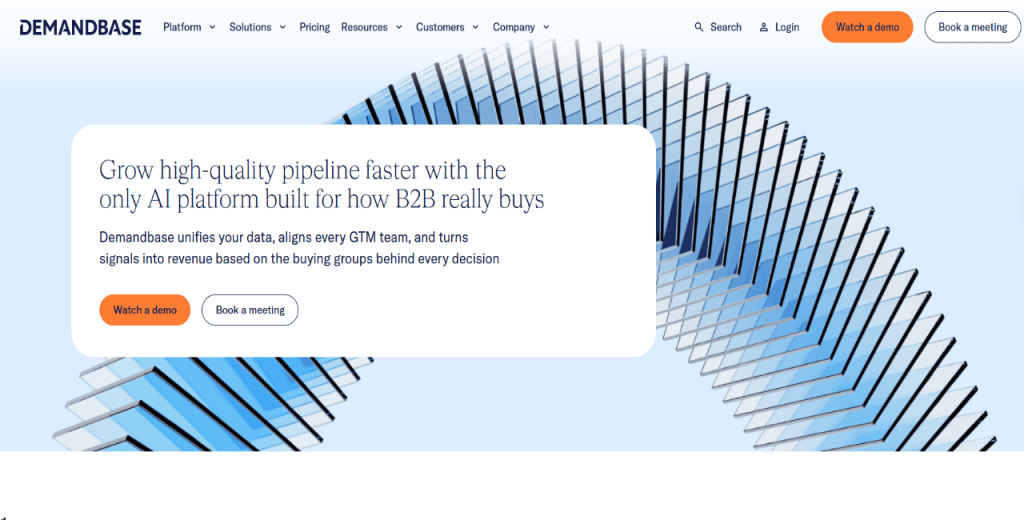
Demandbase is an enterprise ABM and account intelligence platform made for teams running mature account-based GTM programs.

It helps revenue teams identify target accounts, track intent signals, prioritize accounts, run account-based ads, and personalize website experiences. For larger organizations, that means account intelligence, advertising, and marketing orchestration can all sit under one roof.

That said, Demandbase makes the most sense for companies that already have dedicated ABM and RevOps resources. Smaller sales teams may find it too heavy or too expensive, especially if the real goal is outbound prospecting and meeting generation.

Key features

  • Account intelligence: Helps teams identify and prioritize target accounts.
  • Intent data: Surfaces account-level buying signals.
  • Account-based advertising: Runs campaigns to target accounts and buying committees.
  • Website personalization: Adapts website experiences based on account data.

Pros

  • Strong enterprise ABM capabilities
  • Useful for complex buying committees
  • Combines intent, advertising, and account intelligence

Cons

  • Custom enterprise pricing
  • Requires operational resources
  • Not a full sales engagement platform

Pricing:

Demandbase pricing is custom-quoted.

Clearbit

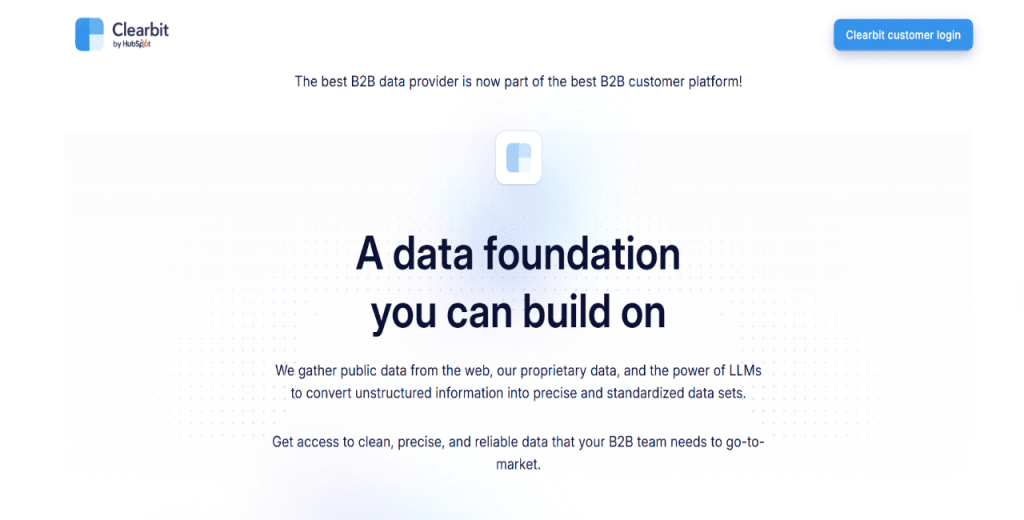
Clearbit is now part of HubSpot’s Breeze Intelligence, so it is most relevant for teams already working inside HubSpot.

It helps enrich company and contact records, surface buyer intent signals, shorten forms, and improve lead routing with cleaner data. For HubSpot users, that can be a very practical way to tighten inbound workflows and keep CRM data in better shape.

The catch? Clearbit is no longer positioned like the standalone sales intelligence tool it used to be. A lot of its value now depends on how your HubSpot setup works, and it does not include native outbound sequencing, inbox management, or deliverability tools.

Key features

  • Data enrichment: Adds company and contact data to CRM records.
  • Buyer intent: Helps identify companies showing relevant buying behavior.
  • Form shortening: Reduces the number of fields visitors need to complete.
  • Lead routing: Routes leads based on enriched attributes.

Pros

  • Strong fit for HubSpot users
  • Useful for inbound enrichment and routing
  • Helps reduce manual CRM cleanup

Cons

  • Best suited for HubSpot-based teams
  • Less flexible as a standalone tool
  • No native outbound sequencing

Pricing:

Breeze Intelligence credits start at $45 per month for 100 credits when billed annually.

Cognism

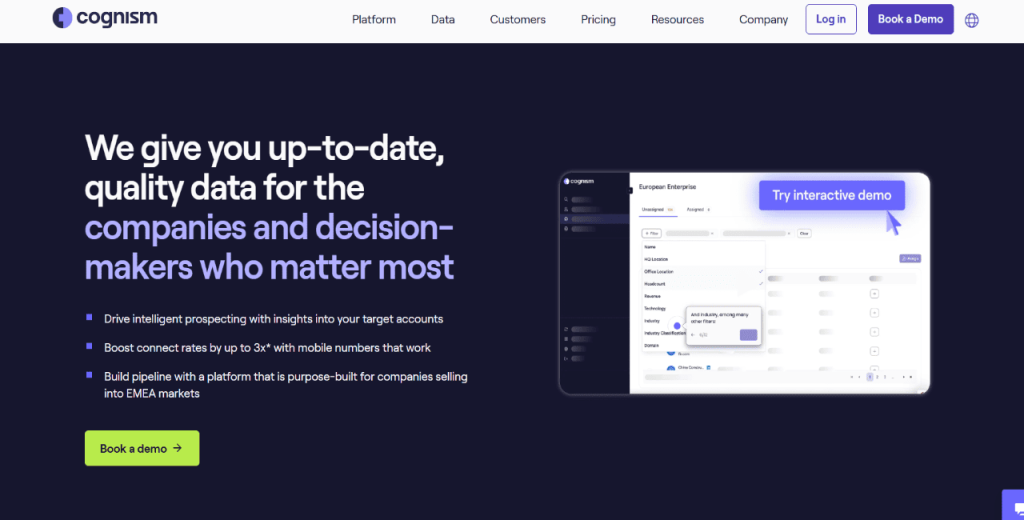
Cognism is a B2B sales intelligence platform best known for its phone-verified mobile data, especially across EMEA.

Its Diamond Data® product gives teams manually verified mobile numbers, which makes it especially useful for orgs that still rely heavily on cold calling. Cognism also leans hard into compliance, with GDPR and CCPA positioning, SOC 2 accreditation, and DNC/TPS screening across multiple regions.

Where it is strongest is contact data and compliant prospecting. Where it is not? Full outbound execution. Teams still need separate tools for sequencing, deliverability, AI personalization, and multichannel follow-up.

Key features

  • Diamond Data®: Phone-verified mobile numbers for cold calling.
  • CRM enrichment: Updates CRM records with fresh company and contact data.
  • Compliance-focused data: Supports compliant prospecting workflows.
  • Intent and signal data: Helps identify accounts ready for outreach.

Pros

  • Strong EMEA data coverage
  • High-value mobile number verification
  • Compliance-focused positioning

Cons

  • Custom annual pricing
  • Not a full sales engagement platform
  • Additional outreach tools are usually required

Pricing:

Cognism’s pricing is custom-quoted.

Albacross

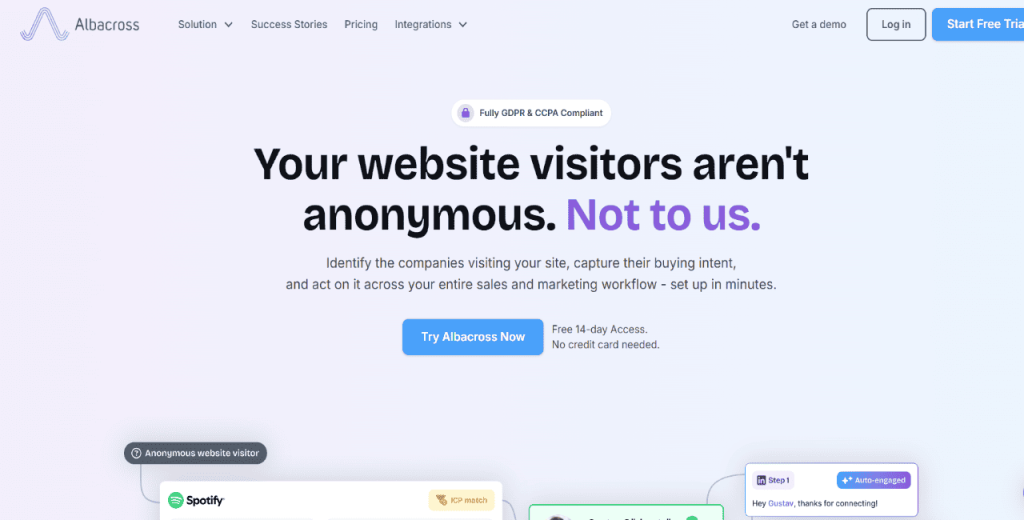
Albacross is a website visitor identification platform built to help B2B teams turn anonymous website traffic into account-level sales signals.

It identifies which companies are visiting your site, shows what pages they looked at, and helps reps prioritize follow-up based on that engagement. For teams with solid traffic and a clear account-based sales motion, that can be really useful.

The limitation is pretty straightforward though: Albacross mainly tells you which company visited, not the exact person behind the visit. So sales teams still need contact data, enrichment, and outreach tools to turn that signal into actual meetings.

Key features

  • Website visitor identification: Identifies companies visiting your website.
  • Account engagement tracking: Shows page views, visit frequency, and behavior.
  • CRM integrations: Connects visitor data with sales workflows.
  • Sales alerts: Notifies reps when target accounts visit your site.

Pros

  • Useful for website-based intent signals
  • Good fit for B2B teams with steady traffic
  • More accessible than enterprise ABM tools

Cons

  • Mainly account-level identification
  • Less useful for low-traffic websites
  • Requires separate outreach tools

Pricing:

Albacross pricing starts at €59 per month.

DemandScience

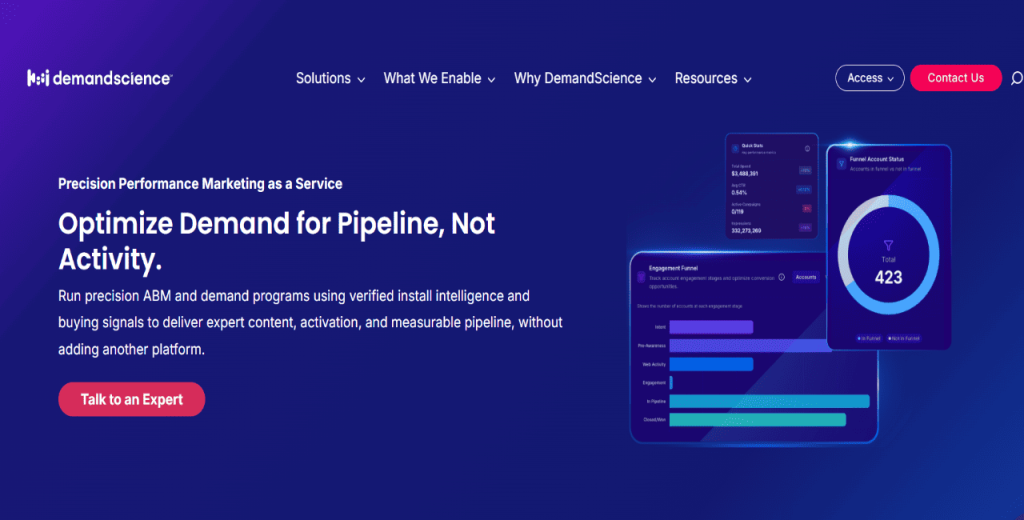
DemandScience is a B2B demand generation and performance marketing company, not a traditional self-serve sales intelligence platform.

It helps marketing teams run targeted demand programs using verified B2B contact data, buying signals, content activation, email distribution, and multichannel campaign execution. It is a better fit for teams that want managed support for pipeline generation, not for reps looking for an everyday SDR prospecting tool.

So yes, DemandScience can help extend campaign reach. But it is not really a direct replacement for sales engagement software. Teams that need contact-level prospecting, AI-personalized sequencing, and inbox management will still need dedicated sales tools.

Key features

  • B2B email distribution: Extends campaigns beyond your CRM database.
  • Intent-powered targeting: Uses buying signals to reach relevant accounts.
  • Multi-channel demand generation: Supports email, content, display, and social campaigns.
  • Managed execution: Helps teams plan and optimize demand programs.

Pros

  • Strong fit for B2B marketing teams
  • Useful for managed demand generation
  • Supports multi-channel campaign execution

Cons

  • Not a self-serve SDR prospecting tool
  • Not a sales engagement platform
  • Pricing depends on campaign scope

Pricing:

DemandScience pricing is custom-quoted.

Lusha

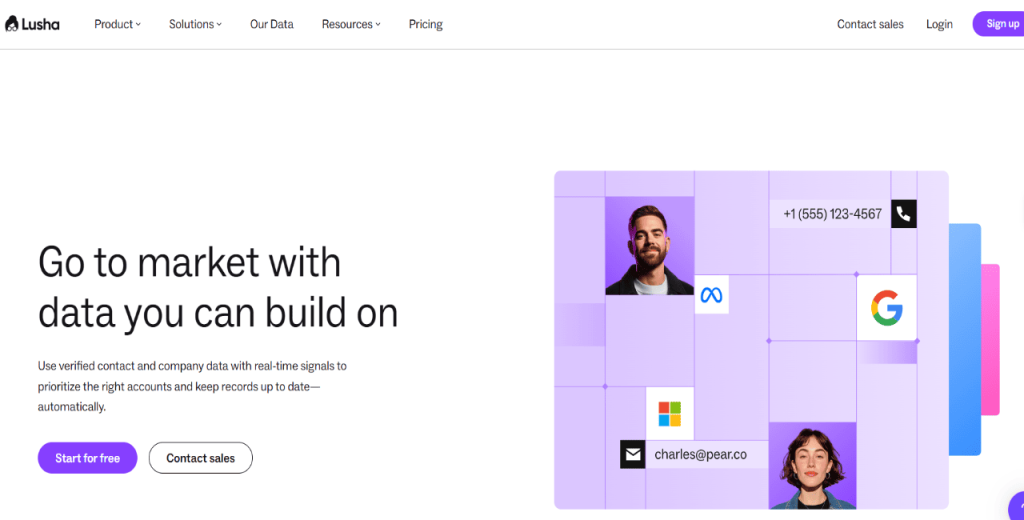
Lusha is a sales intelligence and prospecting platform for reps who want quick access to B2B contact and company data without a lot of friction.

Its Chrome extension helps users find emails and phone numbers while browsing LinkedIn and company sites. Lusha also supports enrichment, buying signals, integrations, and basic prospecting workflows, which makes it pretty practical for day-to-day SDR work.

It is easy to adopt and generally more affordable than a lot of enterprise data platforms. But at the end of the day, it is still mainly a data and prospecting tool. Teams will still need separate software for sequencing, deliverability, inbox management, and multichannel engagement.

Key features

  • Chrome extension: Finds contact data on LinkedIn and company websites.
  • Contact enrichment: Adds verified emails, phone numbers, and company data.
  • Buying signals: Surfaces signals such as job changes, funding, and intent.
  • Integrations: Connects data with other GTM systems.

Pros

  • Easy to use
  • Practical for daily prospecting
  • Free plan available
  • Affordable entry point

Cons

  • Not a full outbound engagement platform
  • Data coverage can vary by region
  • Advanced workflows require higher-tier plans

Pricing:

Lusha has a free plan. Paid plans start at $37.45 per user per month when billed annually.

ZoomInfo

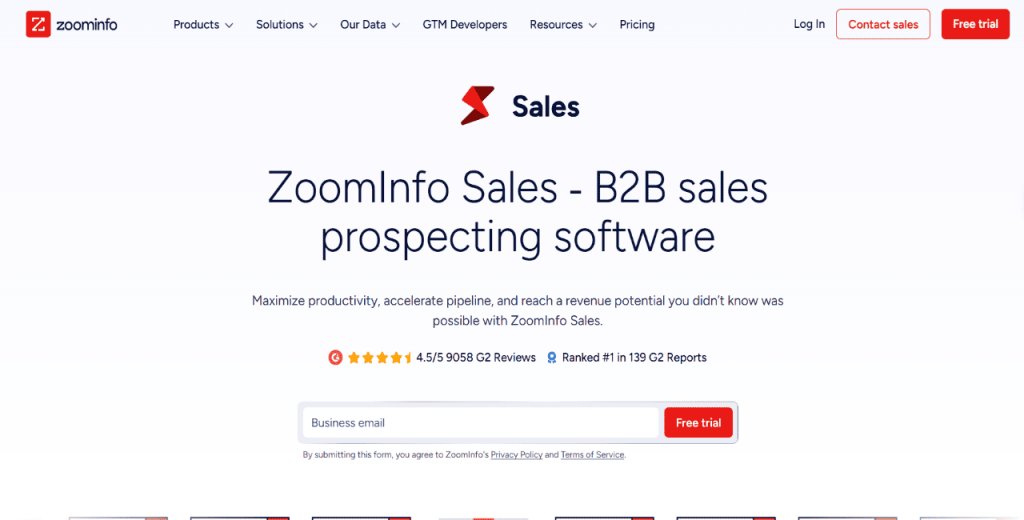
ZoomInfo is one of the biggest B2B sales intelligence platforms on the market, and it is best known for sheer database depth.

SalesOS brings together company data, contact data, intent signals, org charts, enrichment, website visitor tracking, workflows, and some basic engagement features. ZoomInfo says its data universe includes more than 260 million contact profiles and 100 million company profiles.

For enterprise teams or high-volume outbound orgs, that kind of coverage can be a big advantage when market reach is the priority. The downside, of course, is cost and complexity. Smaller teams may find it overpriced, and outbound-heavy teams may still want a dedicated engagement platform for deeper sequencing, deliverability, and AI personalization.

Key features

  • Large B2B database: Provides company and contact data, including direct dials and org charts.
  • Intent data: Identifies accounts showing buying signals.
  • SalesOS: Combines prospecting, enrichment, and sales intelligence.
  • CRM enrichment: Updates CRM records with fresh contact data.

Pros

  • Extensive B2B database
  • Strong org chart and account intelligence
  • Useful for enterprise prospecting

Cons

  • Expensive for smaller teams
  • Custom contract-based pricing
  • Dedicated sales engagement tools may still be needed

Pricing:

ZoomInfo pricing isn’t publicly advertised. Third-party pricing research commonly reports entry-level annual contracts starting around $14,995.

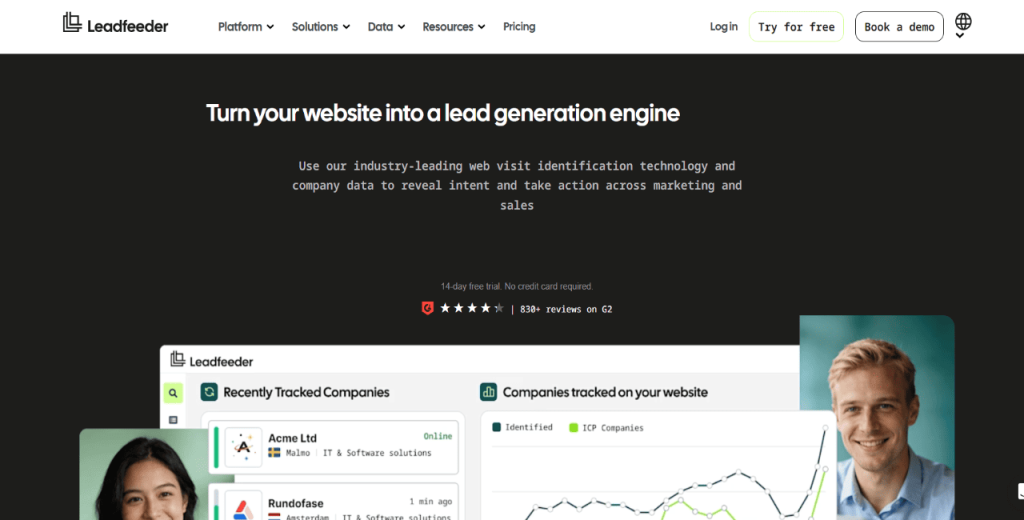
Leadfeeder

Leadfeeder, now part of Dealfront, is a website visitor identification tool for B2B sales and marketing teams.

It identifies which companies are visiting your site, shows what pages they viewed, and helps teams prioritize follow-up based on engagement. For companies getting meaningful traffic, that can be a strong way to surface warm accounts that are already looking into your product or category.

Like similar tools in this category, Leadfeeder is strongest at the account level. It will not always tell you exactly which individual visited. So sales teams still need contact data, enrichment, and outreach automation to turn those account signals into real conversations.

Key features

  • Website visitor identification: Identifies companies behind anonymous visits.
  • Behavioral analytics: Shows page views, visit frequency, and visitor behavior.
  • Lead scoring: Prioritizes companies based on engagement and fit.
  • CRM integrations: Sends visitor data into CRM workflows.

Pros

  • Strong B2B visitor identification
  • Useful for prioritizing warm accounts
  • Good option for European teams

Cons

  • Mostly account-level identification
  • Less useful without enough website traffic
  • Requires separate outreach tools

Pricing:

Leadfeeder’s Website Visitor Identification plan starts at €99 per month, billed annually.

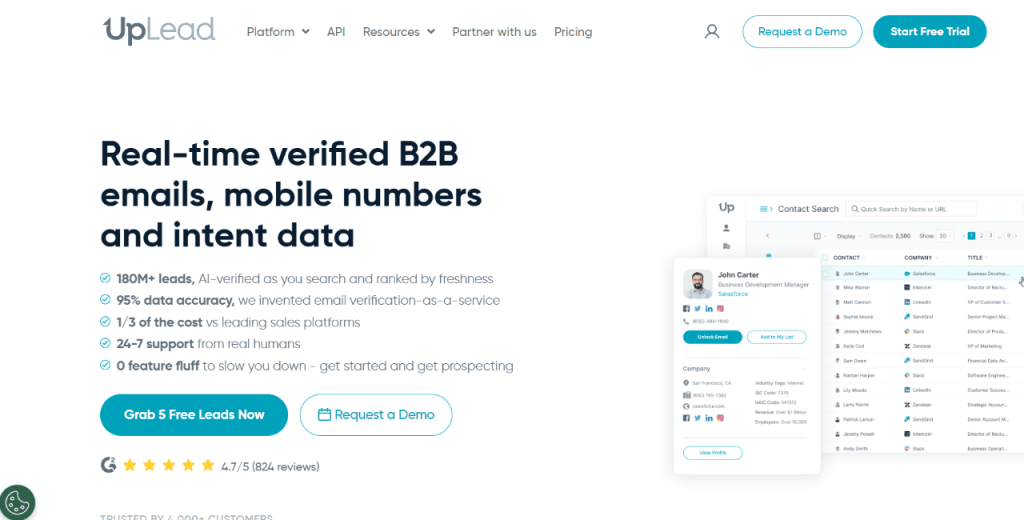
UpLead

UpLead is a B2B prospecting platform focused on verified contact data, real-time email verification, and simple list building.

Its biggest strength is data accuracy. UpLead verifies emails at export and advertises a 95% data accuracy rate. It also includes mobile numbers, a Chrome extension, CRM integrations, and technographic filters for building more targeted lists.

It is a good fit for teams that want clean contact data without signing up for a big enterprise sales intelligence contract. But it is still mainly a data provider. Teams looking for AI personalization, multichannel sequencing, deliverability controls, and full outbound execution will need separate tools for that.

Key features

  • Real-time email verification: Verifies emails at export.
  • Contact database: Provides B2B emails, mobile numbers, and company data.
  • Technographic filtering: Searches companies by technologies used.
  • CRM integrations: Connects with tools like Salesforce, HubSpot, Pipedrive, Outreach, Salesloft, and Reply.io.

Pros

  • Strong focus on email accuracy
  • Transparent credit-based pricing
  • Free trial available
  • Useful for clean list building

Cons

  • Not a full sales engagement platform
  • Buyer intent is only available on higher-tier plans
  • Essentials and Plus plans are single-user plans

Pricing:

UpLead has a 7-day free trial with 5 credits. Paid plans start at $99 per month, or $74 per month when billed annually.

How to choose the right 6sense Sales alternative

The right 6sense Sales alternative really comes down to what your team is trying to fix first.

Some of the tools on this list are more focused on account intelligence and intent data. Others are better for contact enrichment, website visitor identification, or account-based marketing. So the right pick depends on your sales motion, your budget, your team size, and how much of the execution you want the platform to handle on its own.

Before you commit to anything, look at how the tool fits into your actual workflow. Check the data quality, how well it works with your CRM, how easy it is to use, what it can do on the outreach side, and how quickly your team can start turning insights into booked meetings.

If your team wants to find prospects, enrich contacts, personalize outreach, and run multichannel sequences all in one place, Reply.io is definitely worth taking a look at. 

You can start with a free 14-day trial and see how it fits into your outbound workflow.

FAQ: 6sense alternatives

What is the best 6sense Sales alternative?

The best 6sense Sales alternative really depends on your team and how you sell. Reply.io makes the most sense for teams that want prospecting, enrichment, multichannel outreach, AI personalization, and deliverability all working together. Demandbase is more of an enterprise ABM play, while tools like Cognism, ZoomInfo, and Lusha lean more toward pure sales data and contact discovery.

What should you look for in a 6sense Sales alternative?

Look at data quality, intent signals, CRM integrations, ease of use, pricing, and outreach capabilities. If your team needs to go from account insights to real sales conversations, then tools that help with execution matter a lot more than tools that just show you who to target.

Is 6sense Sales mainly an intent data tool or an outreach tool?

6sense Sales is really more about helping teams see which accounts are showing intent, which ones are worth prioritizing, and where reps should focus. It does that part well. But once it’s time to actually run outreach — sequences, inboxes, deliverability, multichannel touches — most teams will still need another tool for that.

Which 6sense alternative is best for small and mid-sized sales teams?

For small and mid-sized teams, the better options are usually the ones that are easy to roll out, reasonably priced, and tied closely to day-to-day outbound work. Reply.io, Lusha, UpLead, Clay, and Leadfeeder are the top choices.

Are 6sense competitors worth testing before buying?

Yes. The differences between 6sense alternatives can be pretty big — data coverage, workflow depth, setup effort, pricing model, all of it. Testing a shortlist before signing anything is usually the best way to see whether a tool actually fits your CRM, outbound process, target market, and team capacity.

Subscribe to our blog to receive the latest updates from the world of sales and marketing.
Stay up to date.

In this article

Your Superhuman SDR

Jason learns your product, tone, and strategy — then runs outreach with the precision of your best rep.

Your Superhuman SDR
Book a demo

Related Articles

What’s New in Reply: New API, AI Custom Fields, LinkedIn Enrichment, and More

What’s New in Reply: New API, AI Custom Fields, LinkedIn Enrichment, and More

What’s New in Reply: New API, AI Custom Fields, LinkedIn Enrichment, and More
Top 12 Cognism Alternatives for Finding Leads in 2026

Top 12 Cognism Alternatives for Finding Leads in 2026

Top 12 Cognism Alternatives for Finding Leads in 2026
Mailtrap Review 2026: Is This Email API the Right Fit for Your Team?

Mailtrap Review 2026: Is This Email API the Right Fit for Your Team?

Mailtrap Review 2026: Is This Email API the Right Fit for Your Team?