
Top 10+ ABM Tools You Need to Know Now

Top 10+ ABM Tools You Need to Know Now

If you’re in sales or marketing today, you’ve probably felt the shift. Prospects research on their own, move between channels, and stay anonymous longer, which makes it harder to know who’s actually interested. 

That’s why account-based marketing (ABM) has become so important again: it helps you focus on accounts that show real buying signals instead of spreading efforts too thin.

Privacy rules like GDPR and CCPA also limit how much data teams can rely on, so accurate intent becomes even more valuable. 

ABM offers a structured way to prioritize the right accounts and tailor outreach in a way that feels relevant to each buying team.

It also improves alignment:

  • Sales gets better signals and clearer opportunities
  • Marketing gets a strategy that proves pipeline impact

Together, both teams can run more coordinated plays that meet buyers where they are.

In this guide, we’ll break down how modern ABM works, what features matter most, and the tools that can help you identify, engage, and convert the accounts that actually move.

Did you know? 84% of companies report real pipeline growth after adopting ABM!

First things first: Why do you need an ABM tool?

ABM works best when you know exactly where to focus, but that clarity is impossible when your data lives everywhere and your funnel feels fuzzy. 

An ABM tool fixes that. 

It brings firmographics, intent signals, and real behavior into one view, so you can immediately spot which accounts fit your ICP and which ones are actively exploring solutions. 

You can double down on the accounts that have real potential to bring revenue. From there, the tool helps you personalize at scale. 

You can shape campaigns, ads, website experiences, and sales plays around what each account is actually doing. When timing and messaging are driven by live activity, engagement rises and proving ROI becomes much easier.

The results show up quickly. Lead qualification becomes more accurate. Target accounts move through the funnel with stronger intent. Sales cycles get cleaner. And sales and marketing teams finally work from the same signals, which eliminates a lot of the usual back-and-forth.

You’ll notice it in everyday moments:

  • A rep gets an alert the second a high-value account spikes in research
  • A marketer tweaks messaging when a segment suddenly becomes more active
  • A revenue leader spots a slowdown early and adjusts the play before the deal slips

And because most ABM platforms support the full workflow: Targeting -> Engagement -> Conversion -> Measurement, you get a smooth, continuous path for moving high-value accounts from first signal to closed won. 

Interesting to note: Forecasts show the ABM market rising about 10+ percent from 2024 to 2030, with revenue nearing 2.39 billion dollars!

What features make an ABM tool effective?

1. Personalization that feels genuinely tailored

Good ABM platforms adapt landing pages, emails, ads, and other assets to what an account actually cares about. 

They use firmographics, past behavior, and intent signals to shape messages in real time, so every interaction feels grounded in context.

2. Targeting that sharpens your focus

ABM works only when you’re aiming at the right accounts. 

Strong tools help you build smart segments, combine firmographic and technographic filters, and enrich lists with intent data from reliable sources. That makes it easier to prioritize accounts showing clear signs of interest.

3. Analytics that guide decisions

Teams need to see where momentum is building and where it’s slowing down. 

Look for platforms that surface account-level engagement and connect activity to pipeline impact. When the data is easy to interpret, sales and marketing stay in sync.

4. Integrations that pull your ecosystem together

ABM doesn’t stand alone. Your platform should sync well with your CRM, marketing automation tools, sales engagement systems, and your ad and data partners. 

Strong connectivity keeps information consistent and reduces the friction between teams.

5. A user experience that encourages adoption

Even the most powerful ABM tool falls short if the interface slows people down. 

The best platforms keep things simple with intuitive navigation, smooth onboarding, practical training material, and responsive support when issues come up. 

6. Flexibility to grow with your strategy

Your ICP changes, your account tiers expand, and your engagement rules evolve. 

Effective ABM software gives you room to adjust without forcing you into fixed templates. Flexibility keeps the system relevant as your program matures.

What are the different types of ABM tools and what do they do?

ABM works best when your stack covers the full buyer journey. 

No single platform can do everything, so most revenue teams combine a few categories to identify the right accounts, reach them in the right places, and keep deals moving. 

Here is a simple breakdown of the tool types you’ll see in a mature ABM setup and what they actually help you accomplish.

Types of ABM tools What it helps you do Examples
Market, company and buyer intelligence Identify the right accounts using data on firmographics, tech stack, contacts, and buying signals. Helps you see which accounts are showing activity. ZoomInfo, UserGems, LinkedIn Sales Navigator, 6sense, Clearbit
Digital advertising and multichannel engagement Reach target accounts across the platforms they use. Supports segment-specific ads, retargeting, and coordinated messaging so accounts stay warm. Demandbase, Terminus, RollWorks, AdRoll, Metadata.io
CRM and sales automation platforms Manage account records, track outreach, organize sequences, and keep all touchpoints aligned. This is where sales teams run their daily workflow and connect ABM efforts to the pipeline. Salesforce, HubSpot CRM, Jason AI, Outreach, Salesloft, Pardot
Event and webinar marketing platforms Run webinars, workshops, roundtables, and virtual demos for priority accounts. Capture intent from attendance, interaction, and follow-up interest. ON24, BrightTALK, Zoom Events, Bizzabo
Web experience and personalization tools Tailor your website to each visitor. Adjust landing pages, CTAs, and chat experiences so accounts see content matched to their context. Unbounce, Drift, Intercom, Uberflip
Content and sales enablement platforms Equip sales with content tailored to each account’s stage. Track which assets get attention so teams know what resonates. PathFactory, Highspot, Uberflip
Gifting and direct mail automation Add a physical touchpoint with personalized gifts or packages for strategic accounts and track lift in meetings or deal movement. Postal.io, Sendoso, Alyce, Reachdesk

Most successful ABM programs use a mix of these categories. 

Intelligence tools show who to target, engagement tools reach them, CRM and automation platforms support sales follow up, and personalization or gifting layers help you stand out. 

When the stack works together, it becomes much easier to run coordinated plays and measure real revenue impact. 

What are the top ABM tools in 2026 and what makes them stand out?

Let’s check out our top 10+ picks for best ABM tools. 

1. Jason AI SDR
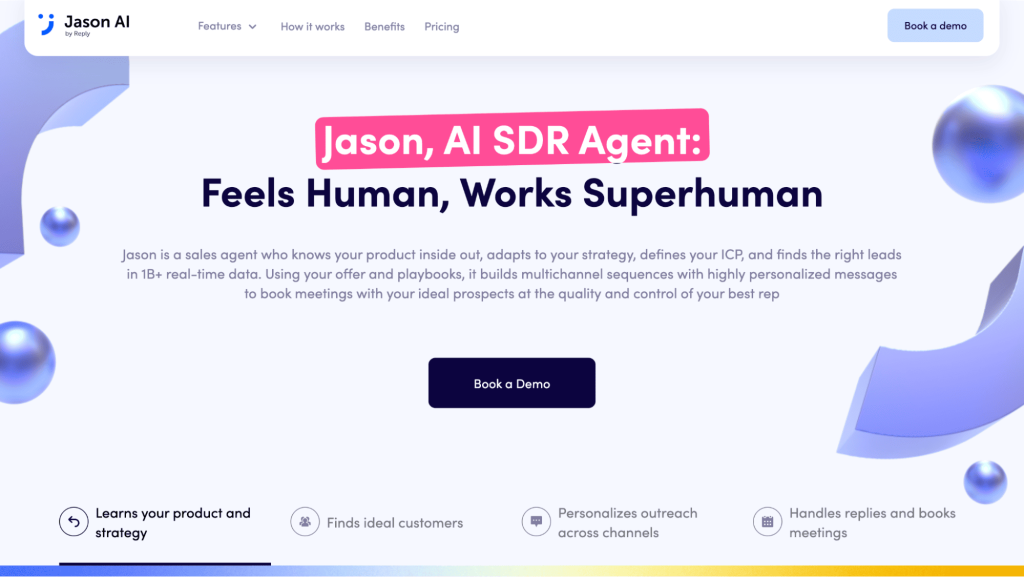
Jason AI SDR

Best for: Small to mid-size businesses that want to drive more pipeline and qualify leads through automated, personalized outreach

Jason AI (by Reply) is an AI-powered sales assistant built to handle the repetitive parts of outbound prospecting. 

It identifies the right accounts, writes personalized messages, manages replies, and books meetings so your team can focus on real conversations. 

Instead of juggling multiple tools or losing hours to manual research, reps get a steady flow of qualified interest backed by intent data and multichannel automation.

Key features

Tailor outreach based on your product, ICP, and strategy
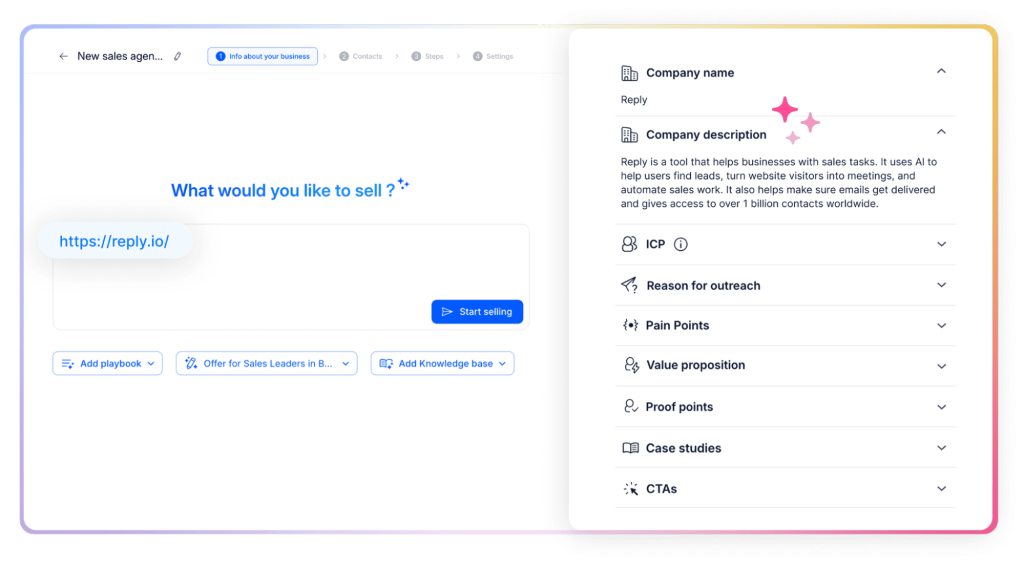
Tailor outreach based on your product, ICP, and strategy

Jason AI studies your sales playbook, product details, offer messaging, ideal customer profile (ICP), and desired communication style. That’s how it ensures its outreach aligns with your brand and sales goals.

Find target prospects
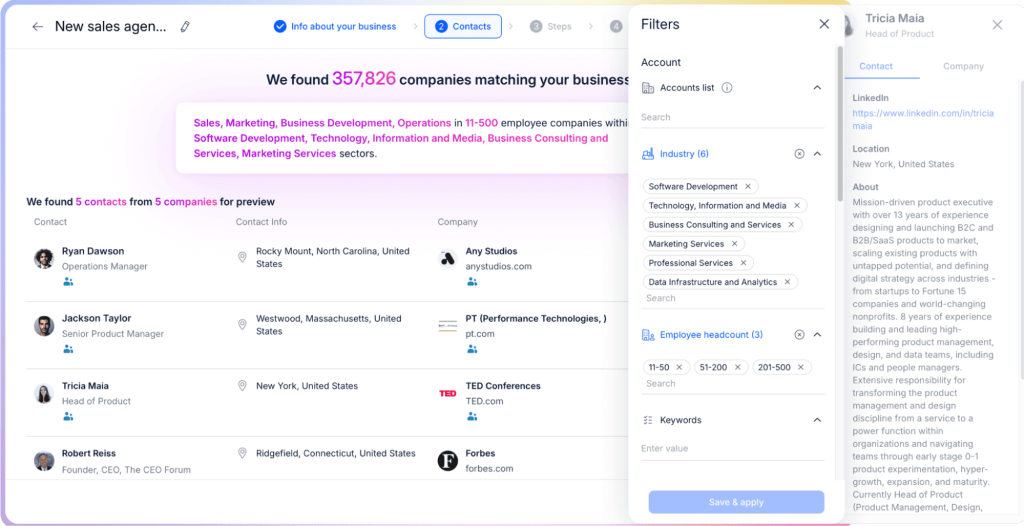
Find target prospects

Using a massive proprietary database of 1B+ contacts and real-time intent signals, it identifies and selects top-fit leads in your market based on the parameters you provide (location, industry, buying signals, etc.).

Create and send personalized multichannel outreach
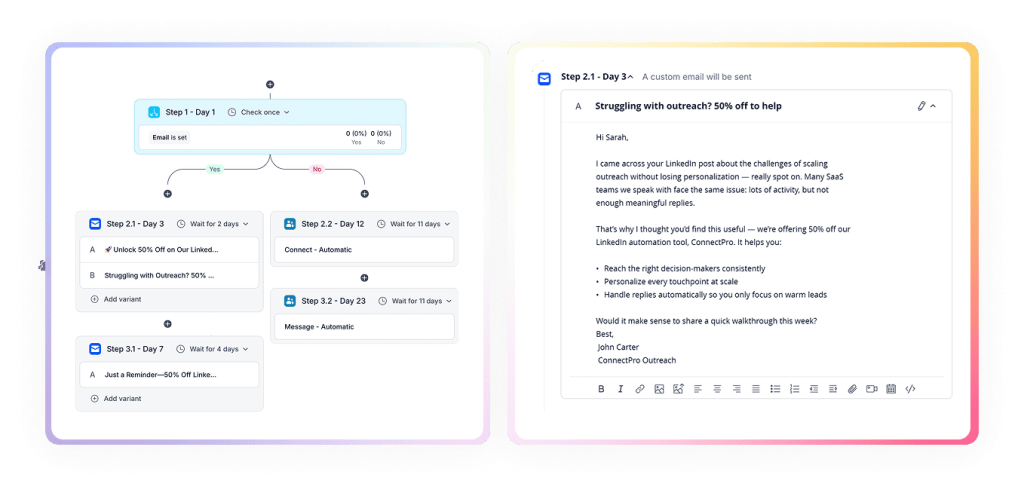
Create and send personalized multichannel outreach

Jason AI generates customized email and LinkedIn messages for each prospect. It personalizes content using insights from the prospect’s web activity, LinkedIn profile, and company information, then launches campaigns across all channels.

Manage replies and handle conversations
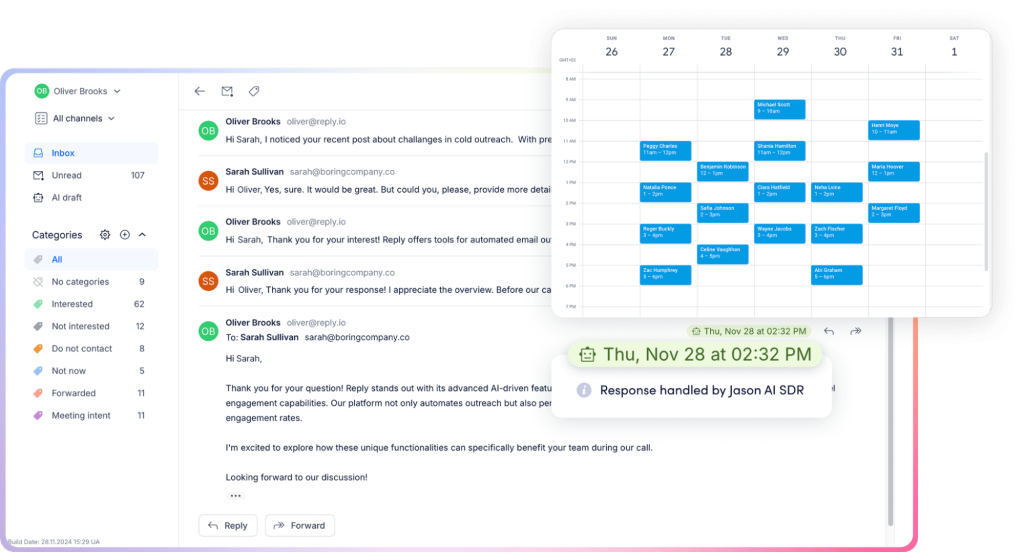
Manage replies and handle conversations

It actively monitors and manages prospect replies, engaging in human-like conversations via email or LinkedIn. Jason AI handles objections, answers questions, and can re-engage unresponsive leads, either autonomously or with your final approval.

Schedule sales meetings automatically

When a prospect is qualified and interested, Jason AI automatically books meetings on your calendar, so sales-ready leads move straight into your pipeline for closing.

Pros

  • Supports multilingual outreach in 150+ countries, helping you connect with prospects in their native language
  • Evergreen sequences keep campaigns fresh by automatically adding new ICP-matched leads
  • Strong deliverability tools like inbox warm-up, DNS health checks, and Google Postmaster insights reduce spam issues
  • Custom AI SDR playbooks let you upload scripts, case studies, and messaging guidelines for brand-aligned outreach
  • Once ICP, playbooks, and calendar sync are set, Jason runs continuously with minimal oversight

Cons

  • Initial setup takes time, especially if your ICP or messaging framework needs refinement
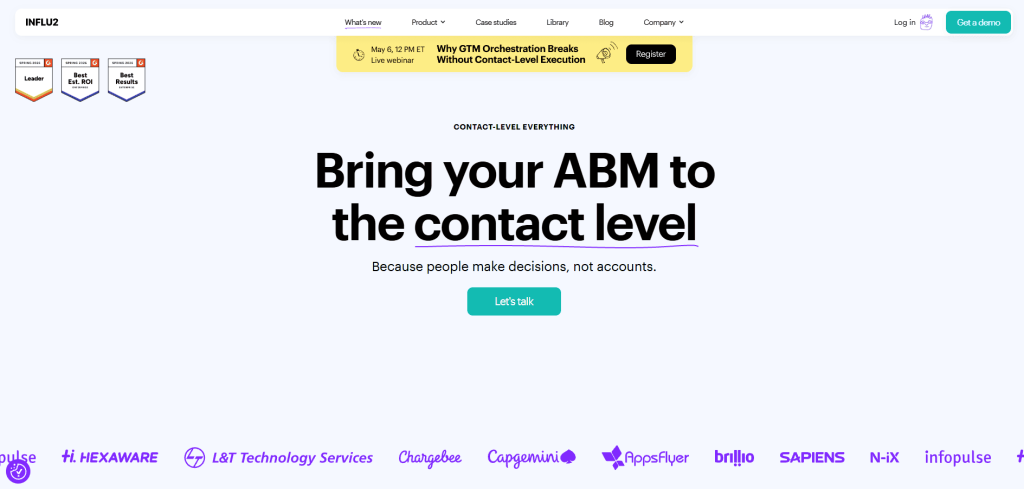
2. Influ2

influ2 as an abm tool

Best for: B2B marketing teams who want to run contact-level ABM across a defined buying committee, with intent signals, advertising, and attribution tied to specific individuals

Key features

  • Lets you upload a target contact list, then delivers ads to those named contacts across LinkedIn, Facebook, Instagram, Bing, display networks and more, without relying on cookies or IP-based matching
  • Tracks contact-level intent signals for the topics and keywords you define, surfacing when those contacts search for them on Google, read about them on third-party sites, or post about related topics on social media
  • Shows how ad engagement by specific contacts connects to pipeline created, progressed, and won, giving marketing credit for influenced deals beyond last-touch conversions
  • Lets you map different ad sets to each stage of your buyer journey, so contacts automatically see ads that reflect where they are in the sales process as they progress through it

Pros

  • Every interaction ties back to a named individual, which makes pipeline attribution more precise than account-level reporting
  • Runs campaigns across multiple channels simultaneously without requiring separate audience builds for each
  • Avoids wasting ad budget and resources on people outside of the people your team actually wants to convert

Cons

  • Requires a defined contact list to get started, making it less suited for prospecting net-new accounts from scratch
  • Intent tracking is scoped to contacts you’ve already selected, so teams that also need to surface new in-market accounts typically pair it with a separate data source for account selection

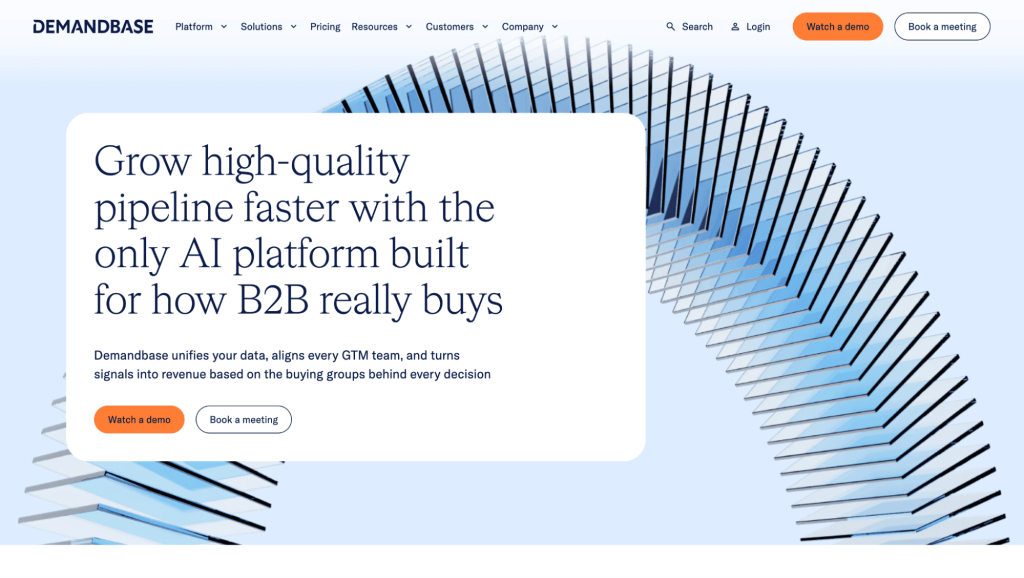
3. Demandbase 

Demandbase

Best for: Mid to large B2B organizations aiming to improve outreach efficiency and measure ROI across multi-touch sales cycles

Key features 

  • Finds new accounts not in your CRM based on keyword intent and onsite engagement
  • Segments the right contacts within target accounts using filters for job titles and functions
  • Offers actionable information delivered to sales teams daily via email or Slack
  • Alerts you when your customers are researching competitors

Pros

  • You can orchestrate targeted advertising, email, and sales outreach from a single platform
  • Offers reporting for tracking pipeline, revenue impact, and account engagement across the buyer journey
  • Connects with Salesforce, LinkedIn, and marketing tools

Cons 

  • Advanced features can feel overwhelming for new users 
  • Performance is closely tied to input data quality

Also read: AI Sales Strategy: How to Boost Revenue in 2026

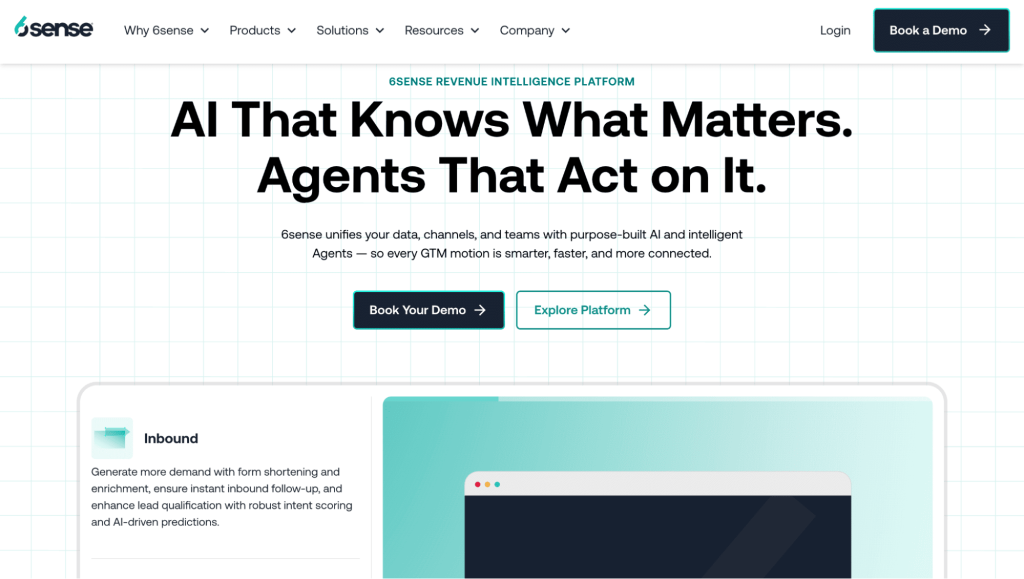
4. 6sense 

6sense

Best for: Mid-size to large B2B organizations looking to target high-value accounts and act on real-time intent data

Key features

  • Unifies intent, company, and contact data to identify in-market accounts 
  • Captures and analyzes a vast range of buying signals (Signalverse) and delivers actionable recommendations
  • Revenue AI agents automate outreach through email, book meetings, follow up instantly, and support both inbound and outbound motions 
  • Uses AI and scoring to prioritize the right accounts worth targeting based on current buying intent and fit

Pros

  • Seamlessly integrates with CRM and marketing automation tools to centralize and enrich the account view
  • Enables omnichannel marketing powered by real-time AI insights
  • Offers deep, actionable analytics across the sales and marketing funnel to optimize GTM motion

Cons

  • Initial setup is complex
  • Ongoing data management is essential for accuracy 

Also read: GTM Plays That Actually Work in Cold Outreach 

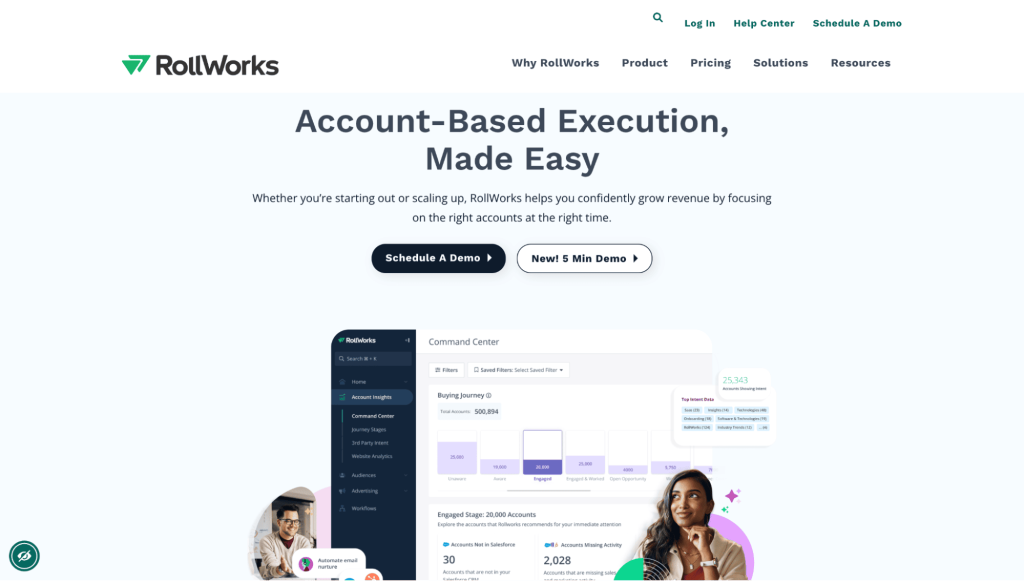
5. Rollworks  

Rollworks

Best for: Small to large orgs looking for AI-driven insights and automation to optimize ABM strategies across stages

Key features

  • Uses AI to identify best-fit target accounts and delivers deep buyer insights for focused engagement
  • Orchestrates outreach across advertising and email, ensuring relevant and timely touchpoints
  • Delivers precision ads to target accounts and personas
  • Surfaces actionable recommendations through intent signals and data for smarter campaign decisions

Pros 

  • Tracks and measures the impact of ABM programs on revenue and pipeline with robust analytics
  • Ensures both sales and marketing teams focus on the same high-value accounts and track success together
  • Supports ABM programs at every stage from initial pilot to enterprise-wide implementation

Cons

  • Occasional data sync delays affecting real-time action
  • Can be expensive for smaller teams 

Also read: The 10 Top AI Companies Driving Growth and Innovation in 2026

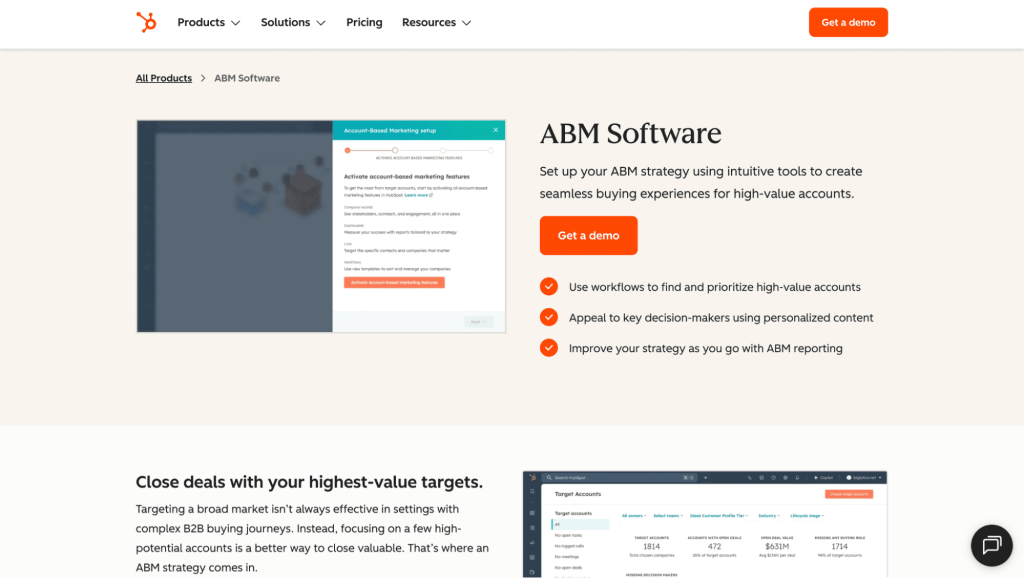
6. Hubspot  

Hubspot

Best for: Small to mid-sized B2B companies, especially those already using or planning to use HubSpot CRM and marketing tools

Key features

  • Use smart recommendations to find, score, and prioritize the best-fit accounts for targeted ABM campaigns
  • Centralized dashboards provide a full view of target accounts, including deal status, value, and engagement with key stakeholders
  • Makes sales and marketing collaboration smooth; both teams can coordinate outreach and track deal progress
  • Personalize emails, campaigns, and website content for key decision-makers at high-value accounts

Pros

  • Integrates with LinkedIn Sales Navigator for enriched account insights
  • Access customizable dashboards and reports to track engagement, pipeline progress, and revenue attribution
  • Start and manage ABM campaigns from a centralized platform, with intuitive tools that are quick to deploy

Cons

  • Most of the advanced features are reserved for premium plans 
  • Customizations are limited in the base plans

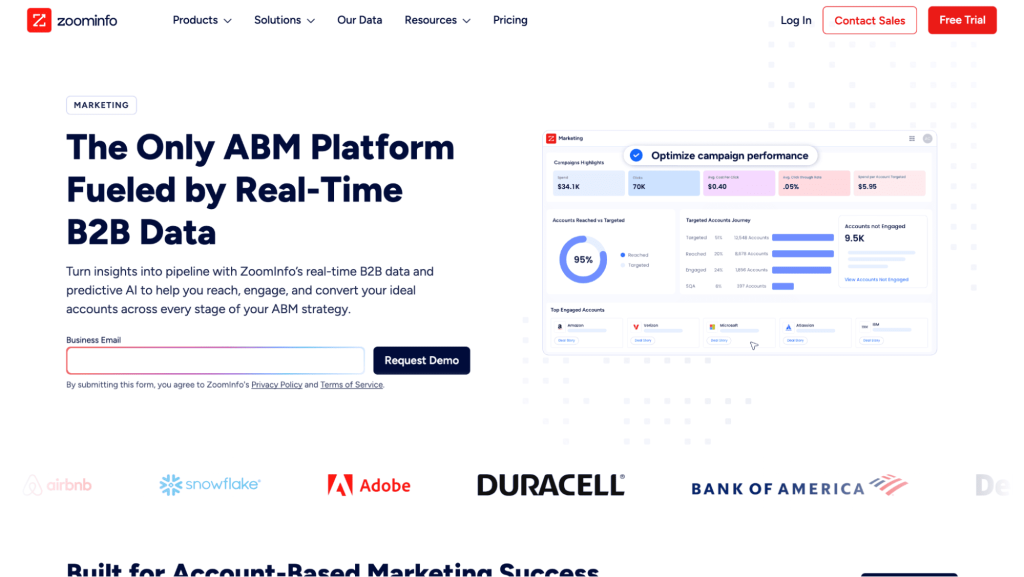
7. ZoomInfo  

ZoomInfo

Best for: Mid-sized to large B2B organizations that need extensive business and contact data for sales, marketing, or recruiting

Key features

  • Can access up-to-date, verified business data to fuel targeting and segmentation
  • Predictive AI ranks and prioritizes accounts that are most likely to buy
  • Surfaces accounts exhibiting buying interest based on digital signals and behaviors
  • Builds hyper-targeted ad audiences using filters and engages them across display, social, and web

Pros

  • Turns anonymous website traffic into pipeline by matching companies to visitors
  • Enriches inbound leads and chat interactions instantly, minimizing forms and manual research
  • Delivers coordinated, data-driven campaigns via email, ads, chat, and more for higher engagement

Cons

  • Steep learning curve due to extensive features
  • Limited non-US coverage 

8. Clearbit (now part of HubSpot)

Clearbit (now part of HubSpot)

Best for: Mid-sized to large sales and marketing teams focused on personalized, data-driven outreach and efficient lead routing

Key features

  • Turns any email, lead, contact, or account into a rich profile with global company and person data
  • Real-time lead scoring and routing
  • Granular segmentation using detailed industry codes (NAICS, GICS, SIC) and corporate family tree visibility 
  • Standardizes titles and seniority levels for better ICP matching and segmented targeting

Pros 

  • Identifies anonymous website visitors and highlights those matching your ICP using advanced IP intelligence
  • Reduces form fields for higher conversions by auto-enriching with data from users’ emails
  • As a HubSpot Native Data Provider, all Clearbit capabilities are now natively accessible in HubSpot’s platform

Cons 

  • Utility is limited for non-HubSpot users
  • Less effective for companies with very small staff sizes

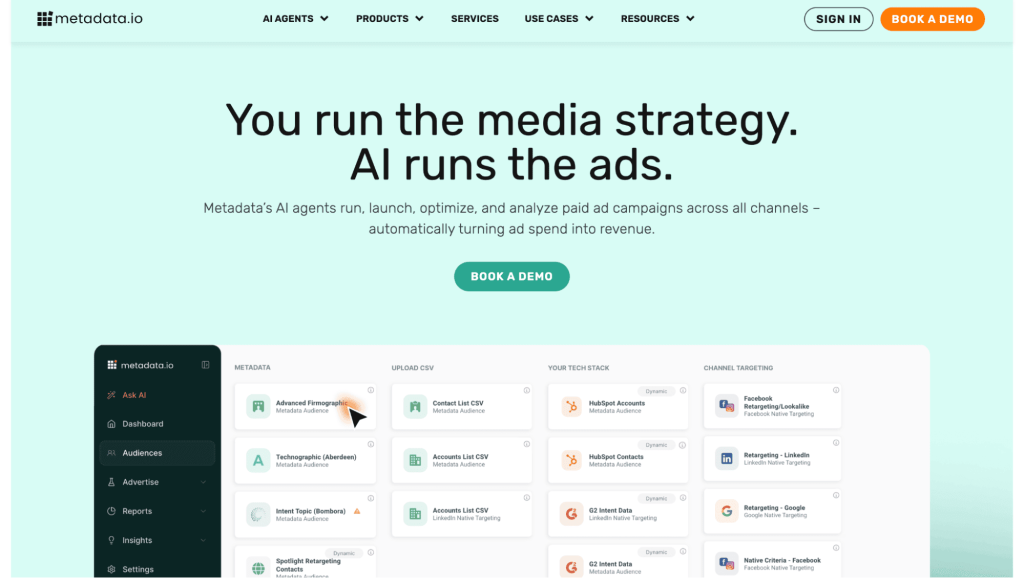
9. Metadata.io  

Metadata.io

Best for: Mid-sized to large B2B orgs looking to automate and optimize demand generation across multiple channels

Key features 

  • Automate audience targeting, creative testing, bidding, budget allocation, and campaign optimization across LinkedIn, Google, and Meta
  • Patented targeting engine MetaMatch builds hyper-targeted audiences using first-party data, intent signals, and firmographics
  • Launch and optimize campaigns for both demand generation and account-based marketing across multiple ad platforms
  • Run rapid, at-scale testing of ad copy, audiences, and channels to double down on top performers

Pros 

  • Get unified reporting that ties ad spend to revenue and ROI
  • Connects with Salesforce, HubSpot, Marketo, G2, and 6sense 
  • Reduces manual setup and optimization, letting teams scale campaigns and results without extra headcount

Cons

  • Requires significant ad budget to unlock best results
  • May be cost-prohibitive for small/early-stage companies

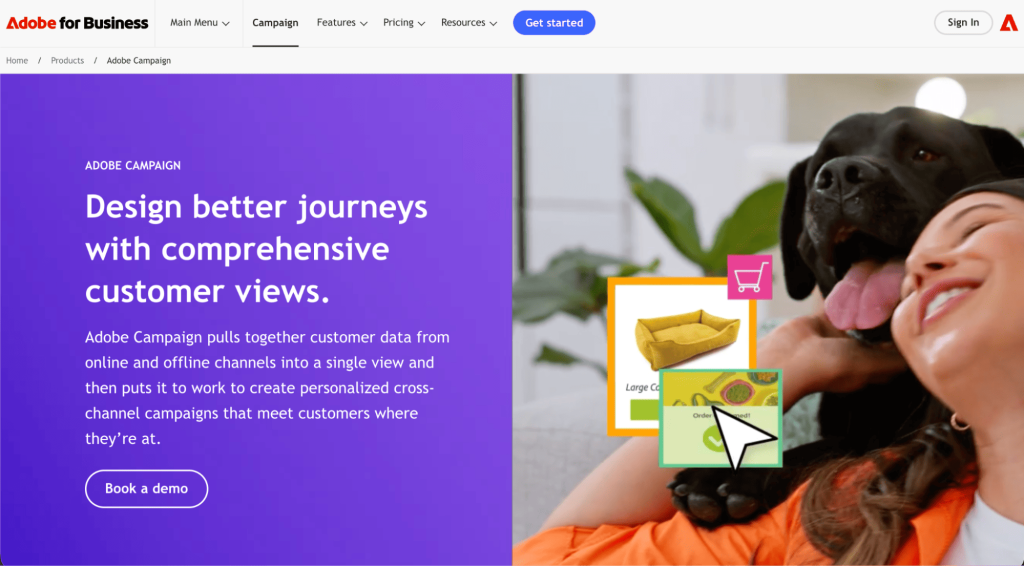
10. Adobe Campaign

Adobe Campaign

Best for: Large and enterprise-level organizations seeking a scalable marketing automation platform

Key features

  • Unified customer profiles aggregate data from multiple channels
  • Build and automate personalized marketing campaigns across email, SMS, mobile push, and web
  • Design, trigger, and manage journeys through an intuitive interface
  • Uses Adobe Sensei AI to optimize send times, predict engagement, and automate insights 

Pros

  • WYSIWYG tools and generative AI make it easy to design and customize campaign messages and experiences
  • Create dynamic audiences based on behavior, preferences, and real-time data for targeted outreach
  • Connects with Adobe Experience Cloud products (e.g., Experience Manager, Journey Optimizer, Workfront)

Cons 

  • Steep learning curve; requires extensive training
  • Integration can be challenging outside the Adobe suite

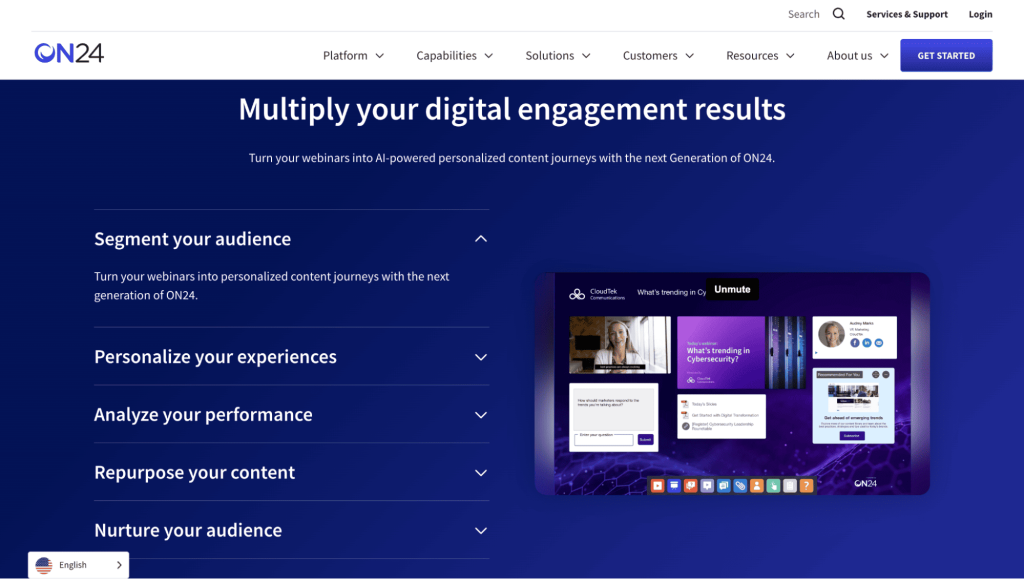
11. on24  

on24

Best for: Mid-sized to large enterprises seeking to scale webinars, virtual events, and digital content experiences

Key features

  • Enables 24/7 interaction and nurtures audiences through on-demand, AI-generated content and event experiences
  • Tracks engagement data across every touchpoint and provides unified analytics to measure event, content, and audience performance
  • Turns engagement data into actionable signals for sales and marketing teams
  • Centralizes webinar, virtual events, and interactive content management in a single platform

Pros

  • Connects with CRM, marketing automation, and other GTM tools to push engagement insights into broader workflows
  • Makes it easy to repurpose live events into always-on content journeys for ongoing lead nurturing and engagement
  • Flexible webinar (live, simulive, on-demand) options

Cons 

  • Clunky and unintuitive user interface
  • Users report occasional technical glitches 

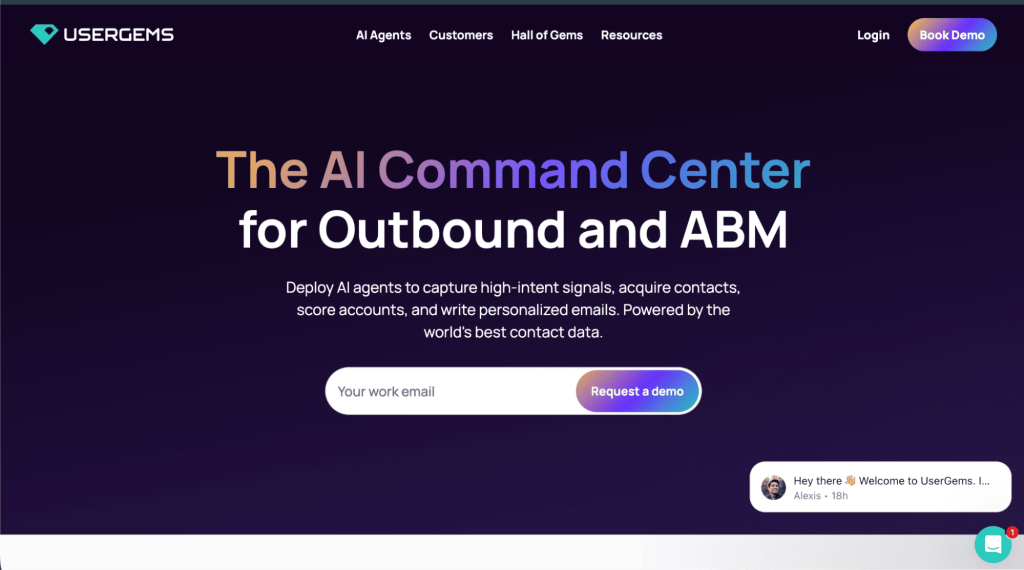
12. UserGems  

UserGems

Best for: B2B revenue, sales, and marketing teams targeting high-intent leads by monitoring job changes, promotions, and new hires within target accounts

Key features

  • Signals Hub centralizes all relevant buyer signals for scoring and prioritizing accounts in one place
  • Uses its own verified contact database to ensure high-quality, actionable data for targeting
  • Personalizes outbound campaigns and cold call talk tracks
  • Integrates natively with tools like Salesforce, HubSpot, Outreach, and Salesloft 

Pros 

  • AI scoring of accounts and contacts based on 600+ signals
  • Promises pipeline results tied directly to spend
  • Dedicated enablement teams provided for smooth onboarding and ongoing campaign optimization

Cons

  • Primarily focused on B2B, less relevant for other sectors
  • Pricing may be high for smaller businesses/startups

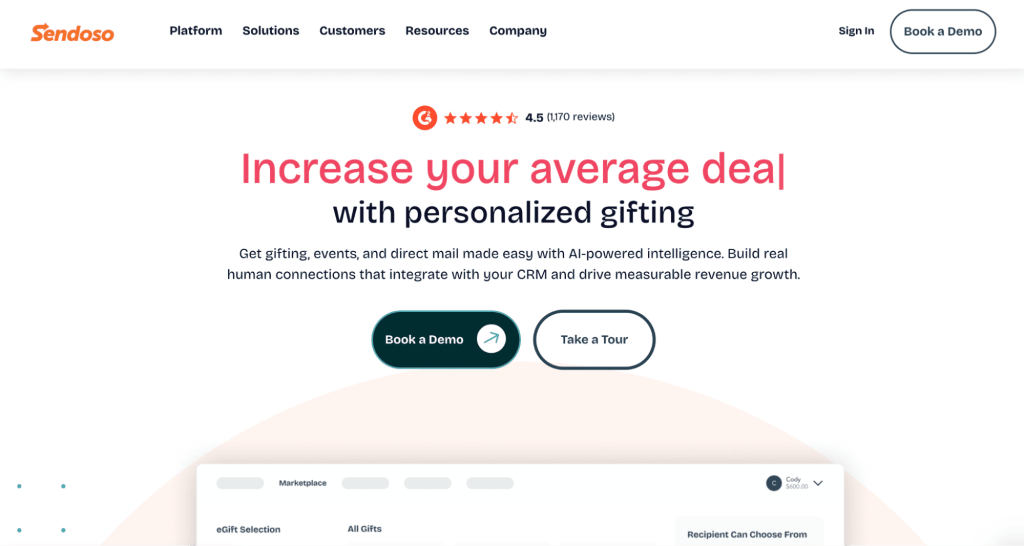
13. Sendoso  

Sendoso

Best for: Mid to large companies looking to boost sales, marketing, or customer engagement with personalized gifting 

Key features

  • Send eGifts, swag, virtual experiences, physical gifts, and handwritten notes to prospects, customers, and employees for standout outreach
  • AI-powered SmartSuite recommends what to gift, where to send it, and what message to include based on first-party data, signals, and recipient interests
  • Create and launch gifting campaigns for every stage of the customer journey using intent data and triggers
  • Ships to 165+ countries, with complete end-to-end logistics 

Pros

  • Ensures accurate recipient delivery with secure confirmation links and smart address sourcing
  • Real-time insights on engagement, conversion rates, pipeline influence, and campaign effectiveness
  • Reduces friction for leads by auto-enriching data and decreasing the need for long forms

Cons 

  • Occasional delivery delays and catalog complexity reported
  • Recipients often have to deal with some address confirmation friction

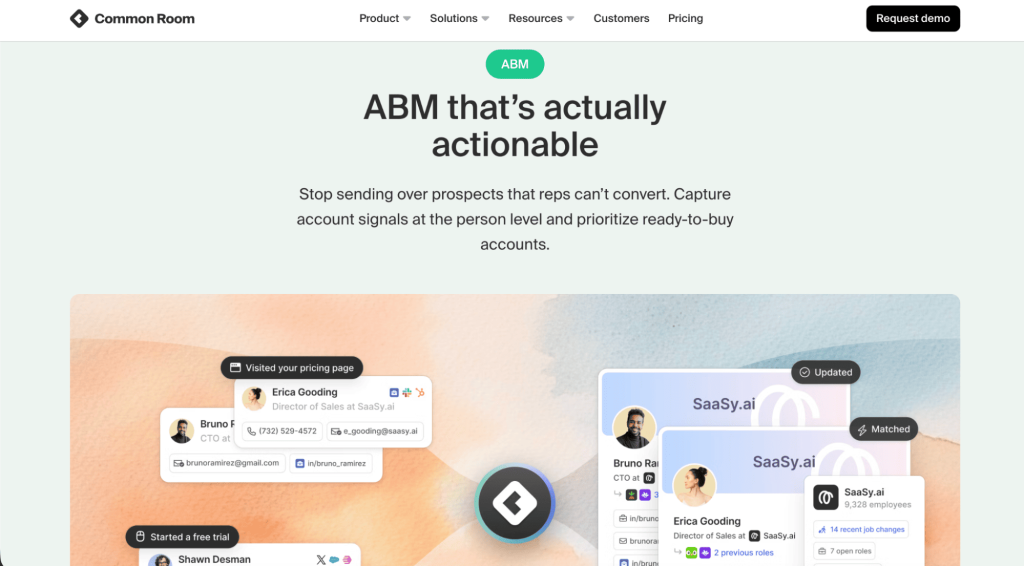
14. Common Room 

common room

Best for: Mid-sized to large companies focused on community-led growth and product-led growth 

Key features

  • RoomieAI™, the tool’s GTM AI agent, automates account research, prioritization, and personalized outreach
  • Detects job changes, website visits, dark funnel actions, product usage, and open source activity 
  • Person360™ is an AI-driven enrichment and identity resolution that matches anonymous signals to known buyers and provides waterfall enrichment for the best match rates
  • Configurable, transparent AI scoring for optimal prioritization of prospects and accounts

Pros

  • Comes with a Chrome extension for research and sourcing, plus tools for identity resolution and segmentation
  • Works seamlessly with major CRMs (Salesforce, HubSpot), sales engagement, and marketing platforms
  • Built with data privacy and compliance in mind

Cons

  • Steep learning curve with a complex interface
  • Data quality issues reported, especially with LinkedIn signals

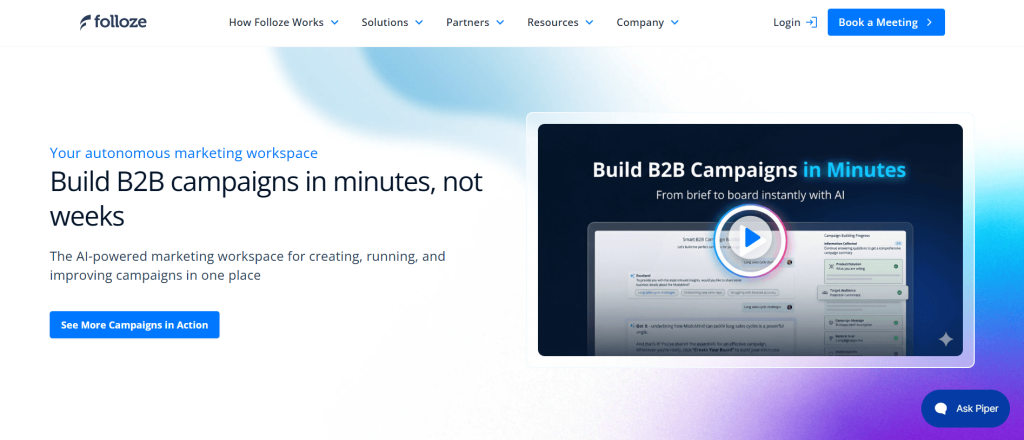
15. Folloze

Folloze as an abm tool

Best for: B2B organizations looking to scale personalized buyer experiences through an AI-powered autonomous marketing workspace.

Key features 

  • Autonomous Campaign Agent that generates microsites, landing pages, emails, and ad copy in minutes.
  • Activation Agent for real-time, behavior-based personalization and automated content recommendations across channels.
  • Insight Agent providing deep visibility into account-level engagement, buyer identity, and ROI measurement.
  • Seamless integration with major sales and marketing platforms, including HubSpot, Salesforce, and Salesloft.

Pros

  • Drastically reduces campaign build time (up to 50%) and accelerates overall execution speed by 5x.
  • Provides sales-ready signals and automated outreach triggers to align marketing and sales teams.
  • Proven impact on pipeline growth and reduction of sales cycles for enterprise B2B accounts.

Cons

  • The high level of automation may require a shift in established manual marketing workflows.
  • Optimized for account-based strategies and may be less effective for broad-market B2C campaigns.

How to choose the right ABM tool for your business?

Consider these factors when choosing an ABM tool:

  • Understand your business needs: Evaluate based on company size, industry, ABM maturity, budget, and key marketing goals like brand awareness, conversions, or revenue
  • Feature priorities: Match the tool to your core requirements. Focus on personalization (content customization, account-level targeting), integration (CRM, sales tools), data quality (account matching, enrichment), and analytics (engagement tracking, attribution)
  • Implementation and support: Consider how easy the tool is to implement, the learning curve, and the quality of vendor support
  • Test before committing: Always request a demo, free trial, or proof of concept to ensure the tool fits your needs in real-world scenarios
  • Compliance and integration: Ask about data privacy, technology compatibility, and how the tool integrates with your existing tech stack

How to implement ABM tools successfully to drive growth?

1. Start with clean, segmented data

Before diving into campaigns, ensure you have a solid foundation. 

First, segment your accounts based on relevant criteria (industry, size, behavior, buying stage).

Then, work with marketing to define a clear target account list (TAL) that aligns with your ICP.

2. Align sales and marketing

ABM success relies on collaboration between sales and marketing.

  • Agree on account definitions: Both teams need to be on the same page about which accounts are “target accounts”
  • Messaging consistency: Ensure sales and marketing use aligned messaging tailored to the needs of your target accounts
  • Shared metrics: Establish common goals, like account engagement and pipeline progression, to track ABM’s impact on revenue

3. Personalize at scale, but stay consistent

Use ABM tools to scale personalization across email, ads, and outreach, but maintain a consistent value proposition and core messaging.

Personalization should feel relevant to the account’s needs, but always tie it back to how your solution solves their specific challenges.

4. Orchestrate multi-channel campaigns

Work with marketing to launch multi-channel campaigns that include ads, emails, webinars, direct mail, and website personalization.

Each channel should reinforce the same message but be tailored for how each account interacts with it.

5. Track account-level engagement

Don’t just track individual leads; focus on account-level engagement. Use ABM tools to measure how different stakeholders within a target account are interacting with your content and campaigns.

Engage with multiple decision-makers across the account to drive deeper relationships and higher conversion potential.

6. Analyze performance and optimize

Dive into detailed reports from your ABM tools to track the effectiveness of campaigns and engagement metrics at the account level.

Regularly iterate and optimize based on what’s working, whether it’s adjusting messaging, targeting, or outreach tactics.

7. Measure ROI via pipeline and revenue attribution

Track how ABM efforts influence the sales pipeline and ultimately drive revenue. Focus on account engagement, conversion rates, and how accounts move through the funnel.

Adjust your spend and tactics based on which accounts are most engaged and show the highest potential for revenue generation.

Wrapping up: Why now is the time to choose your ABM tools wisely and start winning

ABM keeps proving its value because it brings clarity to a buying journey that feels noisier every year. 

When you know who’s actually in-market, what they care about, and how they’re behaving across channels, your outreach stops feeling random and starts driving real movement. 

The right toolset turns all of that into a repeatable system by providing sharper targeting and engagement that feels genuinely relevant to each buying team.

Every business is at a different stage, so choosing well matters. A high-growth startup might lean on automation and intelligence tools, while an enterprise team may need deeper integrations, advanced analytics, and stronger personalization. 

Matching the platform to your size, goals, and existing stack helps you avoid complexity you don’t need and unlock the features that actually move your pipeline forward.

Use this guide as your filter. Shortlist the tools that fit your motion. Book demos and trials. See how each platform handles your real workflows and how well it aligns with the way your team already operates. ABM works best when the tools feel natural to use and easy to adopt.

Teams that invest in ABM tools now build a pipeline engine that’s more predictable, more targeted, and easier to scale. The sooner you start, the sooner you see momentum!

Subscribe to our blog to receive the latest updates from the world of sales and marketing.
Stay up to date.

Related Articles

What’s New in Reply: New API, AI Custom Fields, LinkedIn Enrichment, and More

What’s New in Reply: New API, AI Custom Fields, LinkedIn Enrichment, and More

What’s New in Reply: New API, AI Custom Fields, LinkedIn Enrichment, and More
Top 12 Cognism Alternatives for Finding Leads in 2026

Top 12 Cognism Alternatives for Finding Leads in 2026

Top 12 Cognism Alternatives for Finding Leads in 2026
Mailtrap Review 2026: Is This Email API the Right Fit for Your Team?

Mailtrap Review 2026: Is This Email API the Right Fit for Your Team?

Mailtrap Review 2026: Is This Email API the Right Fit for Your Team?