
AI for Agencies in 2026: The Only Way to Book More Meetings

AI for Agencies in 2026: The Only Way to Book More Meetings

Most agencies don’t have a sending problem. They have a conversion problem.

They can launch campaigns, push thousands of emails, and keep activity high, but the calendar still stays too empty because the targeting is too broad, the messaging is too generic, and warm replies take too long to reach the right person.

AI for agencies now goes far beyond content drafts and call summaries. It can help find better-fit prospects, personalize outreach, run follow-ups, manage replies, and move interested leads toward the calendar without adding more SDR hours.

What’s preventing most agencies from booking more meetings?

Most agencies can send outreach at scale. The harder part is getting replies that turn into real sales conversations.

In many cases, the problem starts before the first email is sent. Weak targeting, poor personalization, inconsistent follow-up, and deliverability gaps can kill reply rates long before a prospect considers booking a call.

Here are the most common issues: 

  • They send generic outreach

Generic outreach gets ignored because buyers can spot a template in seconds.

Messages that open with “I help companies like yours…” or “I came across your profile…” don’t give the prospect a reason to care. They also make every follow-up harder because the first touch failed to create any relevance.

For agencies, this creates a simple problem: every generic email still costs money to send, but it adds very little to the pipeline.

  • Their prospect lists are too broad

Large lists look good in campaign planning, but they often produce weak results because most contacts were never a strong fit.

Agencies that don’t filter by industry, company size, role, buying trigger, tech stack, or intent end up spending sending capacity on people who are unlikely to reply, book, or buy.

High volume to the wrong audience doesn’t create pipeline. It burns domains, wastes SDR time, and makes campaign performance harder to diagnose.

  • Their follow-up breaks after the first email

A single cold email rarely does the job.

Research from RAIN Group found that it takes eight touches on average to generate a conversion, while top performers can do it in fewer touches because their cadence and targeting are stronger. Without a proper follow-up sequence, most potential replies never happen.

For agencies, weak follow-up usually means paid-for leads enter the sequence once, get one message, and disappear before the campaign has a real chance to work.

  • Cold email deliverability is harder to manage than it looks

Deliverability has become a core part of outbound performance.

Google and Yahoo introduced stricter requirements for bulk senders in 2024, including SPF, DKIM, and DMARC authentication. Microsoft also moved to stricter bulk sender requirements in 2025, which makes proper email infrastructure even more important for agencies managing outreach across multiple client domains.

If authentication, sending limits, bounce rates, or sender reputation are off, messages can get filtered before a prospect ever sees them.

  • They respond too slowly to positive replies

A warm reply has a short shelf life.

If a prospect replies with interest and waits two days for someone to follow up, the meeting becomes harder to book. Priorities shift, competitors respond faster, or the prospect simply loses momentum.

For agencies, slow reply handling is one of the easiest ways to lose meetings that the campaign already earned.

How does AI help agencies book more meetings?

AI for marketing agencies is no longer limited to generating copy or summarizing calls.

Used correctly, it can improve the parts of outbound that most directly affect booked meetings: targeting, personalization, follow-up, reply handling, and qualification.

AI finds better-fit prospects

Broad lists create weak campaigns because the audience is too loose from the start.

AI can help agencies define the ICP, filter prospects by firmographics and role, enrich missing data, and prioritize accounts based on intent signals such as hiring activity, funding, website visits, tech stack changes, or relevant company updates.

The result is not just a smaller list. It’s a cleaner list with stronger timing, clearer pain points, and a better chance of turning into real conversations.

AI turns research into stronger outreach angles

Good personalization is built on context, not just a first name or company name.

AI can scan prospect and account data, including job changes, company news, LinkedIn activity, hiring trends, recent funding, and website behavior, then turn those signals into a relevant opener or value proposition.

For agencies, this removes a major bottleneck. Reps don’t have to research every prospect manually, but the outreach can still reference something specific enough to feel written for that account.

AI builds follow-up sequences before leads go cold

Follow-up is where many agency campaigns lose momentum.

AI can help create full outreach sequences across email, LinkedIn, calls, SMS, or other relevant channels, then trigger each step based on timing, engagement, and reply status.

That gives agencies a more consistent cadence without relying on reps to remember every touch manually. The sequence keeps working until the prospect replies, books, or exits the workflow.

AI moves warm replies toward the calendar

Positive replies need fast handling, clear qualification, and an easy path to booking.

AI can classify replies, detect buying intent, answer common questions, handle objections, suggest next steps, and share calendar availability while the prospect is still engaged.

For agencies, this reduces the gap between “interested” and “booked.” Reps can step in where human judgment is needed, while AI handles the early reply management that often slows campaigns down.
The 2026 AI in Sales Playbook

AI is changing sales fast.

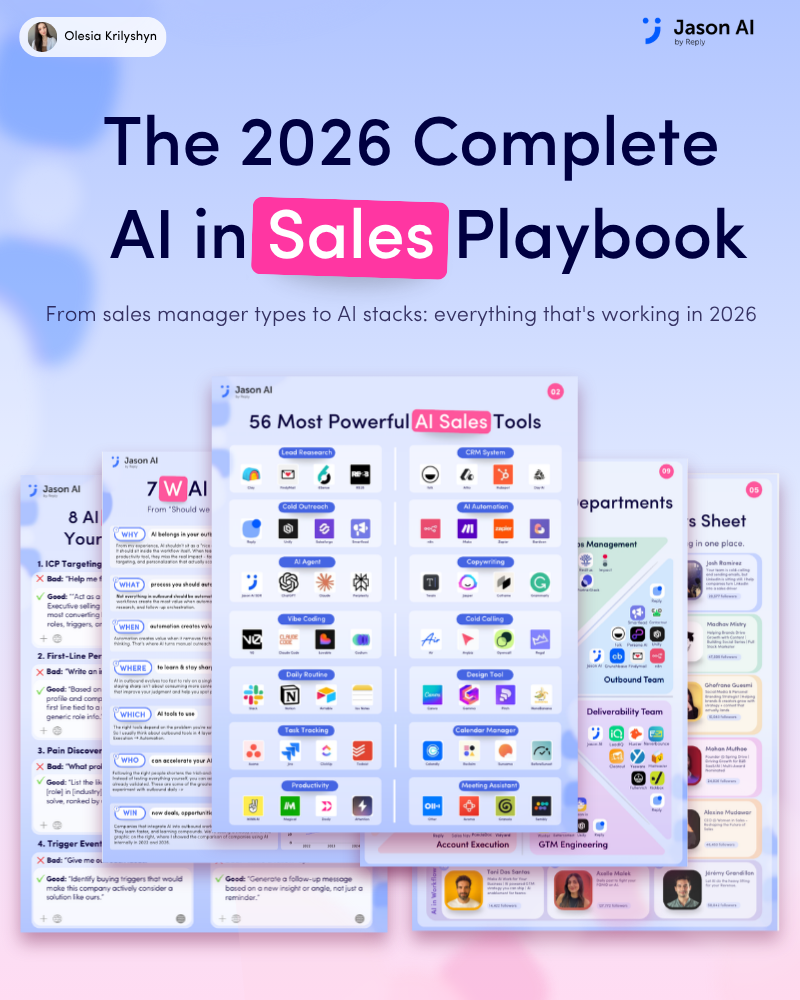
Inside, you’ll get the AI tools, workflows, prompts, and systems modern sales teams are using right now to prospect faster, automate busy work, and close more deals.

What’s inside this guide:

→ 50+ AI tools for prospecting, outreach, research, CRM, automation, and productivity

→ AI workflows sales teams use to save hours every week

→ A simple framework for deciding what to automate and what to keep human

→ 8 practical AI prompts for better prospecting and outreach

→ AI setups used across outbound, GTM, customer success, partnerships, and more

Get your free copy and start building a smarter sales workflow today.

Which AI tools for agencies can improve meeting booking?

Not every AI tool helps agencies book more meetings.

Some tools are built for content, reporting, design, or project management, while meeting booking depends on a more specific workflow: finding the right prospects, understanding their context, reaching them with relevant messages, following up consistently, handling replies, and moving interested leads to the calendar.

The most useful AI tools for agencies usually support at least a couple of these key functions:

AI tool type What it does Meeting impact
Prospecting AI Finds target accounts and contacts Builds better lists
Research AI Studies accounts before outreach Improves message relevance
Personalization AI Tailors emails and LinkedIn messages Raises reply quality
Sequence AI Runs follow-ups Reduces missed chances
Reply management AI Sorts responses Moves warm replies to calls
Deliverability AI Protects inbox placement Gets more emails seen
Meeting analytics AI Tracks campaign results Shows what books calls

The strongest setups don’t treat these as separate tasks — they connect prospecting, enrichment, personalization, outreach, reply management, and scheduling into one workflow, so agencies can move faster without losing context between tools.

How does Reply.io provide AI for agencies looking to book more meetings?

Reply.io is an AI sales engagement platform designed for agencies that need to run and automate lead generation and outbound workflows across multiple clients.

Reply brings the entire meeting-booking motion into one platform, with a native lead database, lead enrichment, multichannel outreach, AI personalization, deliverability, reporting, and its very own AI sales agent — Jason AI

For agencies, that means fewer handoffs, fewer tools and integrations to worry about, cleaner campaign control, and a clearer path from target account to booked call.

Reply’s dedicated agency plan offers multi-workspace management, unlimited clients and users, role-based access, client-facing dashboards, and even a white-label product for agencies that want to run outreach under their own brand.

AI prospecting with Reply Data and Jason AI

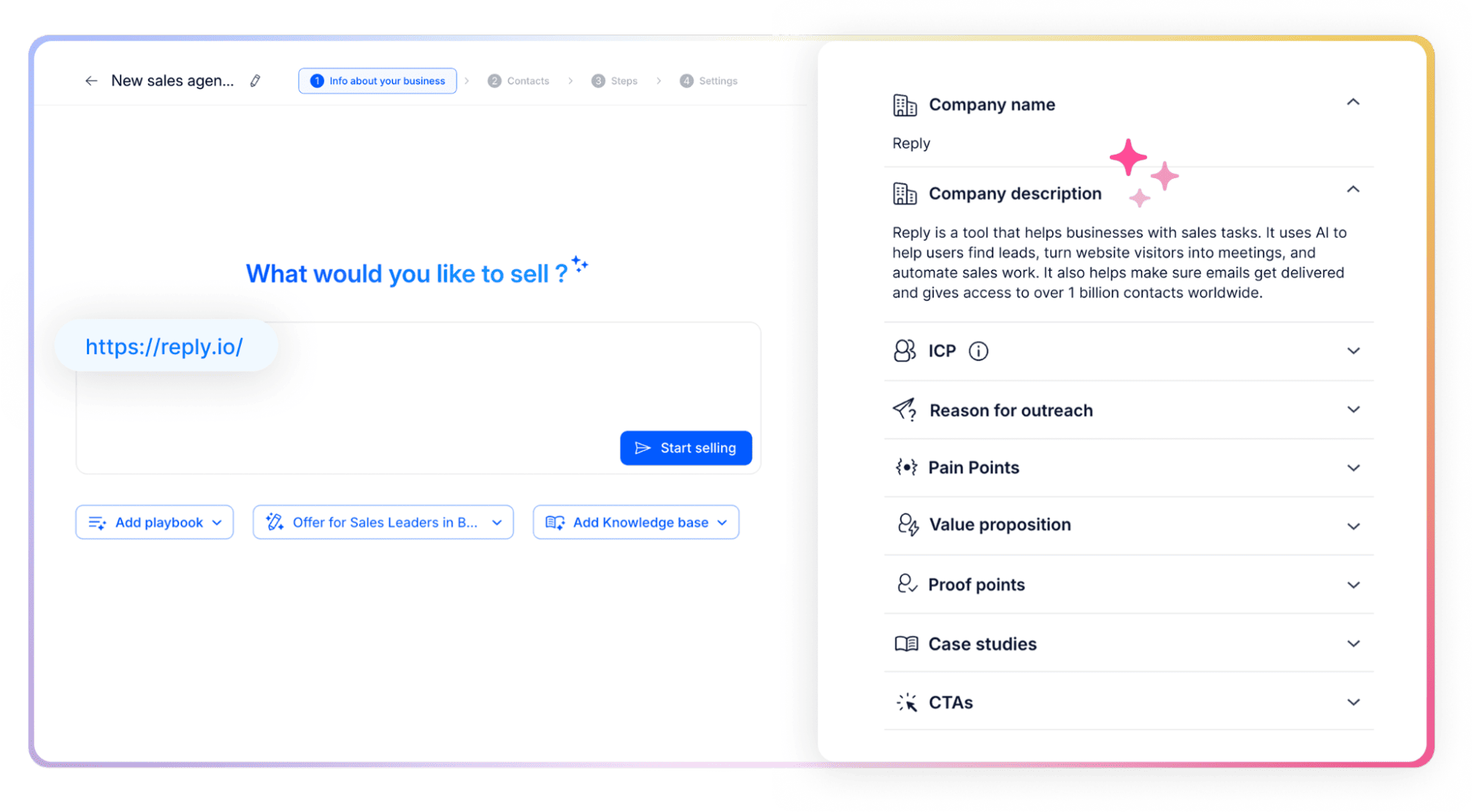
Agencies can use Reply Data and Jason AI to move faster from ICP to prospect list.

Jason AI learns everything about your business, strategy, and audience, and then helps define the ICP, finds targeted prospects, launches outreach, handles replies, and even books meetings. It runs in Autopilot or Copilot mode, so you get full control over how much work it does without human supervision. 

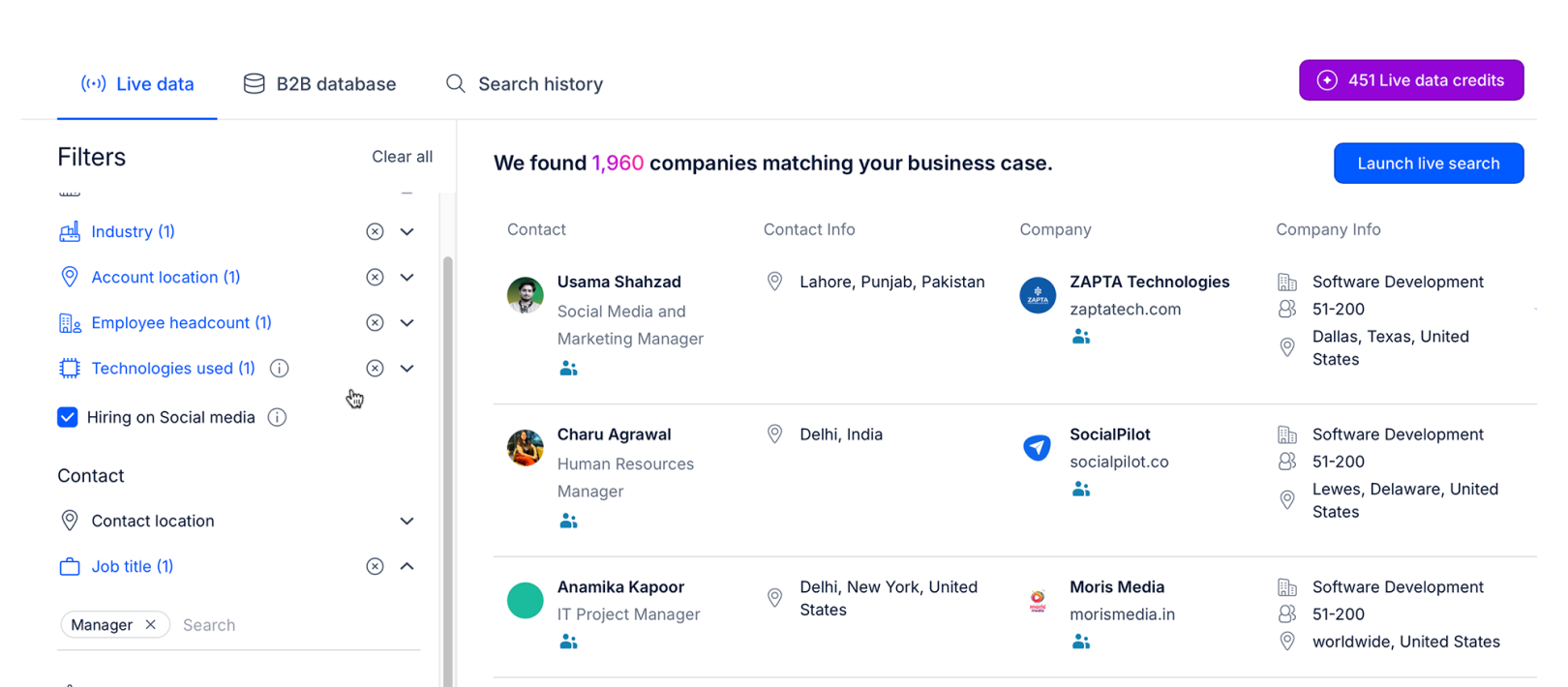
It works with Reply.io’s real-time B2B database, which gives agencies access to 1B+ prospects and accounts for building targeted campaigns, along with advanced search filters, built-in enrichment, email validation, and even intent signals

For agencies, the practical benefit is speed and consistency. Instead of manually pulling lists, checking fit, and passing contacts between tools, teams can build campaigns around clear ICP criteria, validate prospects earlier, and launch outreach before the pipeline slows down.

Multichannel sequences that keep follow-up consistent

Reply.io helps agencies build sequences across email, LinkedIn, calls, SMS, WhatsApp, and other workflow steps instead of relying on one channel to carry the entire campaign.

This is important for meeting booking because most prospects won’t respond to the first touch. A sequence can move through several steps, pause when a prospect replies, and keep follow-ups consistent across every client campaign.

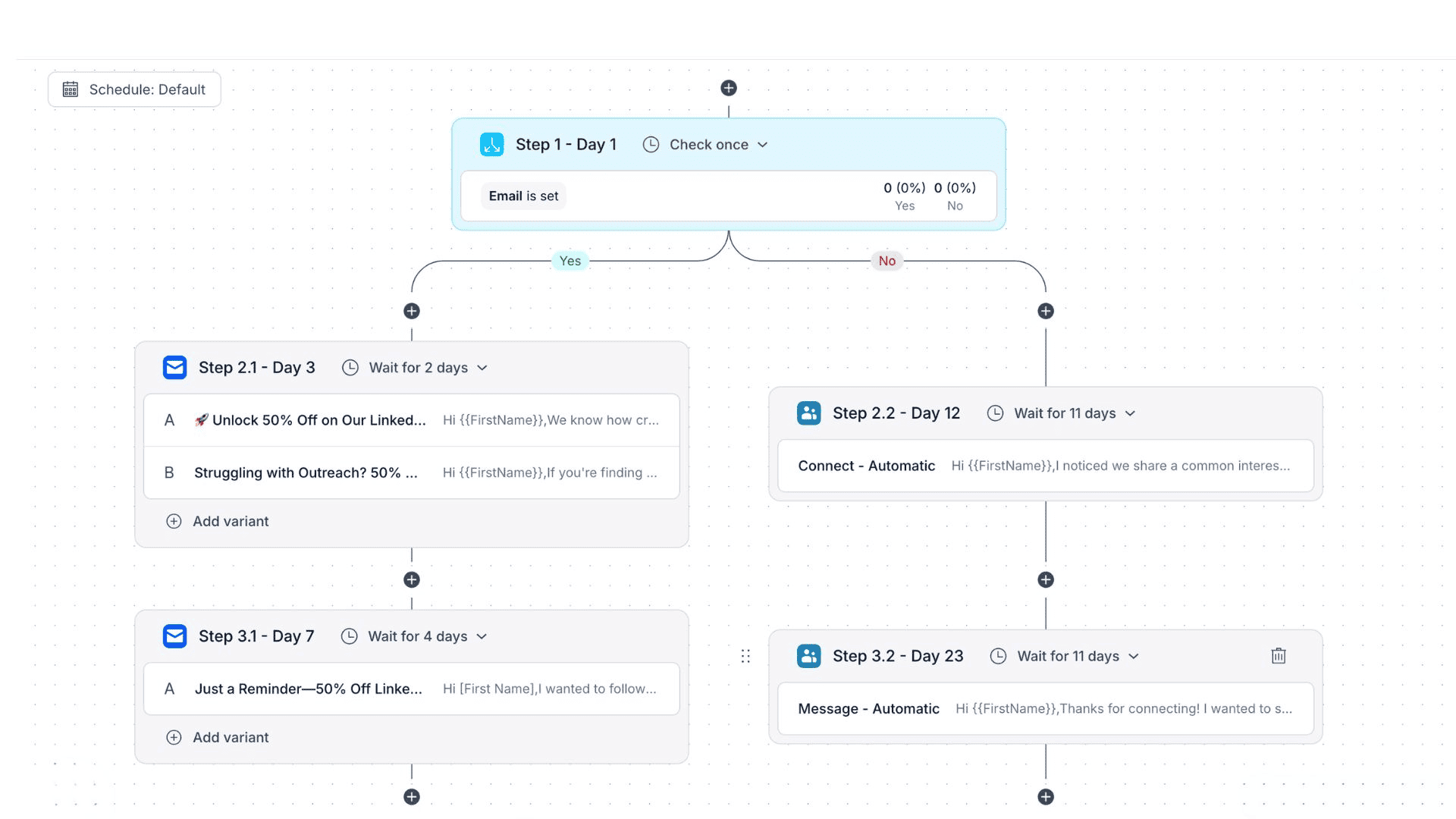
For example, an agency can start with a personalized email, follow up with an automated LinkedIn connection request, add a call task for high-value accounts, and trigger another email if there’s no response. The workflow stays structured and adjusts in real time, without reps manually tracking every next step.

how to auto send emails to a folder in gmail with conditional sequences

AI personalization and variables

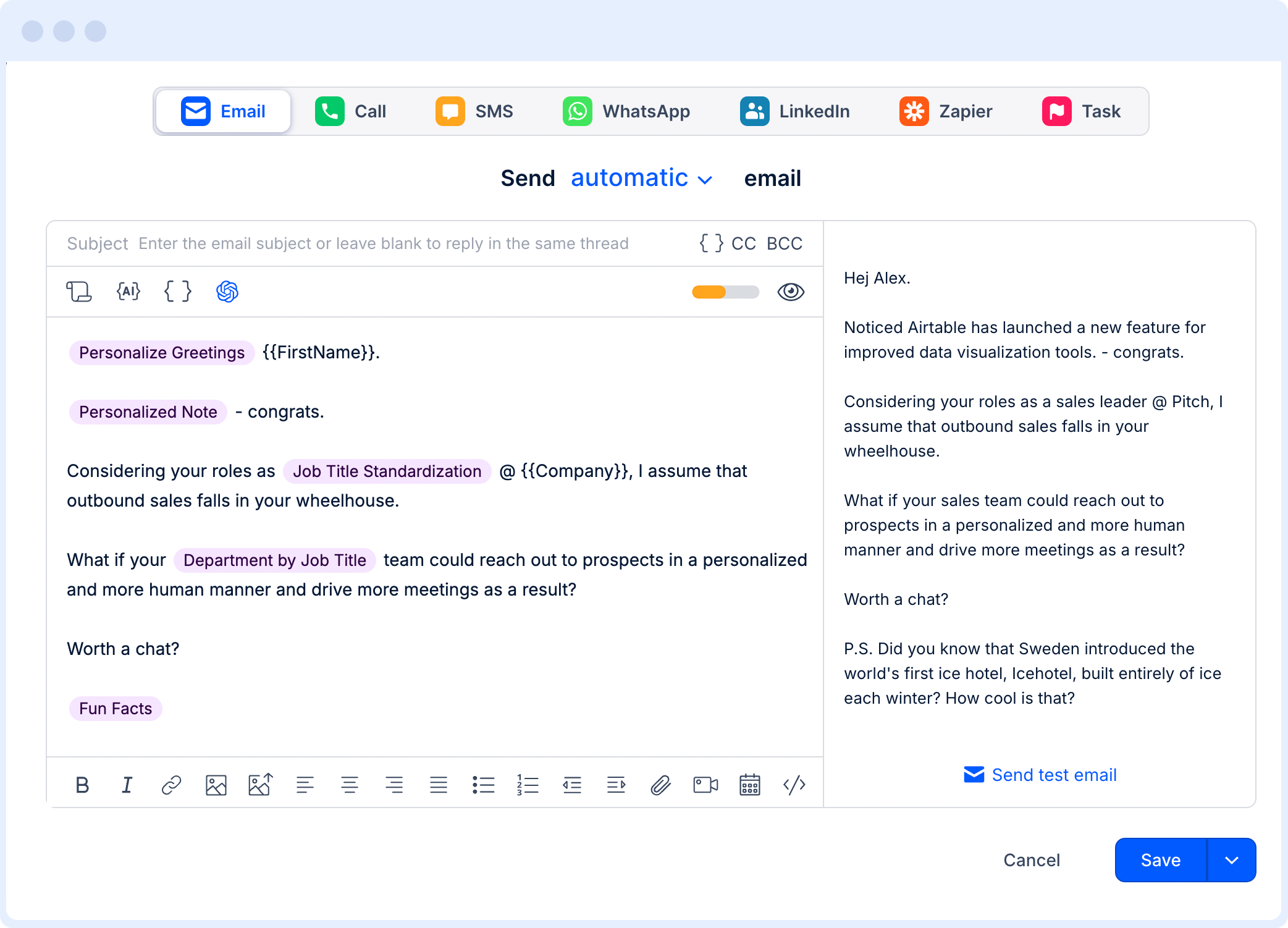
Reply’s AI engine personalizes every email, follow-up, and LinkedIn message based on the uncovered and enriched data, while also offering custom AI Variables, so agencies can create their branded templates, while Reply handles the research to fill in those gaps for each individual lead:

AI personalization

For example, an agency can personalize an opener around a company update, a hiring signal, a LinkedIn activity, or a specific pain point tied to the prospect’s role. The core sequence remains scalable, but the message still has enough context to feel relevant.

This helps agencies protect both quality and speed — reps don’t have to research every contact manually, while clients still get campaigns that go beyond basic name and company-name personalization.

AI reply handling and meeting booking

Positive replies lose value when they sit in the inbox for too long.

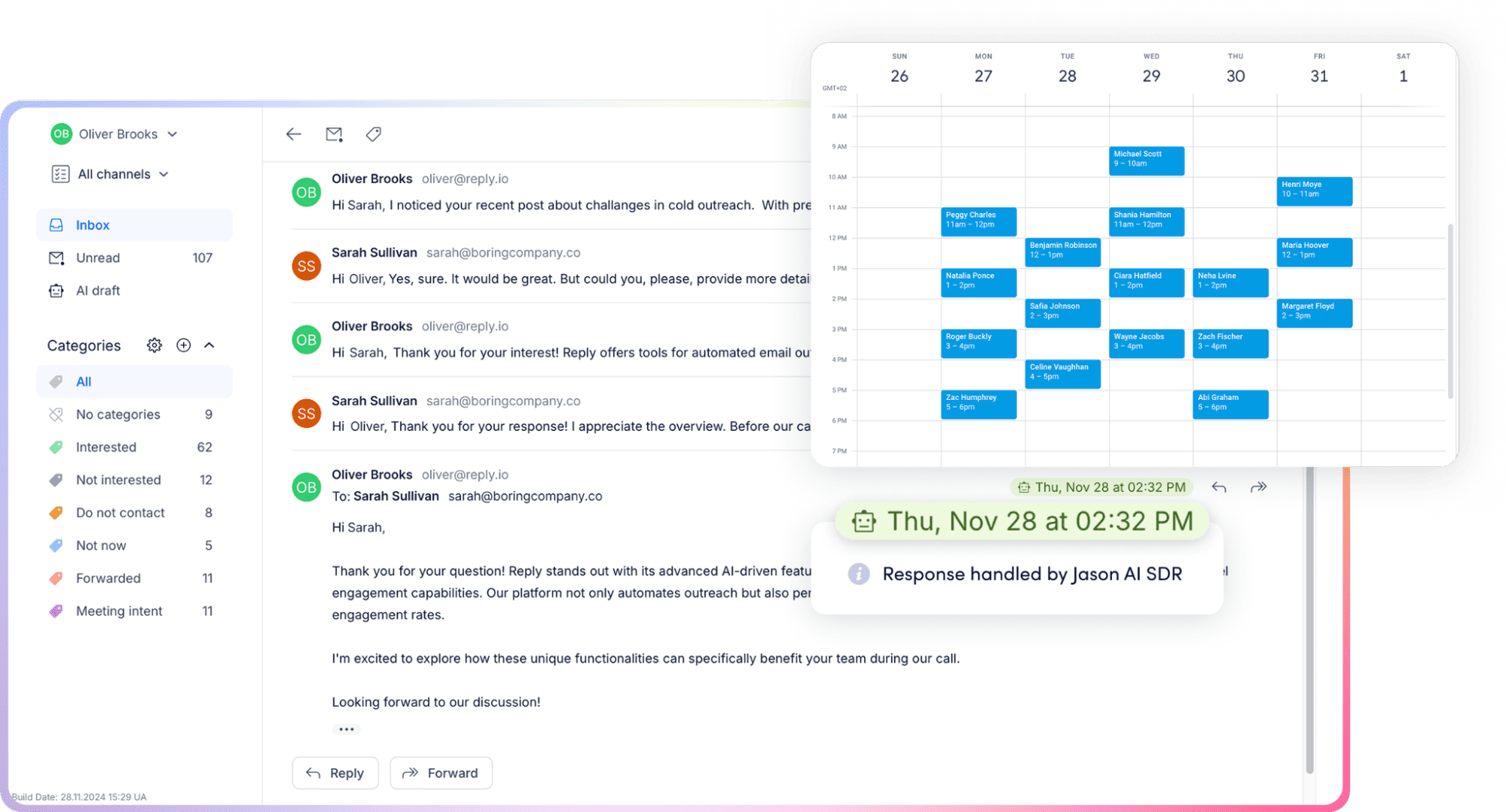
Reply.io helps sort and manage replies so teams can focus on interested prospects first. Jason AI can also handle those responses, answering questions, working with objections, and even moving qualified prospects toward available calendar slots.

Schedule meetings automatically with Jason AI SDR ai tool for market research

For agencies, this shortens the gap between interest and booking, so a prospect who replies with buying intent can be engaged while the conversation is still warm, instead of waiting for a rep to notice the thread later.

Deliverability tools for multi-client outreach

Deliverability has a direct impact on booked meetings because a message that lands in spam creates no pipeline.

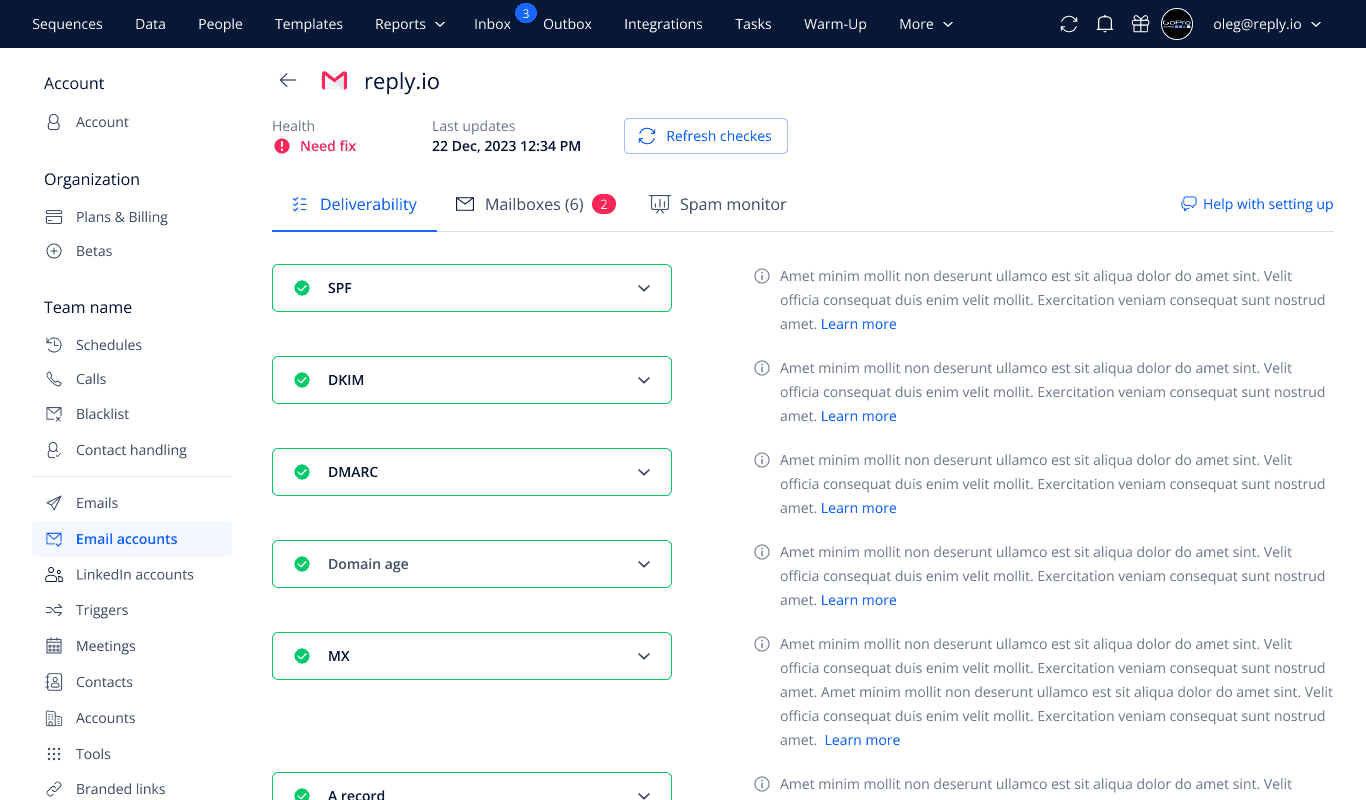
Reply comes with the entire email deliverability toolstack, including warmup, spam monitoring, mailbox management, infrastructure checks for SPF, DKIM, DMARC, and sending limits. 

For agencies running outreach across several client domains, this helps reduce the risk of one weak setup damaging campaign performance, or what’s worse — company domains. Teams can manage sending more safely, monitor mailbox health, and protect inbox placement as the volume grows.

Analytics for booked meetings and campaign performance

Agencies need to know which campaigns create meetings, not just opens and clicks.

Reply.io gives teams full visibility into outreach performance across sequences, channels, replies, interested leads, meetings, and conversions.

That makes it easier to compare client campaigns, cut weak steps, improve messaging, and double down on the channels that actually create calendar slots.

For agencies, this turns reporting into an optimization loop rather than a monthly activity recap.

How to build an AI meeting-booking workflow in Reply.io

A strong AI meeting-booking workflow needs three things before automation starts — a clear offer, a tight ICP, and sequence logic that moves interested prospects toward the calendar without losing context.

Here’s how to build it with Reply.io:

Step 1: Define the offer and meeting reason

Start with the reason someone should take the meeting.

Before building the workflow, define what you help clients achieve, who you help, and why the conversation is worth their time. A vague offer creates weak targeting, weak personalization, and a list that looks fine on paper but fails in the inbox.

A simple format works best:

We help [specific audience] solve [specific problem] so they can [specific outcome].

That statement becomes the foundation for your ICP, prospect filters, messaging angle, and CTA.

Step 2: Turn the offer into a clear ICP

Use Reply.io’s ICP builder to translate the offer into concrete filters: industry, company size, geography, job title, seniority, department, and other criteria that define a good-fit account.

The tighter the ICP, the better the rest of the workflow performs. 

As his first task, Jason AI helps you build your ICP, and then learns from all of your existing sales playbooks, rules, internal docs, and so on. 

All this helps Jason source more relevant leads, AI Variables have better context to work with, and your sequence speaks to a narrower pain point instead of trying to cover everyone.

Step 3: Build and validate the prospect list

Once the ICP is set, use Jason AI and Reply Data to source matching prospects from Reply.io’s B2B database.

This step should also include enrichment and email validation before contacts enter a sequence. Clean data improves deliverability, reduces wasted sends, and gives AI more context for personalization.

For agencies, this is where a lot of manual work disappears. Instead of pulling lists, enriching them in another tool, checking emails elsewhere, and uploading CSVs, the list can move straight into the outreach workflow.

Step 4: Create the multichannel sequence

Build a sequence that combines the right channels for the audience: email, LinkedIn, calls, SMS, WhatsApp, or manual steps.

Multichannel outreach

Reply.io’s sequence builder lets you control timing, channel order, follow-ups, and behavioral triggers. For example, a prospect can receive a LinkedIn touch after opening an email, a call task after showing stronger engagement, or a different follow-up if there’s no response.

That keeps the cadence consistent without forcing reps to manually track every next step.

Step 5: Personalize the message with AI Variables

Create your own brand templates with custom AI Variables to personalize the parts of the message that affect reply rates: opener, pain point, value prop, CTA, or follow-up angle. Reply’s AI engine will take care of the research and fill in those gaps. 

The goal is to connect the meeting reason to something specific about the prospect or account, such as a hiring signal, company update, funding round, website visit, LinkedIn activity, or role-specific challenge — all of which Reply and Jason AI can pick up, keeping outreach scalable without reducing every email to the same template.

Step 6: Classify replies and route intent

Once replies start coming in, Jason AI can help classify intent and move each thread into the right path.

Interested replies can move toward calendar booking. Negative replies can exit the sequence. Neutral or unclear replies can get a relevant follow-up. Questions or objections can be handled before a rep steps in.

This protects warm conversations from sitting in the inbox while giving reps more time for leads that are already qualified.

Step 7: Measure meetings, not activity

Use Reply.io analytics to track the numbers tied to pipeline: interested replies, booked meetings, channel performance, sequence conversion, and trial or deal movement where relevant.

Opens and clicks can help diagnose campaign issues, but they shouldn’t be the main scoreboard. For agencies, the real question is which ICP, channel, message, and sequence path creates the most qualified meetings.

Use that data to adjust targeting, rewrite weak steps, shift channels, and double down on what produces calendar slots.

How to choose AI tools that actually help agencies book more meetings

There are hundreds of AI tools for agencies, but only a small group directly improves meeting booking. The right platform should support the full path from prospect selection to confirmed calendar slot, not just generate copy or summarize calls.

Use these criteria before committing to any tool.

Start with prospect data

AI outreach is only as good as the list behind it. If the platform can write emails but can’t help you find and validate prospects, you still need separate tools for sourcing, enrichment, and verification.

Prioritize tools that combine contact data, account filters, enrichment, and email validation. This keeps the workflow cleaner and reduces the risk of building campaigns around outdated or poor-fit contacts.

Check for multichannel sequencing

Most meetings don’t come from one email.

Look for a tool that can run structured sequences across email, LinkedIn, calls, SMS, WhatsApp, or other relevant touchpoints. It should also adjust based on prospect behavior, so opens, replies, no-shows, and non-responses trigger the right next step automatically.

For agencies, this is what keeps follow-up consistent across multiple client campaigns.

Look for signal-based personalization

Basic personalization is no longer enough.

The tool should use real buyer context, such as job changes, hiring activity, funding, company news, website visits, LinkedIn activity, or relevant account signals. More importantly, it should turn those signals into a relevant outreach angle, not just insert a random line into a template.

The strongest AI tools help connect the reason for outreach to the reason someone might take a meeting.

Prioritize reply handling and routing

Getting replies is only useful if they are handled quickly and correctly.

A strong AI meeting-booking tool should classify replies by intent, separate interested prospects from negative or neutral responses, and move warm conversations toward the calendar. If every reply still lands in one shared inbox for your team to sort manually, the tool hasn’t removed the bottleneck.

Review deliverability before scaling

High-volume outreach depends on inbox placement.

Before scaling campaigns, check whether the platform supports email validation, warmup, sending limits, domain health, and SPF, DKIM, and DMARC checks. This is especially important for agencies managing several client domains, where one weak setup can affect campaign performance for weeks.

Measure meetings, not activity

Open rates and clicks can help diagnose issues, but they don’t prove revenue impact.

The reporting dashboard should show interested replies, booked meetings, sequence performance, channel performance, and conversion rates. That gives agencies the data to improve campaigns based on outcomes instead of optimizing for surface-level engagement.

Turn AI outreach into booked meetings

Booking more meetings comes down to better targeting, stronger personalization, consistent follow-up, and faster reply handling.

Reply.io brings all those moving pieces into one coordinated and fully automated workflow. Agencies can also use Jason AI to actually run the execution, as it can find relevant prospects, personalize outreach, run multichannel sequences, manage replies, and move interested leads toward the calendar without adding any manual work. 

Start your free trial with Reply.io and see it in action right away! 

FAQ

How are agencies using AI?

Agencies use AI to improve the parts of outbound that usually slow teams down: prospecting, enrichment, personalization, sequencing, reply sorting, and meeting booking. The biggest value comes when these steps work together instead of sitting in separate tools.

What is the best AI tool for marketing agencies?

The best AI tool for marketing agencies is one that helps create pipeline, not just content. For outbound-focused agencies, that means prospect data, multichannel sequences, AI personalization, reply management, deliverability, and scheduling in one workflow.

Can AI book meetings automatically?

Yes. AI can respond to interested prospects, handle basic questions, manage the conversation, and share available calendar slots. An AI sales agent like Jason AI helps move warm replies toward booked meetings while your team focuses on qualified conversations.

How does AI personalize outreach for different clients?

AI can use prospect and account data such as job changes, hiring activity, funding, company news, website visits, or LinkedIn activity to create more relevant outreach angles. Reply.io’s AI Variables help apply that personalization across client campaigns without writing every message manually.

How do agencies manage AI outreach for multiple clients?

Agencies need separate workspaces, clean data separation, role-based access, and client-level reporting. Reply.io’s agency plan is built around that structure, so teams can manage multiple client campaigns without mixing contacts, sequences, or performance data.

Subscribe to our blog to receive the latest updates from the world of sales and marketing.
Stay up to date.

Related Articles

GTM Engineering With and Without AI in 2026 | All You Need to Know

GTM Engineering With and Without AI in 2026 | All You Need to Know

GTM Engineering With and Without AI in 2026 | All You Need to Know
How to Use AI as Your GTM Strategist in 2026: Practical Steps

How to Use AI as Your GTM Strategist in 2026: Practical Steps

How to Use AI as Your GTM Strategist in 2026: Practical Steps
The Best 11 Agency Management Software in 2026 to Book More Meetings

The Best 11 Agency Management Software in 2026 to Book More Meetings

The Best 11 Agency Management Software in 2026 to Book More Meetings