
How to Use AI as Your GTM Strategist in 2026: Practical Steps

How to Use AI as Your GTM Strategist in 2026: Practical Steps

Most teams building their GTM strategy will undoubtedly turn to AI, but it takes more than simply finding a few AI platforms. 

That’s a start, and the tools you pick will have a direct impact on the overall success of your GTM strategy, but what’s really key here is creating a full-on system. A system that helps figure out exactly who to target, why now, exactly what to say, which channel to use, and what should happen next after every prospect action. 

AI won’t replace human judgment (and honestly, it shouldn’t), but it does an excellent job at connecting all the scattered pieces of your go-to-market motion, such as data, buying signals, workflows, outreach, replies, and pipeline feedback. 

In this guide, we’ll cover how to use AI as your GTM strategist in 2026, including ICP work, intent signals, multichannel execution, ABM, personalization, and continuous system refinement.

What is a GTM strategy, and what changes when AI enters the picture?

A go-to-market strategy is the operating plan for bringing a product, offer, or new segment to market. It clearly defines who you’re selling to, what problem you solve, why buyers should care right now, which channels you’ll use, how different teams will work together, and which metrics objectively show how well the GTM motion is working.

A strong GTM strategy answers very practical questions:

  • Who is the ideal customer?
  • Which pain points are urgent enough to create action?
  • Which buyer roles influence the deal?
  • What message should lead the conversation?
  • Which channels create the best path to pipeline?
  • How do sales, marketing, customer success, and RevOps stay aligned?

This is noticeably broader than a sales strategy. A sales strategy focuses mostly on how reps convert qualified opportunities into revenue, while a marketing strategy focuses on awareness, demand, education, and conversion. 

GTM strategy connects both into one revenue-driven motion. 

Buyer behavior changes quickly, new competitors keep popping up (especially with the rise of “vibe coding”), budgets shift, buying committees get larger, and prospects leave digital breadcrumbs long before they ever talk to sales.

So modern GTM strategy has to behave like a living system, staying flexible and adjusting based on CRM data, website activity, intent signals, campaign performance, customer feedback, and conversations. 

What is an AI GTM strategy, and how does it transform GTM?

An AI GTM strategy is a connected approach where AI helps teams research markets, sharpen ICPs, prioritize accounts, personalize messaging, automate workflows, analyze replies, and improve GTM execution over time.

The important word here is “connected.” There’s a big difference between having AI tools and having an actual AI go-to-market strategy. 

A team can use AI to write cold emails and still have a weak GTM motion if the targeting is off, the timing is random, and the channel strategy is all over the place.

AI becomes valuable when it improves the decisions behind execution, not just the speed of execution itself. The real goal isn’t to automate everything for the sake of it but to build a smarter GTM system with less manual work, cleaner prioritization, and faster feedback loops.

A real AI-powered GTM strategy usually has three distinct yet interconnected layers — strategy, engineering, and execution.

1. AI changes GTM strategy from static planning to live decision-making

Traditional GTM planning often starts with annual targets, fixed personas, broad segments, and quarterly campaign reviews. 

That’s fine in theory. In reality, buyers change faster than most teams update their playbooks.

At the strategy level, AI helps teams spot markets that actually fit, tighten the ICP, test value props, and find segments with real revenue potential. 

AI lets GTM teams continuously monitor patterns, surfacing accounts that are actively hiring, expanding into a new region, adding specific technology, visiting high-intent pages, engaging with competitor content, or showing category-level interest.

So instead of treating ICP as a one-time document, AI turns it into a dynamic model that keeps learning from the market.

2025 Playbook: Convert Competitors` Fans Into Hot Leads

Stop chasing cold leads.
Start talking to people who already want what you sell.

Your competitors’ followers?
They know the problem. They’re paying attention.
Some are even looking for something better, right now.

This playbook shows you exactly how to turn them into hot leads:

→ Find and pull competitor followers in minutes
→ Clean, segment, and enrich your list for max fit
→ Launch outreach that’s personal, not pushy
→ Automate follow-ups so no lead slips away

2. AI changes GTM engineering from manual handoffs to trigger-based workflows

At the engineering level, AI helps turn GTM logic into actionable workflows. This is where signals, lead scoring, routing, enrichment, sequences, CRM updates, and reporting become part of one connected system.

GTM engineering is the system design behind revenue execution, connecting data, tools, workflows, triggers, ownership, and measurement.

Without AI, many GTM workflows depend on manual handoffs, where, for instance, marketing passes leads to sales, sales checks LinkedIn, RevOps updates fields, reps then build lists, managers review results later…and so on. You get the idea.

With AI, the workflow can become entirely trigger-based.

For example, when a target account visits a pricing page, the system will identify the company, enrich relevant contacts, check fit, assign ownership, launch a relevant sequence, and alert the right person while the interest is still fresh.

3. AI changes GTM execution from generic campaigns to adaptive plays

At the execution level, AI helps teams move much, much faster while staying relevant and still offering a tailored buyer journey. It can support prospecting, outreach personalization, multichannel sequencing, reply handling, meeting scheduling, campaign analysis, and ongoing optimization.

Generic campaigns treat large groups of prospects the same way, whereas adaptive GTM plays adjust based on segment, role, trigger, channel, and stage.

A CFO at a mid-market SaaS company probably doesn’t want another “grow faster” pitch. What they care about is margin, efficiency, and whether this actually saves money. The VP of Sales is looking at it differently — pipeline, rep capacity, how quickly the team can get more meetings on the board. RevOps will have their own angle too.

Tools like Reply.io and Jason AI perfectly fit into this execution layer for teams that want to fully automate prospect discovery and multichannel outreach, while feeding their system real-time B2B data to enrich accounts, personalize messages, and prioritize leads.

AI tools vs AI GTM strategy

AI tools are great at solving tasks, but an AI GTM strategy connects those tasks into a unified revenue motion.

A strategy-led approach may sound more like this: “Use AI to identify the right segment, gather inbound leads from marketing, detect the different buying triggers, choose the right value proposition, build a multichannel sequence, personalize by role, follow up based on behavior, and feed the results back into future targeting.”

It may be quite complicated to build, but the good news is that once it’s up and running — that entire system is fully automated and improving itself in real time. 

GTM workflow Without AI With AI GTM strategy
ICP Static persona docs Dynamic segments based on fit, behavior, and signals
Prospecting Manual list building AI sourcing, enrichment, scoring, and validation
Outreach Same sequence for broad lists Personalized multichannel plays by segment and trigger
Handoffs Slow manual routing Automated alerts, ownership, and next steps
Learning Monthly reporting Continuous optimization from live performance data

How to use AI as your GTM strategist: 6 practical steps

Before AI can act like a GTM strategist, it needs to work from the same inputs a strategist would use: customer data, market context, positioning, signals, workflows, and performance feedback. The steps below show how to turn AI from a task-level assistant into a practical GTM system that helps your team decide where to focus, what to say, when to act, and how to keep improving.

Feed AI your GTM context before asking for recommendations

Most weak AI outputs come from weak inputs, and the same goes for your GTM strategy. 

Before using AI for GTM strategy, give it the same context you’d give a real strategist: product descriptions and internal docs, market research, use cases, strongest customers, disqualifiers, competitors, pricing model, proof points, sales objections, and current performance data.

So when it comes to determining what type of buyers to target, the engineering logic will be something like:

“Based on our product, current customers, closed-won patterns, lost-deal reasons, and target market, identify three ICP segments we should prioritize for outbound next quarter. Include the likely pain points, buying triggers, decision-makers, objections, and recommended channels for each.”

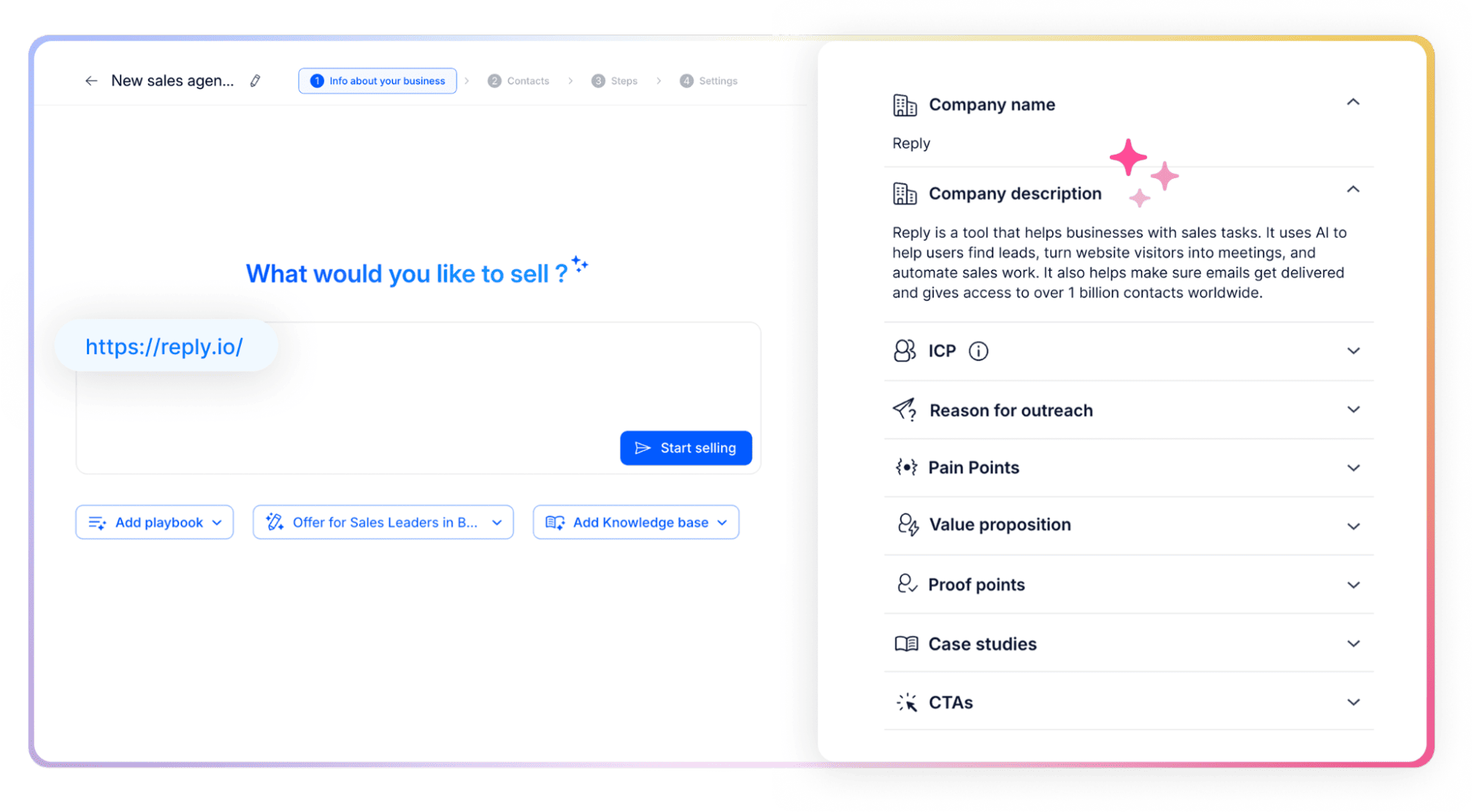
This is also where AI sales agents start their journey. Jason AI, for example, starts its operations by first learning about your product, strategy, and audience, and then helping you decide on your most relevant ICP. 

Every step afterward, be it finding potential customers or crafting tailored messages, will always be aligned with your company’s ICP, offer, tone, and custom sales process.

A good rule of thumb is to treat AI like a junior AI GTM strategist with strong analytical capacity — it can help a lot, but only after it fully understands the business. 

Taking it a step further, AI can help break a large ICP into micro-segments based on firmographics, technographics, hiring activity, funding events, website behavior, intent signals, role-specific pain points, and competitive context.

Some examples can include:

  • Series A SaaS companies hiring SDRs and using HubSpot.
  • Agencies adding outbound services but lacking dedicated sales operations.
  • Cybersecurity companies expanding into Europe and hiring regional sales roles.
  • B2B companies with rising website traffic but low demo conversion.

Each segment needs a different GTM play because the pain is different, the urgency is different, and the message should be different too.

Build a signal model around buying intent, not vanity engagement

Many GTM teams still overvalue weak signals. Email opens, ebook downloads, and one-off page visits may show some interest, but they don’t always show buying intent.

A strong AI GTM strategy separates vanity engagement from meaningful buying signals.

High-value signals can include pricing page visits, demo page visits, competitor comparison activity, category intent, hiring for relevant roles, funding, expansion, technology changes, multiple stakeholders engaging from one account, or repeated LinkedIn engagement from target personas.

Simply tracking everything isn’t the answer, as that can turn into chaos very quickly.

The goal is to identify the key signals that actually correlate with your audience, your market, and your product.

Start with five to seven signals. Compare them against closed-won deals, qualified opportunities, and high-quality meetings. Then use AI to prioritize accounts where several of those signals appear together.

For example, a company that matches your ICP, recently raised funding, and visited your website page deserves a completely different motion than a company that opened one email.

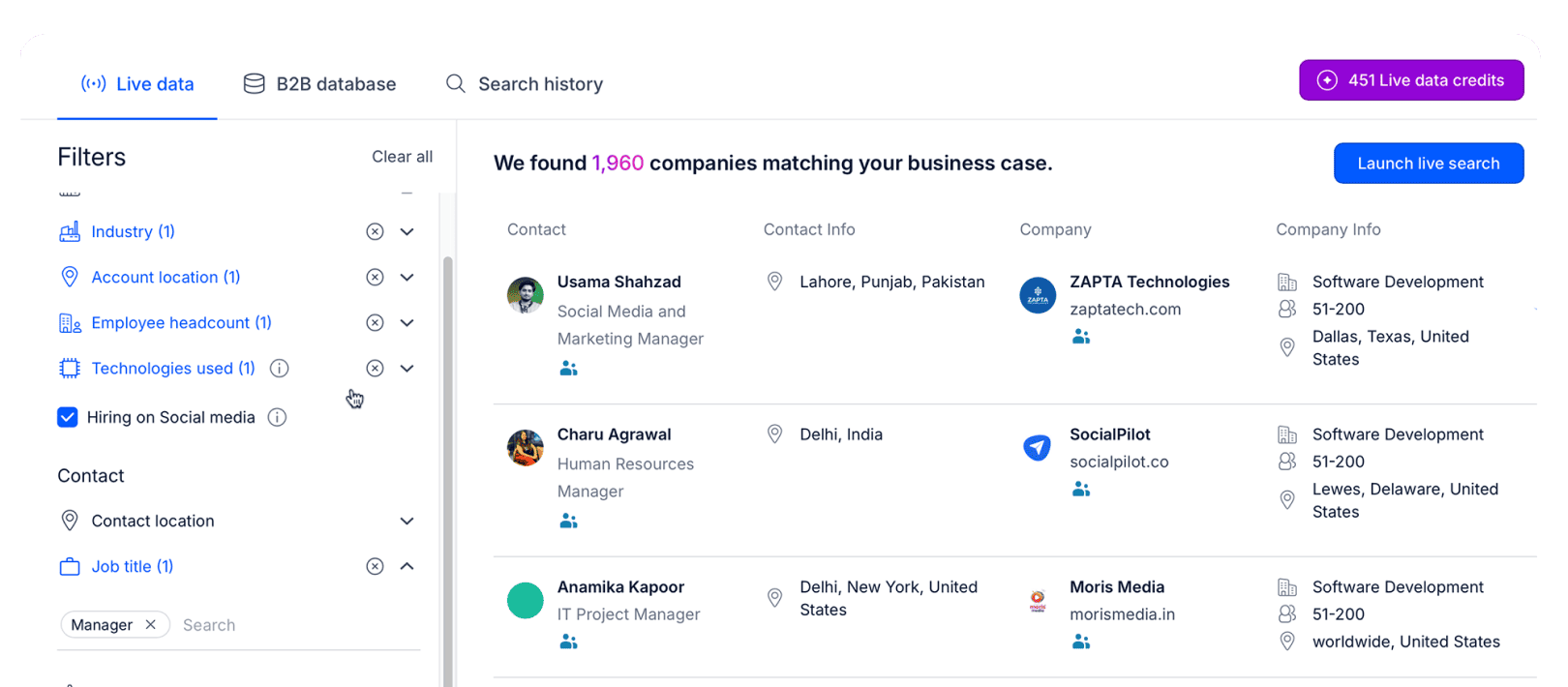
If you’re using an AI sales platform like Reply.io to build your GTM engine, you’ll have this feature baked into your system, as you also get a native lead database with over 1 billion contacts and accounts, lead enrichment, and B2B intent signals, all under one roof.

data in Reply.io as an extra to your personal CRM

Turn AI research into positioning and message-market fit

Finding the right accounts is just step 1. The real challenge is leveraging AI to help explain why those accounts should care.

Use AI to analyze sales calls, email replies, lost-deal notes, competitor reviews, support tickets, website behavior, content engagement, and CRM notes. Then look for patterns in how customers actually describe their problems:

  • Which pain points appear repeatedly?
  • Which objections slow deals down?
  • Which use cases convert fastest?
  • Which competitors show up most often?
  • Which outcomes do buyers actually describe?

This research should feed positioning and message-market fit, so different buyer segments and roles get separate, tailored GTM plays based on concrete data. 

On top of that, it’s equally important to make sure the prospect, company, and enriched data, as well as the intent signals uncovered from the previous steps, are effectively used in your emails, follow-ups, and LinkedIn messages. Doing this manually, as you can imagine, is painful to say the least.  

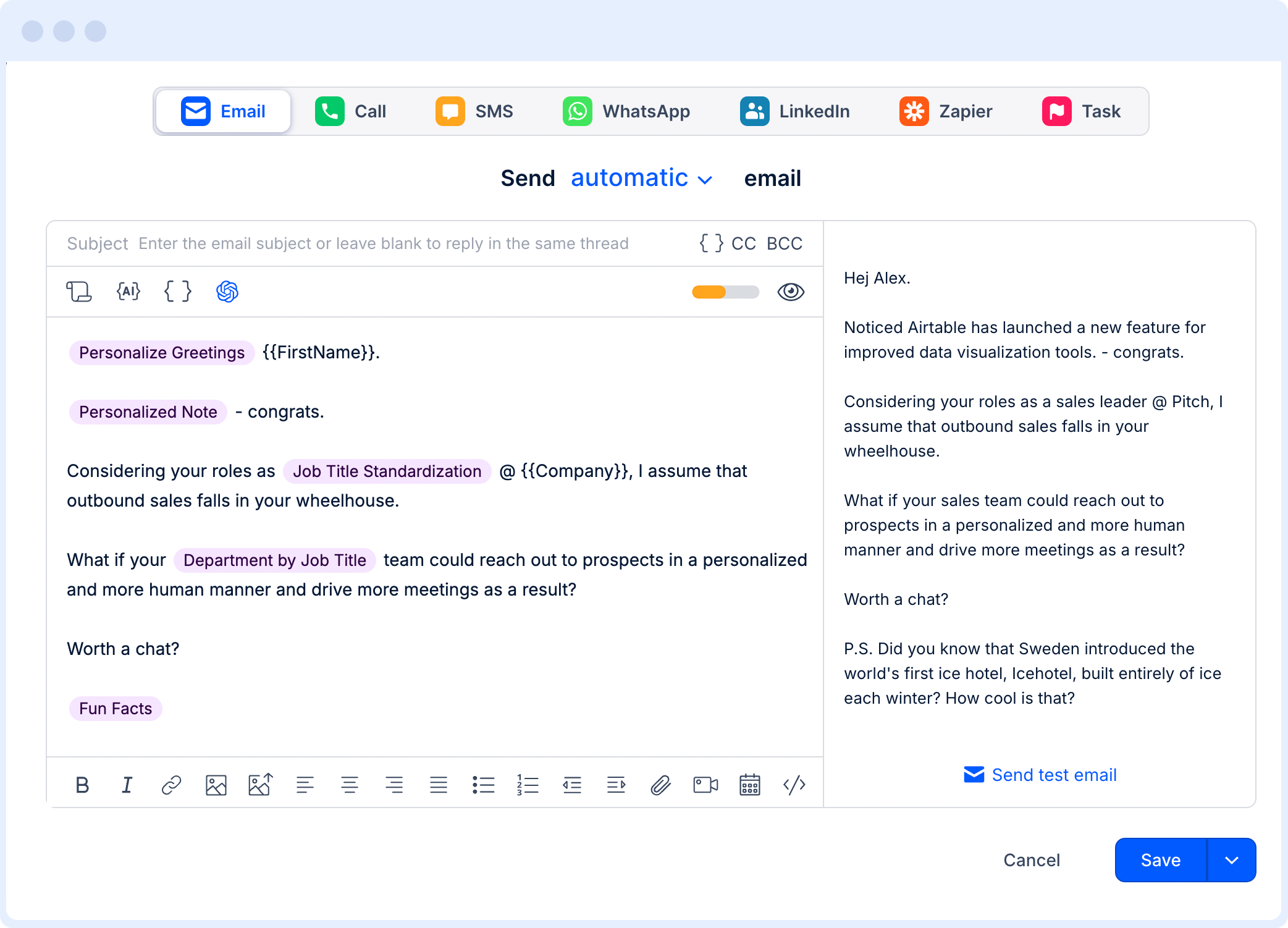
Once again, if you’re using Reply.io or an AI sales agent like Jason AI, all that data will natively be utilized across all your outreach, personalizing every message with the most relevant and up-to-date context. You can also choose to create your very own brand outreach templates with custom AI variables, and let the AI fill in those gaps by researching LinkedIn, company websites, and other sources to find the appropriate data:

AI personalization

Use AI to design multichannel GTM plays, not isolated sequences

A simple outreach sequence by itself is not a GTM play, as it doesn’t take into account the unique segment, triggers, value proposition, offer, channels, sequence logic, fallback path, or conversion goal.

This is where an AI outreach tool like Reply.io or an AI sales agent like Jason AI become truly irreplaceable. Besides leveraging all your pre-designed ICPs, sales playbooks, and other internal docs, as well as all the uncovered account data, Reply and Jason create tailored outreach campaigns that follow conditional logic

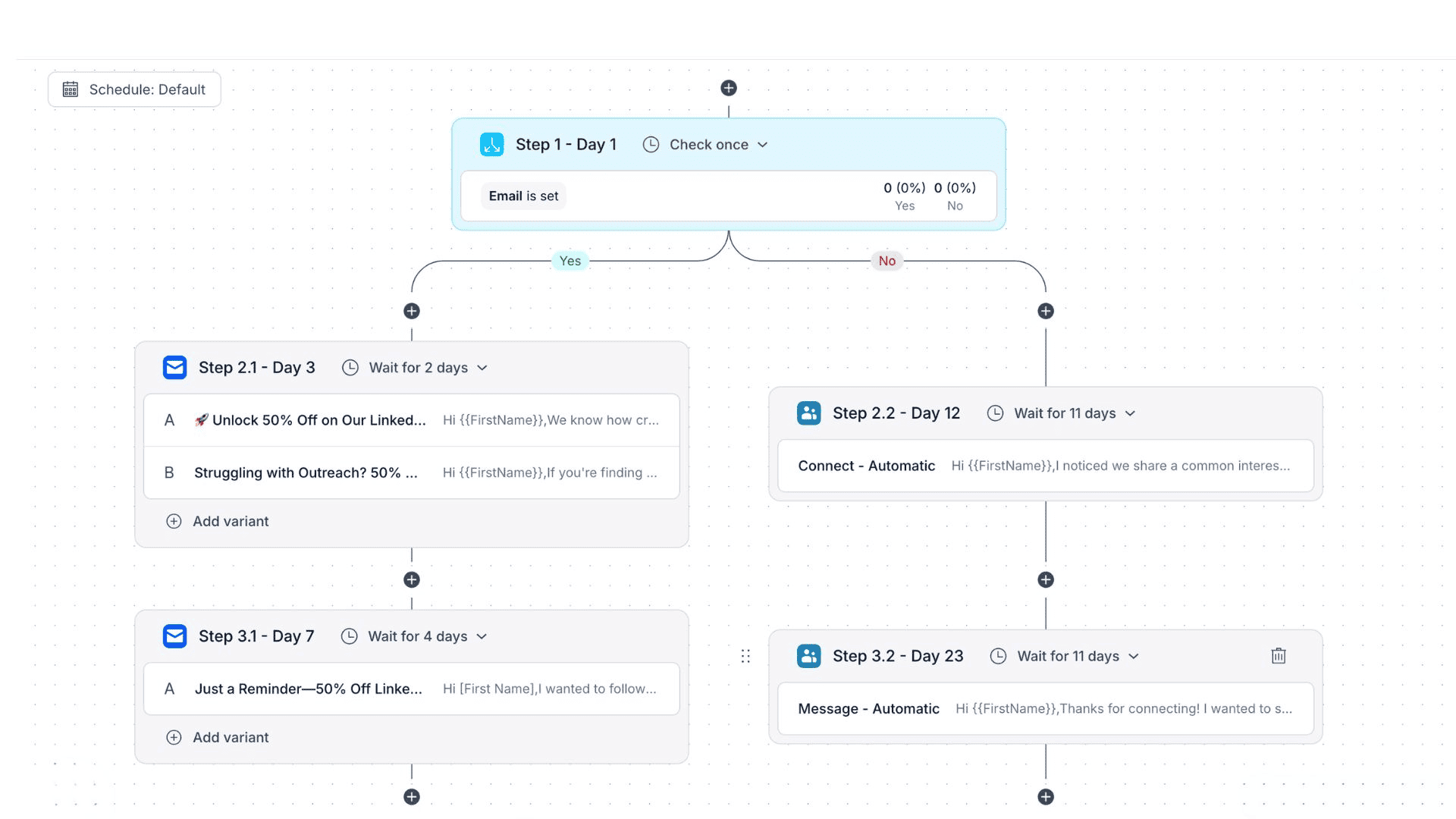
What this means is that once the AI analyzes the lead (their enriched data, company data, engagement context, segment, role, pain point, goal, etc.), it creates the most relevant multichannel sequence that adjusts in real time based on each prospect’s behavior. 

So for instance, if the initial email goes unopened for 3 days, Reply’s AI engine will launch an automated LinkedIn connection request. Once accepted, it will craft a personalized LinkedIn message and cancel the scheduled email follow-up, and so on:

how to auto send emails to a folder in gmail with conditional sequences

This way, whether you have 10 or 1,000 leads in your GTM pipeline, each one will receive a truly tailored and relevant buyer journey. The AI adjusts in real time to determine the most appropriate message, channel, and timing, making your GTM strategy efficiently connect data to action, without you having to lift a finger. Once these campaigns start bringing in highly qualified conversations and demo meetings, that’s when the humans can step in and take over. 

Oh, and if you have Jason AI on your team, it will also handle incoming replies by answering questions, working with objections, and booking meetings on your behalf, based on your custom brand playbooks, strategy, and tone. Jason is also multilingual in over 50 languages, so expanding into new markets should be no issue!

Close the loop: use AI to learn from replies, meetings, and pipeline

An AI GTM strategy only gets better when execution data flows directly back into your strategy. Lucky for us, AI is extremely good at “learning on the job”. 

Just make sure to track more than opens and replies. Measure positive reply rates, meeting-booked rates, performance by channel, segment-level conversion, objections, no-show rates, opportunities created, and closed-won revenue, to name a few. 

Then use AI to identify patterns.

  • Which segments convert into qualified meetings?
  • Which triggers create urgency?
  • Which value propositions generate serious conversations?
  • Which personas respond on email versus LinkedIn?
  • Which objections appear before deals stall?
  • Which sequences create pipeline instead of shallow engagement?

This is where many teams miss the point. They spend immense efforts on trying to optimize subject lines and CTAs, when they really should be optimizing GTM plays.

If one micro-segment produces twice the pipeline with fewer touches, that’s a strategic insight. If one trigger creates high reply rates but low opportunity quality, that’s also a strategic insight.

AI GTM in the real world: 5 practical examples

AI GTM becomes much easier to understand when you stop looking at it as a category of tools and start looking at the workflows it improves. Here are three practical examples of how AI can support different parts of the go-to-market motion without turning the whole strategy into “more sales automation.”

1. Signal-based outbound for high-intent accounts

Signal-based outbound begins when something meaningful happens inside a target account.

Whether they visit your pricing page, start expanding, add a specific tool, raise funding, or check competitor content, it gives your team a legitimate reason to act at this very moment, rather than waiting till that signal is meaningless or focusing your time on efforts on other, less-ready leads.

Say you’re using an AI sales agent like Jason AI. Once Jason AI catches that signal, the next steps happen almost instantly — enriching the right contacts from LinkedIn, uncovering and validating email addresses, scoring the account based on your custom rules, and picking the most relevant outreach angle, channel mix, and timing.

2. ABM campaign orchestration for buying committees

AI is also incredibly powerful for account-based marketing. In complex B2B deals, one lead rarely represents the entire decision-making committee, so to speak. You also have to separately deal with economic buyers, technical evaluators, users, operators, and executives.

AI can help identify those likely buying committee roles, map marketing messages, ads, and value propositions to each role, and coordinate sales and marketing touches around the same account.

For example, marketing may run account-specific content, sales sends role-specific outreach, and RevOps can track engagement at the account level instead of treating every person like a separate lead.

3. Content and demand generation prioritization

AI GTM isn’t just about outbound, as it can also help marketing teams decide which content and inbound campaigns are actually worth the time.

AI can analyze CRM data, sales objections, demo notes, search trends, competitor pages, and content engagement to find topics that already show up in the buying process.

For example, if prospects keep asking about “AI SDR vs human SDR,” that should shape comparison pages, enablement assets, LinkedIn posts, webinar ideas, and sales follow-up materials.

This makes content strategy much closer to revenue strategy, where marketing stops chasing traffic for the sake of traffic and starts creating content that helps buyers make decisions.

And to make it truly effective, the next step is stitching together this inbound automation with your outbound strategy, where sales reps can clearly see what type of content each lead interacted with to shape the outreach strategy. 

The real-world benefits of an AI GTM strategy

A good AI GTM strategy should make the whole revenue motion feel less scattered. The main goal is helping teams see which accounts matter, what is happening around them, and when it actually makes sense to reach out, which an AI GTM strategy fully covers: 

  • Sharper account prioritization → sales teams can focus on accounts that match the ICP and show real timing signals, instead of working through static lists that looked good three months ago.

  • Faster GTM experimentation → teams can test new segments, offers, messages, and channels much faster because they don’t have to rebuild every workflow from scratch each time.

  • Personalization that doesn’t kill the team → AI can adapt messaging by segment, role, trigger, and stage, so reps are not spending half their day researching tiny details for every account.

  • Cleaner sales and marketing alignment → when both teams work from the same account signals, it’s much easier to agree on what should happen next. Fewer “marketing said this lead was hot” debates, which alone is a win.

  • Better pipeline learning → AI can spot which segments, triggers, channels, and value propositions are actually creating meetings and revenue, not just opens, clicks, and polite replies.

Your next GTM strategist will not be another dashboard

In 2026, AI shouldn’t be treated as another standalone platform, dashboard, or email writer. Its real value is helping GTM teams find better-fit accounts, read buying signals, design sharper plays, coordinate channels, and learn from every response, to ensure that every new product or feature enters the market as efficiently as possible. 

Humans still own the strategy, judgment, positioning, and relationships, but an AI engine will help improve the speed, precision, and execution, and that synergy is really what it’s all about.

For teams ready to go from theory to execution, Reply.io and Jason AI are fully equipped to help your team launch a coordinated AI GTM strategy across lead generation, outreach, and conversion. Add an AI marketing platform and a CRM of your choice, and you’ve got yourself a full AI GTM engine ready to go!

FAQ

What is an AI GTM strategy?

An AI GTM strategy is a go-to-market approach where AI helps the team make better calls on accounts, signals, messaging, workflows, and execution. The main idea is simple: connect the data, the strategy, and the actual day-to-day GTM motion across sales, marketing, RevOps, and customer success.

How can AI be used in go-to-market strategy?

AI can help with market research, ICP work, lead sourcing, account scoring, intent monitoring, outreach personalization, multichannel sequences, reply handling, meeting scheduling, forecasting, and performance analysis. The real value, though, is better GTM decisions — which accounts to chase, when to act, and which motion can actually create pipeline.

What is the difference between AI tools and an AI GTM strategy?

AI tools usually solve one specific job, like writing emails or scoring leads. An AI GTM strategy connects those jobs into one revenue motion: who you target, when you reach out, what you say, which channel makes sense, and how you know whether it worked.

Can AI replace SDRs?

AI can take over a lot of repetitive SDR work: research, enrichment, list building, sequence drafts, follow-ups, scheduling, and so on. But human reps still matter for judgment, real conversations, relationship building, negotiation, and high-value accounts where one bad message can cost you. The best setup is usually AI doing the heavy lifting, with humans controlling the quality.

What are the biggest risks of using AI in GTM?

The main risks include working with bad data, which leads to generic personalization, as well as disconnected tools, over-automation, weak ownership, and measuring activity instead of revenue. Luckily, the fix is simple enough — define the ICP properly, always use verified data and reliable sources, review AI outputs (at least in the early stages), connect the workflow with tools like n8n or Claude Code, and track revenue metrics that actually matter.

Subscribe to our blog to receive the latest updates from the world of sales and marketing.
Stay up to date.

Related Articles

GTM Engineering With and Without AI in 2026 | All You Need to Know

GTM Engineering With and Without AI in 2026 | All You Need to Know

GTM Engineering With and Without AI in 2026 | All You Need to Know
The Best 11 Agency Management Software in 2026 to Book More Meetings

The Best 11 Agency Management Software in 2026 to Book More Meetings

The Best 11 Agency Management Software in 2026 to Book More Meetings
How to Define and Optimize Your Cost per Lead | Agency Owner’s Guide

How to Define and Optimize Your Cost per Lead | Agency Owner’s Guide

How to Define and Optimize Your Cost per Lead | Agency Owner’s Guide