The Best 11 Demandbase Competitors for B2B Sales in 2026

The Best 11 Demandbase Competitors for B2B Sales in 2026

An account showing intent is not a pipeline opportunity yet. It’s a signal — and sales teams still need the right contact, the right context, and the right outreach motion to turn it into a meeting.

That’s where Demandbase can feel heavy for some B2B teams. It’s strong for ABM strategy, account intelligence, and marketing orchestration, but not every team needs a large ABM system. Some need faster prospecting, cleaner contact data, simpler workflows, or outreach tools reps can use every day.

So, what are the best alternatives to Demandbase? Glad you asked!

We’ve scoured the market and zeroed in on 11 Demandbase competitors worth your attention, from intent data and enrichment to sales engagement and outbound automation.

Demandbase alternatives: Quick comparison

Before we get into the features and use cases, here’s a table showing how the tools compare at a glance: 

Tool Best for Key capability Built-in outreach  Starting price
Reply.io Outbound outreach tied to lead discovery Multichannel outreach with built-in B2B data and AI personalization Yes $49/user/mo
6sense Predictive, AI-driven account prioritization AI-powered buying stage prediction and account scoring Partial custom (around $60,000/year)
AdRoll Mid-market ABM with simpler setup Account targeting and digital advertising for mid-market teams No $975/mo
DemandScience Multi-channel ABM campaigns Coordinated ad, email, chat, and social campaigns for target accounts Partial On request
Bombora Pure third-party intent data Intent data from 5,000+ premium B2B publishers No On request
Cognism Compliant global contact data Phone-verified mobile numbers with GDPR compliance No On request
Clay Custom data workflows and enrichment Multi-source data enrichment from 75+ providers No $185/month
Madison Logic Content syndication and ABM Intent-driven content distribution to in-market accounts No On request
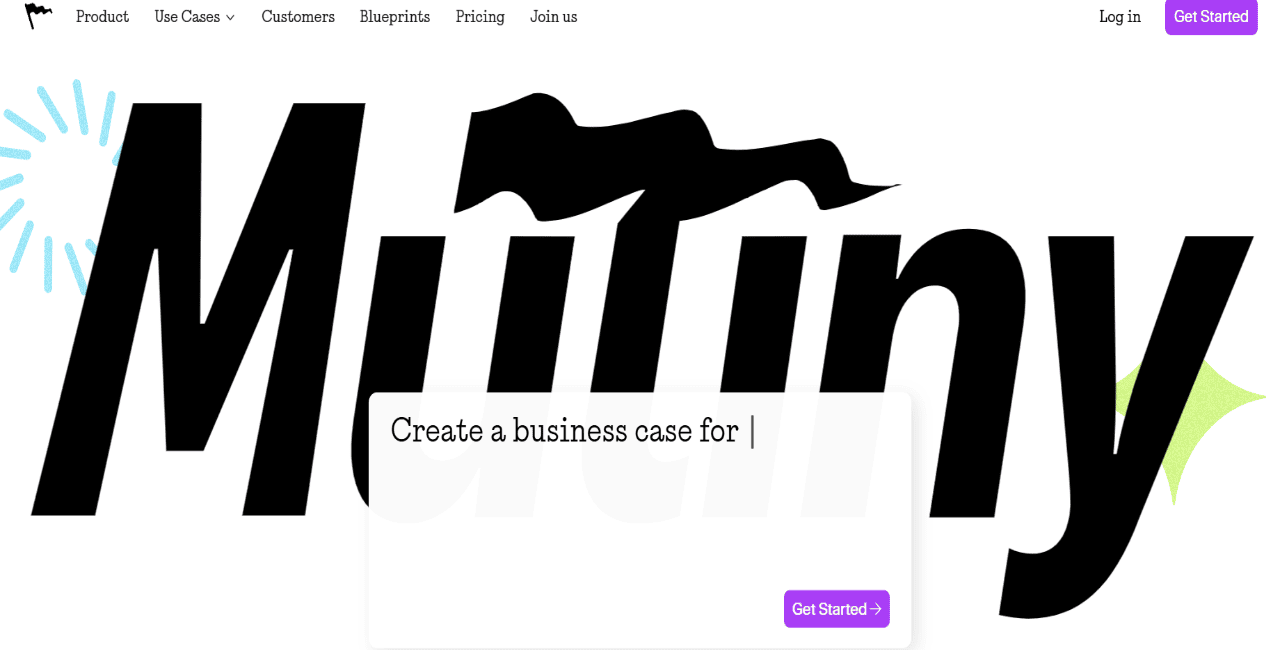
Mutiny Website personalization for target accounts Account-based website personalization for visiting companies No $1,500/mo
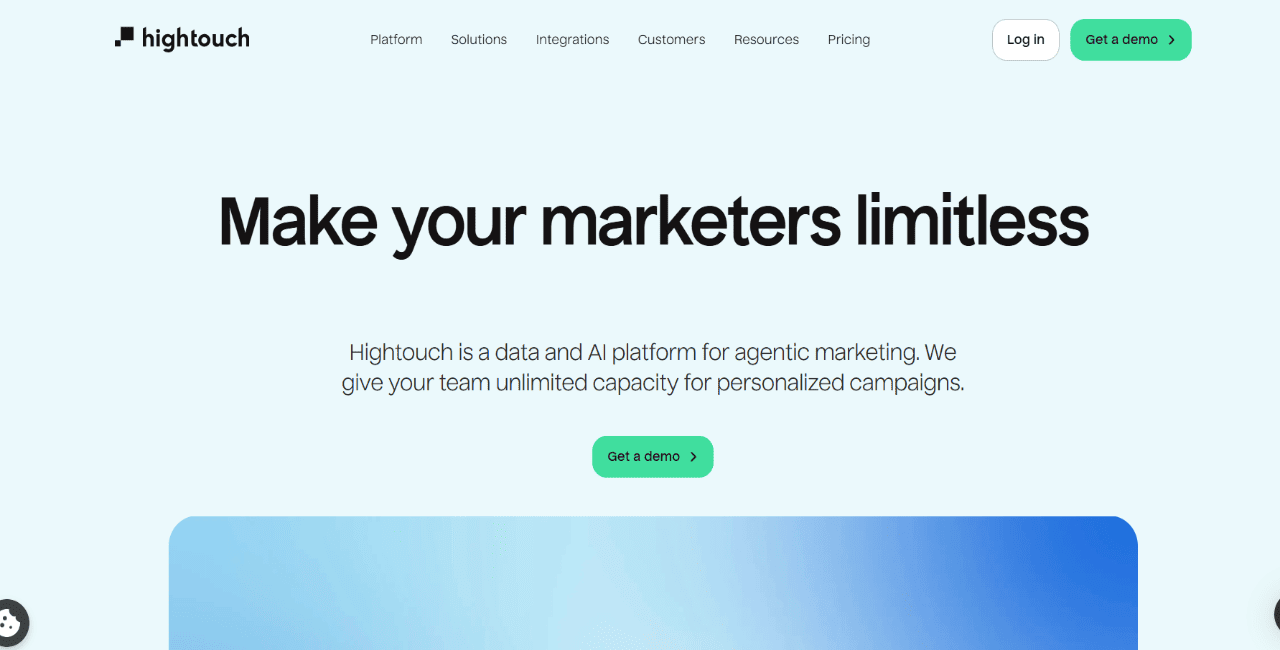
Hightouch Warehouse-native ABM and data activation First-party data activation from Snowflake and BigQuery No $350/month
Marketo Engage Enterprise marketing automation with ABM extensions Enterprise-scale marketing automation with ABM module Partial On request

How did we choose the Demandbase competitors on this list?

Sure, user reviews play an important role in evaluating Demandbase competitors B2B marketing platforms. However, that’s not all there is to finding a good tool.

Here’s what else we considered when curating this roundup: 

  • Core functionality: of course, the tool had to solve at least one problem Demandbase solves, whether that’s account intelligence, intent data, or deal management.
  • Data quality: how accurate, fresh, and extensive each platform’s contact and account data is, since bad data only wastes your time.
  • Intent data: where applicable, we assessed whether the tool surfaces meaningful buying signals that sales reps can act on.
  • AI capabilities: what role AI plays, whether in prospecting, outreach, or workflow automation, and how practical those capabilities are.
  • CRM and tool integrations: each tool had to connect reliably with common CRMs and sales stacks, and ideally, have accessible APIs and/or MCP. 
  • Pricing and accessibility: whether the tool is realistically accessible to SMBs and growing sales teams, not just enterprise buyers.

In the end, we found 11 top-rated alternatives backed with solid functionalities to power your sales campaigns. 

Convert Competitors` Fans Into Hot Leads

Stop chasing cold leads.
Start talking to people who already want what you sell.

Your competitors’ followers?
They know the problem. They’re paying attention.
Some are even looking for something better, right now.

This playbook shows you exactly how to turn them into hot leads:

→ Find and pull competitor followers in minutes
→ Clean, segment, and enrich your list for max fit
→ Launch outreach that’s personal, not pushy
→ Automate follow-ups so no lead slips away

What are the best alternatives to Demandbase?

Now, it’s time to discuss our top picks for Demandbase competitors in 2026, covering core features, pros and cons, and pricing.

Reply.io: best for B2B data + multichannel outreach

For many teams comparing Bombora alternatives, the question is not only where to get accurate leads. It’s also how to turn those leads into actual sales conversations and meetings quickly.

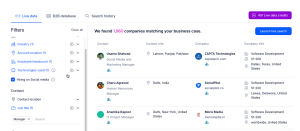
That’s where Reply.io stands out, because it covers both parts of the workflow. It is an AI sales engagement platform that helps teams find targeted prospects, enrich contact records, surface intent signals, and launch personalized outreach across email, LinkedIn, calls, SMS, and WhatsApp from one place.

On the data side, Reply gives sales teams access to a live B2B database with 1+ billion contacts across 150+ countries, 60+ million company profiles, advanced search filters, intent signals, built-in email validation, and contact enrichment.

So instead of exporting static lists into a separate outreach tool, reps can take verified leads and move them straight into AI-powered multichannel sequences in just a few clicks.

Once a lead enters a sequence, Reply’s AI uses that prospect data and those intent signals to personalize emails, follow-ups, and LinkedIn messages at scale. Teams can also build custom templates with AI variables, then let Reply fill in the relevant details for each prospect automatically.

The sequences can also respond to each prospect’s behavior. For example, if someone doesn’t open an email, that can trigger an automated LinkedIn connection request a few days later. If that request gets accepted, a personalized LinkedIn message goes out while the scheduled email follow-up is canceled, and so on. 

how to send a second follow up email after no response with conditional sequences

And for teams that want to automate even more of the process, Reply also includes Jason AI — an AI sales agent that finds leads, researches prospects across LinkedIn, company websites, and more, launches tailored outreach, handles replies, and even books meetings for you. 

Key features

  • Reply Data: Live B2B database with 1+ billion contacts, 60+ million companies, intent signals, and advanced filters.
  • Contact enrichment: Adds missing prospect details such as role, company size, LinkedIn URL, and more.
  • Multichannel sequences: Runs email, LinkedIn, calls, SMS, and WhatsApp in one workflow, with each message personalized using uncovered data.
  • Website visitor tracking: Identifies companies visiting your site and routes them into targeted sequences.
  • Jason AI: Autonomous AI sales agent that sources leads, launches outreach, handles replies, and books meetings.
  • Email deliverability suite: Includes mailbox warm-up, sender reputation tools, email validation, and deliverability monitoring.

Pricing

Reply.io starts at $49 per user per month for email outreach and $89 per user per month for multichannel outreach. Jason AI starts at $500 per month as a standalone AI SDR plan.

Reply.io also offers a 14-day free trial, so teams can test the platform before committing.

6sense: best for predictive, AI-driven account prioritization

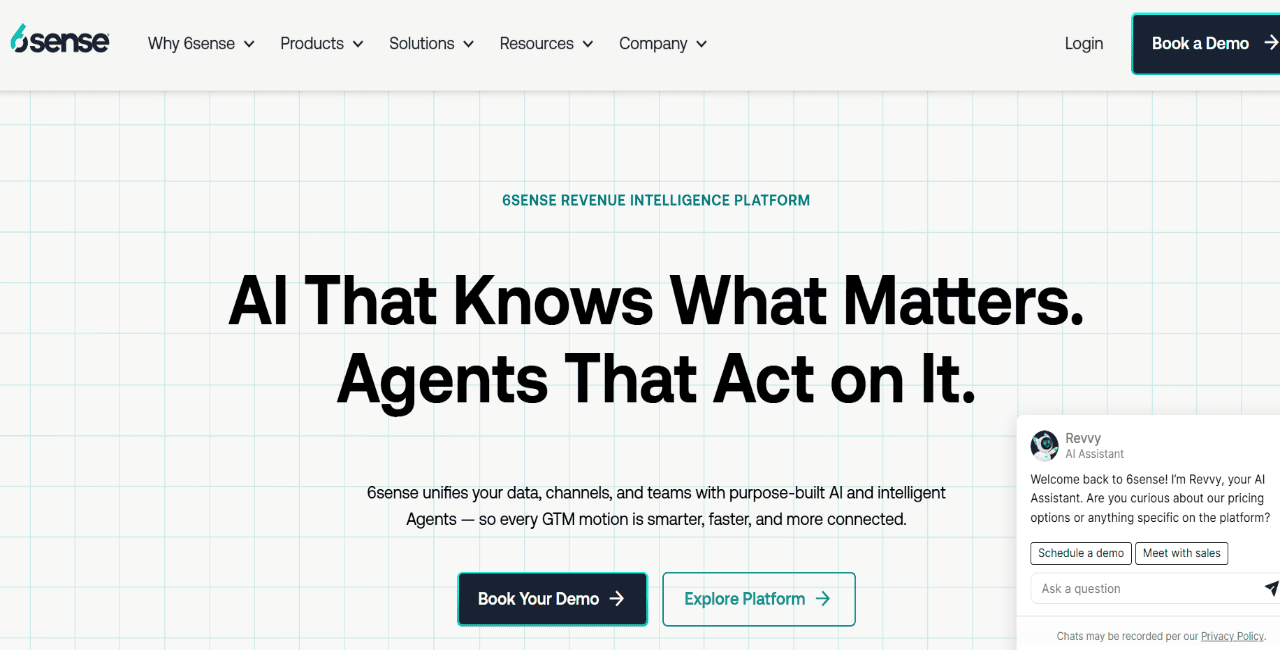
6sense uses AI to predict which accounts are actually in-market. It looks at anonymous buying behavior, third-party intent data, and past patterns to score accounts by likelihood to buy and current buying stage.

That makes it a strong fit for enterprise marketing and sales teams that need a smarter way to sort through a large number of accounts.

The platform also maps buying committees, tracks engagement, and pushes that intelligence into CRM and marketing automation tools. So reps are not just getting a list of accounts — they’re getting context around why those accounts matter right now.

At the enterprise level, 6sense is probably the closest direct competitor to Demandbase.

The limitation, though, is familiar. It helps you decide who to go after, but it does not handle full outbound execution. However, when integrated with an outreach tool like Reply.io, 6sense can be a very valuable add-on. 

Key features:

  • Predictive AI scoring that helps teams rank accounts based on buying behavior and conversion likelihood
  • Buying committee mapping for identifying decision-makers and influencers inside target accounts
  • Intent data that shows what accounts are researching before they ever reach out
  • CRM integration that brings account intelligence into the existing sales workflow

Pros:

  • Detailed buying stage visibility
  • Strong enterprise adoption
  • Solid intent coverage

Cons:

  • Takes time to learn
  • Enterprise pricing is heavy
  • Native outreach is limited

Pricing:

6sense pricing is custom-quoted. Third-party estimates usually place deployments in the tens of thousands per year, with final cost depending on package, users, credits, and implementation scope.

AdRoll ABM: best for mid-market ABM with simpler setup

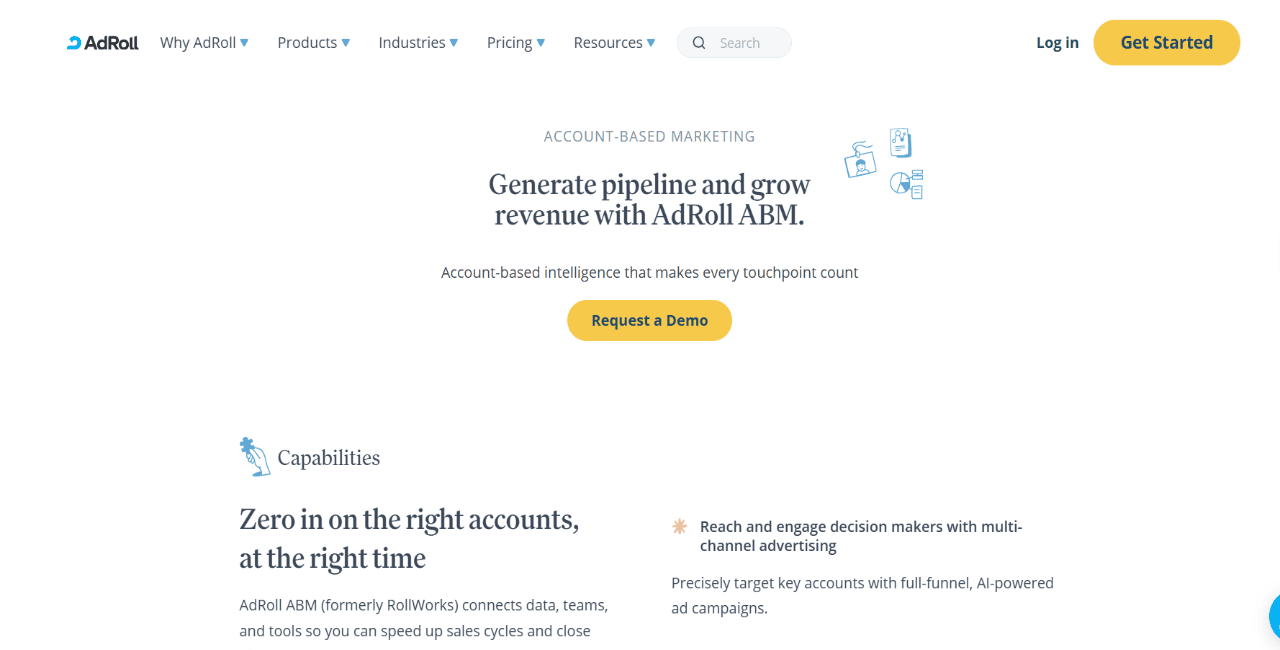
AdRoll ABM, previously RollWorks, is an account-based marketing platform aimed more at mid-market B2B teams.

It’s a solid option if you want ABM advertising and account targeting without the weight of a full enterprise platform. The platform combines account targeting, buyer signals, and digital ads to help teams engage higher-value accounts.

Users generally describe AdRoll ABM as easier to get up and running than larger ABM systems. And while it is not exactly cheap, it is still one of the more practical Demandbase alternatives for teams that want account-based advertising without all the complexity.

Key features:

  • Account targeting for building and prioritizing account lists based on fit and engagement
  • Digital advertising for running campaigns against target accounts
  • Buyer signals that help surface accounts showing signs of interest
  • CRM integration with HubSpot and Salesforce
  • Engagement tracking for seeing how target accounts interact with campaigns

Pros:

  • Fast setup
  • More approachable for mid-market teams
  • Good CRM connections

Cons:

  • Outreach capabilities are limited
  • Reporting customization is fairly weak

Pricing:

AdRoll ABM pricing starts at $975 per company per month when billed annually.

DemandScience: best for multi-channel ABM campaigns

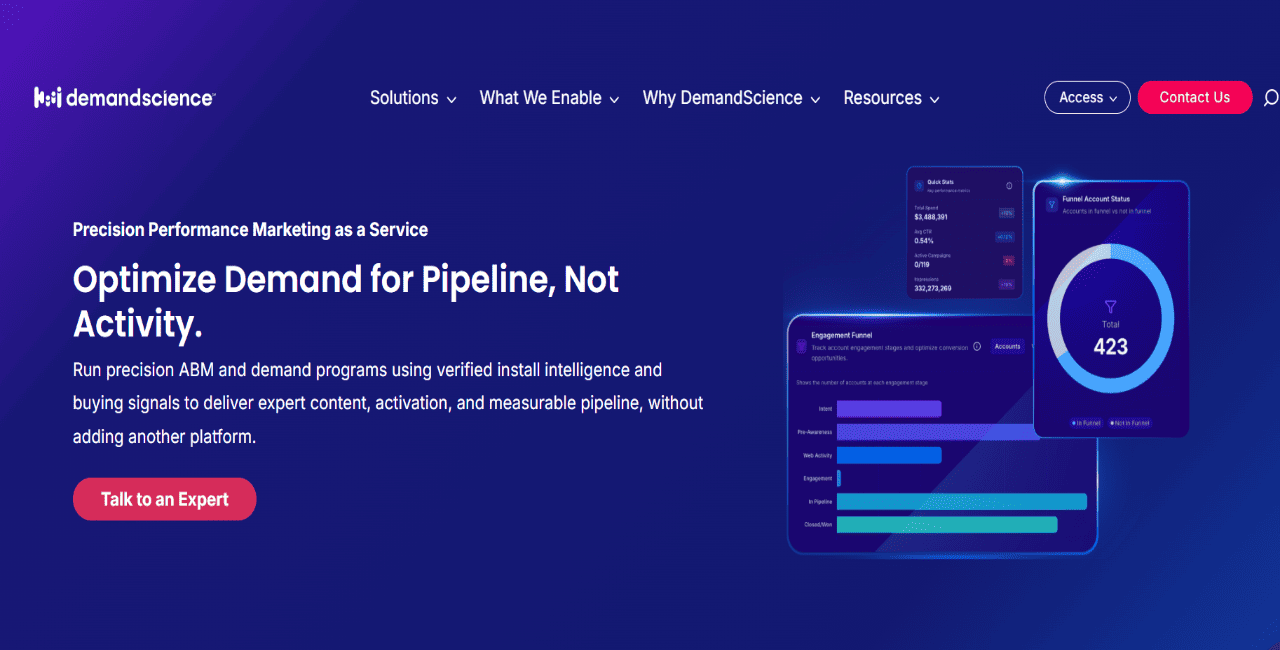
DemandScience and Terminus merged under the DemandScience name, creating a B2B revenue marketing platform with ABM campaign capabilities built in.

It supports coordinated campaigns across display, email, chat, social, and other channels, all aimed at specific accounts. For B2B marketing teams that want target accounts seeing the same message across multiple touchpoints, that can work well.

The platform also connects with CRM systems like Salesforce and HubSpot, so sales and marketing can share visibility into engagement across target accounts.

Still, DemandScience is built mostly with marketers in mind. SDRs and BDRs will usually still need a dedicated outreach tool like Reply.io to turn that engagement into booked meetings.

Key features:

  • Multi-channel advertising across display, social, and connected TV
  • Email experiences for account-based email campaigns at scale
  • Chat-based engagement for interacting with target-account visitors in real time
  • Account scorecards that show engagement and pipeline influence in one view
  • CRM integration with Salesforce and HubSpot

Pros:

  • Wide channel coverage
  • Good CRM integrations

Cons:

  • Native outreach is limited
  • The learning curve can be steep

Pricing:

DemandScience pricing is available on request.

Bombora: best for pure third-party intent data

If the question is specifically which Demandbase alternatives are strongest for intent data, Bombora absolutely belongs in that conversation.

It runs one of the biggest B2B intent data cooperatives, tracking buying signals across a large network of B2B publisher sites.

Unlike broader ABM platforms, Bombora stays focused on one thing: showing which companies are researching topics tied to your market.

That focus makes it a strong source of third-party intent, especially for teams that want account-level research signals without buying a full ABM stack.

The downside is that Bombora stops there. It does not generate outreach, run campaigns, or book meetings. 

Key features:

  • Company Surge data for spotting accounts showing increased research activity around relevant topics
  • Intent topic tracking for monitoring the exact subjects target accounts are researching
  • CRM integration that pushes intent data into Salesforce and similar tools
  • Audience segmentation for building account lists around intent scores
  • Data cooperative that provides access to third-party B2B intent signals

Pros:

  • Strong intent coverage
  • Reliable third-party signals

Cons:

  • No native outreach
  • Can be expensive for a standalone tool

Pricing:

Bombora pricing is available on request.

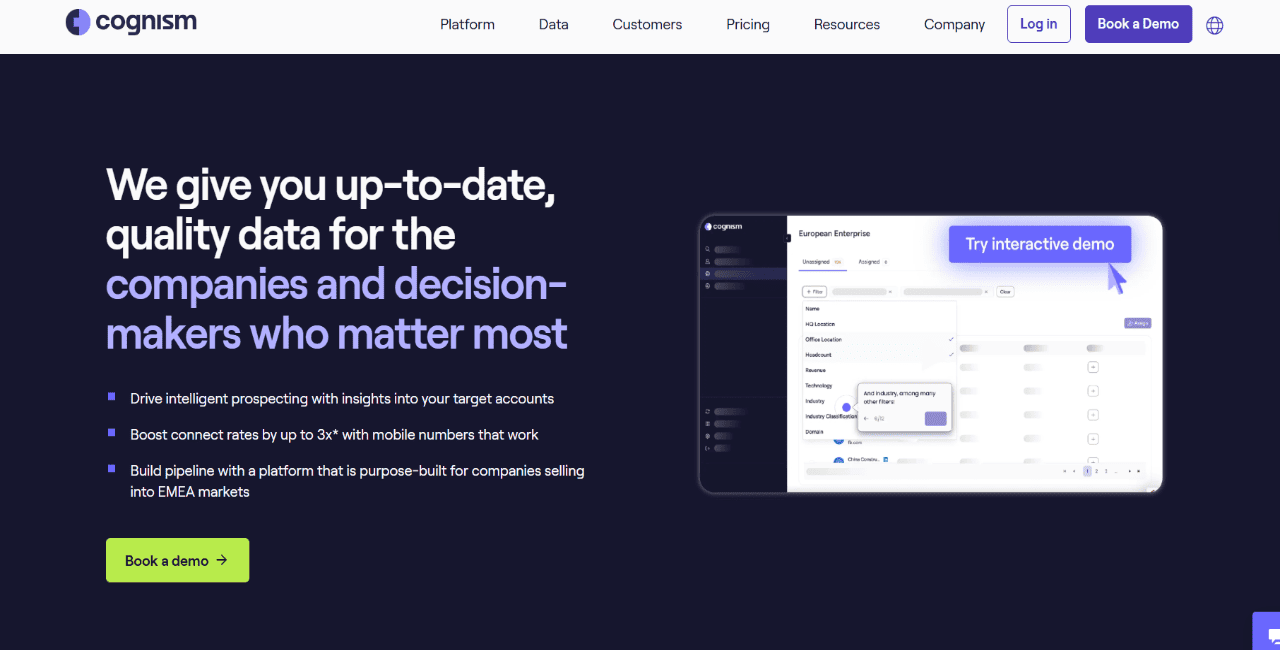
Cognism: best for compliant global contact data

Demandbase competitors vary quite a bit, and Cognism fits a specific lane: accurate, compliance-focused B2B contact data. It is especially strong for teams selling into Europe.

Its best-known feature is Diamond Data, which consists of phone-verified mobile numbers. Given that focus, it makes sense that Cognism positions it as a way to improve cold call connect rates.

For SDR teams running calling campaigns across the UK and EMEA, that level of accuracy can make a real difference.

Still, Cognism is a data platform first. If you want to run campaigns, you will still need to pair it with a separate outreach tool.

Key features:

  • Diamond Data with phone-verified mobile numbers for more accurate cold calling
  • Compliance-focused workflows built for prospecting into European markets
  • Bombora-powered intent data for prioritizing accounts already researching your solution
  • CRM integration with Salesforce and HubSpot
  • Chrome extension for finding verified contact data while browsing LinkedIn

Pros:

  • Strong European coverage
  • Compliance is a clear priority
  • High phone-data accuracy

Cons:

  • No native outreach
  • Coverage still varies by region

Pricing:

Cognism pricing is custom-quoted. Public pricing is not listed on the website.

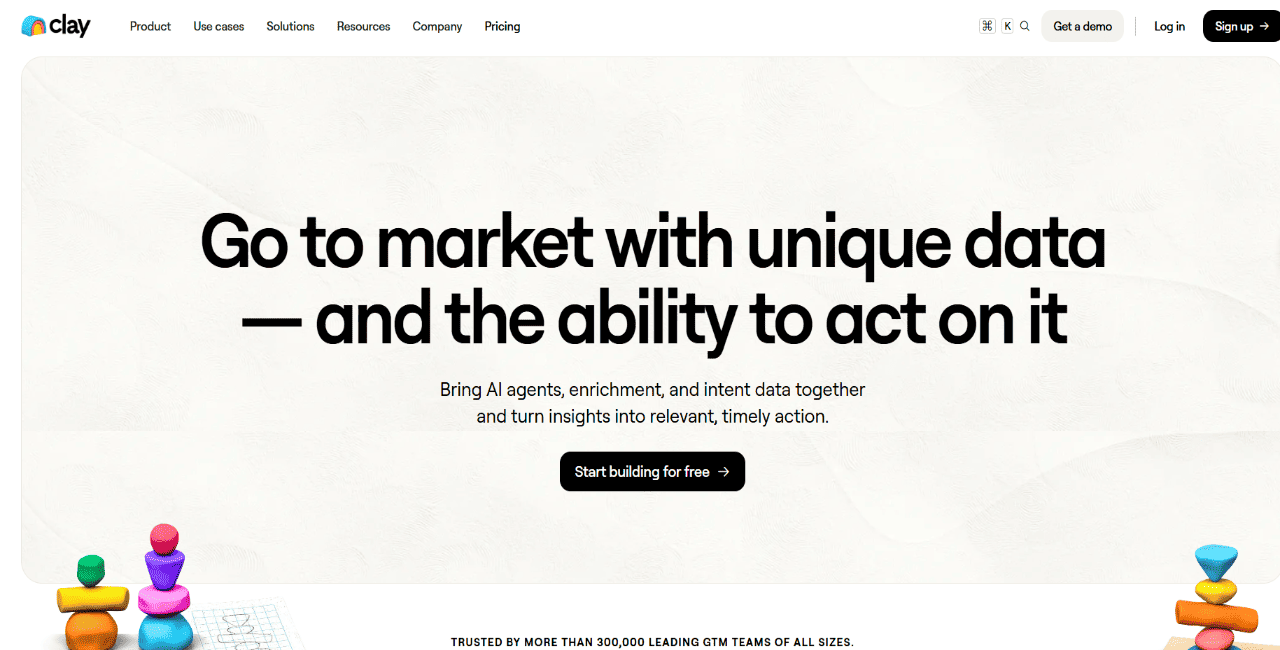
Clay: best for custom data workflows and enrichment

Clay is a prospecting and enrichment tool that pulls from 150+ data providers.

With it, teams can build custom workflows that combine data from multiple sources to create highly targeted prospect lists.

That makes it one of the stronger Demandbase alternatives for revenue teams that want a lot of control over how contact data gets sourced and enriched.

You can pull company data, find contacts, and run AI-powered research on each prospect. Clay also lets teams push leads automatically into CRM or outreach tools.

The trade-off is that Clay is a builder’s tool. To get real value from it, you need time, technical comfort, and a clear idea of what you want to automate.

When paired with an AI outreach platform like Reply.io, Clay becomes a very powerful part of your stack.

Key features:

  • Multi-source enrichment pulling data from 150+ providers into one workflow
  • AI research agent for automating prospect research and personalization
  • CRM integration that pushes enriched contact data into Salesforce and HubSpot
  • Custom workflow builder for full control over sourcing, filtering, and routing
  • LinkedIn-based prospecting for researching profiles and building targeted lists

Pros:

  • Very flexible workflows
  • Huge provider coverage

Cons:

  • Steep learning curve
  • Requires technical setup

Pricing:

Clay has a free plan, while paid plans start at $185 per month.

Madison Logic: best for content syndication and ABM

Madison Logic earns a place on this Demandbase alternatives list because it combines intent data with content syndication. In short, it identifies in-market accounts and then puts targeted content in front of buyers across multiple channels.

For B2B marketing teams running ABM campaigns, that creates a useful sequence. First, identify who is in-market. Then get relevant content in front of them at the right time. Then help accelerate deals already in motion.

Even so, Madison Logic is still mainly a content distribution and awareness platform. It moves accounts through the funnel, but it does not turn that engagement into direct outbound activity.

Key features:

  • Intent data for identifying accounts actively researching your category
  • Content syndication for distributing targeted content to buyers in key accounts
  • Multichannel ABM across display, email, social, connected TV, and more
  • CRM integration with Salesforce and HubSpot
  • Pipeline acceleration showing how content engagement influences open deals

Pros:

  • Strong content syndication network
  • Broad intent coverage

Cons:

  • No native outreach
  • Limited self-serve access

Pricing:

Madison Logic pricing is available on request.

Mutiny: best for website personalization for target accounts

Mutiny is a website personalization platform that changes on-site messaging based on who is visiting. This platform identifies the company behind the visit and then serves a more tailored website experience — different headlines, different messaging, different CTAs.

For B2B teams running ABM, that solves a common problem: spending money to drive target accounts to the site, only for them to land on a generic page that speaks to everyone and no one.

Key features:

  • Account-based personalization for serving tailored site experiences to target accounts
  • Audience segmentation by industry, company size, or account tier
  • A/B testing for optimizing personalized site experiences
  • CRM integration with Salesforce and HubSpot
  • Conversion analytics showing how personalization affects pipeline

Pros:

  • Strong website personalization
  • Relatively easy setup

Cons:

  • No outbound capabilities
  • Limited to the website channel

Pricing:

Mutiny pricing is custom-quoted. Third-party estimates often place entry-level contracts around $1,500 per month with annual commitments.

Hightouch: best for warehouse-native ABM and data activation

Hightouch is a data activation platform that syncs information from your warehouse into sales and marketing tools. It’s built for teams that work with a lot of first-party data in their sales and marketing workflows.

It’s also one of the more notable Demandbase competitors on the data activation side because of its sheer technical depth.

Teams can build audience segments directly from warehouse data and then push those segments into Salesforce, HubSpot, LinkedIn Ads, Google Ads, and other tools.

That means ABM campaigns can run on first-party data instead of relying mainly on third-party approximations.

Key features:

  • Warehouse sync from Snowflake, BigQuery, and similar systems into GTM tools
  • Audience builder for creating segments from raw first-party data
  • CRM integration with Salesforce and HubSpot
  • Ad audience activation into LinkedIn and Google Ads
  • Reverse ETL for controlling how warehouse data flows into the stack

Pros:

  • Strong first-party data activation
  • Precise segmentation

Cons:

  • Needs technical setup
  • No native outreach

Pricing:

Hightouch has a free plan. Paid self-serve pricing starts at $350 per month, with custom pricing for larger teams and more advanced use cases.

Marketo Engage: best for enterprise marketing automation with ABM extensions

Marketo Engage is a Demandbase alternative for enterprise teams with mature marketing operations that manage complex buyer journeys across large databases.

Its strength is not daily sales execution, but rather campaign orchestration — lead scoring, segmentation, nurture flows, attribution, lifecycle tracking, and account-based marketing. For companies with long sales cycles, multiple buyer personas, and stricter CRM processes, it gives the structure to engage accounts over time and see how campaigns influence pipeline.

Its ABM capabilities let teams build target account lists, track account engagement, coordinate campaigns around buying groups, and pass stronger signals to sales.

The catch is that Marketo takes real effort to run well. It needs a solid setup, clean data, and people who can actually manage it over time. It is not the tool an SDR opens to find contacts and book meetings fast, which is why teams usually pair it with something like Reply.io for direct outreach.

Key features:

  • Lead scoring for ranking contacts and accounts based on fit, engagement, and buying behavior
  • Email nurture programs for running automated campaigns across longer, multi-touch buying journeys
  • ABM tools for building target account lists, tracking engagement, and supporting buying-group campaigns
  • CRM integrations with Salesforce and Microsoft Dynamics
  • Multi-touch attribution for measuring how marketing programs affect pipeline and revenue

Pros:

  • Strong enterprise marketing automation
  • Good nurture and lifecycle capabilities
  • Works well in complex CRM environments

Cons:

  • Steep learning curve
  • Needs ongoing marketing ops support
  • Not built for direct sales outreach

Pricing:

Adobe Marketo Engage pricing is custom-quoted and depends on database size, selected package, and included capabilities.

Turn account intelligence into pipeline

The right Demandbase alternative comes down to where your GTM motion actually needs help most. Is it account intent, ABM ads, campaign automation, data activation, enrichment, or direct outreach? 

But that’s really only half the question. The other half is what your team can do once an account starts showing interest. If reps still have to jump between separate tools to find contacts, verify data, personalize messages, automate sequences, and book meetings, things slow down fast.

Reply.io pulls most of that into one place: prospecting, enrichment, AI personalization, multichannel sequences, deliverability tools, and Jason AI to run the whole workflow.

There’s a free 14-day trial too, which makes it easy to see how it fits your outbound sales motion in practice.

FAQ: Demandbase alternatives

What are the best alternatives to Demandbase?

Some of the main Demandbase alternatives are Reply.io, 6sense, AdRoll ABM, DemandScience, Bombora, Cognism, Clay, Metadata.io, Madison Logic, Mutiny, Hightouch, and Marketo Engage. Which one makes sense depends on what you actually need the platform to do — ABM, intent data, contact data, campaign automation, or sales outreach.

How much does Demandbase cost?

Demandbase does not publish fixed pricing on its site. Pricing is quoted case by case, usually based on the products included, number of seats, data requirements, and the size of the contract.

Is Demandbase a CRM?

No, Demandbase is not a CRM. It’s an account-based GTM platform built around account intelligence, intent data, advertising, and ABM orchestration. Most teams use it alongside a CRM like Salesforce or HubSpot.

Is Demandbase better than 6sense?

They are close competitors, but they are not identical. Demandbase is often chosen for account intelligence and advertising, while 6sense is usually stronger around predictive account prioritization and buying-stage visibility.

What should you look for in a Demandbase alternative?

Look for strong account data, useful intent signals, CRM compatibility, campaign execution, contact-level visibility, and outreach support. The best option is the one that helps your team act on account intelligence, not just sit on it.

Subscribe to our blog to receive the latest updates from the world of sales and marketing.
Stay up to date.

In this article

Your Superhuman SDR

Jason learns your product, tone, and strategy — then runs outreach with the precision of your best rep.

Your Superhuman SDR
Book a demo

Related Articles

What’s New in Reply: New API, AI Custom Fields, LinkedIn Enrichment, and More

What’s New in Reply: New API, AI Custom Fields, LinkedIn Enrichment, and More

What’s New in Reply: New API, AI Custom Fields, LinkedIn Enrichment, and More
Top 12 Cognism Alternatives for Finding Leads in 2026

Top 12 Cognism Alternatives for Finding Leads in 2026

Top 12 Cognism Alternatives for Finding Leads in 2026
Mailtrap Review 2026: Is This Email API the Right Fit for Your Team?

Mailtrap Review 2026: Is This Email API the Right Fit for Your Team?

Mailtrap Review 2026: Is This Email API the Right Fit for Your Team?