How to Use Reply.io + Jason for Enterprise Demand Generation 2026
Eugene Suslov28 Mar 2026
Enterprise demand generation in 2026 is not about simply finding a few good-fit accounts and immediately throwing them into your sales outreach campaigns. If only it were that simple.
Real enterprise demand generation begins earlier and spans the entire enterprise buyer journey. You need to create relevance, build trust, and generate enough familiarity across the account so the right people are actually open to engaging, let alone closing a deal, when the time comes.
And let’s be honest, that takes a lot more than sheer volume or one linear lead generation workflow.
It takes accurate data, signal-based prioritization, multichannel outreach, and AI personalization that can scale across long, and complex buying cycles. And when it comes to enterprise deals, that also means adjusting all those moving pieces to everyone involved in the buying process.
That’s exactly where Reply.io and Jason AI come into play, giving modern teams a practical way to handle demand creation, demand capture, and pipeline generation inside one, AI-powered system.
What is enterprise demand generation in 2026
In reality, successful enterprise demand generation starts well before a lead gets captured or someone from the target company is ready to book a meeting. The goal isn’t to just capture existing intent, but to generate new awareness and build relevance within the right enterprise accounts, and then keep that momentum moving until it eventually evolves into a closed deal.
That’s exactly why B2B demand generation at the enterprise level is more complex than standard outbound. You’re dealing with multiple stakeholders, different priorities, internal approvals, and a longer path between early signs of interest and actual buying readiness.
A team may need to warm up an account, educate multiple contacts, and build familiarity over time before the opportunity is even close to sales-ready.
That’s why the best teams treat enterprise demand generation as a structured, long-term operating system. They define which target accounts matter most, identify where demand may already exist, activate those accounts through multichannel, account-based outreach, and track signals that show when interest is turning into potential buyer readiness.
Convert Competitors` Fans Into Hot Leads
Stop chasing cold leads.
Start talking to people who already want what you sell.
Your competitors’ followers?
They know the problem. They’re paying attention. Some are even looking for something better, right now.
This playbook shows you exactly how to turn them into hot leads:
→ Find and pull competitor followers in minutes → Clean, segment, and enrich your list for max fit → Launch outreach that’s personal, not pushy → Automate follow-ups so no lead slips away
Demand generation vs lead generation in enterprise markets
Demand generation and lead generation are tightly connected, but they are not the same thing. And in enterprise markets, that difference is even more present because the buying process is longer, more layered, and usually involves a full buying committee.
A simple way to look at demand generation vs lead generation is this:
Demand generation creates awareness, interest, and trust inside target accounts.
Lead generation captures that interest once the account is ready for a more direct conversation.
Pretty straightforward.
In practice, enterprise demand generation sits earlier in the sales motion and covers more ground. It focuses on awareness-building, account education, and creating enough relevance across enterprise accounts that conversion becomes easier later.
Enterprise lead generation is more direct — it takes that built-up demand and turns it into qualified leads, meetings, and sales opportunities.
Any successful sales system needs both.
If demand generation is weak, enterprise lead generation gets painfully hard because the account is still cold. If lead capture is weak, all that demand creation work never turns into pipeline.
Example of an effective enterprise demand generation workflow
An effective demand generation strategy for enterprise teams should work like a full-funnel system rather than a one-off campaign. Every stage should help create interest, measure engagement, and move the account closer to a more purchase-ready conversation.
A typical workflow may look like this:
define what a qualified enterprise account actually looks like
prioritize target accounts based on fit and buying signals
map decision-makers, champions, and likely buying committee members
enrich account and contact data with company, role, and market context
launch coordinated multichannel outreach touchpoints that create awareness over time
track engagement and demand signals across each account
increase conversion pressure only once the account shows solid purchase intent
route active conversations into qualified leads and booked meetings
The role of enterprise demand generation software here is pretty simple → it helps teams run that entire complex process consistently across many target accounts without losing timing, coordination, or relevance.
What is Reply.io and Jason AI?
Any effective enterprise demand generation workflow requires the right software, there’s no way around it. In our guide, we’ll showcase how to run that workflow with Reply.io, and optionally, along with Jason AI. But first, what are these tools?
Reply.io is an all-in-one AI demand generation and sales engagement platform built for teams that want to automate the entire enterprise buying process under one roof. It combines over 1 billion B2B contacts (companies and individual decision makers), multichannel outreach (email, LinkedIn, SMS, and more), full-scale email deliverability, AI personalization, and analytics.
Jason AI is an AI sales agent that sits on top of that same engine and runs most of the outbound demand generation and conversion workflow completely on its own. It learns your business, continuously finds relevant accounts and key stakeholders within those firms, enriches them with researched context, launches AI-powered multichannel outreach, and even handles replies based on your team’s custom playbooks.
So in practice, Reply.io helps you build and manage an AI demand and lead generation engine, while Jason AI joins your team and actually helps you run it at scale.
How to use Reply.io + Jason AI for enterprise demand generation
The framework below shows how to build a practical enterprise demand generation engine with Reply.io, step-by-step, and then use Jason AI as the final layer to automate most of the actual execution.
Start with account selection and demand priorities
Enterprise demand generation always starts with deciding where the demand is actually worth creating. Before any marketing or outreach goes live, the team has to define what a qualified enterprise account looks like and which accounts deserve focus right now.
That usually means looking at company size, industry, revenue range, strategic fit, operational complexity, likely pain points, maturity, and signs of active change. Trying to create demand everywhere will get messy really fast, so it’s best to focus your strategy on the enterprise accounts that are most likely to convert in the future.
When it comes to enterprise accounts, attention is expensive. Spread your effort too widely, and the messaging gets generic, follow-ups get messy, and the enterprise buyer journey becomes much harder to effectively influence along the way.
A strong starting framework usually includes:
target account criteria
buying triggers or signs of change
likely buying committee structure
accounts that need warming up versus accounts already showing intent
Teams that adopt an AI sales agent like Jason AI can already delegate this. Before it starts looking for targeted accounts or launching any sales outreach, Jason AI first learns everything about your business, product, positioning, and priorities so the rest of the workflow stays aligned with the right enterprise accounts from day one.
Use Reply Data + intent signals to identify where demand already exists
Once your account priorities are clear, the next step is figuring out where demand may already be forming. Here’s where Reply Data becomes one of the most valuable parts of the process — Reply’s native B2B database providing teams access to 1+ billion contacts and accounts, along with real-time intent signals, built-in email validation, and broad geographic coverage.
For enterprise demand generation, it’s crucial to know which accounts are worth activating now, which decision-makers should be involved first, and where the buying motion may already be starting.
A strong workflow usually depends on several moving parts working together:
account-level search
stakeholder targeting by role and seniority
real-time intent signals
lead enrichment from LinkedIn, company websites, and related sources
cleaner data that supports both deliverability and personalization
Intent signals are even more important in this context, helping teams pick up if a company is hiring, expanding, changing leadership, adopting new tools, or showing other signs of momentum, which means there’s a good chance that account is more open to engagement.
This is also where enrichment starts really paying off. Once your account and contact data is enriched with company context, role context, and broader buying signals, you have a much better base for meaningful awareness-building, AI personalization, and later-stage demand capture.
Build multichannel awareness before pushing for conversion
When it comes to enterprise accounts, pushing for a meeting too soon can cost you the deal. Instead, the smarter move is to build familiarity and relevance first, then introduce a stronger conversion-aimed conversation later.
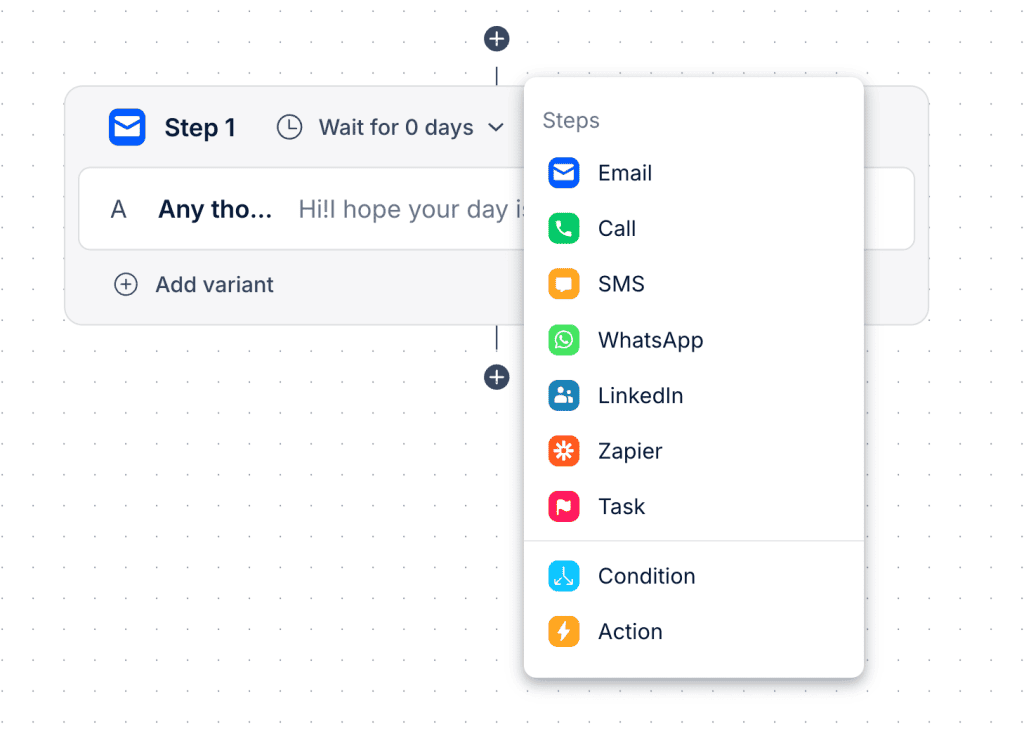
This is where Reply.io truly shines, giving teams the power to launch coordinated multichannel outreach campaigns across email, LinkedIn, calls, SMS, WhatsApp, and other workflow steps.
Enterprise engagement rarely develops through a single channel — one contact may ignore your email and respond on LinkedIn two weeks later, while another may need several touches over time before they even recognize the brand.
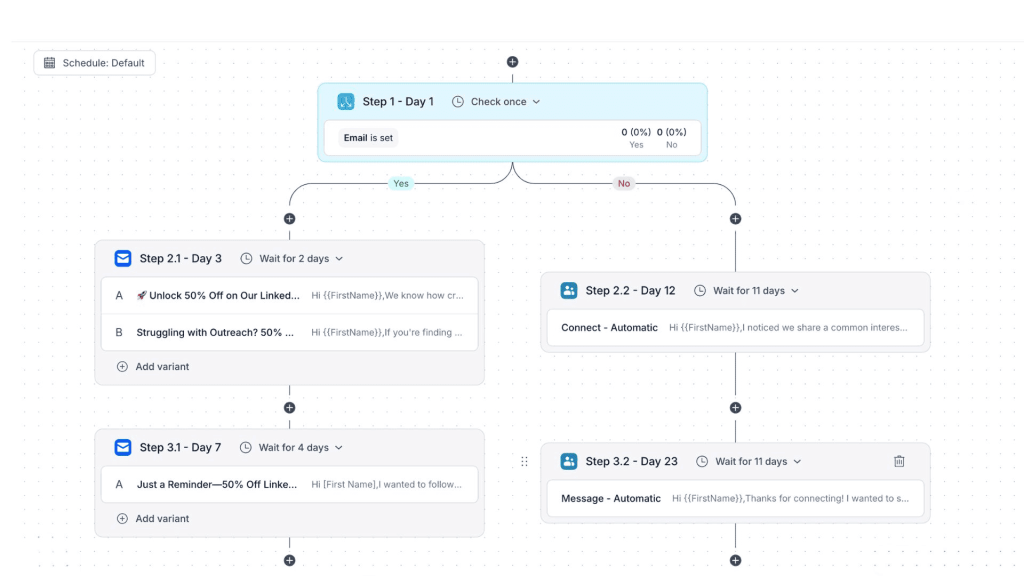
That’s where multichannel conditional sequences come into play. Instead of pushing every enterprise contact through the same fixed buyer journey, Reply.io can adjust each individual flow based on account context, stakeholder role, and actual real-time engagement.
For example, an enterprise demand progression flow might look like this:
Start with a lighter-touch email or LinkedIn message that introduces value without pushing too hard.
Follow up with a more contextual message tied to the account’s likely priorities or active signals.
Adjust the cadence based on opens, replies, or LinkedIn engagement.
Increase conversion focus only after the account shows stronger interest.
That flexibility is a game-changer because enterprise demand generation is really about progression, not volume. You’re moving an account from cold awareness to active engagement, and the sequence needs to support that shift instead of rushing the ‘deal’ talk too early.
Use AI personalization to create enterprise relevance at scale
Enterprise demand generation falls apart pretty quickly when the message feels generic. If your outreach sounds like it could have been sent to anyone, it won’t create much demand, let alone with enterprise stakeholders who expect relevance that reflects both their role and the broader account context.
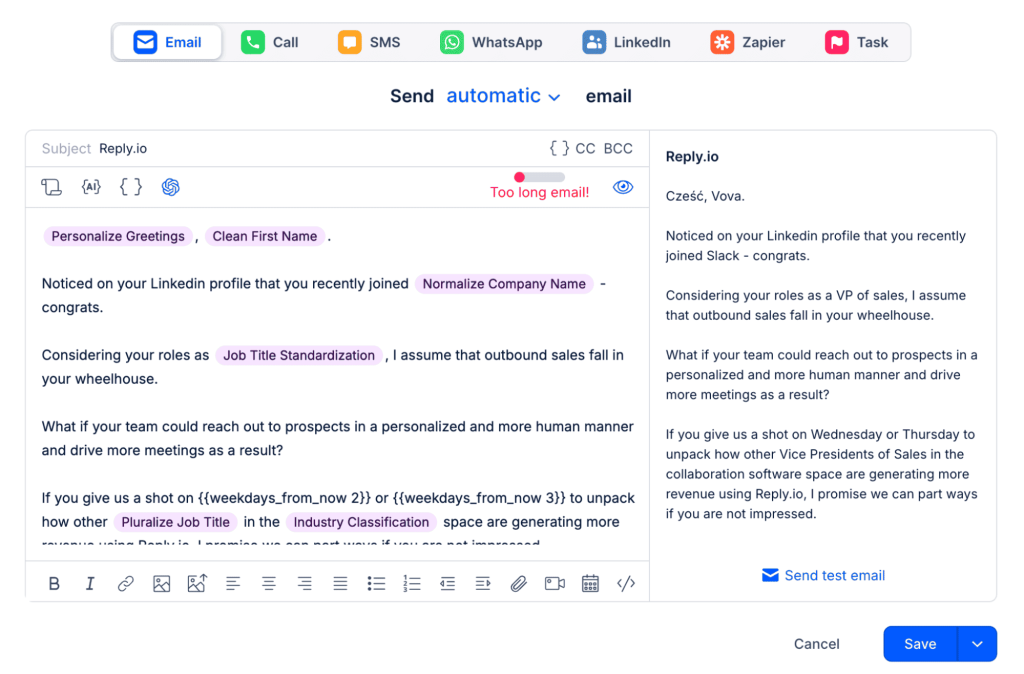
Reply’s AI engine takes care of this by ensuring every email, follow-up, and LinkedIn message is highly tailored to each enterprise stakeholder based on real-time research from Reply Data, LinkedIn, company websites, and more.
Its AI Variables feature allows teams to create their own email and follow-up templates with custom variables, while Reply’s AI engine automatically researches each account and fills in the gaps. The result — brand consistency + AI personalization, at scale.
The real value here isn’t just writing faster but being able to maintain relevance across many enterprise accounts and multiple decision-makers at once.
The strongest personalization usually reflects a few layers at the same time:
the company’s likely priorities or growth context
the stakeholder’s role in the buying committee
likely objections or evaluation criteria
the current level of demand or engagement already visible in the account
Once the system knows the stakeholder’s role, the company’s context, the account’s likely pain points, and the signals pointing to readiness, the message feels highly researched and tailored rather than templated. That’s a huge difference, and it ensures demand generation works the way it should — building trust and credibility over time before going for the sale.
Let Jason AI run the enterprise demand generation engine
At this stage, Reply.io already gives teams a complete operating system for enterprise demand generation, covering account selection, real-time data, intent signals, multichannel outreach, AI personalization, and analytics.
Jason AI is Reply’s AI sales agent that works on that same system and AI engine, and then joins your team as a full-time rep to run most of the actual execution.
After learning your business, offer, strategy, and demand priorities, Jason continuously looks for relevant accounts and stakeholders that match your criteria, enriches them with data from LinkedIn, company websites, and other sources, and then launches tailored multichannel outreach campaigns.
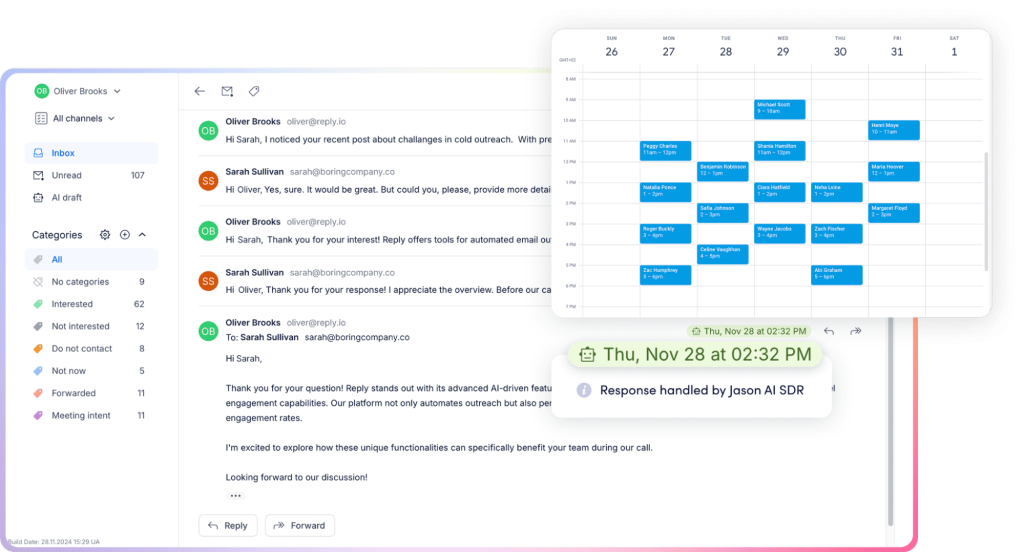
Jason doesn’t stop at first-touch messaging — it personalizes each email and LinkedIn message, adapts follow-ups based on account context and engagement, and on top of all that, handles incoming replies using your custom sales playbooks.
This includes answering common questions, managing objections, and helping convert active demand into booked meetings through integrated calendar scheduling.
A few extra features worth mentioning here:
approval mode for teams that want oversight before outreach goes live
autopilot mode for teams that want deeper automation
multilingual support across 50+ languages for regional or global enterprise coverage
AI-powered reply handling that helps keep active demand moving toward meetings
In short, Jason is an AI sales agent built to take over a large part of the entire enterprise demand generation workflow, from identifying the right target accounts to progressing real conversations, keeping the whole motion structured at all times.
How to measure enterprise demand generation performance
Enterprise demand generation should be measured across both engagement and conversion. Only looking at meetings is too late-stage — you miss the earlier signs that demand is being created. But if you only look at opens and clicks, you miss whether any of that demand is actually turning into closed deals and new revenue.
The most useful performance indicators include:
account engagement
stakeholder engagement
reply quality
meeting conversion
progression from awareness-building to qualified opportunity
This is where analytics becomes a critical part of your demand generation engine. If engagement is weak, the issue may be account selection, timing, or lack of relevance. If replies are coming in but meetings aren’t, the problem may be qualification, conversion timing, or the next step itself.
Reply.io’s reporting and performance visibility help teams understand exactly what’s happening across enterprise accounts, channels, and sequences in real time, so they can quickly improve the right part of the workflow instead of guessing what’s wrong.
Build a smarter enterprise demand generation engine
Enterprise demand generation in 2026 works best when account selection, signal-based prioritization, multichannel outreach, AI personalization, and structured conversion all work together inside one system like clockwork.
Without the right software by your side, that becomes virtually impossible.
Reply.io helps teams build and manage that engine, while Jason AI becomes your new sales rep that runs most of the entire workflow, from finding the right target accounts and decision-makers to launching outreach, handling replies, and helping book meetings.
With this setup, your team will be generating meaningful demand, all while the right stakeholders are engaged with the right message, at the right time, and your team gets a steady flow of qualified enterprise accounts ready to talk numbers and potentially close a deal.
For enterprise teams that want a more scalable and automated way to turn demand creation into closed deals, the next step is to start building a solid demand generation engine piece by piece, and then letting AI execute most of the heavy lifting.
Subscribe to our blog to receive the latest updates
from
the world
of sales and marketing. Stay up to date.
We use cookies to enhance your browsing experience, serve personalised ads or content, and analyse our traffic. By clicking "Accept All", you consent to our use of cookies.