
Lead Generation for Startups in 2026: How to Get Leads Fast

Lead Generation for Startups in 2026: How to Get Leads Fast

Startups don’t get to sit around and wait for demand to show up. They have to take swift and accurate steps to start generating that demand and qualified leads from the very get-go.  

You need conversations before people know the brand, before referrals start doing their thing, and sometimes before the market fully understands why your product should exist in the first place. So “getting your name out there” is really just one part of the equation. Finding the right buyers, testing the right message, and following up consistently enough to turn early interest into actual revenue — that’s the real grunt work.

This guide covers the startup lead generation channels that can create traction fastest, including outbound email, LinkedIn, founder-led selling, and referrals, and how to leverage AI to your advantage in the process.

Why is lead generation for startups different?

Startups don’t sell from the same position as established companies.

Bigger brands already have demand, category trust, customer proof, and years of referrals helping their pipeline. A startup has to build that trust in real time, often while still figuring out the offer, ICP, pricing, and sales process.

Here’s what makes the startup playbook different.

Startups need pipeline before brand trust catches up

Early-stage buyers usually don’t recognize your name, so the outreach has to carry more weight than it would for an established company.

A known brand can lean on reputation, past customers, and inbound demand to reduce buyer resistance. A startup needs sharper targeting, clearer pain-point messaging, and a strong reason for the prospect to care right now.

That means your first message can’t read like a generic product pitch. It has to connect to a problem the buyer already feels, then make the next step low-risk enough to get a reply.

For startups, lead generation is also market validation. Every reply, objection, no-show, and closed deal tells you which buyer actually has urgency and which message is strong enough to move them.

Speed matters because learning cycles are shorter

Startups need to get their pipeline moving quickly because every campaign is also a market test.

Send 100 well-targeted emails and you’ll learn which segment replies, which pain point lands, which objections come up, and whether your offer is specific enough to start a real conversation. Early on, that feedback is usually more useful than waiting months for a long-term channel to mature.

SEO, partnerships, and content can become strong acquisition channels later, but they rarely solve the immediate problem of getting qualified conversations this month. Early lead generation needs to create pipeline and learning at the same time.

The faster you learn who responds and why, the faster you can tighten your ICP, messaging, and sales process.

Startups need channels they can test quickly

A startup can’t afford to spend six months on a channel before finding out whether buyers care.

Outbound email, LinkedIn, founder-led selling, referrals, communities, and paid retargeting give you faster feedback because you can launch small, measure replies, and adjust based on actual buyer behavior.

The goal isn’t to run every channel at once, because that usually just spreads the team too thin. Choose a few channels that match your buyer, test them with a tight ICP, and double down once you start seeing qualified replies and booked meetings.

A channel is only useful early on if it helps you answer two questions quickly: are we reaching the right people, and do they care enough to talk?

The Ultimate AI Sales Playbook for 2026

We built this playbook to show what modern sales teams are actually doing with AI today, and how you can use the same ideas in your own process.

What’s inside this guide:

→ AI tools top sales teams use for prospecting, outreach, meetings, CRM, and daily work

→ Ready-to-use AI prompts for research, cold emails, follow-ups, account planning, and proposals

→ Real examples of using AI across every stage of the sales process

→ A practical system for building pipeline with AI

→ Tips for improving outreach and personalization without adding more work

→ Sales workflows you can copy and start using right away

Get your copy and learn how to use AI to work faster, stay organized, and close more deals.

Why do startups struggle to get leads fast?

Most startup lead generation problems come from weak focus, not lack of effort.

Founders and small teams send messages, test channels, post content, and collect contacts, but the pipeline stays thin because something is off in the targeting, message, follow-up, or deliverability.

Some of the most common blockers are:

  • Low brand trust → prospects who don’t know you need a clear reason to respond. A broad “we help companies save time” message won’t work because it gives them no urgency, no context, and no proof.

  • Limited budget → startups can’t test every channel, hire large teams, or wait for expensive campaigns to become efficient. Budget needs to go toward channels that create fast learning and a real shot at qualified conversations.

  • Weak audience targeting → a broad list makes the whole campaign harder. Even strong copy underperforms when the audience has no clear pain, no buying trigger, or no reason to care right now.

  • Inconsistent follow-ups → most cold prospects won’t reply to the first message. If follow-ups depend on a founder remembering to send the next touch manually, good opportunities will most definitely slip through the cracks.

What are the best strategies for startups to generate leads fast?

Startup lead generation has to do two things at once: create pipeline now and show you exactly which buyers, messages, and channels are actually worth scaling. The fastest strategies are usually the ones that give you real market feedback without needing a big team or a huge budget to get the ball rolling. 

Start with a narrow ICP

Effective lead generation for startups starts with knowing exactly who you’re selling to.

Define your ICP by industry, company size, buyer role, budget range, current pain, and the trigger that makes the problem urgent right now. “B2B companies” is too broad to guide anything useful, while “heads of sales at 20-to-50-person SaaS companies that just raised funding and are actively hiring” gives you a clear buyer, context, and reason to reach out.

A narrow ICP also protects your budget because you contact fewer prospects, but more of them have a reason to care. That usually means better replies, better meetings, and faster learning.

Use outbound email for quick market learning

Cold email is one of the fastest ways to test a startup market because you can reach a focused list, measure replies, and adjust the message within days.

Start small with 50 to 100 tightly matched prospects. Test one pain point, one offer, and one CTA at a time, then actually read the replies. The goal is to see which problems buyers recognize, which objections keep coming up, and which wording gets a real “tell me more.”

Keep a swipe file of subject lines, openers, objections, and CTAs that perform. Once one version consistently gets positive replies, scale it gradually instead of blasting a larger list with a message that still hasn’t proven anything.

Add LinkedIn to warm up cold outreach

LinkedIn works best when it supports the email sequence instead of trying to replace it.

Before sending a connection request, check the prospect’s profile, recent posts, company updates, or hiring activity. Even a relevant profile view or short comment can make your name feel less random before the direct message arrives.

Keep the first touch light. Reference something specific, ask a simple question, or connect around the problem you solve without pitching right away. When the same prospect sees your name in email and LinkedIn, the outreach usually feels more familiar and less like another cold interruption. 

Managing multichannel outreach manually becomes a full-time job. This is why startups leverage AI lead generation platforms like Reply.io, which helps them find potential buyers and launch tailored outreach campaigns in minutes, coordinating emails, follow-ups, LinkedIn, calls, and more (but more on that shortly!)

Turn founder-led selling into a playbook

In the early stage, the founder should stay close to sales because every call teaches you something about the market.

Use founder-led selling and social selling to test the ICP, offer, objections, pricing, and demo flow before hiring reps or handing the process to an agency. Record calls, review where prospects lean in or push back, and document the questions, proof points, and phrases that move deals forward.

The goal is not just to close the first customer but to turn the founder’s raw sales motion into something repeatable that future reps can actually run.

Build lead magnets for active buyers

Lead magnets work when they attract buyers with a problem close to purchase, not random visitors collecting free content.

Use inbound lead generation assets that show intent: calculators, templates, checklists, comparison pages, benchmark reports, ROI worksheets, or implementation guides. 

Only gate content that shows real buying intent or delivers enough value to justify the form. Once someone converts, follow up based on the exact asset they requested instead of throwing them into a generic nurture sequence.

Use referrals and partner channels early

Warm introductions can shorten the trust gap that makes startup sales harder.

Ask for referrals after a customer gets a clear win, not months later when the momentum is gone. Make the ask specific: the role, company type, and problem you help with, so the customer knows exactly who to introduce.

Partners can also become a strong early channel. Consultants, agencies, investors, communities, marketplaces, and complementary SaaS companies already have access to the buyers you want. One focused partner can create more qualified conversations than a broad outbound campaign aimed at the wrong audience.

Retarget visitors who show intent

Most website visitors leave without converting, but that doesn’t mean they’re all low intent.

Retarget people who visit high-signal pages like pricing, product, demo, comparison, case study, or integration pages. The follow-up ad should match the behavior: a pricing visitor may need a demo CTA, while a comparison-page visitor may need proof, a customer story, or a migration offer.

Retargeting usually works best as a support channel. It keeps your startup visible after someone has already shown interest, while outbound or inbound brings them back into a sales conversation.

Track meetings, pipeline, and revenue

Open rates and impressions can help diagnose a campaign, but they should not be the main scoreboard.

Track the numbers that show whether lead generation is turning into business: positive replies, booked meetings, show-up rate, qualified opportunities, pipeline created, and closed deals. A campaign with fewer opens but more qualified meetings is stronger than one with lots of activity and no real revenue path.

Review results weekly. If a channel gets replies but no meetings, the CTA may be weak. If meetings happen but deals don’t progress, qualification or positioning probably needs work. If nobody replies, revisit the ICP and pain point before increasing volume.

Once the basics are working, tools can immensely help scale the entire process. The best lead generation software for startups should combine prospecting, outreach, personalization, follow-up, deliverability, and reporting, so a small team can move fast without stitching together five separate apps, which brings us to Reply. 

How Reply.io helps startups build a lead generation engine

Reply.io gives startups the core lead generation and outbound stack in one place: B2B lead data, enrichment, email validation, multichannel outreach, AI personalization, deliverability, analytics, and its very own AI sales agent — Jason AI.

That matters for small teams because early lead generation often breaks before the campaign even starts. Founders have to connect a database, email finder, sequencer, warm-up tool, inbox tracker, CRM sync, and scheduler just to test one idea. Reply puts all those steps into one coordinated and fully automated workflow, so startups can move from ICP to qualified meetings much faster.

Here’s what Reply.io adds to the startup lead generation process:

  • Reply Data: access to 1B+ B2B contacts and account data for building targeted lists around your ICP, with built-in email validation and enrichment. 
  • Intent signals: better timing based on accounts showing stronger buying context, such as active hiring, technologies used, and more.
  • Multichannel sequences: email, LinkedIn, calls, SMS, WhatsApp, and Zapier steps in one coordinated workflow that adjusts in real time based on lead behavior. 
  • AI Variables and AI sequences: personalized openers, value props, CTAs, and follow-ups based on researched prospect and company context.
  • Jason AI: an AI sales agent that can find leads, run outreach, handle replies, and book meetings, with Copilot and Autopilot modes depending on how much control you want.
  • Deliverability tools: mailbox setup, warm-up, email validation, anti-spam checks, and SPF, DKIM, and DMARC support.
  • Analytics and integrations: reporting on sequences, replies, meetings, and integrations for HubSpot, Salesforce, Pipedrive, Zapier, Make, and many other tools.

Reply.io also has strong startup proof. TechMagic, a software company building products for startups and scale-ups, used Reply.io to generate 700+ replies in six months and increase event-related meetings by roughly 30% by combining email and LinkedIn in one outbound workflow.

How to build a fast startup lead generation workflow in Reply.io

A startup lead generation workflow should be quick to launch, but still structured enough to teach you something useful. Here’s how to build it in Reply.io.

Step 1: Define your ICP and buying trigger

Start with the buyer, not the tool.

Define the niche, company size, buyer role, pain point, and trigger event that makes the problem urgent now. For example, a fintech startup might target compliance leaders at regional banks that recently expanded into new markets and now need better vendor risk controls.

That gives Reply.io stronger inputs for list building, personalization, and sequence logic, which usually means cleaner prospect lists, more relevant messaging, and faster learning from early replies. 

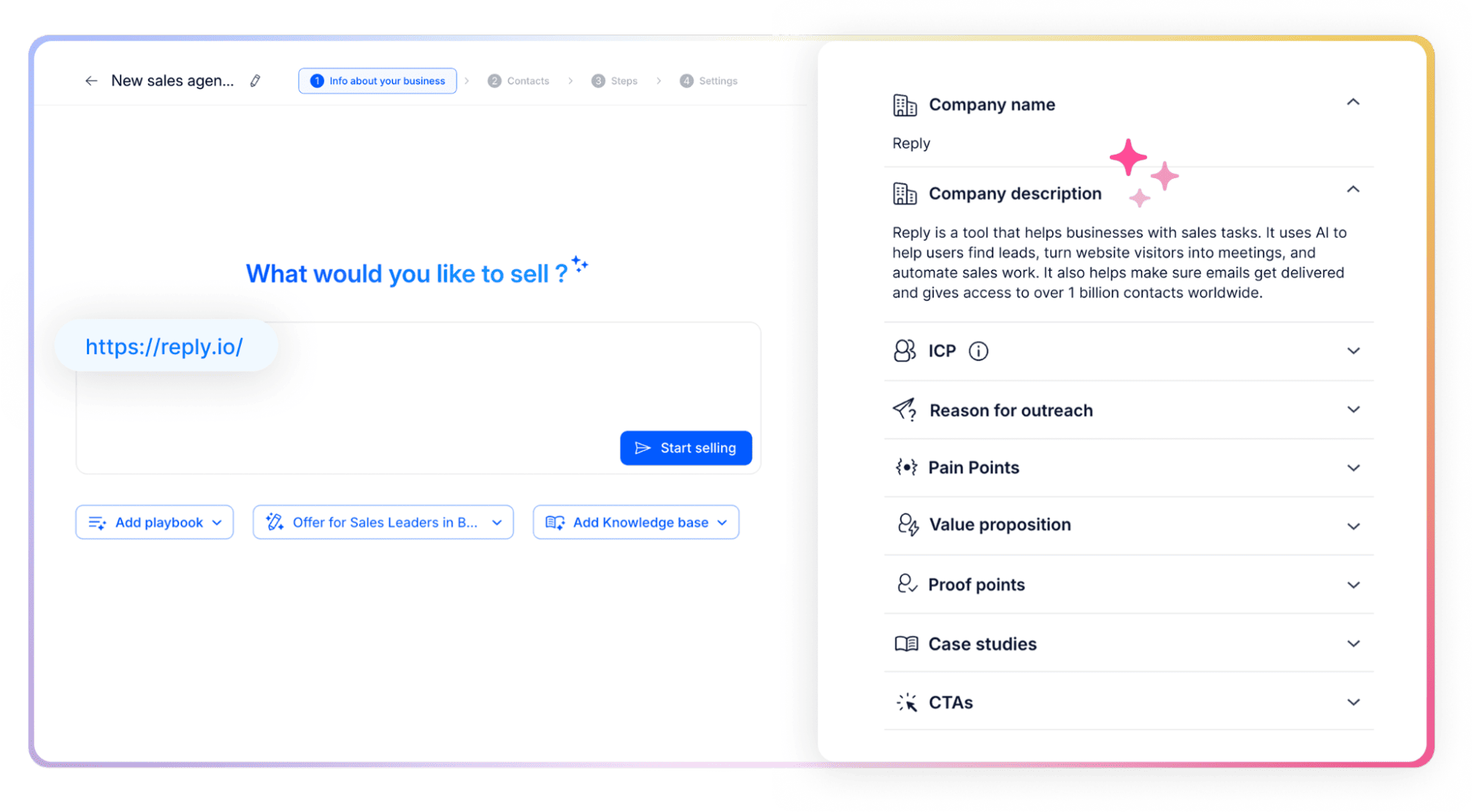
If you’re also using Jason AI, this is where its journey starts — Jason learns everything about your business, audience, and sales strategy to help build your ICP, which will help him better target potential leads and tailor outreach down the line.

Step 2: Build and validate the prospect list

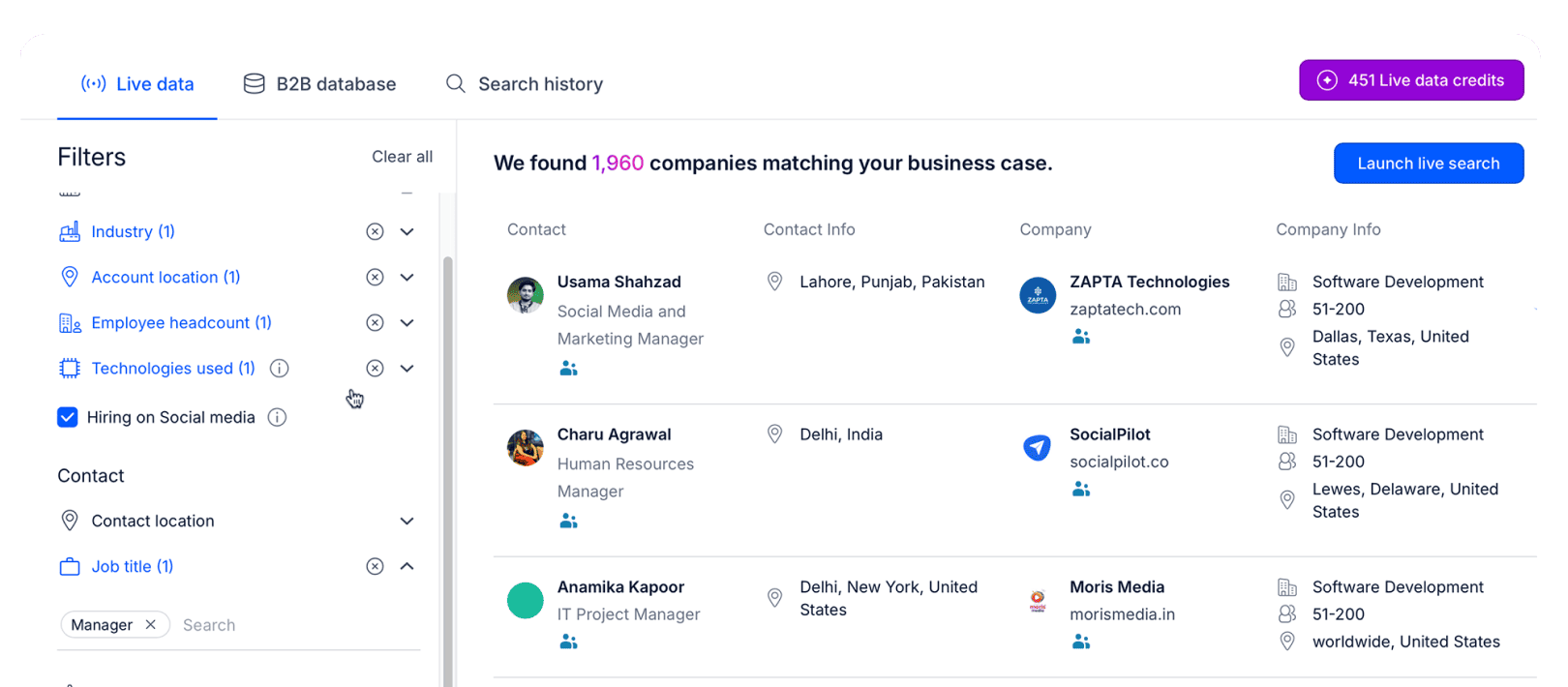
Use Reply Data to find contacts and accounts that match your ICP, then enrich and validate the records before they enter a sequence. Reply’s database has over 1 billion live contacts with advanced search filters, with built-in email validation and intent signals to pinpoint leads most likely to be interested at this very moment. 

data in Reply.io as an extra to your personal CRM

Bad data gets expensive fast. Invalid emails hurt deliverability, poor-fit contacts waste sending volume, and missing context makes personalization weaker. Clean prospect data gives the first campaign a better shot before a single message goes out.

Step 3: Create a multichannel sequence

Build a sequence that reaches prospects through the channels they actually use, instead of asking one cold email to do all the work.

A simple startup sequence might start with a personalized email, add a LinkedIn connection request, create a call task for high-fit prospects, then send a follow-up email with a proof point or low-friction CTA. Reply.io keeps those steps in one workflow across email, LinkedIn, calls, SMS, WhatsApp, and Zapier steps.

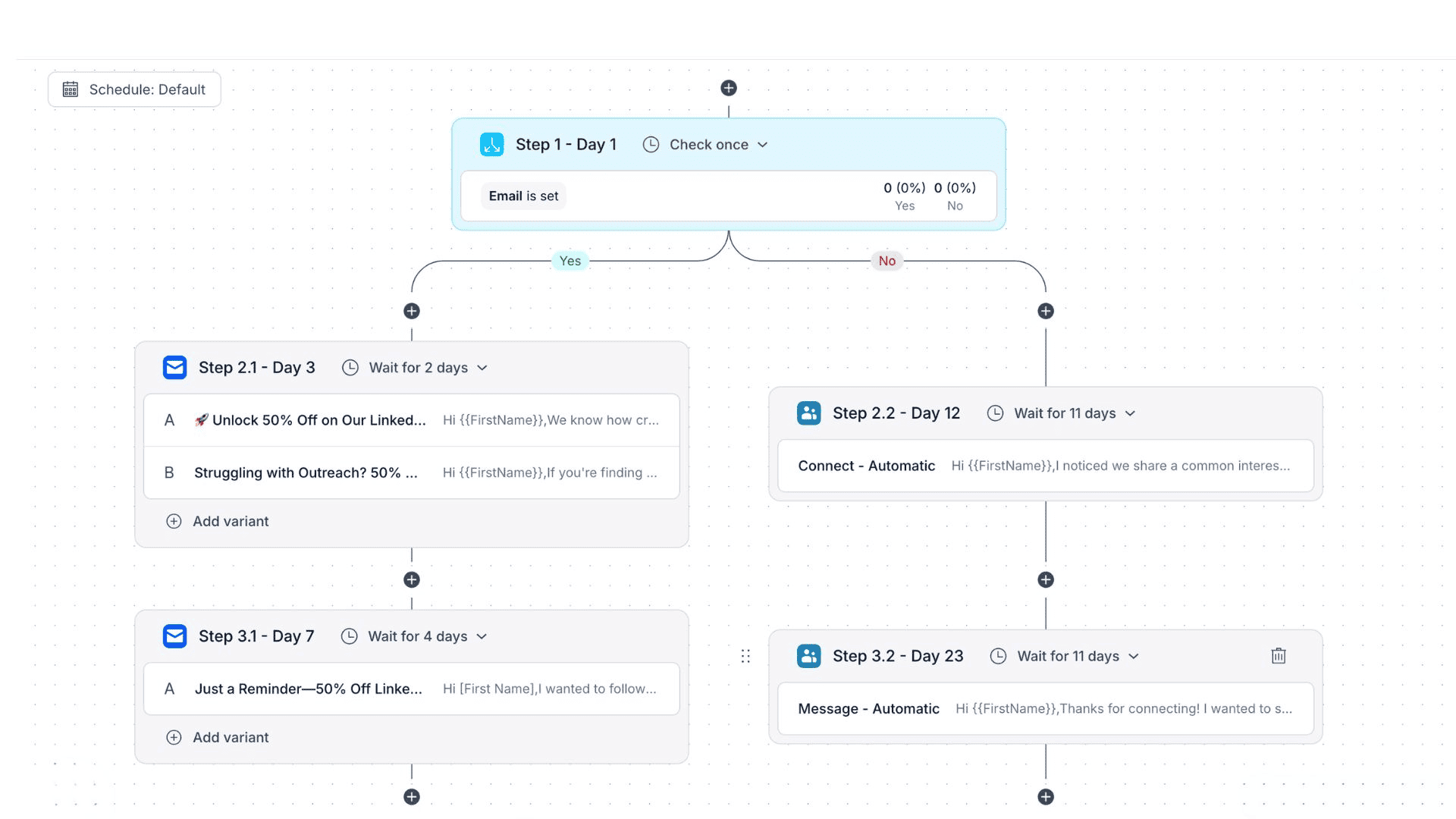
On top of that, your sequences will follow conditional logic, which means they will adjust in real time based on your leads’ engagement behavior. For instance, if your initial email goes unopened after 4 days, Reply will launch an automated LinkedIn connection request. Once accepted, Reply will send a personalized LinkedIn message and cancel the scheduled email follow-up, and so on:

how to auto send emails to a folder in gmail with conditional sequences

Step 4: Personalize around the reason to talk

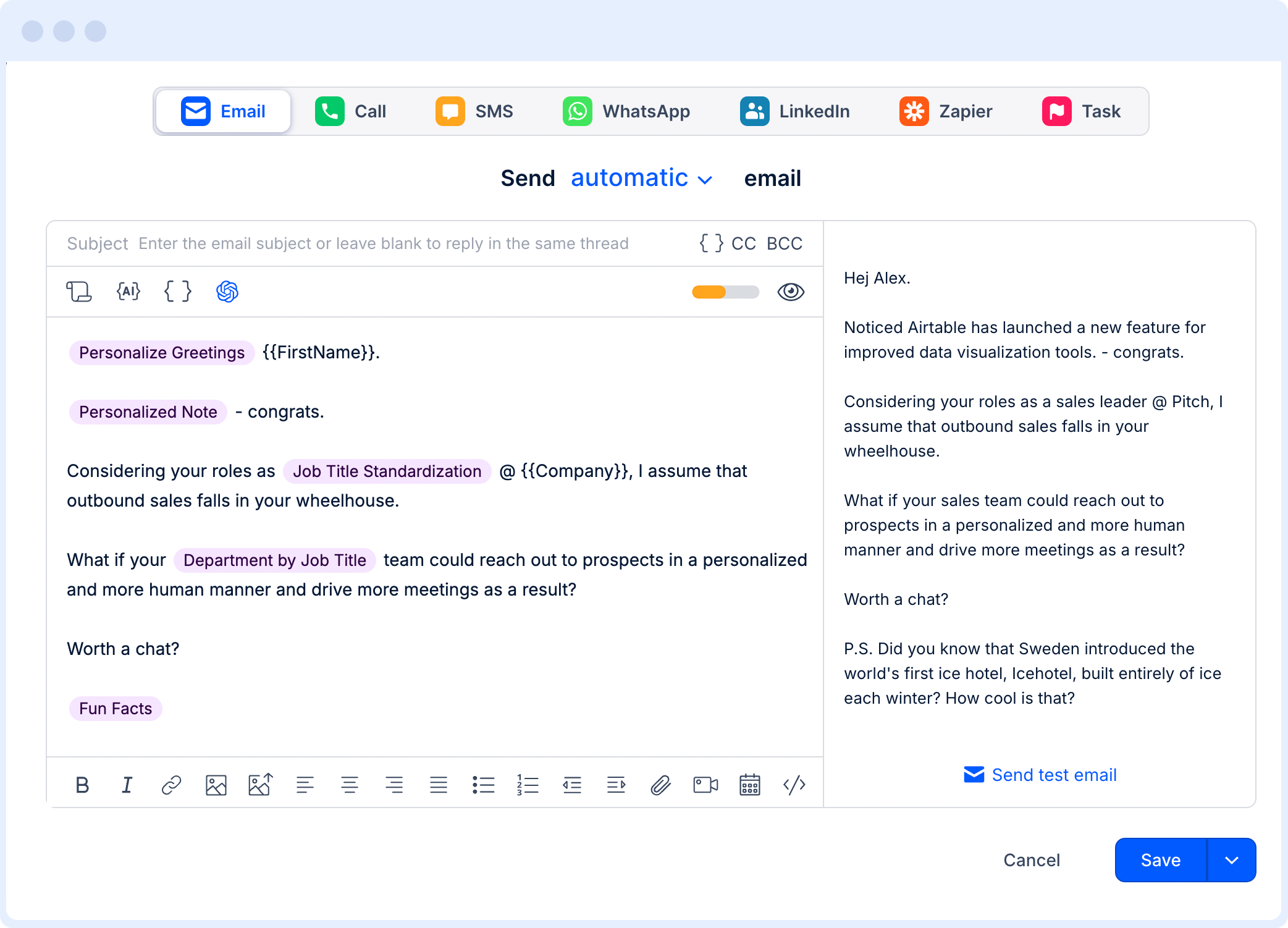
Use AI Variables to create your own brand templates with custom variables to help personalize the parts of the message that actually affect reply quality: opener, pain point, value prop, proof point, and CTA. Reply will then research each lead/account and fill in those gaps before outreach. 

AI personalization

For startups, personalization should connect the outreach to a real reason for the meeting. That could be a funding round, hiring signal, product launch, website visit, tech stack detail, role-specific pain, or market shift affecting the prospect’s team.

This keeps the campaign scalable without falling into the generic startup pitch that buyers ignore immediately.

Step 5: Use Jason AI to handle replies and booking

Increasing overhead isn’t always feasible for startups, which is why they can leverage AI agents to join the team and work as full-time workers. 

For lead generation and outbound, Jason AI is one of the best options on the market — it’s an AI sales agent that finds potential buyers, enriches them through research, launches multichannel outreach, uses the uncovered data to personalize emails and LinkedIn messages, and even handles replies and books meetings on your behalf!

That’s a real game-changer for lean startup teams because founders and early reps often lose time sorting replies, chasing follow-ups, and handling basic qualification. Jason AI can work in Copilot mode when you want approval before sending, or Autopilot mode when you want more of the workflow handled automatically.

Founders can keep building the product while Jason AI handles lead generation, outreach, first-touch replies, qualifies interest, and books the meeting when the prospect is ready.

Step 6: Set up deliverability before scaling

Before increasing volume, make sure the sending setup is safe and your email deliverability is rock solid. 

Reply.io helps with mailbox setup, warm-up, real-time spam monitoring, and domain authentication through SPF, DKIM, and DMARC support. Do this before scaling because a damaged sender reputation is much harder to fix after a campaign is already running.

For startups, deliverability directly decides whether the first outbound campaigns create leads and eventually pipeline or disappear into spam.

Step 7: Measure meetings, not just activity

Use Reply.io analytics to track the numbers that show whether the workflow is working: positive replies, booked meetings, sequence performance, channel performance, and campaign conversion.

Open rates and clicks can help diagnose issues, but they don’t prove traction. A startup lead generation workflow should be judged by qualified conversations, pipeline created, and what you learn about the ICP and message.

Once one segment, message, or channel starts producing meetings, tighten it and scale the version that works.

Build a startup lead generation engine that can scale

Lead generation for startups works best when the system stays focused: a narrow ICP, fast outbound testing, LinkedIn support, consistent follow-up, protected deliverability, and reporting tied to meetings and revenue.

Reply.io helps run that workflow from one place with prospect data, multichannel sequences, AI personalization, deliverability tools, analytics, and Jason AI for reply handling and meeting booking.

Start your free Reply.io trial and start building your very own AI lead generation engine right away.

FAQ

How do startups generate leads fast?

Start with a narrow ICP, then test outbound email, LinkedIn, referrals, and founder-led selling with a small but focused audience. The goal is to get qualified replies quickly, learn which pain points actually land, and scale only the channels that turn into booked meetings.

What are the best lead generation strategies for startups?

The best early strategies are the ones that create pipeline and market feedback at the same time: cold email, LinkedIn outreach, founder-led sales, referrals, partner channels, retargeting, and intent-based lead magnets. Start with one or two channels, track replies and meetings, then double down once you see real traction.

Should startups use lead generation services?

Lead generation services can help startups move faster when the team has no time to build lists, write outreach, or manage follow-ups internally. They work best as a short-term accelerator, while the startup still builds its own repeatable lead generation process in-house.

What are the best lead generation tools for startups?

For startups, lead generation tools need to cover the basics without turning the stack into a mess: prospecting, enrichment, outreach, follow-up, deliverability, and reporting. Reply.io works well here because it brings B2B data, multichannel sequences, AI personalization, Jason AI, and meeting booking into one workflow.

How does Reply.io work for startup lead generation?

Reply.io helps startups build lists, check contact data, run email and LinkedIn outreach, manage replies, keep deliverability in shape, and see which campaigns book meetings. Jason AI can also take on prospecting, qualification, replies, and booking, which is useful when the team is still too lean for a full SDR setup.

How long does startup lead generation take?

Outbound can produce early signals within one to two weeks if the ICP is tight, the list is clean, and the message speaks to a real pain point. Bigger results depend on how quickly you test, review replies, improve targeting, and scale the campaigns that create qualified meetings.

Subscribe to our blog to receive the latest updates from the world of sales and marketing.
Stay up to date.

Related Articles

What’s New in Reply: Pre-Warmed Domains, Agentic Chat, LinkedIn Enrichment, and More

What’s New in Reply: Pre-Warmed Domains, Agentic Chat, LinkedIn Enrichment, and More

What’s New in Reply: Pre-Warmed Domains, Agentic Chat, LinkedIn Enrichment, and More
AI for Improving Your GTM Operations in 2026: No BS Guide

AI for Improving Your GTM Operations in 2026: No BS Guide

AI for Improving Your GTM Operations in 2026: No BS Guide
How to Build a Systematic Cold Outreach Marketing Strategy in 2026

How to Build a Systematic Cold Outreach Marketing Strategy in 2026

How to Build a Systematic Cold Outreach Marketing Strategy in 2026